Silicone Non slip Mat
CN → US| HS Code | Tariff Rate | Origin | Destination | Doc |
|---|---|---|---|---|
| 3923290000 | 38.0% | CN | US | Official Doc |
| 3926901000 | 20.9% | CN | US | Official Doc |
| 3926904000 | 12.8% | CN | US | Official Doc |
| 3923900080 | 38.0% | CN | US | Official Doc |
| 4016100000 | 35.0% | CN | US | Official Doc |
Product Images
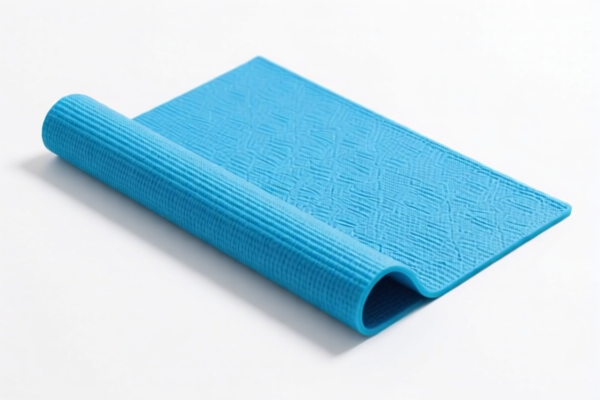

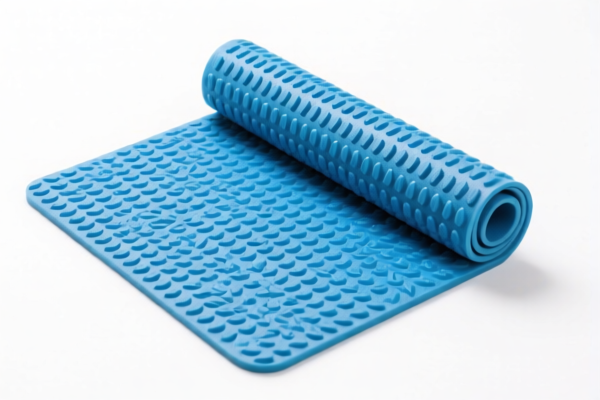
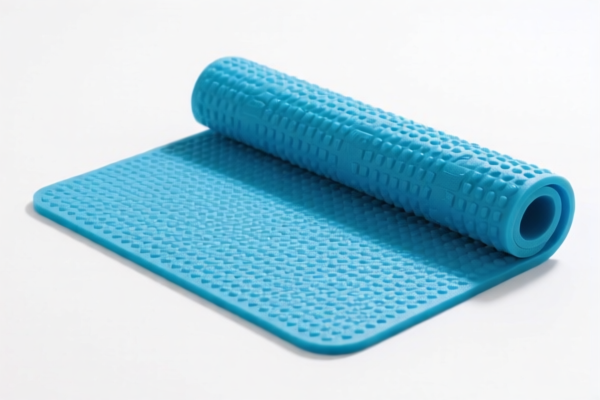
AI Analysis
🧘 Silicone Non-slip Mat
🌐 HS Code Reference & Customs Clearance Guide | 2026 Latest Tariff Analysis | Professional Clearance Strategy
📌 I. Product Definition & Classification: Do You Really Understand "Silicone Non-slip Mats"?
Silicone non-slip mats are versatile accessories used in kitchens, bathrooms, offices, and industrial settings to prevent sliding, absorb spills, or protect surfaces. In international trade, their classification depends heavily on material composition (is it considered "plastic" or "rubber"?), function (packaging vs. general use), and specific sub-category logic under Chapter 39 (Plastics) or Chapter 40 (Rubber).
⚠️ Key Distinction Points:
- If classified as a "closing device" or "packaging accessory" → Falls under HS 3923 (Plastics Articles for Packaging);
- If classified as a "general plastic article" (e.g., kitchenware, floor mat) → Falls under HS 3926 (Other Plastic Articles);
- If deemed a "rubber product" due to elasticity/material properties → Falls under HS 4016 (Other Rubber Articles).
📦 II. HS Code Classification Details (2026 Latest Tariff Authority Comparison)
Based on the provided data, here are the five possible HS Codes with their logical justifications and tax implications:
| HS Code | Product Description & Logic | Total Tax Rate | Tax Detail Breakdown |
|---|---|---|---|
| 3923.29.00.00 | Other Plastic Closing Devices/Packaging Articles 🔹 Logic: Silicone is treated as a plastic/synthetic material. If the mat is used for sealing, closing containers, or as a packaging accessory, it falls under this "catch-all" for other plastic closing devices. 🔹 Shape: Pad-like. |
38.0% | • Base Duty: 3.0% • Section 301 (Add-on): 25.0% • Section 122: 10.0% |
| 3926.90.10.00 | Other Plastic Articles: Anti-slip Mats 🔹 Logic: Silicone is a polymer/plastic. An anti-slip mat is explicitly categorized as a "plastic product" in this subheading. 🔹 Usage: General utility (kitchen, bathroom, industrial). |
20.9% | • Base Duty: 3.4% • Section 301 (Add-on): 7.5% • Section 122: 10.0% |
| 3926.90.40.00 | Other Plastic Articles: Miscellaneous 🔹 Logic: Silicone fits under Chapter 39 (Plastics). This is a "miscellaneous" sub-category for other plastic articles not elsewhere specified. 🔹 Note: Lower base duty, but still subject to Section 122. |
12.8% | • Base Duty: 2.8% • Section 301 (Add-on): 0.0% • Section 122: 10.0% |
| 3923.90.00.80 | Other Plastic Articles for Packaging/Assistive Fixing 🔹 Logic: Material inferred as plastic/synthetic. Usage aligns with "packaging or auxiliary fixing items." It’s a reasonable inference for mats used to secure items or protect surfaces in packaging. 🔹 Category: Other items under 3923. |
38.0% | • Base Duty: 3.0% • Section 301 (Add-on): 25.0% • Section 122: 10.0% |
| 4016.10.00.00 | Other Vulcanized Rubber Articles 🔹 Logic: Inferred material as rubber/plastic. Fits the category of "other vulcanized rubber articles." Shape matches the product description. 🔹 Material Shift: Classified as rubber rather than plastic, leading to different duty structure (lower base, but high Section 301). |
35.0% | • Base Duty: 0.0% • Section 301 (Add-on): 25.0% • Section 122: 10.0% |
🔍 Critical Insight:
- Plastic vs. Rubber: The biggest classification risk is whether Customs views silicone as a plastic (Ch. 39) or rubber (Ch. 40). Chapter 40 (HS 4016) has 0% base duty but still incurs the 25% Section 301 tariff.
- Section 122 Tariff: Note that all HS codes above include a 10% "Section 122" tariff. This is a critical, often overlooked cost driver.
- Section 301 Variance: The US imposed 25% on some plastic/packaging items and 7.5% on others. Choose carefully!
💰 III. 2026 Latest Tariff Rate Breakdown (Including Additional Duties & Policy Surcharges)
✅ Applicable Country: USA (US)
✅ Origin: China (CN)
✅ Effective Date: 2025/2026 (Current Policy)
🎯 1. 3923.29.00.00 & 3923.90.00.80 —— High-Tariff Packaging/Sealing Category
| Item | Detail |
|---|---|
| Base Duty | 3.0% (ad valorem) |
| Section 301 Add-on | +25.0% (High penalty category) |
| Section 122 | +10.0% |
| Total Rate | 38.0% |
| Tax Calculation | CIF Value × 38.0% |
| De Minimis Exemption? | ❌ No (High-value goods subject to scrutiny) |
📌 Why so high?
These HS codes are often viewed as "packaging materials" or "sealing devices," which are heavily taxed under US trade policies to protect domestic packaging industries.
🎯 2. 3926.90.10.00 —— Moderate-Tariff Plastic Anti-slip Category
| Item | Detail |
|---|---|
| Base Duty | 3.4% |
| Section 301 Add-on | +7.5% (Lower penalty category) |
| Section 122 | +10.0% |
| Total Rate | 20.9% |
| Tax Calculation | CIF Value × 20.9% |
| De Minimis Exemption? | ❌ No |
📌 Why this one?
If your mat is clearly a "non-slip mat" for general use (kitchen/bath), this is the most accurate description. The 7.5% Section 301 is significantly lower than the 25% for packaging items.
🎯 3. 3926.90.40.00 —— Lowest Total Tax Rate (Plastic Misc.)
| Item | Detail |
|---|---|
| Base Duty | 2.8% |
| Section 301 Add-on | 0.0% (Exempt from 301?) |
| Section 122 | +10.0% |
| Total Rate | 12.8% |
| Tax Calculation | CIF Value × 12.8% |
| De Minimis Exemption? | ❌ No |
📌 Strategic Advantage:
This code has 0% Section 301, making it the cheapest option at 12.8%. However, it requires strong justification that the product is a "miscellaneous plastic article" not fitting other specific categories. Risk: Customs may challenge if it's clearly an "anti-slip mat."
🎯 4. 4016.10.00.00 —— Rubber Classification
| Item | Detail |
|---|---|
| Base Duty | 0.0% |
| Section 301 Add-on | +25.0% |
| Section 122 | +10.0% |
| Total Rate | 35.0% |
| Tax Calculation | CIF Value × 35.0% |
| De Minimis Exemption? | ❌ No |
📌 Warning:
While base duty is 0%, the 25% Section 301 makes it expensive. Only use if Customs insists it's rubber, not plastic.
🛠️ IV. Customs Clearance Practical Advice (Real-World Pitfall Avoidance)
✅ 1. Document Checklist (Non-Negotiable)
| Document | Required? | Notes |
|---|---|---|
| Product Specification Sheet | ✔️ | Must detail material (Silicone %), dimensions, hardness (Shore A), and function. |
| Product Photos (Lifestyle & Close-up) | ✔️ | Show texture, flexibility, and typical use (e.g., on a kitchen counter). |
| Commercial Invoice | ✔️ | Clearly state: "Silicone Non-slip Mat, Material: 100% Silicone, HS Code: 3926.90.10.00" |
| Certificate of Origin (CO) | ✔️ | Essential for proving Chinese origin. |
| Bill of Lading (B/L) | ✔️ | Ensure weight and dimensions match invoice. |
| Third-party Test Report | ✔️ | FDA/LFGB compliance for food-grade silicone (if used in kitchen). |
✅ 2. Declaration Strategy (Key Mnemonic)
🔥 "Material First, Function Second, Code Choice Saves Money!"
| Scenario | Recommended HS Code | Why? | Risk if Wrong |
|---|---|---|---|
| Kitchen/Bath Mat (General Use) | 3926.90.10.00 |
Explicitly mentions "anti-slip mats." Balanced tax (20.9%). | Misclassifying as packaging (3923) → +17% extra tax. |
| Packaging Liner/Seal | 3923.29.00.00 |
Used to seal/close containers. | High tax (38%) but accurate for packaging. |
| Miscellaneous Household Item | 3926.90.40.00 |
Lowest tax (12.8%) if no specific "anti-slip" subheading applies. | Customs may reclassify to 3926.90.10.00 (20.9%) if "anti-slip" is evident. |
| Elastic/Stretchy Mat (Rubber-like) | 4016.10.00.00 |
If silicone is highly elastic and deemed "rubber." | High tax (35%) due to 25% Section 301. |
✅ 3. Special Handling Tips
| Situation | Advice |
|---|---|
| Food-Grade Silicone | Emphasize FDA/LFGB compliance in documentation. This doesn't change HS code but speeds up clearance. |
| Composite Materials | If mat has a non-slip rubber base + silicone top, clarify the principal material. Usually, the top layer (silicone) dictates classification. |
| Set Sales | If sold with a box/stand, declare the mat as the principal item. Don't split. |
| Section 122 Impact | Remember: 10% is added to ALL codes. Budget for this. It's a US-specific surcharge. |
🌍 V. Global Market Comparison (2026)
| Market | Recommended HS Code | Est. Total Tax (China Origin) | Key Requirement |
|---|---|---|---|
| 🇺🇸 USA | 3926.90.10.00 |
20.9% | FDA Compliance, Section 301 (7.5%) + Sec 122 (10%) |
| 🇨🇳 China | 3926.90.10.00 |
~2-5% (Import Duty) | CCC Certification (if applicable) |
| 🇪🇺 EU | 3926.90.95 |
~4-6% | CE Marking, REACH Compliance |
| 🇬🇧 UK | 3926.90.90 |
~5-8% | UKCA Marking |
📌 Conclusion:
The US is the most complex market due to Section 301 and Section 122. Always aim for3926.90.10.00(20.9%) or3926.90.40.00(12.8%) for cost efficiency. Avoid3923categories unless it's truly packaging.
📌 VI. Common Mistakes & Pitfalls (Lessons Learned)
❌ Mistake 1: Calling it "Rubber Mat" when it's Silicone
👉 Result: Customs may reclassify to 4016 (35%) instead of 3926 (20.9%).
✅ Fix: Use "Silicone" in description.
❌ Mistake 2: Using "Packaging" HS Code (3923) for a General Use Mat
👉 Result: 38% tax vs. 20.9%. Overpaying $170 per $1,000 of goods.
✅ Fix: Use 3926.90.10.00 for non-packaging mats.
❌ Mistake 3: Ignoring Section 122 Tariff
👉 Result: Budget shortfall. Many forget the 10% add-on.
✅ Fix: Include 10% in all cost calculations.
❌ Mistake 4: Vague Product Description
👉 Result: Delays. Customs asks for more info.
✅ Fix: Use "Silicone Non-slip Mat, Kitchen/Bathroom Use, FDA Compliant".
🎯 VII. Conclusion: Smart Classification, Smarter Profits!
🎯 Remember the Golden Rule:
🔹 "Silicone is Plastic (Ch. 39), not Rubber (Ch. 40), unless proven otherwise."
🔹 "Anti-slip mat" →3926.90.10.00(20.9%) is usually the safest balance."
🔹 "Packaging" →3923(38%) is expensive. Avoid unless necessary."
🔹 "Section 122" → 10% is mandatory. Plan for it.**
📌 Pro Tip:
If you can prove the mat is "miscellaneous" and not specifically "anti-slip," 3926.90.40.00 (12.8%) is the cheapest option. However, this requires strong justification. For most standard mats, 3926.90.10.00 is the correct and defensible choice.
📣 Immediate Action:
📞 Consult a Customs Broker to confirm
3926.90.10.00vs.3926.90.40.00based on your product's exact use.
📄 Prepare FDA/LFGB Docs to speed up US clearance.
💰 Budget for 20.9% Total Tax (Base + Sec 301 + Sec 122).
✨ Professional Clearance Starts with Accurate Classification!
💼 Every Percent Saved is Pure Profit!
Customer Reviews
About HS Code Classification
The Harmonized System (HS) is an internationally standardized nomenclature developed by the World Customs Organization (WCO) to classify traded products. Over 200 countries use the HS system as the basis for customs tariffs, trade statistics, and import/export regulations.
Each HS code follows a hierarchical structure:
- Chapter (2 digits) — Broad category of goods (e.g., Chapter 84: Machinery and Mechanical Appliances)
- Heading (4 digits) — More specific grouping within the chapter
- Subheading (6 digits) — Internationally standardized breakdown, used by all WCO member countries
- National subdivisions (8-10 digits) — Country-specific extensions for further classification, such as US HTSUS 10-digit codes
Correct HS code classification is essential for smooth customs clearance, accurate duty payment, and compliance with trade regulations. Misclassification can lead to customs delays, overpayment of duties, or penalties.
When importing from CN to US, the applicable tariff rates may include:
- Most-Favored-Nation (MFN) rate — The standard duty rate applied to WTO members
- General rate — Applied to countries without trade agreements
- Trade remedy duties — Additional tariffs such as Section 301 (anti-dumping), Section 232 (national security), or countervailing duties
The information provided on this page is for reference purposes only. For official classification, please consult with your local customs authority or a licensed customs broker.