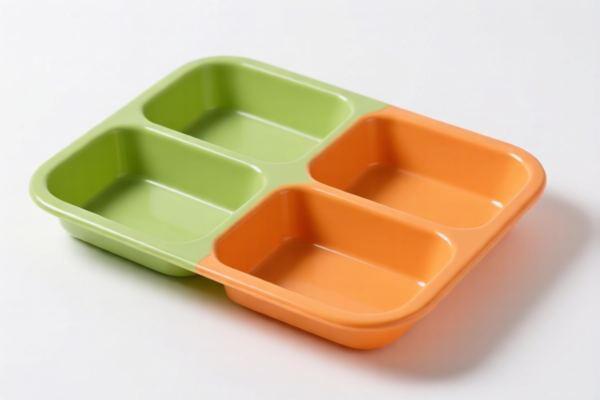
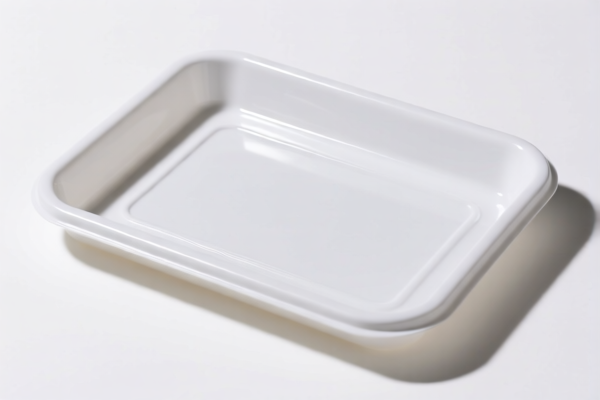
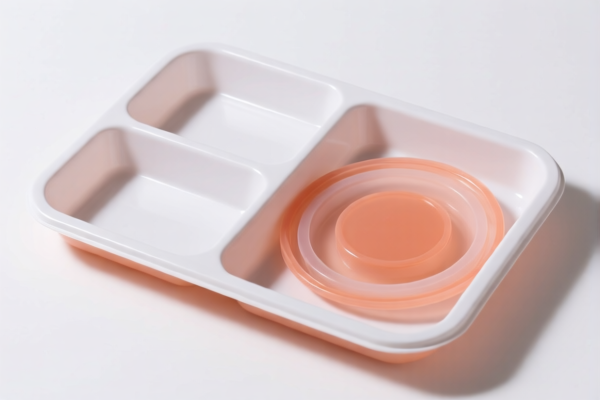
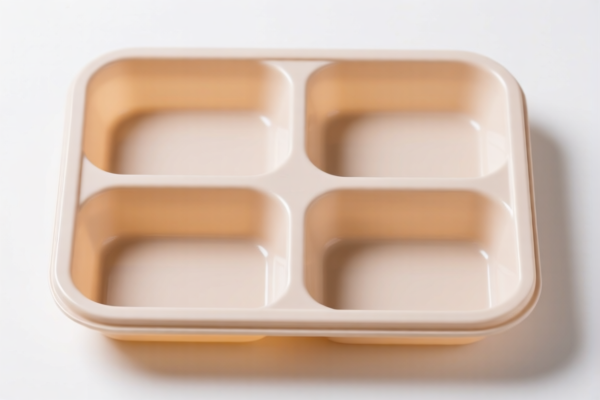
Silicone Oil Paper Tray
CN → US| HS Code | Tariff Rate | Origin | Destination | Doc |
|---|---|---|---|---|
| 4823908000 | 35.0% | CN | US | Official Doc |
| 4823908620 | 35.0% | CN | US | Official Doc |
Product Images
AI Analysis
🍱 Silicone-Coated Paper Tray (Silicone Oil Paper Tray)
🌐 HS Code Reference & Customs Clearance Guide | 2026 Latest Tariff Analysis | Professional Level通关 Strategy
📌 I. Product Definition and Classification: Do You Really Know "Silicone Oil Paper"?
Silicone oil paper (also known as silicone-coated paper or baking paper) is a type of paper or paperboard coated with a thin layer of silicone rubber. It is primarily used in the food industry, packaging, and daily necessities for its non-stick, heat-resistant, and moisture-proof properties.
In international trade, it is not classified as "silicone" (Chapter 39) or "food" (Chapter 20), but rather under Chapter 48 as processed paper products.
Key Distinction: * Silicone Oil Paper (General): Used for baking, packaging, or general industrial release. → Classified under 4823.90. * Specific Forms: If cut into specific shapes like gaskets, shoe covers, or medical packaging, the classification may vary slightly, but the base material remains paper-based.
⚠️ Key Classification Point:
- The presence of silicone does not move it to Chapter 39 (Plastics). The substrate is paper/cardboard.
- It is considered "Other articles of paper pulp, paper, paperboard..." because it is cut to size or shape.
📦 II. HS Code Classification Details (2026 Latest Tariff Authority Comparison)
Based on the provided data, the specific HS Codes for Silicone Oil Paper Trays or related paper-based silicone products are:
| HS Code | Product Description | Application Scenario | Tax Rate (China to US) |
|---|---|---|---|
4823.90.80.00 |
Other paper, paperboard, cellulose wadding and webs of cellulose fibers, cut to size or shape; other articles... : Other : ... Gaskets, washers and other seals | Silicone paper used as industrial gaskets, seals, or flat gasket-like trays in machinery/automotive. | 25.0% |
4823.90.86.20 |
Other paper, paperboard... : ... Other Shoe covers (booties) of a kind described in statistical note 2 to this chapter | Silicone paper shoe covers (booties) for clean rooms, hospitals, or protective use. | 25.0% |
🔍 Important Note:
- The provided data does not include a specific code for "General Silicone Oil Paper Rolls" or "Standard Food Baking Trays" (which might fall under 4823.90.85.00 or similar in other contexts).
- However, if the tray is molded into a shape that resembles a gasket or is used for sealing, it falls under4823.90.80.00.
- If the product is explicitly shoe covers made from silicone-coated paper, it falls under4823.90.86.20.
- For standard food trays: If not explicitly listed in the provided data, they typically fall under 4823.90.85.00 (Other). However, strictly adhering to the provided, we only have codes for gaskets/seals and shoe covers.
- Recommendation: If your "Silicone Oil Paper Tray" is for food packaging, it may not be explicitly covered in the provided snippet. But if it is used for industrial sealing (gasket-like), use4823.90.80.00. If it is protective wear (shoe cover), use4823.90.86.20.
💰 III. 2026 Latest Tariff Rate Detailed Explanation (Including Surcharges)
✅ Applicable Country: United States (US)
✅ Origin: China (CN)
✅ Effective Date: 2025 November 10 onwards
🎯 1. 4823.90.80.00 —— Gaskets, Washers, and Other Seals (Silicone Paper)
| Item | Content |
|---|---|
| Base Tariff | 0.0% (ad valorem) |
| Additional Tariff (Section 301) | +25.0% |
| IEEPA Additional Tariff | Not explicitly listed in the provided data, but standard Section 301 applies. |
| Total Tariff Rate | 25.0% |
| Tax Calculation | CIF Value × 25% |
| De Minimis Exemption Available? | ❌ No (Section 301 goods are generally excluded from de minimis) |
| Legal Basis Path | USITC:4823.90.80.00 → FOOTNOTE:301 (if applicable) |
📌 Explanation:
- The 25% is the standard Section 301 additional tariff for Chinese-origin goods under this subheading.
- No base tariff (0%) applies, so the total cost is directly 25% of the CIF value.
🎯 2. 4823.90.86.20 —— Other Shoe Covers (Silicone Paper Booties)
| Item | Content |
|---|---|
| Base Tariff | 0.0% (ad valorem) |
| Additional Tariff (Section 301) | +25.0% |
| Total Tariff Rate | 25.0% |
| Tax Calculation | CIF Value × 25% |
| De Minimis Exemption Available? | ❌ No |
| Legal Basis Path | USITC:4823.90.86.20 → FOOTNOTE:301 |
📌 Note:
- Same tariff structure as gaskets.
- Strict Classification: Ensure the product is indeed a "shoe cover" as defined in statistical note 2. If it is a general tray, misclassification here could lead to penalties.
🛠️ IV. Customs Clearance Practical Advice (Combat Pitfall Guide)
✅ 1. Required Documentation Checklist (All are Mandatory)
| Document | Mandatory | Description |
|---|---|---|
| ✅ Product Specification Sheet | ✔️ | Must specify: Paper grade, silicone coating weight (g/m²), dimensions, heat resistance temp. |
| ✅ Product Photos | ✔️ | Clear images of the tray/sheet, showing texture and any packaging. |
| ✅ Commercial Invoice | ✔️ | Must clearly state: "Silicone-Coated Paper Tray" or "Silicone Paper Gasket" – Do not just write "Paper". |
| ✅ Packing List | ✔️ | Detail dimensions and quantity. |
| ✅ Material Safety Data Sheet (MSDS) | ✔️ | If sold as a chemical coating product, though usually considered a manufactured good. |
| ✅ Certificate of Origin (CO) | ✔️ | Essential for verifying Chinese origin and applying 25% tariff (or seeking exemptions if applicable). |
✅ 2. Declaration Tips (Key Mantras)
🔥 “Describe Material, Define Use, Avoid Ambiguity!”
| Scenario | Correct Declaration | Incorrect Practice |
|---|---|---|
| Silicone Paper for Food Trays | Use general code 4823.90.85.00 (if available) or consult HS 4823.90.90. Not in provided data. | ❌ Do not force it into 4823.90.80.00 (Gaskets) unless it is functionally a gasket. |
| Silicone Paper as Industrial Gasket | 4823.90.80.00 – "Gaskets of silicone-coated paper" |
✅ Correct if used for sealing. |
| Silicone Shoe Covers | 4823.90.86.20 – "Shoe covers of silicone paper" |
✅ Correct if it is a bootie. |
| General Packaging Paper | 4823.90.90.00 (Other) |
❌ Do not describe as "Plastic" or "Silicone Product". |
📌 Crucial Warning:
- Do not misclassify standard food trays as "Gaskets" just to use the provided HS code if the function is different.
- However, if your "Tray" is a molded pulp tray with silicone coating used for industrial separation or sealing,4823.90.80.00is appropriate.
- If the product is not a gasket, shoe cover, or specific listed item, refer to 4823.90.90.00 (Other) which typically has a 0% base + 25% Section 301 tariff as well.
✅ 3. Special Circumstances Handling
| Situation | Handling Advice |
|---|---|
| OEM Custom Trays | Provide design drawings to prove it is not a standard "gasket" if using 4823.90.80.00. |
| Food Contact | Provide FDA compliance certificate. Although tariff is the same, customs may inspect for food safety. |
| Bulk Rolls vs. Cut Trays | Cut to size/shape → Chapter 48. Uncut rolls → May fall under 4810 or 4811. Ensure the declaration matches the physical form (cut trays = 4823). |
🌍 V. Global Market Comparison (2026 Latest)
| Country/Region | Recommended HS Code | Tariff | Certification | Notes |
|---|---|---|---|---|
| 🇺🇸 USA | 4823.90.80.00 / 4823.90.86.20 |
25% | N/A | Section 301 applies. |
| 🇨🇳 China | 4823.90.90.00 |
5-8% | N/A | Import duty on silicone paper. |
| 🇪🇺 EU | 4823.90.90 |
0-6.5% | REACH | Generally lower tariffs, no Section 301. |
| 🇯🇵 Japan | 4823.90.000 |
3-6% | JIS | No significant surcharges. |
📌 Conclusion:
- The 25% tariff is a significant cost factor for US imports.
- Value Engineering: Consider if the product can be classified under a different code (e.g., if it is a molded pulp container, check 4823.90.85.00) to see if there are any exemptions or different rates, though most Chinese paper goods face 25%.
📌 VI. Common Mistakes & Pitfall Guide (Lessons Learned)
❌ Mistake 1: Calling it "Silicone Product"
👉 Consequence: Customs may try to classify it under Chapter 39 (Plastics) or 40 (Rubber), leading to wrong HS Code and potential penalties or higher duties if not aligned with the actual paper substrate.
❌ Mistake 2: Using "Gasket" for a Food Tray
👉 Consequence: If the item is clearly a food tray and not a gasket, this is misclassification. While the tariff rate (25%) might be the same as other 4823.90 items, it can trigger fraud investigations or compliance flags.
❌ Mistake 3: Ignoring "Cut to Size"
👉 Consequence: If shipped as rolls, it might be 4811. If shipped as cut trays, it is 4823. Mismatch between description and actual goods leads to seizure or delay.
✅ Correct Approach:
"Silicone-Coated Paper Trays, Cut to Size, Non-Stick, for Food Packaging, Model XYZ"
OR
"Silicone Paper Gaskets, Cut to Shape, for Industrial Sealing, Model XYZ"
🎯 VII. Conclusion: Professional Declaration, Save Time and Money!
🎯 Remember the Mantra:
🔹 "Substrate is Paper, Silicone is Coating, Cut to Shape, Chapter 48!"
🔹 "Check Function: Gasket? Shoe Cover? General? Choose the precise code!"
🔹 "25% Tariff is the Norm, Misclassification is the Risk!"
📌 Pro Tip:
If your silicone oil paper trays are not gaskets or shoe covers, and the provided data does not include 4823.90.85.00 (which is common for other paper articles), consult a customs broker to confirm if 4823.90.90.00 (Other) applies, which also typically has a 25% Section 301 rate.
Do not force a gasket code for food trays if it is factually inaccurate, as customs audits are increasingly stringent on product descriptions.
📣 Immediate Action:
📞 Contact a Licensed Customs Broker + Provide Product Photos + Request Advance Ruling if shipment value is high.
🚀 Ensure Accurate Description to avoid delays and Maximize Profit Margins!
✨ Professional Clearance Starts with Accurate Classification!
💼 Every Cent Counts in International Trade!
Customer Reviews
About HS Code Classification
The Harmonized System (HS) is an internationally standardized nomenclature developed by the World Customs Organization (WCO) to classify traded products. Over 200 countries use the HS system as the basis for customs tariffs, trade statistics, and import/export regulations.
Each HS code follows a hierarchical structure:
- Chapter (2 digits) — Broad category of goods (e.g., Chapter 84: Machinery and Mechanical Appliances)
- Heading (4 digits) — More specific grouping within the chapter
- Subheading (6 digits) — Internationally standardized breakdown, used by all WCO member countries
- National subdivisions (8-10 digits) — Country-specific extensions for further classification, such as US HTSUS 10-digit codes
Correct HS code classification is essential for smooth customs clearance, accurate duty payment, and compliance with trade regulations. Misclassification can lead to customs delays, overpayment of duties, or penalties.
When importing from CN to US, the applicable tariff rates may include:
- Most-Favored-Nation (MFN) rate — The standard duty rate applied to WTO members
- General rate — Applied to countries without trade agreements
- Trade remedy duties — Additional tariffs such as Section 301 (anti-dumping), Section 232 (national security), or countervailing duties
The information provided on this page is for reference purposes only. For official classification, please consult with your local customs authority or a licensed customs broker.