Silicone Paper
CN → USProduct Images
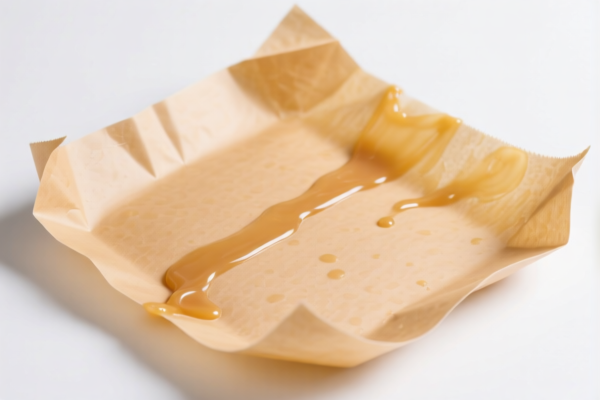
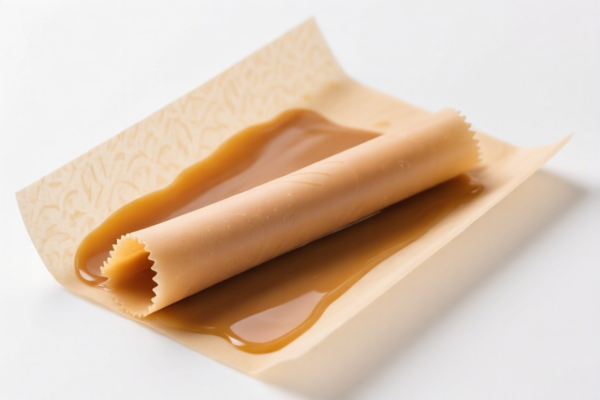
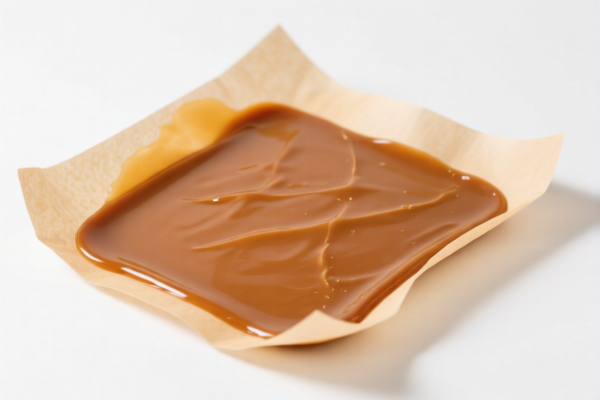
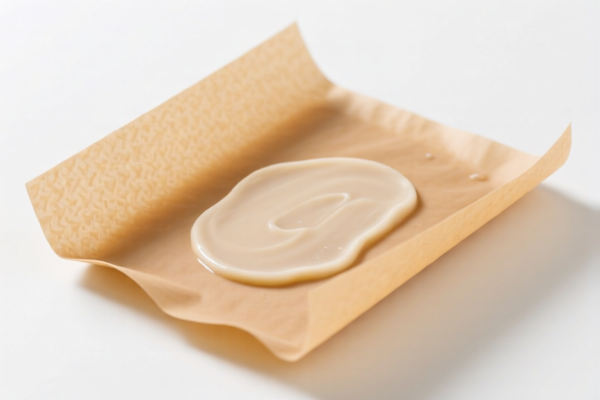
AI Analysis
📄 Silicone Paper (Release Liner)
🌐 HS Code Reference & Customs Clearance Guide | 2026 Latest Tariff Analysis | Professional通关 Strategy
📌 1. Product Definition & Classification: Do You Really Understand "Silicone Paper"?
Silicone Paper, technically known as Release Liner or Siliconized Paper, is a specialized material consisting of paper, plastic, or foil coated with a thin layer of silicone. Its primary function is to serve as a backing for pressure-sensitive adhesive products (like labels, tapes, and stickers), allowing the adhesive side to be released cleanly without residue when the product is used.
In international trade, it is not treated as standard packaging or simple paper. It is classified based on its coating material and specific application, primarily falling under Chapter 48 (Paper and Paperboard) or Chapter 39 (Plastics) if the substrate is plastic/film.
⚠️ Key Distinction:
- If the base material is Paper: Classified under 4811.41 or 4811.59.
- If the base material is Plastic Film (e.g., PET, PE): Classified under 3920.94 or 3919.90.
- Do NOT classify as "Packaging Material" (e.g., 4821) or "Adhesive Tape" (3730/3919) itself, as the silicone paper is merely a component or support, not the final adhesive product.
📦 2. HS Code Classification Details (2026 Latest Tariff Authority Match)
| HS Code | Product Description | Application Scenario | Base Material |
|---|---|---|---|
4811.41.00.00 |
Goffs or other coated or impregnated paper, with a density ≥ 150 g/m², in rolls, coated with silicone | Most common release liners for label backing | Paper |
4811.59.00.00 |
Other coated or impregnated paper, with a density < 150 g/m², in rolls, coated with silicone | Lightweight release liners, thermal paper backing | Paper |
3920.94.90.00 |
Other plates, sheets, film, foil, and strip, of plastics, non-cellular, not reinforced, coated, plated, or supported with other materials | Silicone-coated PET or PE film liners (Plastic substrate) | Plastic |
3919.90.00.00 |
Self-adhesive plates, sheets, film, foil, tape, strip, and other flat shapes, of plastics | If the silicone paper is pre-cut into self-adhesive shapes (rare for raw liner) | Plastic |
🔍 Critical Reminder:
- The majority of industrial silicone release paper (for labels, medical tapes, etc.) is Paper-based → Use 4811.41 or 4811.59.
- If you are importing Silicone-Coated PET Film (often used in high-end electronics or automotive tapes), use 3920.94.
- Misclassification Risk: Classifying plastic-based liners as paper (4811) will lead to customs disputes because the material properties differ significantly.
💰 3. 2026 Latest Tariff Rate Detail (Including Surcharges & Policy Add-ons)
✅ Applicable Country: United States (US)
✅ Country of Origin: China (CN)
✅ Effective Date: November 10, 2025 (and subsequent imports)
🎯 1. 4811.41.00.00 – Coated Paper with Silicone (Paper Substrate)
| Item | Content |
|---|---|
| Base Duty Rate | 3.5% (Ad Valorem) |
| USITC Section 301 Surcharge | +25% (Footnote 9903.88.01 applies to many paper products) |
| IEEPA Surcharge | +10% (Targeting Chinese/HK products, effective Nov 10, 2025) |
| Total Effective Rate | 38.5% |
| Tax Calculation | CIF Value × 38.5% |
| De Minimis Exemption | ❌ Not Eligible (deny_de_minimis) |
| Legal Authority Path | IEEPA:9903.01.25 → IEEPA:9903.01.24 → USITC:4811.41.00.00 → FOOTNOTE:9903.88.01 |
📌 Explanation:
- The 25% Section 301 tariff applies broadly to paper products from China.
- The 10% IEEPA tariff is an additional layer specifically targeting Chinese imports.
- Total 38.5% is a significant cost driver. Many importers attempt to shift sourcing to Vietnam or Thailand to avoid these surcharges, but rules of origin must be strictly verified.
🎯 2. 4811.59.00.00 – Lighter Weight Coated Paper with Silicone
| Item | Content |
|---|---|
| Base Duty Rate | 3.5% (Ad Valorem) |
| USITC Section 301 Surcharge | +25% |
| IEEPA Surcharge | +10% |
| Total Effective Rate | 38.5% |
| Tax Calculation | CIF Value × 38.5% |
| De Minimis Exemption | ❌ Not Eligible |
| Legal Authority Path | IEEPA:9903.01.25 → IEEPA:9903.01.24 → USITC:4811.59.00.00 → FOOTNOTE:9903.88.01 |
📌 Note:
- Same rate structure as heavy-weight silicone paper.
- Even if the paper weight is light (<150 g/m²), the silicone coating triggers the same surcharge rules under USITC footnote 9903.88.01 for paper products.
🎯 3. 3920.94.90.00 – Silicone-Coated Plastic Film (If applicable)
| Item | Content |
|---|---|
| Base Duty Rate | 3.2% (Ad Valorem) |
| USITC Section 301 Surcharge | +25% |
| IEEPA Surcharge | +10% |
| Total Effective Rate | 38.2% |
| Tax Calculation | CIF Value × 38.2% |
| De Minimis Exemption | ❌ Not Eligible |
📌 Note:
- Slightly lower base rate (3.2% vs 3.5%) but same surcharges.
- Must ensure the product is truly plastic-based (PET/PE) and not paper. Misclassifying plastic as paper can result in severe penalties for false declaration.
🛠️ 4. Customs Clearance Practical Advice (Battle-Tested Pitfall Guide)
✅ 1. Required Documentation Checklist (Non-Negotiable)
| Document | Mandatory? | Description |
|---|---|---|
| ✅ Product Specification Sheet | ✔️ | Must specify: Base material (Paper/PET), GSM (weight), silicone coating type (mono/double), roll width/diameter. |
| ✅ Material Safety Data Sheet (MSDS) | ✔️ | Required for chemical safety; confirms silicone is stable and non-hazardous. |
| ✅ Commercial Invoice | ✔️ | Must clearly state: "Silicone Coated Release Liner, Paper Substrate" (NOT just "Paper"). |
| ✅ Bill of Lading (B/L) | ✔️ | Consistent with invoice and packing list. |
| ✅ Certificate of Origin (CO) | ✔️ | Critical for verifying non-US origin; check if Vietnam/Thailand origin can claim exemption. |
| ✅ Packing List | ✔️ | Detail roll dimensions, weight, and quantity per roll. |
✅ 2. Declaration Strategy (Key Mantra)
🔥 "Material First, Coating Second, No 'Packaging' Label!"
| Scenario | Correct Declaration | Incorrect Practice |
|---|---|---|
| Paper-based silicone liner | 4811.41.00.00 – "Silicone Coated Paper Roll" |
"Packaging Paper" (4821) → Risk of fraud |
| PET-based silicone liner | 3920.94.90.00 – "Silicone Coated PET Film" |
"Plastic Sheet" (3920.93) → Wrong subclass |
| Used in Label Manufacturing | Declare as Raw Material | "Label Stickers" (3730/3919) → Wrong chapter |
| Small sample sent via DHL | Declare as Sample | May be seized if no de minimis exemption for Chinese goods |
✅ 3. Special Case Handling
| Scenario | Handling Advice |
|---|---|
| OEM Label Liner | Provide customer order + technical spec. Avoid generic terms like "Backing Paper." |
| Combined Shipment (Tapes + Liners) | Separate HS Codes! Do not lump under one code. Tapes are 3919/3730, Liners are 4811/3920. |
| Vietnam Origin Claim | Must provide Form A or Certificate of Origin proving substantial transformation in Vietnam. Pure relabeling/repalleting will be rejected by US Customs. |
| Sample Imports | If value < $800, cannot use de minimis for Chinese goods. Must file formal entry or use Section 321 with caution (many ports block Chinese Section 321 now). |
🌍 5. Global Market Customs Comparison (2026 Latest)
| Country/Region | Recommended HS Code | Duty Rate | Certification | Remarks |
|---|---|---|---|---|
| 🇺🇸 USA | 4811.41.00.00 |
38.5% | None specific | High tariff due to 301 + IEEPA. |
| 🇨🇳 China | 4811.41.00.00 |
4.5% | None | Low duty, no surcharges. |
| 🇪🇺 EU | 4811.41.00.00 |
4.3% | CE (if applicable) | No major surcharges for paper. |
| 🇦🇺 Australia | 4811.41.00.00 |
5.0% | None | Standard GST applies. |
| 🇯🇵 Japan | 4811.41.00.00 |
3.8% | None | Stable low tariff. |
📌 Conclusion:
- USA is the most expensive market due to combined Section 301 and IEEPA tariffs.
- Supply Chain Diversification: Importers are increasingly sourcing silicone paper from Vietnam, Indonesia, or Thailand to mitigate US tariffs.
- Caution: Ensure Substantial Transformation occurs in the third country, not just simple assembly or repackaging.
📌 6. Common Mistakes & Pitfalls (Blood & Tears Lessons)
❌ Mistake 1: Declaring Silicone Paper as "General Packaging Paper" (4821)
👉 Consequence: Customs will reclassify it to 4811 and assess 38.5% + penalties for undervaluation.
❌ Mistake 2: Using "Label Backing" without specifying material
👉 Consequence: Ambiguity leads to manual examination, delay, and potential seizure.
❌ Mistake 3: Assuming De Minimis ($800) applies to Chinese silicone paper
👉 Consequence: Blocked! US Customs has tightened Section 321 rules for Chinese goods. Small shipments will be detained.
❌ Mistake 4: Confusing "Silicone Paper" with "Silicone Adhesive Tape"
👉 Consequence: Tape is 3919 (often 25-30% duty); Liner is 4811 (38.5% duty). Wrong classification leads to underpayment or overpayment.
✅ Correct Declaration Example:
"Silicone Coated Release Liner, Paper Substrate, Unwound, Weight 150g/m², for Adhesive Label Backing, Model RL-2000, Not Classified as Tape or Label"
🎯 7. Conclusion: Precision in Classification Saves Money!
🎯 Remember the Mantra:
🔹 "Paper or Plastic? Coated or Not? Check Footnote 9903.88.01!"
🔹 "Silicone Liner from China? Expect 38.5% in USA."
🔹 "Don't call it Packaging, call it Coated Paper!"
📌 Pro Tip:
If you are importing large volumes, consider Advance Ruling from US Customs and Border Protection (CBP) to confirm the HS Code and tariff liability before shipment.
Also, explore Section 301 Exclusions if your specific product code is listed on the exclusion list (check regularly as lists change).
📣 Immediate Action:
📞 Consult your freight forwarder to verify HS Code 4811.41.00.00 vs 3920.94.90.00 based on your exact material.
🚀 Ensure your Commercial Invoice accurately reflects the Silicone Coating to avoid customs delays.
✨ Professional Clearance Starts with Accurate Classification!
💼 Your Cost Efficiency Depends on Every Digit of the HS Code!
Customer Reviews
About HS Code Classification
The Harmonized System (HS) is an internationally standardized nomenclature developed by the World Customs Organization (WCO) to classify traded products. Over 200 countries use the HS system as the basis for customs tariffs, trade statistics, and import/export regulations.
Each HS code follows a hierarchical structure:
- Chapter (2 digits) — Broad category of goods (e.g., Chapter 84: Machinery and Mechanical Appliances)
- Heading (4 digits) — More specific grouping within the chapter
- Subheading (6 digits) — Internationally standardized breakdown, used by all WCO member countries
- National subdivisions (8-10 digits) — Country-specific extensions for further classification, such as US HTSUS 10-digit codes
Correct HS code classification is essential for smooth customs clearance, accurate duty payment, and compliance with trade regulations. Misclassification can lead to customs delays, overpayment of duties, or penalties.
When importing from CN to US, the applicable tariff rates may include:
- Most-Favored-Nation (MFN) rate — The standard duty rate applied to WTO members
- General rate — Applied to countries without trade agreements
- Trade remedy duties — Additional tariffs such as Section 301 (anti-dumping), Section 232 (national security), or countervailing duties
The information provided on this page is for reference purposes only. For official classification, please consult with your local customs authority or a licensed customs broker.