Silicone Pet Feeding Mat
CN → US| HS Code | Tariff Rate | Origin | Destination | Doc |
|---|---|---|---|---|
| 3924901050 | 13.3% | CN | US | Official Doc |
| 3924104000 | 13.4% | CN | US | Official Doc |
| 6307907500 | 14.3% | CN | US | Official Doc |
| 6307909891 | 24.5% | CN | US | Official Doc |
Product Images
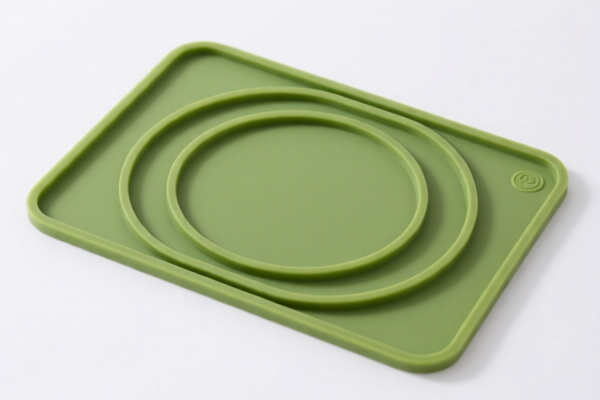
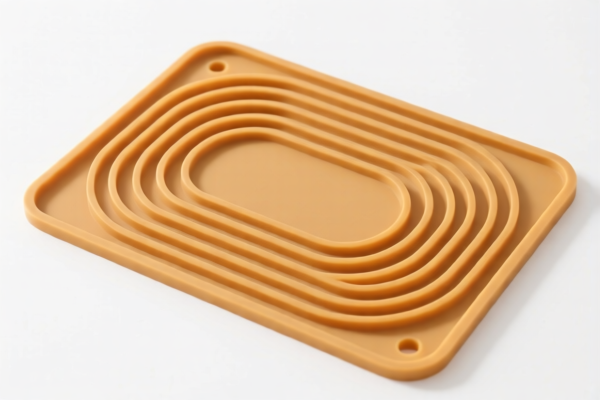
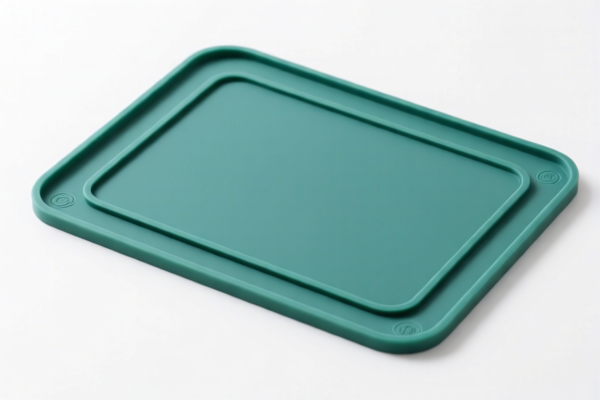
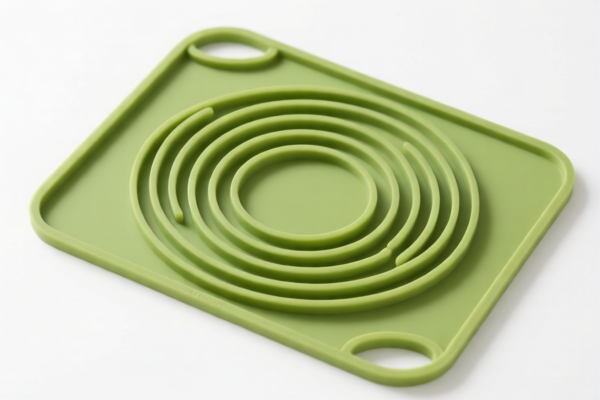
AI Analysis
🐾 Silicone Pet Feeding Mat (硅胶宠物喂食垫)
🌐 HS Code Reference & Customs Clearance Guide | 2026 Latest Tariff Analysis | Professional Clearance Strategy
📌 I. Product Definition & Classification: What Exactly Is a "Pet Feeding Mat"?
A Silicone Pet Feeding Mat is a specialized accessory designed to protect floors from spills, scratches, and messes during pet feeding. In international trade, its classification depends heavily on two factors: Material Composition and Specific Use Case.
While commonly perceived as a simple kitchen item, customs authorities often scrutinize whether it is primarily for human household use (silicone/plastic) or animal goods (textile). Misclassification can lead to significant duty disparities, especially under current US trade policies (122 Clauses).
⚠️ Key Distinction Point:
- If made of Silicone and marketed for Human/Domestic Dining (even if used by pets) → Often classified under Chapter 39 (Plastics) as Tableware/Crockery.
- If made of Textiles or explicitly marketed as "Pet Accessories" in specific contexts → May fall under Chapter 63 (Other Made-up Articles).
- Crucial Note: Even if the material is silicone, if the description emphasizes "Pet Use" without clear household crockery intent, some traders risk shifting to textile codes, though this is less common for pure silicone mats. The data provided shows specific dual-pathways based on how the importer defines the "primary use" and "material perception."
📦 II. HS Code Classification Details (2026 Latest Tariff Authority Reference)
| HS Code | Product Description | Application Scenario | Material Perception | Total Tax Rate* |
|---|---|---|---|---|
3924.90.10.50 |
Silicone Placemat, Form: Placemat, Material: Silicone, Use: Household Items | Household dining, general pet feeding (deemed household) | ✅ Silicone (Plastic) | 13.3% |
3924.10.40.00 |
Silicone Placemat, Use: Tableware/Household Items, Material: Considered Plastic Product | Tableware category, general household use | ✅ Plastic (Silicone treated as plastic) | 13.4% |
6307.90.75.00 |
Pet Mat, Use: Pet Supplies, Material: Textile Material | Pet-specific products, textile-based mats | ✅ Textile | 14.3% |
6307.90.98.91 |
Pet Mat, Form: Made-up Article, Material: Textile/Synthetic Fiber, Other Made-up Articles | General other made-up textile articles for pets | ✅ Textile/Synthetic | 24.5% |
🔍 Important Reminder:
- The data shows Silicone Mats are primarily grouped under Chapter 39 (Plastics) with tax rates around 13.3%-13.4%.
- Textile Pet Mats fall under Chapter 63, with rates ranging from 14.3% to 24.5%.
- Misclassification Risk: Declaring a silicone mat as a textile item (6307) to potentially seek different duties is risky if the material is visibly silicone. Customs will check physical composition.
- Duplicate Entry:3924.90.10.50appears twice in the source data with identical details, confirming it as a standard code for silicone placemats.Note: Rates include Base Duty + Additional Duties + 122 Clause (Section 301/USITC) as per provided data.
💰 III. 2026 Latest Tariff Rate Breakdown (Including Surcharges & Policy Add-ons)
✅ Applicable Country: United States (US)
✅ Origin: China (CN) (Implied by "122 Clause" and typical trade context)
✅ Effective Time: Current applicable rules for China-origin goods
🎯 1. 3924.90.10.50 & 3924.10.40.00 —— Silicone Placemats (Plastic/Silicone Category)
| Item | Content |
|---|---|
| Base Duty Rate | 3.3% (for 3924.90.10.50) / 3.4% (for 3924.10.40.00) |
| Additional Duty (USITC/301) | 0.0% (No specific 301 footnote mentioned for these sub-headings in this dataset, but see below) |
| 122 Clause Duty | +10% (Specific Section 301 / 122 Clause levy) |
| Total Effective Rate | 13.3% / 13.4% |
| Tax Calculation | CIF Value × Total Rate |
| De Minimis Exemption | ❌ Not Applicable for Section 301/122 goods from China in most cases |
| Legal Basis Path | HTSUS:3924 → USITC:122 Clause |
📌 Explanation:
- The 13.3%/13.4% rate is a composite rate. It combines a low base duty (~3.3-3.4%) with a 10% "122 Clause" surcharge.
- Why 122 Clause? This refers to specific Section 301 actions targeting Chinese plastics and household articles.
- No 25% Tariff? Interestingly, this dataset does not list the standard 25% Section 301 tariff for these codes, only the 10% 122 Clause. This suggests either a specific exemption, a different policy track, or that the 122 Clause replaces or supplements in a unique way for this specific product list. Always verify with current USITC lists.
🎯 2. 6307.90.75.00 —— Pet Mat (Textile Material)
| Item | Content |
|---|---|
| Base Duty Rate | 4.3% |
| Additional Duty (USITC/301) | 0.0% |
| 122 Clause Duty | +10% |
| Total Effective Rate | 14.3% |
| Tax Calculation | CIF Value × 14.3% |
| De Minimis Exemption | ❌ Not Applicable |
📌 Explanation:
- Textile pet mats have a slightly higher base duty (4.3%) but still face the 10% 122 Clause.
- Total 14.3% is comparable to silicone options, so material alone isn't a huge savings driver here.
🎯 3. 6307.90.98.91 —— Pet Mat (Other Made-up Textile Articles)
| Item | Content |
|---|---|
| Base Duty Rate | 7.0% |
| Additional Duty (USITC/301) | +7.5% |
| 122 Clause Duty | +10% |
| Total Effective Rate | 24.5% |
| Tax Calculation | CIF Value × 24.5% |
| De Minimis Exemption | ❌ Not Applicable |
📌 Explanation:
- This code carries the highest tax burden (24.5%).
- It includes a 7.5% Additional Duty on top of the base duty, plus the 10% 122 Clause.
- Avoid this code if you can classify under6307.90.75.00(14.3%) or Chapter 39 (13.3%), unless your product strictly fits the "Other" description and cannot be classified as specific pet supplies.
🛠️ IV. Customs Clearance Practical Advice (Real-World Pitfall Guide)
✅ 1. Documentation Checklist (Must-Have)
| Document | Required? | Explanation |
|---|---|---|
| ✅ Product Composition Report | ✔️ | Must explicitly state Silicone (Polydimethylsiloxane) vs. Textile/Fabric. Customs will test if in doubt. |
| ✅ Product Photos (Clear) | ✔️ | Show the texture, packaging, and intended use (e.g., "for dogs/cats" vs. "kitchen"). |
| ✅ Commercial Invoice | ✔️ | Must clearly describe the item as "Silicone Pet Feeding Mat" or "Textile Pet Mat." Avoid vague terms like "Mat." |
| ✅ HS Code Justification | ✔️ | If claiming 3924 for a "Pet" product, explain that it is a household article made of plastic/silicone. |
| ✅ Packing List | ✔️ | Match invoice quantities exactly. |
✅ 2. Declaration Tips (Key Mantras)
🔥 "Material First, Use Second, Code Determined!"
| Scenario | Correct Declaration Strategy | Incorrect Action |
|---|---|---|
| Silicone Mat | Use 3924.90.10.50 or 3924.10.40.00. Declare material as Silicone. |
Misdeclaring as textile to avoid plastic duties (leads to penalties). |
| Textile Mat | Use 6307.90.75.00 for specific pet supplies. |
Using 6307.90.98.91 if 75.00 applies (saves 10.2% tax!). |
| Mixed Materials | If silicone + fabric, declare based on essential character. | Splitting shipment to confuse customs. |
✅ 3. Special Considerations
| Situation | Handling Advice |
|---|---|
| OEM/Private Label | Ensure packaging does not contradict the HS code. If packaging says "Silicone," do not declare as textile. |
| Pet vs. Human Use | Even for pets, silicone mats are often classified under Chapter 39 as "Household articles." Do not automatically go to Chapter 63. |
| 122 Clause Impact | All codes in the dataset include a 10% 122 Clause. Ensure your cost model includes this mandatory surcharge. |
| Valuation | CIF value includes product, insurance, and freight. Duty is calculated on CIF, not just FOB. |
🌍 V. Global Market Comparison (2026 Outlook)
| Country/Region | Recommended HS Code | Est. Duty Rate | Certification Required | Notes |
|---|---|---|---|---|
| 🇺🇸 USA | 3924.90.10.50 |
13.3% | FDA (Food Contact) | High scrutiny on material misclassification. |
| 🇪🇺 EU | 3924.10.00 |
~4-6% | LFGB/FDA | No 122 Clause equivalent, but anti-dumping may apply. |
| 🇨🇳 China | 3924.10.40.00 |
~10-15% | GB Standards | Import duties vary; focus on domestic sales tax. |
| 🇬🇧 UK | 3924.10.00 |
~4-6% | UKCA | Post-Brexit rules apply. |
📌 Conclusion:
- USA remains the most complex market due to 122 Clause (10%) and potential for Section 301 overlaps.
- Silicone (Chapter 39) is generally tax-efficient (13.3-13.4%) compared to some textile categories (6307.90.98.91at 24.5%).
- Textile mats should be classified carefully under6307.90.75.00(14.3%) rather than the general "Other" category.
📌 VI. Common Mistakes & Pitfalls (Lessons Learned)
❌ Mistake 1: Declaring a Silicone Mat as a Textile Pet Mat (6307) to avoid perceived plastic tariffs.
👉 Consequence: Customs inspection reveals silicone content → Penalty + Back Duties + Possible Fraud Charges.
❌ Mistake 2: Using 6307.90.98.91 when 6307.90.75.00 is more accurate.
👉 Consequence: Paying 24.5% instead of 14.3% → Loss of 10.2% margin.
❌ Mistake 3: Ignoring the 122 Clause (10%) in cost calculations.
👉 Consequence: Underestimating landed cost → Negative Profit Margins.
❌ Mistake 4: Vague Description "Pet Mat" on Invoice.
👉 Consequence: Customs assigns default higher duty or holds shipment for clarification → Delay.
✅ Correct Practice:
"Silicone Pet Feeding Mat, Food-Grade Silicone, 12x12 Inch, For Dogs/Cats, Model XYZ"
HS: 3924.90.10.50 | Tax: 13.3%
🎯 VII. Conclusion: Precision in Classification, Profit in Clearance!
🎯 Key Takeaway:
🔹 "Silicone is Plastic (Ch. 39), Not Textile (Ch. 63), unless proven otherwise."
🔹 "122 Clause (+10%) is mandatory for China-origin goods in this dataset."
🔹 "Choose3924(13.3%) over6307.98(24.5%) for textile-like mats if possible, but verify material!"
📌 Pro Tip:
- If your product is 100% Silicone, always aim for 3924.90.10.50 (13.3%).
- If it is Textile, aim for 6307.90.75.00 (14.3%) to avoid the 24.5% trap.
- Always consult a licensed customs broker for pre-classification rulings if the product has mixed materials.
📣 Immediate Action:
📞 Verify Material Certificate → Choose Correct HS Code → Calculate Landed Cost with 122 Clause → Ship with Confidence!
🚀 Your Pet Feeding Mat, Clearing Fast, Profits Maximized!
✨ Professional Clearance Starts with Accurate Classification!
💼 Every Dollar Saved on Duty is Pure Profit!
Customer Reviews
About HS Code Classification
The Harmonized System (HS) is an internationally standardized nomenclature developed by the World Customs Organization (WCO) to classify traded products. Over 200 countries use the HS system as the basis for customs tariffs, trade statistics, and import/export regulations.
Each HS code follows a hierarchical structure:
- Chapter (2 digits) — Broad category of goods (e.g., Chapter 84: Machinery and Mechanical Appliances)
- Heading (4 digits) — More specific grouping within the chapter
- Subheading (6 digits) — Internationally standardized breakdown, used by all WCO member countries
- National subdivisions (8-10 digits) — Country-specific extensions for further classification, such as US HTSUS 10-digit codes
Correct HS code classification is essential for smooth customs clearance, accurate duty payment, and compliance with trade regulations. Misclassification can lead to customs delays, overpayment of duties, or penalties.
When importing from CN to US, the applicable tariff rates may include:
- Most-Favored-Nation (MFN) rate — The standard duty rate applied to WTO members
- General rate — Applied to countries without trade agreements
- Trade remedy duties — Additional tariffs such as Section 301 (anti-dumping), Section 232 (national security), or countervailing duties
The information provided on this page is for reference purposes only. For official classification, please consult with your local customs authority or a licensed customs broker.