Silicone Popcorn Bucket
CN → US| HS Code | Tariff Rate | Origin | Destination | Doc |
|---|---|---|---|---|
| 3924104000 | 13.4% | CN | US | Official Doc |
| 4819200020 | 35.0% | CN | US | Official Doc |
| 3923109000 | 38.0% | CN | US | Official Doc |
| 4819100020 | 35.0% | CN | US | Official Doc |
| 3924104000 | 13.4% | CN | US | Official Doc |
Product Images
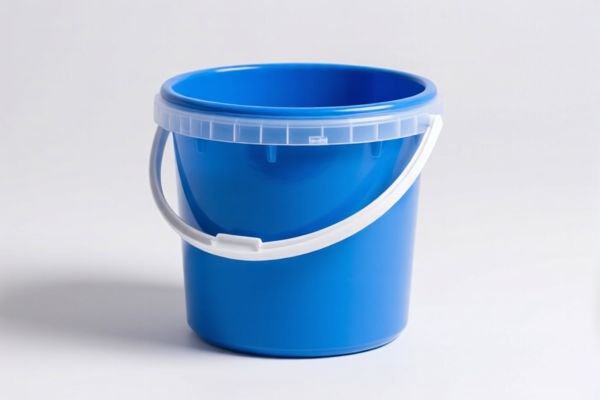
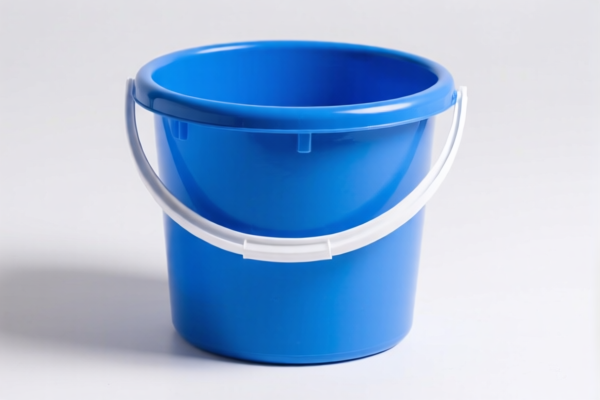

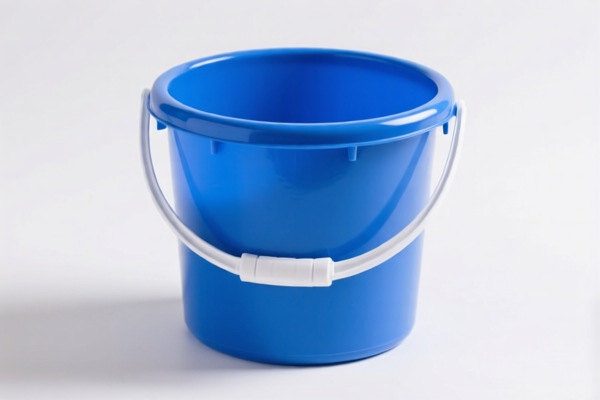
AI Analysis
🍿 Silicone Popcorn Bucket (Silicone Food Container)
🌐 HS Code Reference & Customs Clearance Guide | 2026 Latest Tariff Analysis | Professional Strategy for Cross-Border E-Commerce
📌 I. Product Definition & Classification: What Exactly is a "Silicone Popcorn Bucket"?
A Silicone Popcorn Bucket is a flexible, heat-resistant container made primarily of silicone (polymer). In international trade, its classification hinges on two critical factors: 1. Material: It is classified as plastic/silicone, not paper or metal. 2. Function: It is used as tableware/kitchenware for holding food, rather than as a rigid industrial packaging box.
⚠️ Key Distinction:
- If the product is rigid paper/cardboard → It is classified as a Paper Container (HS 4819).
- If the product is silicone or plastic and used for eating/handling food → It is classified as Plastic Tableware/Kitchenware (HS 3924).
- Do NOT confuse with generic "plastic boxes" (HS 3923) unless the primary function is storage/packaging rather than direct consumption.
📦 II. HS Code Classification Details (2026 Latest Tariff Authority)
Based on the provided data, the Silicone Popcorn Bucket falls primarily into one category, with similar plastic alternatives in another. Here is the precise mapping:
| HS Code | Product Description | Material | Primary Use | Classification Logic |
|--------|--------------------------|----------|-----------------------------|
| 3924.10.40.00 | Silicone Popcorn Bucket
(Silicone Popcorn Container) | Silicone | Tableware/Kitchenware | ✅ Correct Match
Falls under "Plastic Tableware & Kitchenware" because silicone is treated as a plastic polymer in this context, and its primary use is for consuming food directly. |
| 3924.10.40.00 | Popcorn Box (Plastic) | Plastic | Food Container | ✅ Alternative Match
If the material is inferred to be plastic (not silicone), it still falls under Tableware/Kitchenware because it is used for盛放 (holding) food for consumption. |
| 3923.10.90.00 | Popcorn Box (Plastic) | Plastic | Packaging Box | ⚠️ Less Likely
Classified as "Plastic Packaging Articles." Use this ONLY if the item is a rigid storage box not designed for direct table use, but the silicone bucket is clearly tableware. |
| 4819.20.00.20 | Popcorn Box (Paper) | Paper | Food Container | ❌ Incorrect for Silicone
This is for paper folding boxes. Do not use for silicone products. |
| 4819.10.00.20 | Popcorn Box (Paper/Cardboard) | Paper | Hygiene/Food Container | ❌ Incorrect for Silicone
This is for corrugated paper/cardboard containers. Do not use for silicone products. |
🔍 Critical Note:
- Silicone is legally classified under HS 39 (Plastics) in most customs jurisdictions, not under a separate "rubber" or "elastomer" category when used as tableware. - HS 3924 is specifically for "Tableware, kitchenware, other household articles and hygienic or toilet articles, of plastics." This is the most accurate fit for a silicone bucket used for eating.
💰 III. 2026 Latest Tariff Rate Breakdown (Including Additional Duties)
✅ Applicable Country: United States (US)
✅ Origin: China (CN)
✅ Effective Date: November 10, 2025 onwards (Including subsequent imports)
🎯 1. 3924.10.40.00 —— Silicone Popcorn Bucket (Plastic Tableware)
| Item | Content |
|---|---|
| Base Tariff Rate | 3.4% (Ad Valorem) |
| Section 301 Additional Tariff | 0.0% (Exempt or not applicable for this specific subheading) |
| Section 122 Tariff (De Minimis) | +10.0% (Specific to small packages under $800 from China) |
| Total Tariff Rate | 13.4% |
| Tax Calculation | CIF Value × 13.4% |
| De Minimis Exemption? | ❌ NO (The 10% Section 122 tariff applies to low-value shipments, meaning no duty-free entry for small parcels from China under this code). |
| Legal Basis Path | USITC:3924.10.40.00 → SECTION122:9903.01.24 |
📌 Explanation:
- The base duty for plastic tableware is relatively low (3.4%).
- Crucially, the Section 122 tariff (10%) applies to all imports from China under de minimis thresholds (shipments <$800). This removes the duty-free benefit previously enjoyed by many e-commerce sellers.
- Total Cost Impact: You must budget for 13.4% of the product value in duties alone.
- No Section 301 (25%): Unlike electronics or heavy machinery, this specific plastic tableware code does not carry the 25% Section 301 penalty, which is a significant advantage over other HS codes.
🎯 Comparison: Why Not Paper Codes (4819)?
| HS Code | Total Tax | Why Not for Silicone? |
|---|---|---|
4819.20.00.20 (Paper Box) |
35.0% | 0% Base + 25% Sec 301 + 10% Sec 122. Much higher. |
3923.10.90.00 (Plastic Packaging) |
38.0% | 3% Base + 25% Sec 301 + 10% Sec 122. Highest risk. |
📌 Strategy:
By correctly classifying as Tableware (3924.10.40.00), you save 21.6%–24.6% in duties compared to misclassifying as "Packaging" or "Paper."
🛠️ IV. Customs Clearance Practical Advice (Battle-Tested Pitfall Guide)
✅ 1. Documentation Checklist (Mandatory)
| Document | Required? | Description |
|---|---|---|
| ✅ Product Description | ✔️ | Must explicitly state: "Silicone Popcorn Bucket, Food Grade, BPA-Free". Avoid vague terms like "Plastic Box." |
| ✅ Material Specification | ✔️ | Confirm 100% Silicone or Plastic. If mixed materials, disclose. |
| ✅ Food Contact Certification | ✔️ | FDA (US), LFGB (EU), or equivalent. Customs may request proof of food safety. |
| ✅ Commercial Invoice | ✔️ | Must match HS Code 3924.10.40.00. Value must be accurate (CIF). |
| ✅ Photos | ✔️ | Clear images showing flexibility (silicone feature) and food-contact surfaces. |
✅ 2. Classification Tips (Key Mnemonic)
🔥 “Silicone is Plastic Tableware, Not Paper or Generic Box!”
| Scenario | Correct HS Code | Wrong HS Code | Consequence |
|---|---|---|---|
| Silicone Bucket | 3924.10.40.00 (13.4%) |
4819.xxxx (35%) |
Overpaying ~22% in duties. |
| Plastic Bucket | 3924.10.40.00 (13.4%) |
3923.10.90.00 (38%) |
Overpaying ~25% due to Section 301. |
| Paper Bucket | 4819.20.00.20 (35%) |
3924.xxxx (13.4%) |
Underpayment → Penalty + Back Taxes. |
📌 Critical:
- Do NOT declare silicone products as "Paper" or "Cardboard" to avoid plastic tariffs. This is fraud and will trigger severe penalties.
- Do NOT declare silicone buckets as "Packaging" (3923) if they are clearly for consumption. The primary use test favors Tableware (3924).
✅ 3. Special Cases
| Situation | Handling Advice |
|---|---|
| OEM Custom Shapes | Still 3924.10.40.00 as long as it’s tableware. Provide design sheets. |
| Stackable Storage Containers | If used only for storage (not direct eating), consider 3923.10.90.00 (38%), but 13.4% is much better. Ensure marketing shows "for eating" to support 3924. |
| Gift Sets (Bucket + Popcorn) | Declare only the bucket as 3924.10.40.00. Declare popcorn separately as food (0% duty). Do not bundle into one HS code. |
🌍 V. Global Market Comparison (2026 Latest)
| Country/Region | Recommended HS Code | Tariff Rate | Certification Required | Notes |
|---|---|---|---|---|
| 🇺🇸 USA | 3924.10.40.00 |
13.4% | FDA, Section 122 (10%) | 10% Sec 122 tax applies – No de minimis duty-free entry. |
| 🇨🇳 China | 3924.10.40.00 |
5–9% | CCC (if applicable) | No Section 301 or 122. |
| 🇪🇺 EU | 3924.10.00 |
0–4% | LFGB, REACH | No additional tariffs for China. |
| 🇬🇧 UK | 3924.10.00 |
0–4% | UKCA, FSA | No additional tariffs. |
📌 Conclusion:
- The US market is unique due to Section 122 (10%) and Section 301 (if misclassified).
- Correct classification as 3924.10.40.00 is the only way to keep duties at a manageable 13.4%.
- Misclassification as packaging or paper leads to 35–38% duties.
📌 VI. Common Errors & Pitfall Guide (Blood & Tears Lessons)
❌ Error 1: Declaring Silicone Bucket as "Plastic Packaging" (3923.10.90.00)
👉 Consequence: 38% Duty (3% Base + 25% Sec 301 + 10% Sec 122). Costs 24.6% more!
❌ Error 2: Declaring Silicone Bucket as "Paper Box" (4819.20.00.20)
👉 Consequence: 35% Duty + Customs Audit for Material Fraud. Heavy Penalties.
❌ Error 3: Ignoring Section 122 (10%)
👉 Consequence: Many sellers assume $800 shipments are duty-free. This is false for China-origin goods under current rules. You MUST pay 10%.
❌ Error 4: Using "Popcorn Container" without specifying "Silicone/Tableware"
👉 Consequence: Customs may default to highest applicable rate. Always specify "Food-Grade Silicone Tableware."
✅ Correct Practice:
"Food Grade Silicone Popcorn Bucket, Flexible, BPA-Free, For Home Use, HS Code: 3924.10.40.00"
🎯 VII. Conclusion: Professional Classification Saves Money!
🎯 Remember the Mnemonic:
🔹 “Silicone = Plastic Tableware (3924) = 13.4% Tax!”
🔹 “Packaging (3923) or Paper (4819) = 35–38% Tax!”
🔹 “Section 122 (10%) Applies to All China Imports <$800!”
📌 Pro Tip:
- Apply for a Customs Ruling if your product is borderline (e.g., semi-rigid silicone).
- Update Invoices to clearly state "Silicone Tableware" to support 3924.10.40.00.
- Factor in 13.4% in your pricing model for US shipments. Do not assume 0% duty.
📣 Immediate Action:
📞 Verify your supplier’s material composition (Silicone vs. Plastic).
📝 Label goods as "Silicone Tableware" on all documentation.
💰 Budget for 13.4% US Customs Duty on all China-origin shipments.
✨ Professional Customs Clearance Starts with Accurate Classification!
💼 Your Profit Margin Depends on the Right HS Code!
Customer Reviews
About HS Code Classification
The Harmonized System (HS) is an internationally standardized nomenclature developed by the World Customs Organization (WCO) to classify traded products. Over 200 countries use the HS system as the basis for customs tariffs, trade statistics, and import/export regulations.
Each HS code follows a hierarchical structure:
- Chapter (2 digits) — Broad category of goods (e.g., Chapter 84: Machinery and Mechanical Appliances)
- Heading (4 digits) — More specific grouping within the chapter
- Subheading (6 digits) — Internationally standardized breakdown, used by all WCO member countries
- National subdivisions (8-10 digits) — Country-specific extensions for further classification, such as US HTSUS 10-digit codes
Correct HS code classification is essential for smooth customs clearance, accurate duty payment, and compliance with trade regulations. Misclassification can lead to customs delays, overpayment of duties, or penalties.
When importing from CN to US, the applicable tariff rates may include:
- Most-Favored-Nation (MFN) rate — The standard duty rate applied to WTO members
- General rate — Applied to countries without trade agreements
- Trade remedy duties — Additional tariffs such as Section 301 (anti-dumping), Section 232 (national security), or countervailing duties
The information provided on this page is for reference purposes only. For official classification, please consult with your local customs authority or a licensed customs broker.