Silicone Resin Moulds
CN → US| HS Code | Tariff Rate | Origin | Destination | Doc |
|---|---|---|---|---|
| 4016996050 | 37.5% | CN | US | Official Doc |
| 3926909905 | 22.8% | CN | US | Official Doc |
| 3926909910 | 22.8% | CN | US | Official Doc |
| 3926909989 | 22.8% | CN | US | Official Doc |
| 4016990500 | 20.9% | CN | US | Official Doc |
Product Images
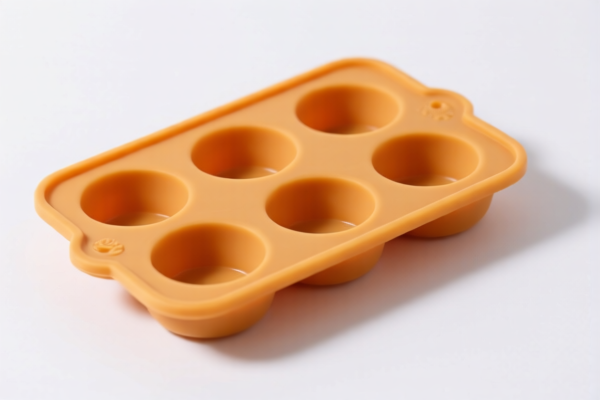
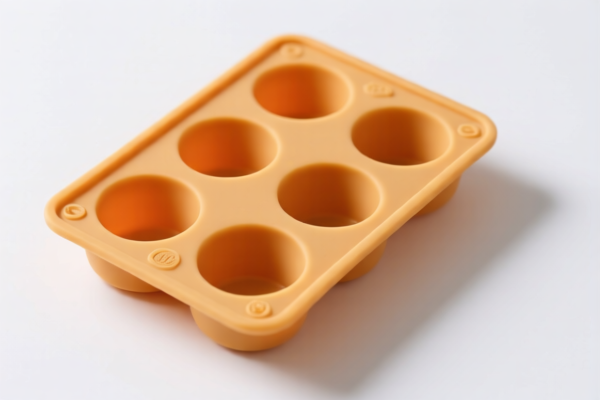
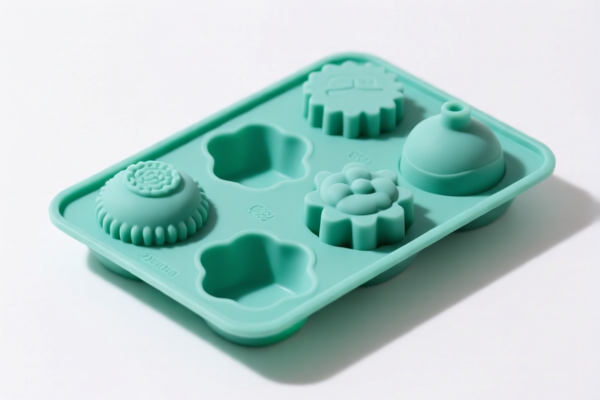
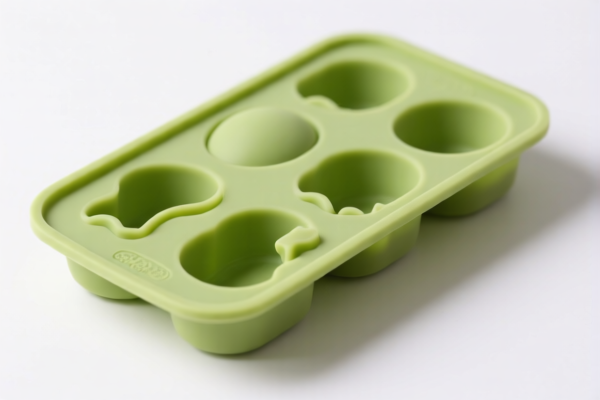
AI Analysis
🧪 Silicone Resin Moulds: HS Code Classification & U.S. Customs Clearance Guide (2026)
🌐 HS Code Reference & Customs Clearance Strategy | 2026 Latest Tariff Analysis | Professional-Level Compliance Guide
📌 I. Product Definition & Classification: What Exactly Are "Silicone Resin Moulds"?
Silicone resin moulds are specialized industrial tools used for casting, molding, or shaping materials. In international trade, the classification hinges on the material nature of the mould itself and its intended use. Are they classified as Vulcanized Rubber (elastic, heat-resistant) or Plastic/Artificial Plastics (synthetic resin-based)?
Key Distinction:
- Vulcanized Rubber (HS 4016): If the silicone is fully cured, cross-linked, and behaves like an elastic elastomer (common for high-temp industrial moulds).
- Artificial Plastic/Synthetic Resin (HS 3926): If the material is treated as a synthetic polymer or uncolored plastic-like material under specific trade interpretations.
⚠️ Critical Classification Point:
- Silicone = Vulcanized Rubber: Often classified under Chapter 40.
- Silicone = Plastic/Resin: Often classified under Chapter 39 (as "Other articles of plastics").
The chosen HS Code drastically changes the tariff burden due to U.S. Section 301 and IEEPA duties.
📦 II. HS Code Classification Matrix (2026 Latest Tariff Schedule)
| HS Code | Product Description | Applicable Scenario | Material Classification |
|---|---|---|---|
4016.99.60.50 |
Silicone belongs to vulcanized rubber; moulds are other vulcanized rubber articles | High-temp industrial silicone moulds, rubber-like elasticity | ✅ Vulcanized Rubber |
3926.90.99.05 |
Silicone viewed as plastic/synthetic rubber; moulds are plastic articles | General-purpose silicone moulds, resin-based classification | ✅ Artificial Plastic |
3926.90.99.10 |
Silicone belongs to plastic/polymer materials; moulds are other plastic articles | Polymer-based silicone variants | ✅ Artificial Plastic |
3926.90.99.89 |
Silicone belongs to plastic/synthetic resin; moulds are unclassified other plastic articles | Niche silicone products not fitting other plastic categories | ✅ Artificial Plastic |
4016.99.05.00 |
Silicone belongs to vulcanized rubber/elastomer; moulds are other household/industrial utensils | Household or general industrial silicone moulds | ✅ Vulcanized Rubber |
🔍 Key Reminder:
- Chapter 40 (Rubber) moulds generally face higher total tariffs (37.5%) due to higher base duties combined with附加 taxes.
- Chapter 39 (Plastics) moulds face lower total tariffs (22.8%) due to lower base duties, making them more cost-effective if the material can be legally justified as plastic.
💰 III. 2026 Latest Tariff Rate Breakdown (Including Additional Taxes & Policy Levies)
✅ Applicable Country: United States (US)
✅ Country of Origin: China (CN)
✅ Effective Date: November 10, 2025 (and onwards)
🎯 1. 4016.99.60.50 —— Silicone Moulds (Vulcanized Rubber)
| Item | Details |
|---|---|
| Base Tariff | 2.5% (ad valorem) |
| Section 301 Additional Tariff | +25.0% (U.S. Trade Law Section 301) |
| Section 122 Tariff | +10.0% (Specific provision for certain rubber/plastic articles) |
| Total Tax Rate | 37.5% |
| Tax Calculation | CIF Value × 37.5% |
| De Minimis Exemption Eligibility | ❌ Not Eligible (deny_de_minimis) |
| Legal Basis Path | USITC:4016.99.60.50 → Section 301: Footnote 9903.88.01 → Section 122: 10% levy |
📌 Explanation:
- The 25% Section 301 duty is applied to Chinese-made rubber articles.
- The 10% Section 122 duty is a specific additional levy on certain rubber/plastic products.
- Total 37.5% is significantly high. Importers must consider this in cost modeling.
🎯 2. 3926.90.99.05 / 3926.90.99.10 / 3926.90.99.89 —— Silicone Moulds (Artificial Plastic)
| Item | Details |
|---|---|
| Base Tariff | 5.3% (ad valorem) |
| Section 301 Additional Tariff | +7.5% (U.S. Trade Law Section 301) |
| Section 122 Tariff | +10.0% (Specific provision for plastic articles) |
| Total Tax Rate | 22.8% |
| Tax Calculation | CIF Value × 22.8% |
| De Minimis Exemption Eligibility | ❌ Not Eligible (deny_de_minimis) |
| Legal Basis Path | USITC:3926.90.99.xx → Section 301: Footnote 9903.88.01 → Section 122: 10% levy |
📌 Explanation:
- The 7.5% Section 301 duty is lower than the rubber category.
- The 10% Section 122 duty still applies.
- Total 22.8% is 14.7 percentage points lower than the rubber classification.
- Strategic Advantage: If the mould can be legally described as a "plastic article," this classification saves significant costs.
🎯 3. 4016.99.05.00 —— Silicone Moulds (Vulcanized Rubber, Other Uses)
| Item | Details |
|---|---|
| Base Tariff | 3.4% (ad valorem) |
| Section 301 Additional Tariff | +7.5% (U.S. Trade Law Section 301) |
| Section 122 Tariff | +10.0% (Specific provision for rubber articles) |
| Total Tax Rate | 20.9% |
| Tax Calculation | CIF Value × 20.9% |
| De Minimis Exemption Eligibility | ❌ Not Eligible (deny_de_minimis) |
| Legal Basis Path | USITC:4016.99.05.00 → Section 301: Footnote 9903.88.01 → Section 122: 10% levy |
📌 Explanation:
- This is the lowest tariff among rubber-classified moulds (20.9%).
- Suitable for household or general industrial silicone moulds that do not fall under the "other vulcanized rubber articles" (60.50) category.
- Strategic Advantage: If the mould is for non-specialized industrial use, this code offers the best rate in Chapter 40.
🛠️ IV. Customs Clearance Practical Advice (Pitfall Avoidance Guide)
✅ 1. Document Checklist (Mandatory)
| Document | Required | Notes |
|---|---|---|
| ✅ Product Specification Sheet | ✔️ | Must clearly state: Material (Silicone), Curing Type (Vulcanized vs. Thermoset Plastic), Hardness (Shore A), Temperature Resistance. |
| ✅ Material Safety Data Sheet (MSDS) | ✔️ | To prove chemical composition (Silicone Polymer vs. Other Plastics). |
| ✅ Product Photos (Including Label) | ✔️ | Show the mould’s structure, flexibility, and any markings. |
| ✅ Commercial Invoice | ✔️ | Clearly describe the item as "Silicone Mould" and specify HS Code. |
| ✅ Packing List | ✔️ | Detail quantities, weights, and dimensions. |
| ✅ Certificate of Origin (CO) | ✔️ | If applicable, to check for preferential treatments (though unlikely for China-origin). |
✅ 2. Declaration Strategy (Key Tips)
🔥 “Material Matters, Use Defines, Code Saves!”
| Scenario | Correct Declaration | Risk of Wrong Classification |
|---|---|---|
| High-Temp Industrial Mould | 4016.99.60.50 (37.5%) or 4016.99.05.00 (20.9%) |
Misclassifying as plastic could lead to penalties + back taxes. |
| General Household/Art Mould | 4016.99.05.00 (20.9%) |
Misclassifying as plastic (3926...) may be rejected if material is clearly rubber. |
| Plastic-Like Silicone Variant | 3926.90.99.05 (22.8%) |
If proven to be synthetic resin, this saves 14.7% vs. rubber codes. |
| Unclassified Plastic Article | 3926.90.99.89 (22.8%) |
For niche silicone products not fitting other plastic categories. |
✅ 3. Special Handling Scenarios
| Scenario | Handling Advice |
|---|---|
| OEM Custom Moulds | Provide design drawings and material certs. Prove if it’s "vulcanized rubber" or "plastic." |
| Silicone vs. Rubber Ambiguity | Submit MSDS and material test reports to customs. If ambiguous, pre-ruling is recommended. |
| Partial Assembly | Do not split shipment. Declare as a complete mould. Splitting leads to higher combined duties. |
| Used/Refurbished Moulds | Must declare as "Used." Additional documentation may be required. |
🌍 V. Global Market Comparison (2026 Latest)
| Country/Region | Recommended HS Code | Total Tariff (China Origin) | Certification Requirements | Notes |
|---|---|---|---|---|
| 🇺🇸 USA | 3926.90.99.05 (Plastic) |
22.8% | None specific | Best if plastic classification is defensible. |
| 🇺🇸 USA | 4016.99.05.00 (Rubber) |
20.9% | None specific | Best for household/general industrial rubber moulds. |
| 🇺🇸 USA | 4016.99.60.50 (Rubber) |
37.5% | None specific | Avoid if possible due to high cost. |
| 🇨🇳 China | Varies | 5% - 10% | CCC (if applicable) | No additional U.S. taxes. |
| 🇪🇺 EU | 4016.99.90 |
0% - 3% | REACH, RoHS | No Section 301/122 duties. |
| 🇯🇵 Japan | Varies | 0% - 5% | PSE, JIS | No additional U.S. taxes. |
📌 Conclusion:
- USA is the most complex market due to Section 301 and Section 122 duties.
- Plastic classification (HS 3926) offers a cost advantage if the material can be legally justified.
- Rubber classification (HS 4016) is safer for high-temp, elastic silicone but comes at a higher cost.
📌 VI. Common Mistakes & Pitfall Guide (Lessons Learned)
❌ Mistake 1: Declaring "Silicone Mould" as "Plastic Tool" when it’s clearly vulcanized rubber.
👉 Consequence: Customs audit → Back taxes + fines.
❌ Mistake 2: Using 4016.99.60.50 (37.5%) when 4016.99.05.00 (20.9%) is more appropriate.
👉 Consequence: Overpaying 16.6% in duties.
❌ Mistake 3: Splitting the mould into parts (base, top, pins) for shipment.
👉 Consequence: Each part taxed separately, potentially leading to higher total duties.
❌ Mistake 4: Ignoring Section 122 duties.
👉 Consequence: Unexpected 10% levy added to the base + Section 301 duties.
✅ Correct Approach:
"Silicone Rubber Mould, Heat-Resistant, For Industrial Casting, Model XYZ, Material: Vulcanized Silicone, Hardness: Shore A 30, Certified for US Market"
🎯 VII. Conclusion: Professional Classification, Cost Efficiency, Risk Mitigation!
🎯 Key Takeaways:
🔹 "Plastic vs. Rubber? It’s all about the material science!"
🔹 "3926 = 22.8%, 4016.05 = 20.9%, 4016.60 = 37.5% — Choose wisely!"
🔹 "Always submit MSDS and material certs to justify your HS Code!"
📌 Pro Tip:
- If your silicone moulds are originating from Vietnam, Thailand, or Malaysia, you may qualify for exemptions from Section 301/122 duties (0% - 5% total).
- Consider applying for a Customs Ruling (Pre-Ruling) before shipment to lock in your HS Code and avoid post-clearance surprises.
📣 Immediate Action:
📞 Contact a licensed customs broker + Provide MSDS & Material Test Reports + Apply for HS Code Pre-Ruling
🚀 Ensure your silicone moulds clear U.S. customs smoothly, minimize costs, and maximize profitability!
✨ Professional Customs Clearance Starts with Accurate Classification!
💼 Every Dollar Saved in Duties is Pure Profit!
Customer Reviews
About HS Code Classification
The Harmonized System (HS) is an internationally standardized nomenclature developed by the World Customs Organization (WCO) to classify traded products. Over 200 countries use the HS system as the basis for customs tariffs, trade statistics, and import/export regulations.
Each HS code follows a hierarchical structure:
- Chapter (2 digits) — Broad category of goods (e.g., Chapter 84: Machinery and Mechanical Appliances)
- Heading (4 digits) — More specific grouping within the chapter
- Subheading (6 digits) — Internationally standardized breakdown, used by all WCO member countries
- National subdivisions (8-10 digits) — Country-specific extensions for further classification, such as US HTSUS 10-digit codes
Correct HS code classification is essential for smooth customs clearance, accurate duty payment, and compliance with trade regulations. Misclassification can lead to customs delays, overpayment of duties, or penalties.
When importing from CN to US, the applicable tariff rates may include:
- Most-Favored-Nation (MFN) rate — The standard duty rate applied to WTO members
- General rate — Applied to countries without trade agreements
- Trade remedy duties — Additional tariffs such as Section 301 (anti-dumping), Section 232 (national security), or countervailing duties
The information provided on this page is for reference purposes only. For official classification, please consult with your local customs authority or a licensed customs broker.