Silicone Sheet
CN → USProduct Images
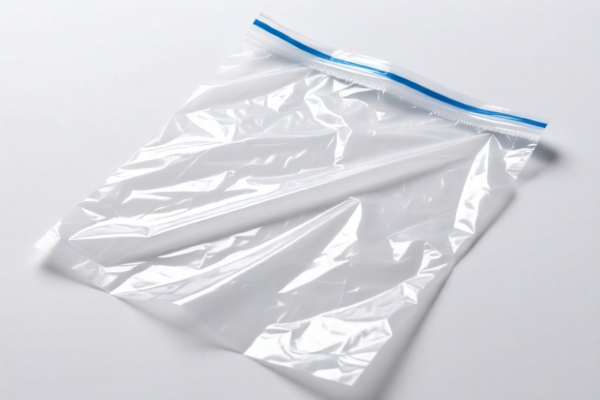
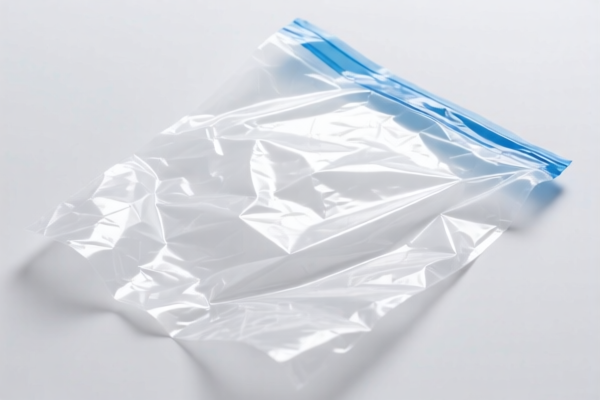
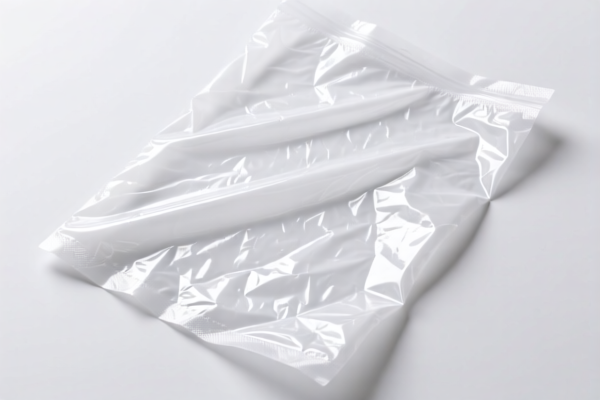
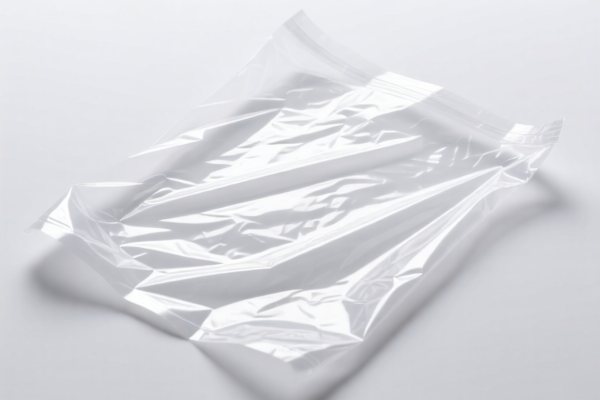
AI Analysis
🛡️ Silicone Sheet (Rubber Sheet)
🌐 HS Code Reference & Customs Clearance Guide | 2026 Latest Tariff Analysis | Professional Customs Strategy
📌 Part 1: Product Definition & Classification: What Exactly is a "Silicone Sheet"?
Silicone sheets are versatile elastomeric materials widely used in industrial sealing, medical applications, food processing, and electronics insulation. In international trade, they are primarily classified under Chapter 40 (Rubber and Articles Thereof). However, the precise HS Code depends heavily on whether the sheet is plain or treated/coated (e.g., with a release coating or adhesive).
Plain Silicone Sheets:
- Uncoated, unvulcanized or vulcanized silicone rubber sheets.
- Used as raw materials for cutting, die-cutting, or further manufacturing.
Treated/Coated Silicone Sheets:
- Sheets with a release coating (e.g., for labels, tape backing).
- Sheets with adhesive backing.
- These may fall under Chapter 39 (Plastics) or Chapter 40 depending on the primary characteristic, but often remain in 4008 if rubber is the essential character.
⚠️ Key Distinction Point:
- If the sheet is plain (no coating, no adhesive) → HS Code 4008.11.00.00
- If the sheet has a release coating (but no adhesive) → Still often 4008.11.00.00 (as per USITC rulings, coating does not change essential character)
- If the sheet has an adhesive backing → May be classified as adhesive tape under 3919.10.00.00 or 4008.11 if the adhesive is incidental.
- If the sheet is cellular (foam) → 4008.21.00.00 or 4008.39.00.00
📦 Part 2: HS Code Classification Details (2026 Latest Tariff Authoritative Comparison)
| HS Code | Product Description | Application Scenario | Key Characteristics |
|---|---|---|---|
4008.11.00.00 |
Vulcanized rubber sheets, plain or simple, of silicone rubber | Industrial gaskets, seals, food-grade mats, electrical insulation | ✅ Plain, no adhesive, no cellular |
4008.19.00.00 |
Other vulcanized rubber sheets, plain or simple, of other rubber | Nitrile, EPDM, neoprene sheets | ❌ Not silicone (for comparison) |
4008.21.00.00 |
Cellular rubber sheets, of silicone rubber | Insulation foam, cushioning, packaging | ✅ Cellular (foam) |
3919.10.00.00 |
Self-adhesive plates, sheets, film, foil, tape, strip, other flat shapes, of plastics | Adhesive-backed silicone tape, release liners with adhesive | ✅ Adhesive-backed (primary characteristic is adhesive/plastic) |
4008.39.00.00 |
Other plates, sheets, block of rubber, of silicone rubber (non-cellular, non-vulcanized) | Raw silicone rubber sheets for further processing | ❌ Non-vulcanized |
🔍 Key Reminder:
- Most plain silicone sheets (vulcanized, no adhesive) are classified under 4008.11.00.00.
- If the sheet is coated with a release agent (e.g., for label backing), it typically remains 4008.11.00.00 because the rubber is the essential character.
- If the sheet has an adhesive layer, it may be reclassified as 3919.10.00.00 (plastic adhesive tape) if the adhesive is the primary feature.
- Cellular silicone (foam) falls under 4008.21.00.00.
💰 Part 3: 2026 Latest Tariff Rate Details (Including Additional Taxes, Policy Surcharges)
✅ Applicable Country: United States (US)
✅ Country of Origin: China (CN)
✅ Effective Date: November 10, 2025 (including subsequent imports)
🎯 1. 4008.11.00.00 —— Vulcanized Silicone Rubber Sheets (Plain)
| Item | Content |
|---|---|
| Base Tariff Rate | 3.4% (ad valorem) |
| USITC Additional Tariff | +7.5% (from USITC Footnote 9903.88.01, Section 301) |
| IEEPA Additional Tariff | +10% (against China/HK products, from Nov 10, 2025) |
| Total Tariff Rate | 20.9% |
| Tax Calculation | CIF Value × 20.9% |
| De Minimis Exemption Eligible | ❌ No (deny_de_minimis) |
| Legal Basis Path | IEEPA:9903.01.25 → IEEPA:9903.01.24 → USITC:4008.11.00.00 → FOOTNOTE:9903.88.01 |
📌 Explanation:
- The "7.5% USITC additional tariff" is part of the Section 301 tariffs on Chinese goods.
- The "10% IEEPA tariff" is the new surcharge on Chinese imports effective from Nov 10, 2025.
- Total 20.9% is significantly higher than the base rate, so pre-assessment is crucial.
🎯 2. 4008.21.00.00 —— Cellular Silicone Rubber Sheets (Foam)
| Item | Content |
|---|---|
| Base Tariff Rate | 3.4% |
| USITC Additional Tariff | +7.5% |
| IEEPA Additional Tariff | +10% |
| Total Tariff Rate | 20.9% |
| Tax Calculation | CIF × 20.9% |
| De Minimis Exemption Eligible | ❌ No |
| Legal Basis Path | IEEPA:9903.01.25 → IEEPA:9903.01.24 → USITC:4008.21.00.00 → FOOTNOTE:9903.88.01 |
📌 Note:
- Cellular silicone sheets are subject to the same additional tariffs as plain sheets.
- Ensure correct declaration as "cellular" to avoid misclassification.
🎯 3. 3919.10.00.00 —— Self-Adhesive Silicone Sheets (Plastic-Based)
| Item | Content |
|---|---|
| Base Tariff Rate | 5.7% |
| USITC Additional Tariff | +25% |
| IEEPA Additional Tariff | +10% |
| Total Tariff Rate | 40.7% |
| Tax Calculation | CIF × 40.7% |
| De Minimis Exemption Eligible | ❌ No |
| Legal Basis Path | IEEPA:9903.01.25 → IEEPA:9903.01.24 → USITC:3919.10.00.00 → FOOTNOTE:9903.88.01 |
📌 Warning:
- If your silicone sheet has an adhesive backing, it may be classified under 3919.10.00.00 (plastic adhesive tape), which carries a much higher tariff (40.7%).
- This is a critical distinction: Plain silicone = 20.9%, Adhesive silicone = 40.7%.
🛠️ Part 4: Customs Clearance Practical Advice (Battle-Proven Pitfall Avoidance Guide)
✅ 1. Document Checklist (All Mandatory)
| Document | Required | Description |
|---|---|---|
| ✅ Product Specification Sheet | ✔️ | Include material (silicone rubber), thickness, hardness, color, vulcanization status |
| ✅ Composition Statement | ✔️ | Confirm no plastic additives that change essential character |
| ✅ Product Photos (Including Label) | ✔️ | Clear images showing cross-section (plain vs. coated vs. adhesive) |
| ✅ Third-Party Test Report | ✔️ | FDA, LFGB, RoHS, REACH (if applicable for food/medical use) |
| ✅ Commercial Invoice | ✔️ | Clearly state "Silicone Rubber Sheet, Vulcanized, Plain" |
| ✅ Certificate of Origin (CO) | ✔️ | If not from China, to claim preferential rates |
| ✅ Packing List | ✔️ | Indicate if sheets are rolled, cut, or packaged with adhesives |
✅ 2. Declaration Tips (Key Mantra)
🔥 "Plain Silicone = 4008.11, Adhesive = 3919.10, Coating Doesn't Change Character!"
| Scenario | Correct Declaration | Incorrect Practice |
|---|---|---|
| Plain silicone sheet (no adhesive) | 4008.11.00.00 |
Misclassify as "plastic sheet" → 5.7% base but wrong chapter |
| Silicone sheet with release coating | 4008.11.00.00 |
Misclassify as "plastic film" → higher tariff |
| Silicone sheet with adhesive backing | 3919.10.00.00 |
Declare as plain silicone → 40.7% vs 20.9% risk |
| Cellular silicone foam | 4008.21.00.00 |
Declare as plain sheet → 20.9% (same, but wrong description) |
✅ 3. Special Case Handling
| Scenario | Handling Advice |
|---|---|
| OEM Custom Silicone Sheets | Provide customer PO + design specs to prove commercial purpose |
| Food-Grade Silicone Sheets | Include FDA/LFGB compliance statements for smoother clearance |
| Silicone Sheets for Medical Devices | Declare as "medical accessory" if applicable, but still under 4008.11 |
| Silicone Sheets with Adhesive | CRITICAL: Declare under 3919.10.00.00 to avoid penalty for misclassification |
🌍 Part 5: Global Customs Clearance Comparison (2026 Latest)
| Country/Region | Recommended HS Code | Tariff | Certification Required | Notes |
|---|---|---|---|---|
| 🇺🇸 United States | 4008.11.00.00 |
20.9% (China) | FDA, RoHS | 40.7% if adhesive-backed |
| 🇨🇳 China | 4008.11.00.00 |
5% | CCC (if applicable) | No additional surcharges |
| 🇪🇺 European Union | 4008.11.00.00 |
5.3% | CE, REACH, RoHS | No additional tariffs |
| 🇦🇺 Australia | 4008.11.00.00 |
5% | RCM | No additional tariffs |
| 🇯🇵 Japan | 4008.11.00.00 |
3.2% | PSE | No additional tariffs |
📌 Conclusion:
- The US is the only market imposing high additional tariffs (20.9% for plain, 40.7% for adhesive).
- EU and Asia offer significantly lower tariffs, making them more attractive for high-volume imports.
- China-origin goods face the highest costs in the US market due to Section 301 and IEEPA tariffs.
📌 Part 6: Common Errors & Pitfall Avoidance Guide (Lessons Learned)
❌ Error 1: Classifying adhesive-backed silicone sheets as plain silicone (4008.11.00.00)
👉 Consequence: Underpayment of duty + penalty → Back taxes + fines!
❌ Error 2: Declaring "silicone sheet" without specifying vulcanization or coating
👉 Consequence: Customs delay for inspection → Demurrage charges!
❌ Error 3: Using "plastic sheet" as declaration for silicone
👉 Consequence: Misclassification → Wrong HS code, potential audit!
❌ Error 4: Ignoring FDA/LFGB requirements for food-grade silicone
👉 Consequence: Product rejected at border → Return or destruction!
✅ Correct Practice:
"Vulcanized Silicone Rubber Sheet, Plain, Food-Grade, FDA Compliant, Thickness: 2mm, Color: White, Model: SIL-SHEET-2MM-WHT, RoHS & REACH Certified"
🎯 Part 7: Conclusion: Precise Classification Saves Money!
🎯 Remember the Mantra:
🔹 "Plain Silicone = 4008.11 (20.9%), Adhesive = 3919.10 (40.7%), Coating Doesn't Change Character!"
🔹 "HS Code Determines Duty, Difference of 20%, Declaration Step Saves Thousands!"
📌 Pro Tip:
If your silicone sheets are originally from Vietnam, Mexico, Thailand, or Malaysia, you may qualify for IEEPA exemption, reducing the tariff to 0%~5%.
Recommend pre-apply for Advance Ruling to avoid clearance risks.
📣 Immediate Action:
📞 Contact a professional customs broker + Provide product photos + Apply for HS Code Advance Ruling
🚀 Let your silicone sheets clear customs smoothly, efficiently export, and maximize profits!
✨ Professional Customs Clearance Starts with Precise Classification!
💼 Every Cent of Your Cost Deserves Accurate Calculation!
Customer Reviews
About HS Code Classification
The Harmonized System (HS) is an internationally standardized nomenclature developed by the World Customs Organization (WCO) to classify traded products. Over 200 countries use the HS system as the basis for customs tariffs, trade statistics, and import/export regulations.
Each HS code follows a hierarchical structure:
- Chapter (2 digits) — Broad category of goods (e.g., Chapter 84: Machinery and Mechanical Appliances)
- Heading (4 digits) — More specific grouping within the chapter
- Subheading (6 digits) — Internationally standardized breakdown, used by all WCO member countries
- National subdivisions (8-10 digits) — Country-specific extensions for further classification, such as US HTSUS 10-digit codes
Correct HS code classification is essential for smooth customs clearance, accurate duty payment, and compliance with trade regulations. Misclassification can lead to customs delays, overpayment of duties, or penalties.
When importing from CN to US, the applicable tariff rates may include:
- Most-Favored-Nation (MFN) rate — The standard duty rate applied to WTO members
- General rate — Applied to countries without trade agreements
- Trade remedy duties — Additional tariffs such as Section 301 (anti-dumping), Section 232 (national security), or countervailing duties
The information provided on this page is for reference purposes only. For official classification, please consult with your local customs authority or a licensed customs broker.