Silicone Toe Separators
CN → US| HS Code | Tariff Rate | Origin | Destination | Doc |
|---|---|---|---|---|
| 3926901000 | 20.9% | CN | US | Official Doc |
| 6406909000 | 17.5% | CN | US | Official Doc |
| 9021100090 | 10.0% | CN | US | Official Doc |
| 9021908100 | 10.0% | CN | US | Official Doc |
| 6406901580 | 32.4% | CN | US | Official Doc |
Product Images
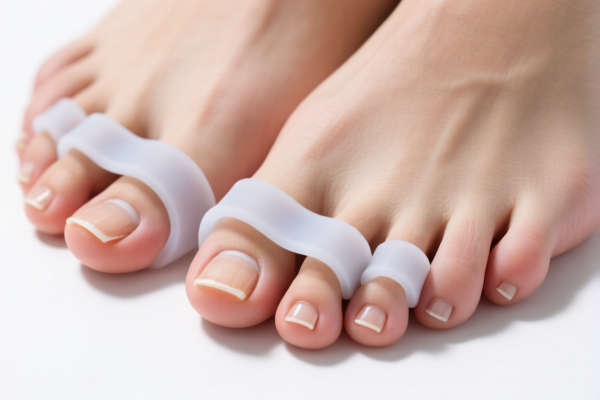
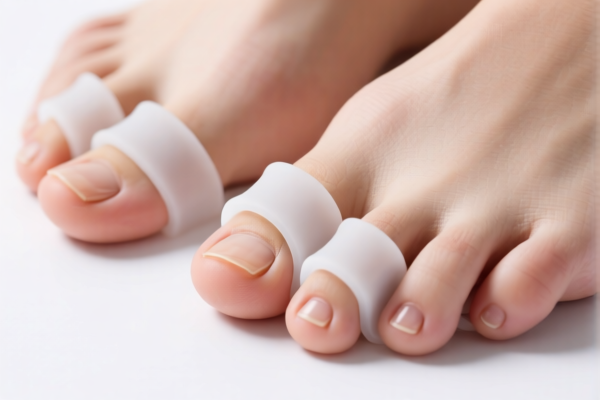
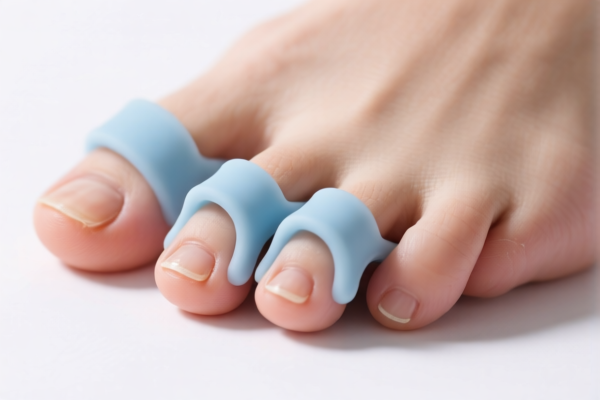

AI Analysis
👣 Silicone Toe Separators (Foot Care Devices)
🌐 HS Code Reference & Customs Clearance Guide | 2026 Latest Tariff Analysis | Professional Strategy for US Imports
📌 I. Product Definition & Classification: Do You Really Know What "Toe Separators" Are?
Silicone Toe Separators are personal care and medical accessories designed to maintain spacing between toes, relieve pressure, or assist in foot alignment. In international trade, these items are tricky because they straddle the line between "Personal Care Accessories" and "Medical/Orthopedic Appliances." The final HS Code depends heavily on the primary intended use and physical structure.
⚠️ Critical Distinction:
- If used purely for cosmetic purposes (e.g., during pedicures) or as general shoe inserts/liners without specific therapeutic claims → Classified under Chapter 39 (Plastics) or Chapter 64 (Footwear Parts).
- If designed for medical correction, orthotic support, or post-surgical recovery → Classified under Chapter 90 (Medical Appliances).
📦 II. HS Code Classification Details (2026 Latest Tariff Authority Comparison)
Based on the provided data, here are the four most relevant HS Codes and why they apply:
| HS Code | Product Description | Why It Fits (Classification Logic) | Tax Implication |
|---|---|---|---|
3926.90.10.00 |
Plastic/Other Plastic Articles | Material: Silicone (Plastic). Used for personal care (pedicures, spa). Not a specialized medical device. | 20.9% |
6406.90.90.00 |
Other Footwear Parts | Form: Insert/Liner. Treated as a component of footwear (like a heel pad or insole) rather than a separate garment or medical device. | 17.5% |
6406.90.15.80 |
Heel Pads & Similar Articles | Form: Specific Foot Part. Explicitly covers heel pads and similar foot supports made of other materials. | 32.4% |
9021.10.00.90 |
Orthopedic Appliances | Function: Correction/Auxiliary. If marketed for correcting toe alignment, bunions, or gait issues. | 10.0% |
9021.90.81.00 |
Parts of Orthopedic Devices | Function:整形矫形 (Plastic/Surgical Correction). If part of a larger orthopedic system or specialized surgical aid. | 10.0% |
🔍 Key Insight:
- Medical Claim = Lower Tax? Interestingly, the Orthopedic codes (9021) have a 10% total tax, while the Plastic/Footwear codes (3926/6406) have higher taxes (17.5%–32.4%).
- Warning: Misclassifying a medical device as a "plastic toy" or "footwear part" to avoid higher taxes is a common audit risk. However, in this specific dataset, the medical classification is cheaper.
- BUT: The 3926 code (Personal Care) is 20.9%, which is higher than the medical code but lower than the specific "Heel Pad" code.
💰 III. 2026 Latest Tariff Rate Breakdown (Including Additional Taxes)
✅ Applicable Country: United States (US)
✅ Origin: China (CN)
✅ Effective Time: Post-2025 Trade Policies (Section 301 & IEEPA)
🎯 1. 3926.90.10.00 —— Plastic Articles for Personal Care (Silicone)
Use Case: Pedicure separators, spa accessories, general comfort inserts without medical claims.
| Item | Details |
|---|---|
| Base Rate | 3.4% |
| Section 301 (Added Tariff) | 7.5% |
| Section 122 (IEEPA) | 10.0% |
| Total Tax Rate | 20.9% |
| Calculation | CIF Value × 20.9% |
| De Minimis Exemption | ❌ Not Eligible (Section 301 & 122 apply) |
| Legal Path | USITC:3926.90.10.00 → FOOTNOTE:301/122 |
📌 Explanation:
- Silicone is classified as "Other Plastic Articles."
- Because it's from China, it attracts both the Section 301 tariff (7.5%) and the Section 122 IEEPA tariff (10%).
- This is the most common classification for non-medical, cosmetic toe separators.
🎯 2. 6406.90.90.00 —— Other Footwear Parts (Non-Medical)
Use Case: General insoles, heel lifts, or toe spacers viewed as "shoe accessories."
| Item | Details |
|---|---|
| Base Rate | 0.0% |
| Section 301 (Added Tariff) | 7.5% |
| Section 122 (IEEPA) | 10.0% |
| Total Tax Rate | 17.5% |
| Calculation | CIF Value × 17.5% |
| De Minimis Exemption | ❌ Not Eligible |
| Legal Path | USITC:6406.90.90.00 → FOOTNOTE:301/122 |
📌 Explanation:
- If customs views the separator as a component of footwear (like a sock or insole), it falls here.
- Cheaper than3926(17.5% vs 20.9%).
- Risk: If the product is clearly a standalone medical/orthopedic device, misclassifying it as a "shoe part" can lead to penalties.
🎯 3. 6406.90.15.80 —— Heel Pads & Similar Articles
Use Case: Specifically designed heel inserts or thick toe pads.
| Item | Details |
|---|---|
| Base Rate | 14.9% |
| Section 301 (Added Tariff) | 7.5% |
| Section 122 (IEEPA) | 10.0% |
| Total Tax Rate | 32.4% |
| Calculation | CIF Value × 32.4% |
| De Minimis Exemption | ❌ Not Eligible |
| Legal Path | USITC:6406.90.15.80 → FOOTNOTE:301/122 |
📌 Warning:
- This is the MOST EXPENSIVE classification in the dataset.
- Only use if the product is strictly defined as a "Heel Pad" under Chapter 64.
- Avoid this code if you can classify it under3926or9021.
🎯 4. 9021.10.00.90 & 9021.90.81.00 —— Orthopedic Appliances
Use Case: Medical-grade toe correctors, post-surgical splints, bunion correctors with therapeutic claims.
| Item | Details |
|---|---|
| Base Rate | 0.0% |
| Section 301 (Added Tariff) | 0.0% |
| Section 122 (IEEPA) | 10.0% |
| Total Tax Rate | 10.0% |
| Calculation | CIF Value × 10.0% |
| De Minimis Exemption | ❌ Not Eligible (IEEPA still applies) |
| Legal Path | USITC:9021 → FOOTNOTE:122 |
📌 Explanation:
- Lowest Total Tax (10%)!
- Why is base + 301 zero? Medical devices often enjoy lower base rates. Section 301 may not apply to specific medical items, but Section 122 (10%) still applies due to origin (China).
- CRITICAL REQUIREMENT: You MUST prove the product is an Orthopedic/Medical Device.
- Provide FDA registration (if applicable).
- Product packaging must state "Medical Device," "Orthopedic Support," "Corrective Appliance."
- Do NOT market it as a "Pedicure Accessory" if you want this tax rate.
🛠️ IV. Customs Clearance Practical Advice (Avoiding Pitfalls)
✅ 1. Decision Matrix: Which HS Code Should You Choose?
| Your Product Nature | Recommended HS Code | Total Tax | Strategy |
|---|---|---|---|
| Cosmetic/Spa Use (Pedicure, no medical claims) | 3926.90.10.00 |
20.9% | Safe, standard classification for "Plastic Articles." |
| General Comfort Insert (No specific medical claim) | 6406.90.90.00 |
17.5% | Best for Non-Medical. Cheaper than 3926. Prove it's a "footwear part." |
| Medical/Corrective (Bunions, alignment, post-op) | 9021.10.00.90 |
10.0% | Lowest Tax! Must have medical documentation and marketing. |
| Heel Pads Only | 6406.90.15.80 |
32.4% | Avoid if possible. High tax, narrow definition. |
✅ 2. Documentation Checklist
| Document | Required For | Why It Matters |
|---|---|---|
| Product Catalog/Brochure | All Codes | Defines intended use. If it says "Pedicure," use 3926/6406. If it says "Corrects Bunions," use 9021. |
| FDA Registration (if applicable) | 9021 Codes |
Proof of medical device status. Essential for claiming the 10% tax rate. |
| Composition Declaration | 3926 |
Must state "100% Silicone" or "Plastic Material." |
| Intended Use Statement | 6406 vs 9021 |
A signed letter from the manufacturer stating if it is for "Footwear Enhancement" or "Medical Correction." |
| Commercial Invoice | All | Must match HS Code description exactly. |
✅ 3. Common Errors & Pitfalls
❌ Error 1: Using Medical Claims for Cosmetic Products
👉 Risk: Customs will reject the 10% medical rate, assess 20.9% + penalties + retroactive duties.
👉 Solution: If the product is sold on Amazon as "Pedicure Tool," do NOT declare it as a "Medical Orthopedic Device."
❌ Error 2: Misclassifying as "Footwear Part" for a Standalone Device
👉 Risk: If the item is not attached to footwear and has no specific footwear integration, customs may downgrade it to "Plastic Article" (3926) or reject the 6406 classification.
👉 Solution: Use 3926 if it’s a standalone plastic item. Use 6406 only if it’s clearly a part/insert for shoes.
❌ Error 3: Ignoring Section 122 (IEEPA)
👉 Risk: Assuming 0% tax because Base + 301 is 0%.
👉 Reality: For China-origin goods, Section 122 (10%) often applies even to medical devices (9021). Always calculate Total Tax = Base + 301 + 122.
🌍 V. Global Market Comparison (2026 Context)
| Country/Region | Recommended HS Code | Est. Total Tax | Notes |
|---|---|---|---|
| 🇺🇸 USA | 9021 (Medical) or 6406 (Part) |
10.0% - 17.5% | Section 122 applies to all China-origin. |
| 🇨🇳 China | 3926 or 9021 |
5-10% | No Section 301/122. Lower base rates. |
| 🇪🇺 EU | 3926 or 9021 |
0-4.2% | No Section 301/122. CE Marking required for medical. |
| 🇬🇧 UK | 3926 or 9021 |
0-4.2% | Post-Brexit rules. UKCA marking for medical. |
📌 Conclusion:
- The US market is unique due to Section 301 and Section 122 tariffs.
- Medical classification (9021) offers the lowest US tariff (10%), but requires strict documentation.
- Non-medical classification (6406) is the sweet spot (17.5%) if you cannot prove medical use.
📌 VI. Final Recommendations for Importers
- Define Your Market Position:
- Are you selling a "Pedicure Tool"? → Use
3926.90.10.00(20.9%) or try6406.90.90.00(17.5%). -
Are you selling a "Bunion Corrector"? → Use
9021.10.00.90(10.0%). -
Prepare Marketing Materials Accordingly:
- To qualify for the 10% medical rate, your website, packaging, and ads must emphasize health, correction, and orthopedic benefits.
-
If your marketing says "Soft Silicone for Comfortable Toes," customs will likely reject the medical classification.
-
Apply for Pre-Ruling:
- If unsure, submit an Advance Ruling Request to US Customs and Border Protection (CBP) with product images and intended use statements. This provides legal certainty.
🎯 VII. Conclusion: Precision Classification = Cost Savings
🎯 Key Takeaway:
🔹 "Medical Claims = 10% Tax. Cosmetic Claims = 17.5-20.9% Tax."
🔹 "Don't force medical classification without proof. Don't ignore Section 122."
📣 Immediate Action:
📞 Audit your product packaging. Does it say "Medical Device"?
📝 Update your commercial invoice to match the HS Code description.
🚀 Save up to 10% in duties by correctly classifying as an Orthopedic Appliance if eligible!
✨ Professional Clearance Starts with Accurate Classification!
💼 Your bottom line depends on these digits.
Customer Reviews
About HS Code Classification
The Harmonized System (HS) is an internationally standardized nomenclature developed by the World Customs Organization (WCO) to classify traded products. Over 200 countries use the HS system as the basis for customs tariffs, trade statistics, and import/export regulations.
Each HS code follows a hierarchical structure:
- Chapter (2 digits) — Broad category of goods (e.g., Chapter 84: Machinery and Mechanical Appliances)
- Heading (4 digits) — More specific grouping within the chapter
- Subheading (6 digits) — Internationally standardized breakdown, used by all WCO member countries
- National subdivisions (8-10 digits) — Country-specific extensions for further classification, such as US HTSUS 10-digit codes
Correct HS code classification is essential for smooth customs clearance, accurate duty payment, and compliance with trade regulations. Misclassification can lead to customs delays, overpayment of duties, or penalties.
When importing from CN to US, the applicable tariff rates may include:
- Most-Favored-Nation (MFN) rate — The standard duty rate applied to WTO members
- General rate — Applied to countries without trade agreements
- Trade remedy duties — Additional tariffs such as Section 301 (anti-dumping), Section 232 (national security), or countervailing duties
The information provided on this page is for reference purposes only. For official classification, please consult with your local customs authority or a licensed customs broker.