Silicone Toilet Brush
CN → US| HS Code | Tariff Rate | Origin | Destination | Doc |
|---|---|---|---|---|
| 3924900500 | 20.6% | CN | US | Official Doc |
| 3924905650 | 20.9% | CN | US | Official Doc |
| 3926909989 | 22.8% | CN | US | Official Doc |
| 3924900500 | 20.6% | CN | US | Official Doc |
| 3924905650 | 20.9% | CN | US | Official Doc |
Product Images
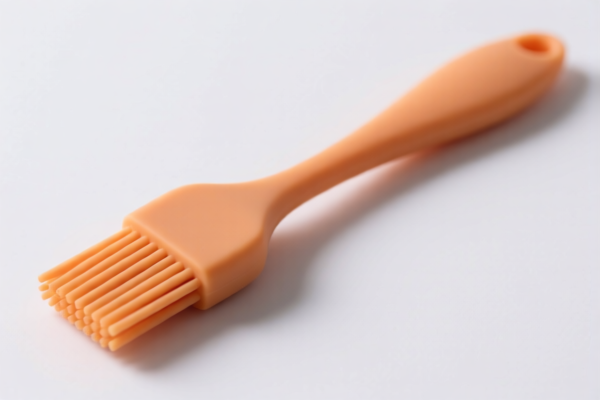
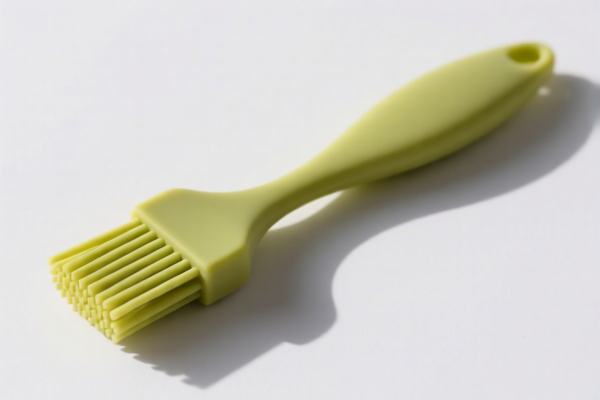


AI Analysis
🚽 Silicone Toilet Brush (Silicone Cleaning Tools)
🌐 HS Code Reference & Customs Clearance Guide | 2026 Latest Tariff Analysis | Professional-Level Strategy
📌 I. Product Definition & Classification: Do You Really Understand "Silicone Toilet Brush"?
The Silicone Toilet Brush is a modern hygiene tool made primarily of food-grade or industrial silicone for the bristles and often plastic or silicone for the handle. In international trade, its classification hinges on two factors: Material Composition and Specific Use.
Because it is a plastic household item, it generally falls under Chapter 39 (Plastics and Articles Thereof). However, specific HS codes vary based on whether it is viewed as a general household supply, a specialized sanitary item, or a generic plastic part.
⚠️ Key Distinction:
- If classified as a general plastic household item → 3924.90
- If classified as a specific sanitary plastic item → 3924.90 (different subheading)
- If classified as a generic plastic part/brush head → 3926.90
📦 II. HS Code Classification Details (2026 Latest Tariff Authority Mapping)
Based on the provided data, here are the three most likely HS Code classifications for Silicone Toilet Brushes, along with their corresponding tax liabilities.
| HS Code | Summary Description | Taxable Category | Total Tax Rate |
|---|---|---|---|
3924.90.05.00 |
Silicone Toilet Brush classified as plastic household and sanitary wares, fitting the use of sanitary supplies. | Plastic Household/Sanitary Wares | 20.6% |
3924.90.56.50 |
Silicone Toilet Brush matches plastic sanitary and other household items, with a specific focus on sanitary use. | Plastic Sanitary/Household Items | 20.9% |
3926.90.99.89 |
Silicone Toilet Brush as a plastic product, falling under the "catch-all" category for other plastic products, shaped as a brush head. | Other Plastic Articles | 22.8% |
🔍 Critical Note:
- The difference between the first two codes lies in the specific subheading for "household wares" vs. "other plastic sanitary items."
- The third code (3926.90.99.89) treats the item more generically as a "part" or "other plastic article," which often carries a higher base tariff, resulting in the highest total tax.
💰 III. Detailed 2026 Tariff Rate Breakdown (Including Surcharges & Policy Add-ons)
✅ Applicable Country: United States (US)
✅ Origin: China (CN)
✅ Effective Time: Includes subsequent imports (based on current 301/122条款 structures)
🎯 1. 3924.90.05.00 —— Plastic Household and Sanitary Wares
| Item | Details |
|---|---|
| Base Tariff | 3.1% |
| Section 301 Surcharge | 7.5% |
| Section 122 Tariff | 10% |
| Total Tax Rate | 20.6% |
| Tax Calculation | CIF Value × 20.6% |
| De Minimis Exemption? | ❌ No (High tariff threshold) |
| Legal Basis | Standard HTSUS 3924 + Additional USTR Footnotes for Chinese Origin |
📌 Explanation:
- This code is typically favored if the product is marketed specifically as a "sanitary ware" accessory.
- The Section 122 Tariff (10%) is a significant add-on for certain plastic goods from specific origins.
- Total 20.6% is the most competitive rate among the three options if the product fits this specific subheading.
🎯 2. 3924.90.56.50 —— Plastic Sanitary and Other Household Items
| Item | Details |
|---|---|
| Base Tariff | 3.4% |
| Section 301 Surcharge | 7.5% |
| Section 122 Tariff | 10% |
| Total Tax Rate | 20.9% |
| Tax Calculation | CIF Value × 20.9% |
| De Minimis Exemption? | ❌ No |
| Legal Basis | Standard HTSUS 3924 + Additional USTR Footnotes for Chinese Origin |
📌 Explanation:
- This code is very similar to the first but captures a broader "other household items" category.
- The Base Tariff is slightly higher (3.4% vs 3.1%), leading to a total rate of 20.9%.
- Use this if customs officers interpret the item as a general "household plastic good" rather than strictly "sanitary ware."
🎯 3. 3926.90.99.89 —— Other Plastic Articles (Catch-All)
| Item | Details |
|---|---|
| Base Tariff | 5.3% |
| Section 301 Surcharge | 7.5% |
| Section 122 Tariff | 10% |
| Total Tax Rate | 22.8% |
| Tax Calculation | CIF Value × 22.8% |
| De Minimis Exemption? | ❌ No |
| Legal Basis | Standard HTSUS 3926 + Additional USTR Footnotes for Chinese Origin |
📌 Explanation:
- This is the "Catch-All" (兜底) category. If the product doesn't fit neatly into "Household Wares" (3924), it defaults to "Other Plastic Articles" (3926).
- The Base Tariff is significantly higher (5.3%), resulting in the highest total tax of 22.8%.
- Risk: Misclassification as a "generic part" rather than a finished "household product" leads to this higher rate.
🛠️ IV. Customs Clearance Practical Advice (Real-World Pitfall Avoidance)
✅ 1. Required Documentation Checklist
| Document | Must Provide | Explanation |
|---|---|---|
| ✅ Product Specification Sheet | ✔️ | Must specify material (e.g., "100% Silicone Bristles, ABS Handle"). |
| ✅ Product Photos | ✔️ | Clear images of the brush head and handle, showing the silicone texture. |
| ✅ Commercial Invoice | ✔️ | Must clearly state "Silicone Toilet Brush" or "Plastic Sanitary Brush." Avoid vague terms like "Cleaning Tool." |
| ✅ Packing List | ✔️ | Detail the quantity, weight, and packaging type. |
| ✅ Certificate of Origin (CO) | ✔️ | Essential for confirming Chinese origin to apply accurate tariffs (and potential exemptions if eligible). |
✅ 2. Declaration Tips (Key Mantra)
🔥 "Material Matters: Silicone vs. Plastic, Finish vs. Part!"
| Scenario | Correct Declaration | Wrong Practice |
|---|---|---|
| Finished Brush (Handle + Head) | Declare as "Plastic Household/Sanitary Ware" → 3924.90.xx.xx |
Declare as "Plastic Part" → 3926.90.99.89 (Higher Tax!) |
| Silicone Bristles Only | Declare as "Silicone Product" | Declare as "Plastic" → Potential Misclassification Penalty |
| General Cleaning Brush | Use terms like "Sanitary Item" | Use vague terms like "Gadget" → Delays |
✅ 3. Special Handling Cases
| Scenario | Handling Advice |
|---|---|
| Mixed Materials | If the handle is wood and bristles are silicone, declaration becomes complex. Usually, the material of the principal value determines the chapter. For silicone brushes, Chapter 39 is still likely. |
| Packaging | If sold in a box with cleaning tablets, the tablets may be classified separately. Ensure the invoice lists them distinctly. |
| Samples | Even for samples, if declared as commercial goods, the 20.6%-22.8% tax applies. Do not under-declare value. |
🌍 V. Global Market Comparison (2026 Latest)
| Country/Region | Recommended HS Code | Tariff (China Origin) | Certification | Notes |
|---|---|---|---|---|
| 🇺🇸 USA | 3924.90.05.00 |
20.6% | FDA (if food contact) | Highest tariffs due to 301 & 122 clauses. |
| 🇨🇳 China | 3924.90.05.00 |
~10-12% | N/A | Lower domestic import duties. |
| 🇪🇺 EU | 3924.90 |
~6.5% | CE (General Safety) | No Section 122 or 301 equivalent; lower burden. |
| 🇬🇧 UK | 3924.90 |
~6.5% | UKCA | Post-Brexit rules apply. |
📌 Conclusion:
- The US market imposes the heaviest burden due to Section 122 (10%) and Section 301 (7.5%) surcharges.
- Choosing the correct HS code (3924.90.05.00over3926.90.99.89) saves 2.2% on the total value, which adds up significantly for bulk shipments.
📌 VI. Common Mistakes & Pitfalls (Blood & Tears Lessons)
❌ Mistake 1: Classifying as 3926.90.99.89 (Other Plastic Articles)
👉 Consequence: Paying 22.8% instead of 20.6%.
💡 Fix: Prove it is a finished "Household/Sanitary Item" (3924), not a generic part.
❌ Mistake 2: Using vague descriptions like "Cleaning Brush"
👉 Consequence: Customs may classify it incorrectly or delay inspection.
💡 Fix: Use precise terms: "Silicone Toilet Brush, Plastic Household Sanitary Item."
❌ Mistake 3: Ignoring Section 122 Tariff
👉 Consequence: Unexpected tax bill upon arrival.
💡 Fix: Factor the 10% Section 122 into your landed cost calculation immediately.
🎯 VII. Conclusion: Precision Classification Saves Money!
🎯 Remember the Mantra:
🔹 "Silicone Brush = Household/Sanitary (3924), Not Generic Part (3926)."
🔹 "3924.05 saves 2.2% vs 3926.89, which is pure profit!"
🔹 "Declare Material + Use Clearly: Silicone + Sanitary = 20.6%."
📌 Pro Tip:
If your product contains food-grade silicone, ensure you have FDA compliance documentation. While it doesn't change the HS code, it prevents rejection at the border for safety violations.
📣 Immediate Action:
📞 Consult a licensed customs broker for Pre-Ruling (Pre-classification).
📄 Prepare High-Res Photos showing the silicone texture and plastic handle.
🚀 Accurate Classification = Smooth Clearance = Maximized Profit!
✨ Professional Clearance, Starting with Precise Classification!
💼 Every Percent Matters in the Age of Tariffs!
Customer Reviews
About HS Code Classification
The Harmonized System (HS) is an internationally standardized nomenclature developed by the World Customs Organization (WCO) to classify traded products. Over 200 countries use the HS system as the basis for customs tariffs, trade statistics, and import/export regulations.
Each HS code follows a hierarchical structure:
- Chapter (2 digits) — Broad category of goods (e.g., Chapter 84: Machinery and Mechanical Appliances)
- Heading (4 digits) — More specific grouping within the chapter
- Subheading (6 digits) — Internationally standardized breakdown, used by all WCO member countries
- National subdivisions (8-10 digits) — Country-specific extensions for further classification, such as US HTSUS 10-digit codes
Correct HS code classification is essential for smooth customs clearance, accurate duty payment, and compliance with trade regulations. Misclassification can lead to customs delays, overpayment of duties, or penalties.
When importing from CN to US, the applicable tariff rates may include:
- Most-Favored-Nation (MFN) rate — The standard duty rate applied to WTO members
- General rate — Applied to countries without trade agreements
- Trade remedy duties — Additional tariffs such as Section 301 (anti-dumping), Section 232 (national security), or countervailing duties
The information provided on this page is for reference purposes only. For official classification, please consult with your local customs authority or a licensed customs broker.