Silicone Tube
CN → US| HS Code | Tariff Rate | Origin | Destination | Doc |
|---|---|---|---|---|
| 3917290090 | 38.1% | CN | US | Official Doc |
| 3926909989 | 22.8% | CN | US | Official Doc |
| 4009120050 | 20.0% | CN | US | Official Doc |
Product Images

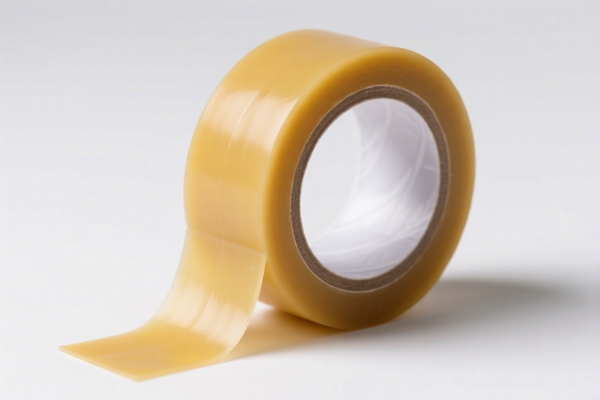
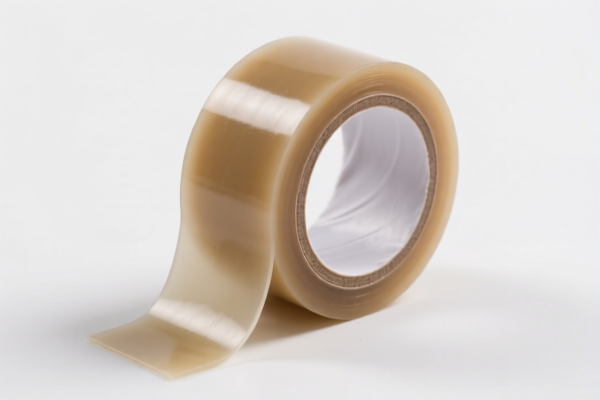
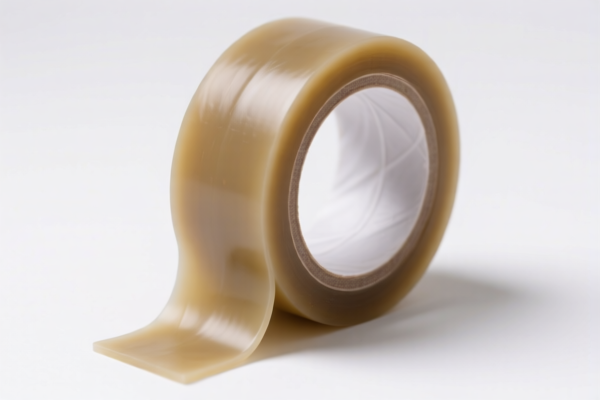
AI Analysis
🔦 Silicone Tubes: The Ultimate Import Classification Guide (USA 🇺🇸)
🌐 HS Code Reference & Customs Clearance Strategy | 2026 Latest Tariff Analysis | Professional Clearance Tactics
📌 1. Product Definition & Classification: Do You Really Know "Silicone Tube"?
Silicone tubes are flexible conduits used in medical, food, automotive, and industrial applications. In international trade, they are primarily classified under Chapter 39 (Plastics) or Chapter 40 (Rubber), depending on their specific material composition and structure.
Key Distinction: * Silicone as a Polymer: Silicone is technically a synthetic polymer. Under US Customs rulings, it often falls under Chapter 39 (Plastics) unless it is specifically identified as "vulcanized rubber" under Chapter 40. * Tube vs. Fitting: The classification depends heavily on whether the item is a hollow tube, a pipe with fittings, or a general plastic article.
⚠️ Critical Classification Points:
- If the tube is unvulcanized or treated as a plastic article → Chapter 39.
- If the tube is vulcanized rubber and has fittings/attachments → Chapter 40.
- If it is a general plastic accessory without specific pipe structure → Chapter 39 (General).
📦 2. HS Code Classification Details (2026 Latest Tariff Authority)
| HS Code | Product Description | Application Scenario | Material Conflict? |
|---|---|---|---|
3917.29.00.90 |
Tubes, pipes, and hoses of plastics, other (e.g., silicone) | General silicone tubing, no specific rubber vulcanization proof | ✅ No conflict; silicone treated as plastic/polymer |
3926.90.99.89 |
Other articles of plastics and articles of other materials of headings 3901 to 3914 | Silicone accessories, non-tube plastic items, general "other" plastic goods | ✅ No conflict; broad "other" category for plastic articles |
4009.12.00.50 |
Tubes, pipes, and hoses of vulcanized rubber other than hard rubber, reinforced only by metal or other rigid materials (including fittings) | Silicone tubes classified as "vulcanized rubber" with fittings/attachments | ✅ No conflict; silicone treated as vulcanized rubber |
🔍 Key Reminder:
- Chapter 39 is generally safer for pure silicone tubes without complex fittings.
- Chapter 40 applies if the silicone is explicitly declared as "vulcanized rubber" and includes fittings.
- Misclassification Risk: Declaring a rubber tube as plastic (or vice versa) can lead to audits and penalties.
💰 3. 2026 Latest Tariff Rate Details (Including Additional Taxes, Policy Add-ons)
✅ Applicable Country: United States (US)
✅ Origin: China (CN)
✅ Effective Date: November 10, 2025 onwards (including subsequent imports)
🎯 1. 3917.29.00.90 —— Plastic Tubes, Pipes, Hoses (Other)
| Item | Content |
|---|---|
| Basic Duty | 3.1% (ad valorem) |
| Section 301 Additional Duty | +25.0% |
| Section 122 Duty | +10.0% |
| Total Duty Rate | 38.1% |
| Tax Calculation | CIF Value × 38.1% |
| De Minimis Exemption Eligible? | ❌ No (deny_de_minimis) |
| Legal Basis Path | USITC:3917.29.00.90 → FOOTNOTE:301 → SECTION_122 |
📌 Explanation:
- "Section 301 Additional Duty 25%": Based on US Trade Law Section 301 against Chinese goods.
- "Section 122 Duty 10%": Specific additional duty applied to certain categories.
- Total 38.1%: High duty rate; must be factored into cost structure.
🎯 2. 3926.90.99.89 —— Other Articles of Plastics
| Item | Content |
|---|---|
| Basic Duty | 5.3% |
| Section 301 Additional Duty | +7.5% |
| Section 122 Duty | +10.0% |
| Total Duty Rate | 22.8% |
| Tax Calculation | CIF Value × 22.8% |
| De Minimis Exemption Eligible? | ❌ No (deny_de_minimis) |
| Legal Basis Path | USITC:3926.90.99.89 → FOOTNOTE:301 → SECTION_122 |
📌 Note:
- This code is for "other" plastic articles.
- Lower total duty (22.8%) compared to tube-specific code3917.29.00.90.
- Suitable if the item is not clearly a tube or has complex forms.
🎯 3. 4009.12.00.50 —— Vulcanized Rubber Tubes (with Fittings)
| Item | Content |
|---|---|
| Basic Duty | 2.5% |
| Section 301 Additional Duty | +7.5% |
| Section 122 Duty | +10.0% |
| Total Duty Rate | 20.0% |
| Tax Calculation | CIF Value × 20.0% |
| De Minimis Exemption Eligible? | ❌ No (deny_de_minimis) |
| Legal Basis Path | USITC:4009.12.00.50 → FOOTNOTE:301 → SECTION_122 |
📌 Note:
- Lowest total duty rate (20.0%) among the three.
- Requires clear declaration as "vulcanized rubber" and confirmation of fittings/attachments.
- If silicone is accepted as rubber, this is the most cost-effective option.
🛠️ 4. Customs Clearance Practical Advice (Battle-Tested Pitfall Avoidance)
✅ 1. Required Documentation Checklist (Non-Negotiable)
| Document | Must Provide | Description |
|---|---|---|
| ✅ Product Spec Sheet | ✔️ | Material composition (silicone type), hardness, temperature resistance |
| ✅ Material Certificate | ✔️ | Proof of vulcanization (if claiming Ch 40) or polymer type (if Ch 39) |
| ✅ Product Photos | ✔️ | Clear images of tube, fittings, and any markings |
| ✅ Commercial Invoice | ✔️ | Must specify "Silicone Tube" or "Vulcanized Rubber Tube" accurately |
| ✅ Packing List | ✔️ | Detailed quantity, weight, and packaging info |
| ✅ Third-Party Test Report | ✔️ | FDA, LFGB, or RoHS compliance if applicable |
✅ 2. Declaration Strategy (Key Mantra)
🔥 “Material Defines Chapter, Fittings Define Code, Name Must Match, Tax Saves 18%!”
| Scenario | Correct Declaration | Wrong Practice |
|---|---|---|
| Pure Silicone Tube (no fittings) | 3917.29.00.90 |
Declare as rubber → audit risk |
| Silicone Tube with Fittings | 4009.12.00.50 |
Declare as plastic → penalty |
| Silicone Accessory (not tube) | 3926.90.99.89 |
Declare as tube → misclassification |
| Unclear Material | 3917.29.00.90 |
Guessing → high risk of delay |
✅ 3. Special Case Handling
| Scenario | Handling Advice |
|---|---|
| Medical Grade Silicone | Provide FDA compliance docs; still classify under Ch 39 or 40, not medical device code |
| Food Grade Silicone | Provide LFGB/FDA test reports; no special tariff exemption |
| OEM Custom Tubes | Provide customer design specs to justify specific HS code |
| Mixed Shipments | Separate declaration for each HS code; do not bundle different types |
🌍 5. Global Market Clearance Comparison (2026 Latest)
| Country/Region | Recommended HS Code | Duty Rate | Certification | Notes |
|---|---|---|---|---|
| 🇺🇸 USA | 4009.12.00.50 |
20.0% | FDA/LFGB | Cheapest option if rubber |
| 🇨🇳 China | 3917.29.00.00 |
5.0% | RoHS | No additional duties |
| 🇪🇺 EU | 3917.23.10 |
0% | REACH | No additional duties |
| 🇦🇺 Australia | 3917.29.00 |
5.0% | AICIS | No additional duties |
| 🇯🇵 Japan | 3917.23.00 |
0% | JIS | No additional duties |
📌 Conclusion:
- USA is the only major market with significant additional duties.
- China-origin silicone tubes face 20-38% duties in the US.
- EU/Japan offer 0% duty; consider non-US markets if cost-sensitive.
📌 6. Common Mistakes & Pitfall Avoidance (Blood-Sweat Lessons)
❌ Mistake 1: Declaring "Silicone" as "Rubber" without vulcanization proof
👉 Consequence: Customs may reclassify to Ch 39, leading to higher duty (38.1%) or penalties.
❌ Mistake 2: Ignoring "Fittings" in description
👉 Consequence: If fittings are present but not declared, customs may assess higher duty or demand additional docs.
❌ Mistake 3: Using vague terms like "Flexible Tube"
👉 Consequence: Customs may apply most-favored-nation (MFN) rate or audit, causing delays.
❌ Mistake 4: Assuming De Minimis exemption applies
👉 Consequence: None of these codes qualify for De Minimis under current US rules. Small shipments still pay full duty.
✅ Correct Practice:
"Silicone Rubber Tube, Vulcanized, with Fittings, Medical Grade, FDA Compliant, Model XYZ"
🎯 7. Conclusion: Professional Declaration, Time-Saving, Cost-Effective!
🎯 Remember the Mantra:
🔹 "Material Dictates Chapter, Fittings Dictate Code, Silicone is Rubber or Plastic, Choose Wisely!"
🔹 "HS Code Determines Tax, 18% Difference Matters, Declare Correctly, Save Thousands!"
📌 Tips:
- If your silicone tube is vulcanized rubber with fittings, use 4009.12.00.50 for 20.0% duty.
- If it is plain silicone tube, use 3917.29.00.90 for 38.1% duty.
- For general plastic articles, use 3926.90.99.89 for 22.8% duty.
- Pre-clearance Ruling is recommended for high-value shipments.
📣 Immediate Action:
📞 Contact a licensed customs broker + Provide product photos + Apply for Advance Ruling
🚀 Ensure smooth clearance, efficient export, and maximized profit margins!
✨ Professional Clearance Starts with Accurate Classification!
💼 Every Cent of Cost Deserves Precise Calculation!
Customer Reviews
About HS Code Classification
The Harmonized System (HS) is an internationally standardized nomenclature developed by the World Customs Organization (WCO) to classify traded products. Over 200 countries use the HS system as the basis for customs tariffs, trade statistics, and import/export regulations.
Each HS code follows a hierarchical structure:
- Chapter (2 digits) — Broad category of goods (e.g., Chapter 84: Machinery and Mechanical Appliances)
- Heading (4 digits) — More specific grouping within the chapter
- Subheading (6 digits) — Internationally standardized breakdown, used by all WCO member countries
- National subdivisions (8-10 digits) — Country-specific extensions for further classification, such as US HTSUS 10-digit codes
Correct HS code classification is essential for smooth customs clearance, accurate duty payment, and compliance with trade regulations. Misclassification can lead to customs delays, overpayment of duties, or penalties.
When importing from CN to US, the applicable tariff rates may include:
- Most-Favored-Nation (MFN) rate — The standard duty rate applied to WTO members
- General rate — Applied to countries without trade agreements
- Trade remedy duties — Additional tariffs such as Section 301 (anti-dumping), Section 232 (national security), or countervailing duties
The information provided on this page is for reference purposes only. For official classification, please consult with your local customs authority or a licensed customs broker.