Silicone Water Stop Strip
CN → US| HS Code | Tariff Rate | Origin | Destination | Doc |
|---|---|---|---|---|
| 3917390050 | 38.1% | CN | US | Official Doc |
| 3921190090 | 41.5% | CN | US | Official Doc |
| 3921905050 | 39.8% | CN | US | Official Doc |
| 3926904590 | 38.5% | CN | US | Official Doc |
| 3926909989 | 22.8% | CN | US | Official Doc |
Product Images
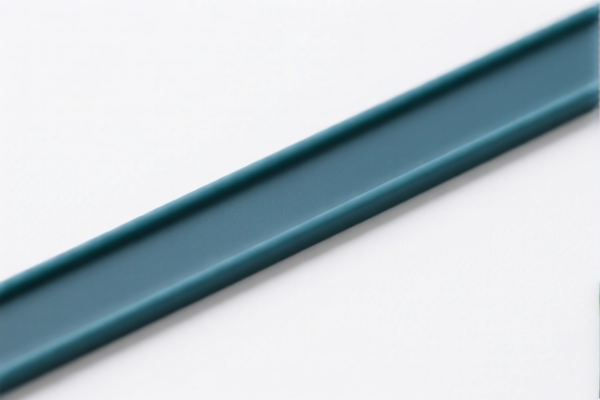
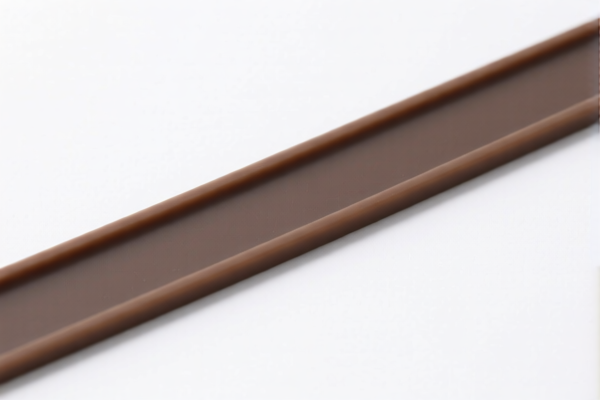


AI Analysis
🌊 Silicone Water Stop Strip (Waterproofing Seal)
🌐 HS Code Reference & Customs Clearance Guide | 2024 Latest Tariff Analysis | Professional-Level Logistics Strategy
📌 I. Product Definition & Classification: Do You Really Understand the "Silicone Water Stop Strip"?
A Silicone Water Stop Strip is a critical construction material used in concrete joints (expansion, contraction, or settlement joints) to prevent water leakage. It is primarily made of silicone rubber or similar silicone-based polymers. In international trade, its classification depends heavily on its physical form (strip, tube, sheet) and function (sealing component).
⚠️ Key Classification Dilemma:
- Is it a Tubular/Hose shape → Category 3917 (Plastic Pipes/Hoses);
- Is it a Sheet/Strip form → Category 3921 (Plastic Plates/Sheets/Strips);
- Or is it a General Plastic Article (Seal/Gasket) → Category 3926 (Other Plastic Articles)?
📦 II. HS Code Classification Details (Latest 2024 Tariff Authority Comparison)
Based on the provided data, here are the 5 possible HS Code classifications for Silicone Water Stop Strips, along with their logic and tax implications.
| HS Code | Product Description | Classification Logic | Total Tax Rate (China-Origin to US)* |
|---|---|---|---|
3917.39.00.50 |
Plastic Pipes, Tubes & Hoses | Shape-based: Inferred as plastic/synthetic material; shape matches "tubes/hoses" (round or semi-round profiles). | 38.1% |
3921.19.00.90 |
Plastic Plates, Sheets, Films, Foils & Strips | Form-based: Identified as "water stop strips" (flat/ribbon shape); material is silicone (organic silicone polymer), falling under "other plastic materials". | 41.5% |
3921.90.50.50 |
Other Plates, Sheets, Films, Foils & Strips of Plastic | Form-based: Material inferred as plastic/synthetic; shape is strip-like, fitting the logic of "other plastic strips". | 39.8% |
3926.90.45.90 |
Other Plastic Articles: Seals/Gaskets | Function-based: Inferred as sealing components/gaskets; no obvious material conflict; falls under "other plastic articles". | 38.5% |
3926.90.99.89 |
Other Plastic Articles: Catch-all Category | Fallback Category: Material is plastic; fits the general category of "other articles of plastics and articles of other materials". No conflict with shape or use. | 22.8% |
🔍 Key Insight:
-3926.90.99.89offers the lowest total tax rate (22.8%), but it is a "catch-all" category. Customs may challenge this if the product has a specific function (like sealing) that better fits3926.90.45.90.
-3921codes are highly specific to the strip/sheet shape. If your water stop is flat and wide, this is the most technically accurate description of its physical form.
-3917codes are for tubular shapes. Only use if the water stop profile is truly tubular (e.g., round bulb profiles).
💰 III. 2024 Latest Tariff Rate Breakdown (Including Surtaxes & Policy Add-ons)
✅ Applicable Country: United States (US)
✅ Country of Origin: China (CN)
✅ Effective Time: Current (Includes 301 Tariffs and IEEPA Add-ons)
🎯 1. 3917.39.00.50 —— Plastic Tubes/Hoses
| Item | Detail |
|---|---|
| Base Tariff | 3.1% (Most Favored Nation Rate) |
| Section 301 Surtax | +25.0% (Trade Enhancement Act) |
| IEEPA Add-on | +10.0% (Executive Order on Chinese Goods) |
| Total Tax Rate | 38.1% |
| Calculation | CIF Value × 38.1% |
| De Minimis Exemption? | ❌ No (Section 301 tariffs apply to de minimis imports from China) |
| Legal Basis Path | USITC:3917.39.00.50 → FOOTNOTE:301 → IEEPA:9903.01.24 |
📌 Explanation:
- Base 3.1%: Standard MFN rate for plastic pipes/tubes.
- +25%: Section 301 tariffs on Chinese plastics.
- +10%: IEEPA add-on for specific Chinese goods.
- Total: 38.1%. This is a high-cost classification.
🎯 2. 3921.19.00.90 —— Plastic Plates/Sheets/Strips
| Item | Detail |
|---|---|
| Base Tariff | 6.5% |
| Section 301 Surtax | +25.0% |
| IEEPA Add-on | +10.0% |
| Total Tax Rate | 41.5% |
| Calculation | CIF Value × 41.5% |
| De Minimis Exemption? | ❌ No |
| Legal Basis Path | USITC:3921.19.00.90 → FOOTNOTE:301 → IEEPA:9903.01.24 |
📌 Explanation:
- This category has the highest total tax rate (41.5%) due to the higher base tariff (6.5%).
- Only choose this if the product is strictly classified as a "sheet/strip" and you cannot justify a lower-duty alternative.
🎯 3. 3921.90.50.50 —— Other Plastic Strips
| Item | Detail |
|---|---|
| Base Tariff | 4.8% |
| Section 301 Surtax | +25.0% |
| IEEPA Add-on | +10.0% |
| Total Tax Rate | 39.8% |
| Calculation | CIF Value × 39.8% |
| De Minimis Exemption? | ❌ No |
| Legal Basis Path | USITC:3921.90.50.50 → FOOTNOTE:301 → IEEPA:9903.01.24 |
📌 Explanation:
- Slightly lower than3921.19, but still high.
- Use this if the product is a "strip" but doesn't fit the specific "19" subcategory (which is for flat sheets).
🎯 4. 3926.90.45.90 —— Other Plastic Articles: Seals/Gaskets
| Item | Detail |
|---|---|
| Base Tariff | 3.5% |
| Section 301 Surtax | +25.0% |
| IEEPA Add-on | +10.0% |
| Total Tax Rate | 38.5% |
| Calculation | CIF Value × 38.5% |
| De Minimis Exemption? | ❌ No |
| Legal Basis Path | USITC:3926.90.45.90 → FOOTNOTE:301 → IEEPA:9903.01.24 |
📌 Explanation:
- Function-based classification. If customs accepts the product as a "seal" rather than a "plastic strip," this is a competitive option.
- Lower base tariff (3.5%) than3921codes.
🎯 5. 3926.90.99.89 —— Other Plastic Articles (Catch-All)
| Item | Detail |
|---|---|
| Base Tariff | 5.3% |
| Section 301 Surtax | +7.5% |
| IEEPA Add-on | +10.0% |
| Total Tax Rate | 22.8% |
| Calculation | CIF Value × 22.8% |
| De Minimis Exemption? | ❌ No |
| Legal Basis Path | USITC:3926.90.99.89 → FOOTNOTE:301 → IEEPA:9903.01.24 |
📌 Explanation:
- Lowest total tax rate (22.8%)!
- Why is the surtax only 7.5%? This HS Code may fall under a different 301 tariff list (List 3 or List 4b exclusions, depending on current updates).
- ⚠️ Risk: Customs may argue that "Water Stop Strip" is more specifically described as a "strip" (3921) or "seal" (3926.90.45.90). Using this code requires strong justification or prior ruling.
🛠️ IV. Customs Clearance Practical Advice (Combat Pitfalls Guide)
✅ 1. Essential Documentation Checklist (Non-negotiable)
| Document | Mandatory? | Purpose |
|---|---|---|
| ✅ Product Specification Sheet | ✔️ | Must detail: Material (100% Silicone? Rubber blend?), Hardness (Shore A), Density, Dimensions. |
| ✅ Technical Drawing | ✔️ | Shows cross-section shape (round, flat, bulb). Critical for deciding between 3917 (tube) vs 3921 (strip). |
| ✅ High-Resolution Photos | ✔️ | Show installation context (in concrete joint) to prove "water stop" function. |
| ✅ Commercial Invoice | ✔️ | Must clearly state "Silicone Water Stop Strip for Concrete Joints". Avoid vague terms like "Plastic Seal". |
| ✅ Certificate of Origin (CO) | ✔️ | Required to verify China origin (triggers surtaxes). |
| ✅ Third-Party Test Report | ✔️ | Proof of material composition (Silicone vs. PVC vs. EPDM). |
✅ 2. Declaration Strategy (Key Mantras)
🔥 “Shape Defines Code, Function Supports Claim, Material Proves It!”
| Scenario | Recommended HS Code | Risk Level |
|---|---|---|
| Round/Bulb Profile | 3917.39.00.50 |
Low (Shape matches Tube) |
| Flat/Rectangular Strip | 3921.19.00.90 or 3921.90.50.50 |
Medium (High tax, but accurate) |
| General Seal/Gasket Use | 3926.90.45.90 |
Low-Medium (Functional argument) |
| Attempt to Minimize Tax | 3926.90.99.89 |
High Risk (Customs may reclassify) |
✅ 3. Special Case Handling
| Situation | Handling Advice |
|---|---|
| Mixed Materials | If the strip has a fabric core or metal insert, it may no longer be "plastic." Check Chapter 68 or 73. |
| Pre-formed vs. Roll Goods | Pre-formed shapes (e.g., circular loops) lean towards 3926 (articles). Rolls lean towards 3921 (strips). |
| Customs Audit Defense | If audited on 3926.90.99.89, provide expert testimony that the product does not fit the specific "strip" definition in Chapter 39 Note 2. |
🌍 V. Global Market Customs Comparison (2024 Latest)
| Country/Region | Recommended HS Code | Tariff (China-Origin) | Certification Required | Notes |
|---|---|---|---|---|
| 🇺🇸 USA | 3926.90.99.89 |
22.8% (Target) | FCC (if electrical), RoHS (if applicable) | Highest risk/reward. Try for lowest rate. |
| 🇨🇳 China | 3921.19.00.90 |
6.5% | No extra tariffs | Import duty only. |
| 🇪🇺 EU | 3926.90.99 |
0% (if under 1000 EUR) | REACH (Chemical compliance) | No tariffs for many plastic goods in EU. |
| 🇦🇺 Australia | 3926.90.99 |
5% | No special certs | Standard MFN rate. |
| 🇯🇵 Japan | 3926.90.99 |
3-5% | PSE (if applicable) | Low tariffs. |
📌 Conclusion:
- USA is the most complex market due to Section 301 and IEEPA tariffs.
- EU and Japan are tariff-friendly for plastic goods.
- Optimize for US by using3926.90.99.89if defensible, or3926.90.45.90if function-based.
📌 VI. Common Mistakes & Pitfalls (Blood-Learnings)
❌ Mistake 1: Calling it "Rubber Seal" when it is Silicone.
👉 Consequence: Misclassification under Chapter 40 (Rubber) instead of 39 (Plastic). Silicone is often classified under 39. Check Chapter 39 Notes.
❌ Mistake 2: Using 3921 for a Tubular profile.
👉 Consequence: Customs may reject as "incorrect shape description" and reclassify, causing delays and penalties.
❌ Mistake 3: Ignoring IEEPA 10% Add-on.
👉 Consequence: Underpayment of duties. All listed codes include this 10% for China-origin goods. Do not forget to add it.
❌ Mistake 4: Claiming De Minimis Exemption ($800 threshold).
👉 Consequence: Section 301 and IEEPA tariffs DO NOT apply to de minimis exemptions for China. You must pay taxes on shipments under $800 if they are Chinese origin.
✅ Correct Practice:
"Silicone Water Stop Strip, Cross-section [Shape], Used in Concrete Joints, Material: 100% Silicone Polymer, HS Code 3926.90.99.89"
🎯 VII. Conclusion: Professional Declaration, Save Costs, Ensure Smooth Clearance!
🎯 Remember the Mantras:
🔹 "Shape Dictates Chapter 39, Function Helps Subheading!"
🔹 "US Tariffs are High: 22.8% is the Goal, 41.5% is the Risk!"
🔹 "Silicone is Plastic (Ch. 39), Not Rubber (Ch. 40) – Verify Notes!"
📌 Pro Tip:
If your silicone water stop strip is exclusively for construction use, provide architectural drawings to prove it is a "building material" rather than a general industrial seal, which may strengthen the case for 3926.90.99.89.
📞 Action Item:
Contact your customs broker with cross-section drawings and apply for a Binding Tariff Information (BTI) or Advance Ruling if possible.
🚀 Let your water stop strips flow through customs as smoothly as the water they block!
✨ Professional Customs Clearance Starts with Accurate Classification!
💼 Every Percent Saved is Pure Profit!
Customer Reviews
About HS Code Classification
The Harmonized System (HS) is an internationally standardized nomenclature developed by the World Customs Organization (WCO) to classify traded products. Over 200 countries use the HS system as the basis for customs tariffs, trade statistics, and import/export regulations.
Each HS code follows a hierarchical structure:
- Chapter (2 digits) — Broad category of goods (e.g., Chapter 84: Machinery and Mechanical Appliances)
- Heading (4 digits) — More specific grouping within the chapter
- Subheading (6 digits) — Internationally standardized breakdown, used by all WCO member countries
- National subdivisions (8-10 digits) — Country-specific extensions for further classification, such as US HTSUS 10-digit codes
Correct HS code classification is essential for smooth customs clearance, accurate duty payment, and compliance with trade regulations. Misclassification can lead to customs delays, overpayment of duties, or penalties.
When importing from CN to US, the applicable tariff rates may include:
- Most-Favored-Nation (MFN) rate — The standard duty rate applied to WTO members
- General rate — Applied to countries without trade agreements
- Trade remedy duties — Additional tariffs such as Section 301 (anti-dumping), Section 232 (national security), or countervailing duties
The information provided on this page is for reference purposes only. For official classification, please consult with your local customs authority or a licensed customs broker.