Silk Card Holder
CN → US| HS Code | Tariff Rate | Origin | Destination | Doc |
|---|---|---|---|---|
| 4202224010 | 42.4% | CN | US | Official Doc |
| 5007906090 | 38.9% | CN | US | Official Doc |
| 4202227000 | 42.0% | CN | US | Official Doc |
| 4202224010 | 42.4% | CN | US | Official Doc |
| 4202227000 | 42.0% | CN | US | Official Doc |
Product Images


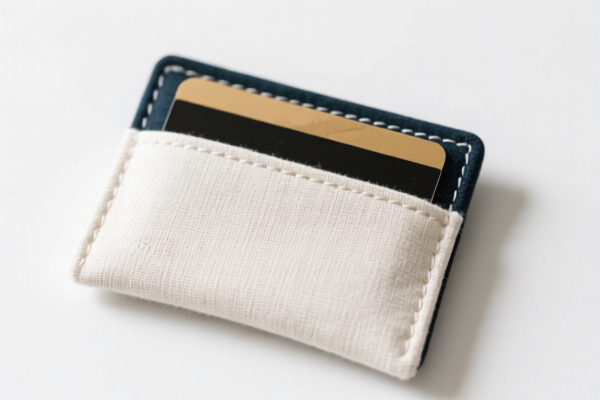
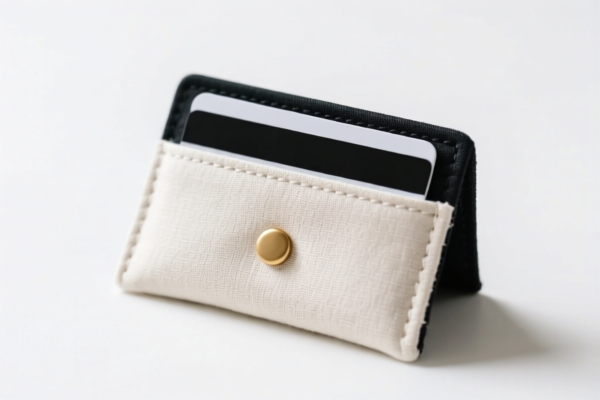
AI Analysis
🧳 Silk Card Holder: Global Trade & Customs Clearance Master Guide (2026 Edition)
🚀 Precision HS Code Classification | High-Tax Alert | Strategic Clearance Strategy
🌐 Executive Summary: What is a "Silk Card Holder"?
A Silk Card Holder is a compact accessory designed to store business cards, credit cards, or IDs. Its defining characteristics are:
1. Material: Made primarily from Silk (natural or synthetic silk fibers, typically >85% silk content for higher classification tiers).
2. Function: A container for carrying small items (card holder, small pouch).
3. Form: Often small, soft, and flexible, sometimes with a snap button or zip closure.
⚠️ Critical Trade Reality:
Because it is a textile container made of silk, it faces extremely high tariffs when entering the US market from China. The classification hinges on whether it is deemed a "pouch/bag" (Chapter 42) or a "textile article" (Chapter 50/5007).
💡 Pro Tip: Even if it's tiny, if it functions as a "container" (holds cards), customs may classify it under Handbags/Purses (Chapter 42), not just clothing or fabric. This triggers the "Bag" tariff rates (often 7.4% + 25% + 10%).
📦 II. HS Code Classification Analysis (Data-Driven)
Based on the provided dataset, there are two primary classification paths for Silk Card Holders, depending on how the material and form are interpreted by customs officers.
🔍 Option A: The "Bag/Pouch" Classification (Most Common & Risky)
If the card holder is viewed as a small handbag or pouch.
| HS Code | Product Description | Logic & Rationale |
|---|---|---|
| 4202.22.40.10 | Pouches & Cases of Silk | Form: Identified as a "Handbag/Purse" category. Material: Matches the "Silk" content requirement. Risk: High. This is the standard classification for any silk container. |
| 4202.22.70.00 | Other Pouches/Cases of Silk | Form: "Handbag" category. Material: Explicitly requires ≥85% Silk content. Risk: If silk content is <85%, this code is invalid. |
📌 Why this matters:
These codes classify the item as a finished good accessory (bag), triggering a higher base tariff (7.0%–7.4%) compared to raw fabric.
🔍 Option B: The "Textile Article" Classification (Alternative)
If the item is viewed primarily as a piece of silk fabric or a simple textile item.
| HS Code | Product Description | Logic & Rationale |
|---|---|---|
| 5007.90.60.90 | Other Woven Silk Fabrics | Material: Focuses on the Silk Fabric itself. Form: Treated as a textile article rather than a structured bag. Risk: Lower base tariff (3.9%), but requires proof it is not a bag. |
📌 Why this matters:
This code assumes the item is a textile product (like a scarf or lining) rather than a container. However, if the structure implies a "card holder," customs may still force the Chapter 42 classification.
💰 III. 2026 US Tariff Breakdown (Detailed Tax Calculation)
🇺🇸 Destination: United States
🏭 Origin: China (Assumed based on 122 Clause reference)
📅 Effective: 2025-2026 Trade War Tariffs
🎯 Scenario 1: HS Code 4202.22.40.10 (The Standard "Bag" Route)
The most likely classification for a finished card holder.
| Tax Component | Rate | Legal Basis / Logic |
|---|---|---|
| Base Duty (MFN) | 7.4% | Standard duty for "Pouches/Cases of Silk". |
| Section 301 (Add-on) | 25.0% | Trump/Trump-era Tariffs: "Section 301" punitive tax on Chinese goods. |
| Section 122 (China) | 10.0% | New US Tariff: Specific punitive tax on Chinese textiles/apparel (Section 122). |
| 🔥 TOTAL DUTY | 42.4% | Base (7.4) + 301 (25) + 122 (10) |
📉 Financial Impact:
For a $100 Silk Card Holder, you pay $42.40 in duties before shipping, insurance, or broker fees.
🎯 Scenario 2: HS Code 4202.22.70.00 (High-Silk Content Route)
Requires ≥85% Silk. If qualified.
| Tax Component | Rate | Legal Basis / Logic |
|---|---|---|
| Base Duty (MFN) | 7.0% | Standard duty for high-grade silk pouches. |
| Section 301 (Add-on) | 25.0% | Section 301 punitive tax. |
| Section 122 (China) | 10.0% | Section 122 punitive tax. |
| 🔥 TOTAL DUTY | 42.0% | Base (7.0) + 301 (25) + 122 (10) |
📉 Financial Impact:
Slightly cheaper base rate ($100 × 42.0% = $42.00), but still prohibitively high.
🎯 Scenario 3: HS Code 5007.90.60.90 (The "Textile" Route - Attempted)
Only if customs accepts it as "fabric" and not a "bag".
| Tax Component | Rate | Legal Basis / Logic |
|---|---|---|
| Base Duty (MFN) | 3.9% | Standard duty for "Other woven silk fabrics". |
| Section 301 (Add-on) | 25.0% | Section 301 punitive tax. |
| Section 122 (China) | 10.0% | Section 122 punitive tax. |
| 🔥 TOTAL DUTY | 38.9% | Base (3.9) + 301 (25) + 122 (10) |
⚠️ Critical Warning:
This is only 3.5% cheaper than the bag classification. The risk of reclassification is massive. If you declare 5007 but the inspector sees a "card holder," they will force 4202 and charge you the difference + penalties.
🛠️ IV. Strategic Clearance Advice (How to Survive)
✅ 1. Pre-Shipment Classification Strategy
🚫 DO NOT rely on "Silk Card Holder" as a generic name in commercial invoices.
✅ DO be specific about the structure vs. material.
| Strategy | Action | Why? |
|---|---|---|
| Option A: Prove it's a "Pouch" | Declare under 4202.22.40.10. | This is the safest legal route. The tariff is predictable (42.4%). Don't try to hide under fabric codes. |
| Option B: Optimize Material | Ensure ≥85% Silk if using 4202.22.70.00. | Justifies the specific sub-code. If <85%, risk of misclassification. |
| Option C: Avoid "Bag" Language | Do NOT use words like "Handbag," "Purse," or "Case" in the description if aiming for 5007. Use "Textile Insert" or "Silk Woven Article". | Risk: High. US Customs (CBP) is strict on "container" definitions. |
✅ 2. Documentation Checklist (Mandatory for 122/301 Compliance)
To avoid audits and fines on Section 122/301:
| Document | Requirement | Purpose |
|---|---|---|
| Commercial Invoice | Must explicitly state: "Silk Card Holder, 100% Silk, HS Code 4202.22.40.10". | Proves origin and classification to CBP. |
| Bill of Lading | Must match Invoice details exactly. | Prevents "mismatch" triggers. |
| Material Certificate | Lab report proving Silk Content (e.g., "85% Silk"). | Critical for 4202.22.70.00 validity. |
| Country of Origin | Clearly mark "Made in China". | Section 122 and 301 apply ONLY to China. |
| Section 301 Exclusion | Check if your specific product has an active exclusion (rare for textiles). | If no exclusion, you must pay 25% + 10%. |
✅ 3. Common Pitfalls & "Red Flags"
❌ Mistake 1: Declaring "Silk Fabric" (5007) for a structured card holder.
👉 Result: CBP reclassifies to 4202, charges 42.4%, and issues a $10,000+ penalty for misdeclaration.
❌ Mistake 2: Under-declaring silk content (e.g., claiming 85% when it's 70%).
👉 Result: Automatic audit. If caught, you lose the 3.9% base rate benefit and face penalties.
❌ Mistake 3: Ignoring Section 122 (10% tax).
👉 Result: Many importers forget this newer tax (2025/2026). They budget for 32.4% (7.4+25) but are hit with 42.4%. Always budget for 42.4%!
🌍 V. Global Market Comparison (2026)
| Region | Recommended HS Code | Estimated Total Duty (China) | Notes |
|---|---|---|---|
| 🇺🇸 USA | 4202.22.40.10 |
42.4% | Highest Risk: 301 + 122 + Base. |
| 🇪🇺 EU | 4202.22.10 |
~5%–7% | No 301/122. Standard textile duty applies. |
| 🇨🇳 China | 4202.22.10 |
7.0% | Domestic trade only. |
| 🇯🇵 Japan | 4202.22.10 |
3%–6% | No punitive tariffs on textiles. |
📌 Conclusion:
The US market is the most expensive for Silk Card Holders due to the double punishment of Section 301 (25%) and Section 122 (10%).
Recommendation: If possible, source final assembly in Vietnam or Thailand (if rules of origin allow) to bypass these specific China taxes.
📌 VI. Final Verdict & Action Plan
🏆 Best Strategy for Silk Card Holder (US Import)
- Accept the 42.4% Tax: Do not try to hide the classification.
- Use HS Code
4202.22.40.10: It is the most robust classification for a "Silk Pouch/Card Holder". - Price Adjustment: Increase your product price by ~35% (to cover 42.4% tax + buffer) to maintain margin.
- Labeling: Ensure every package says "Made in China" and "Silk".
🔥 The Golden Rule:
"In the US, a Silk Card Holder is a Bag. A Bag is a Bag. Pay the 42.4%."
Trying to save 3.5% by using textile codes will cost you more in fines and delays.
🎯 Call to Action
🚀 Ready to Ship?
- Verify Silk Content: Get a lab report.
- Confirm HS Code: Stick to 4202.22.40.10.
- Calculate Landed Cost:
Product Price × 1.424.- File Bond: Ensure you have a Customs Bond for high-duty goods.
💡 Pro Tip: If your volume is high, apply for a Section 301 Exclusion immediately (check USTR.gov). If granted, you save the 25% + 10% (42.4% → 7.4%).
✨ Smart Trade, Clear Path.
💼 Don't let Silk cost you your Profit!
Customer Reviews
About HS Code Classification
The Harmonized System (HS) is an internationally standardized nomenclature developed by the World Customs Organization (WCO) to classify traded products. Over 200 countries use the HS system as the basis for customs tariffs, trade statistics, and import/export regulations.
Each HS code follows a hierarchical structure:
- Chapter (2 digits) — Broad category of goods (e.g., Chapter 84: Machinery and Mechanical Appliances)
- Heading (4 digits) — More specific grouping within the chapter
- Subheading (6 digits) — Internationally standardized breakdown, used by all WCO member countries
- National subdivisions (8-10 digits) — Country-specific extensions for further classification, such as US HTSUS 10-digit codes
Correct HS code classification is essential for smooth customs clearance, accurate duty payment, and compliance with trade regulations. Misclassification can lead to customs delays, overpayment of duties, or penalties.
When importing from CN to US, the applicable tariff rates may include:
- Most-Favored-Nation (MFN) rate — The standard duty rate applied to WTO members
- General rate — Applied to countries without trade agreements
- Trade remedy duties — Additional tariffs such as Section 301 (anti-dumping), Section 232 (national security), or countervailing duties
The information provided on this page is for reference purposes only. For official classification, please consult with your local customs authority or a licensed customs broker.