Silk Cosmetic Bag with Brush Compartment
CN → USProduct Images
AI Analysis
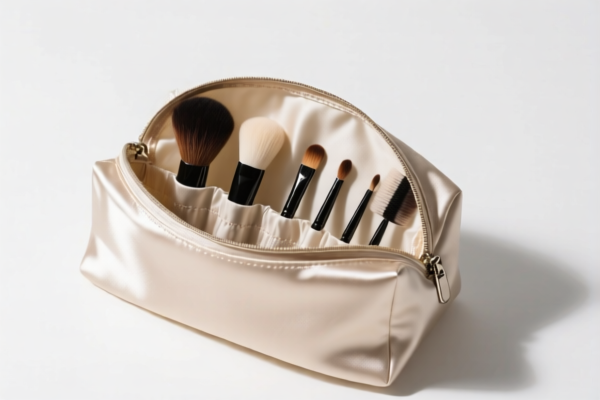
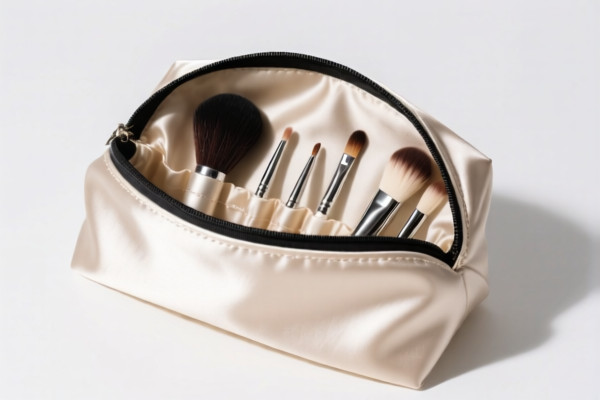
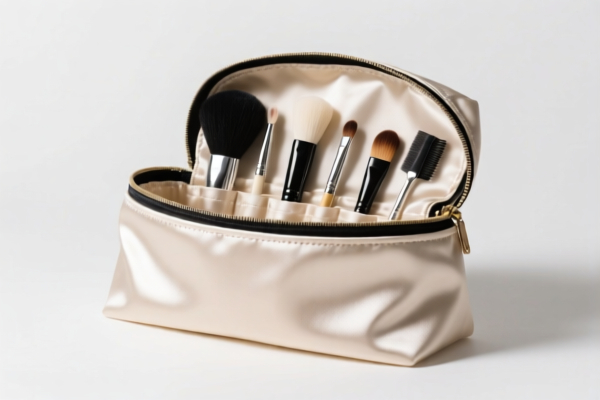
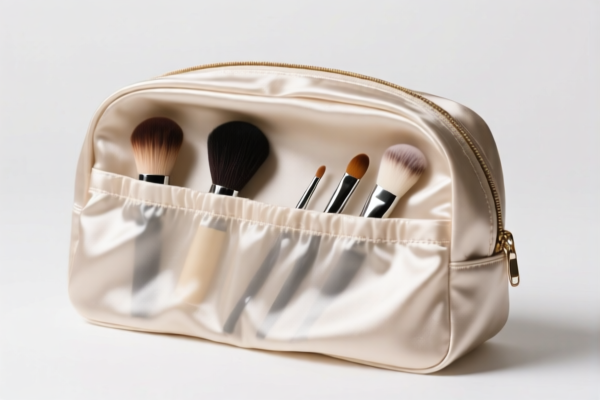
👜 Silk Cosmetic Bag with Brush Compartment
🌐 HS Code Reference & Customs Clearance Guide | 2026 Latest Tariff Analysis | Professional Strategy
📌 1. Product Definition & Classification: Are You Sure It’s Just a "Bag"?
A "Silk Cosmetic Bag with Brush Compartment" is typically categorized based on its primary material and function. In international trade, the distinction lies between:
- Silk/Textile Bags (Chapter 42/63): If the outer shell is predominantly silk (or synthetic silk-like fabric) and the primary function is carrying cosmetics.
- Plastic/PVC Bags (Chapter 39): If the "silk" finish is actually a coated plastic (PVC/PU) with a silk texture. Most mass-market "silk" cosmetic bags are actually PVC or nylon, not natural silk.
⚠️ Critical Distinction:
- If 100% Natural Silk → Chapter 63 (Other made-up articles) or Chapter 42 (if lined with non-silk materials for structure).
- If Synthetic (Nylon/Polyester) or Plastic (PVC) with Silk Texture → Chapter 42 or 39.
- Most Common Scenario: The "Brush Compartment" is an internal feature, not a separate classification driver. It remains a cosmetic bag.
📦 2. HS Code Classification Details (2026 Latest Tariff Reference)
| HS Code | Product Description | Applicable Scenario | Material Note |
|---|---|---|---|
4202.92.76.30 |
Cosmetic bags, with outer surface of textile materials (Nylon/Polyester) | Most common "silk-textured" nylon bags | ❌ Not natural silk |
4202.92.76.10 |
Cosmetic bags, with outer surface of silk | True Natural Silk cosmetic bags | ✅ Yes |
6307.90.98.89 |
Other made-up articles of textiles (if no zipper/closure) | Unlined, simple pouches | ❌ No hard structure |
3926.90.99.99 |
If PVC/Plastic "Silk" finish | Cheap PVC bags with silk print | ❌ Plastic |
🔍 Key Reminder:
- USITC Footnote 9903.88.01 often affects Chapter 42 items from China.
- "Silk" must be proven: If customs suspects it’s synthetic, they may reclassify under synthetic textiles, changing the tariff.
- Brush Compartment: This is an internal feature and does not change the HS Code. It’s still a cosmetic bag.
💰 3. 2026 Latest Tariff Rate Breakdown (US Market Focus)
✅ Applicable Country: United States (US)
✅ Origin: China (CN)
✅ Effective Date: 2025/2026 Tariff Period
🎯 1. 4202.92.76.30 —— Cosmetic Bags, Nylon/Polyester (Most Common)
| Item | Details |
|---|---|
| Base Rate | 32% (Ad Valorem) |
| USITC Section 301 Tariff | +7.5% (Footnote 9903.88.01) |
| IEEPA Additional Tariff | +10% (China-specific, effective Nov 2025) |
| Total Tariff Rate | 49.5% |
| Calculation Basis | CIF Value × 49.5% |
| De Minimis Exemption | ❌ Not Eligible (Value > $800 threshold not applicable for high tariffs) |
| Legal Reference Path | IEEPA:9903.01.25 → USITC:4202.92.76.30 → FOOTNOTE:9903.88.01 |
📌 Explanation:
- Base Rate 32%: Standard MFN rate for other travel/goods bags.
- Section 301 +7.5%: Added in 2018, still in effect.
- IEEPA +10%: New 2025/2026 addition for China-origin textile/consumer goods.
- Total 49.5%: Extremely high. Cost-effective alternatives include sourcing from Vietnam or Thailand for IEEPA exemption.
🎯 2. 4202.92.76.10 —— Cosmetic Bags, Natural Silk
| Item | Details |
|---|---|
| Base Rate | 32% (Ad Valorem) |
| USITC Section 301 Tariff | +7.5% |
| IEEPA Additional Tariff | +10% |
| Total Tariff Rate | 49.5% |
| Calculation Basis | CIF Value × 49.5% |
| De Minimis Exemption | ❌ Not Eligible |
| Legal Reference Path | IEEPA:9903.01.25 → USITC:4202.92.76.10 → FOOTNOTE:9903.88.01 |
📌 Note:
- Even natural silk cosmetic bags from China face the same high tariffs due to their classification under Chapter 42.
- Provenance is critical: Mislabeling synthetic silk as natural silk can lead to customs penalties.
🛠️ 4. Customs Clearance Practical Advice
✅ 1. Required Documentation Checklist
| Document | Mandatory? | Details |
|---|---|---|
| ✅ Commercial Invoice | ✔️ | Must state "Cosmetic Bag, Model XYZ, Material: 100% Silk / Nylon" |
| ✅ Packing List | ✔️ | Include brush compartment details if separate items are included |
| ✅ Material Declaration | ✔️ | Crucial: Specify if "Silk" is natural or synthetic |
| ✅ Photos of Product | ✔️ | Show zipper, interior, and any branding |
| ✅ Test Report | ✔️ | If claimed "Anti-Bacterial" or "Special Coating" |
✅ 2. Classification Tips
🔥 "Material Defines HS, Compartment is Internal"
| Scenario | Correct HS Code | Wrong Approach |
|---|---|---|
| Nylon bag with silk texture | 4202.92.76.30 |
Classify as "Silk" → Audit risk |
| True Silk bag | 4202.92.76.10 |
Classify as "Textile Pouch" → Lower tariff but misdeclaration |
| Bag with removable brushes | 4202.92.76.30 + 9603.30.00.00 (Brushes) |
Combine into one bag → Incorrect |
| PVC bag with silk print | 3926.90.99.99 |
Classify as "Textile" → Misclassification |
✅ 3. Special Handling
| Situation | Recommendation |
|---|---|
| OEM Custom Bags | Provide design specs to prove material composition |
| Mixed Materials | If lining is different, still classify by outer surface |
| Gift Sets (Bag + Brushes) | Declare separately if brushes are high-value |
| Vietnam/Thailand Origin | Apply for IEEPA exemption → 0% IEEPA, lower total tax |
🌍 5. Global Market Comparison (2026)
| Country/Region | Recommended HS Code | Tariff (China Origin) | Certification | Notes |
|---|---|---|---|---|
| 🇺🇸 USA | 4202.92.76.30 |
49.5% (Total) | No specific | High tariff due to Section 301 + IEEPA |
| 🇨🇳 China | 4202.92.76.30 |
5-10% | No specific | Low import tariff |
| 🇪🇺 EU | 4202.92.76.30 |
0-12% (depending on duty-free agreements) | REACH (if chemical-treated) | No IEEPA equivalent |
| 🇬🇧 UK | 4202.92.76.30 |
0-12% | UKCA (if applicable) | Post-Brexit rules apply |
| 🇯🇵 Japan | 4202.92.76.30 |
0-12% | PSE (if electronic, not applicable here) | Low tariff |
📌 Conclusion:
- USA is the highest-cost market due to combined Section 301 and IEEPA tariffs.
- Consider sourcing from Southeast Asia (Vietnam, Thailand) to avoid IEEPA 10% tariff, reducing total to ~39.5%.
📌 6. Common Mistakes & Pitfalls
❌ Mistake 1: Classifying as "Textile Pouch" (6307.90.98.89) to avoid higher duty
👉 Consequence: Customs may reclassify as 4202.92.76.30, leading to back taxes and penalties.
❌ Mistake 2: Labeling PVC bags as "Silk"
👉 Consequence: Customs may reject declaration, demand physical inspection, or impose fines for misdeclaration.
❌ Mistake 3: Ignoring the "Brush Compartment" as a separate item
👉 Consequence: If brushes are high-value, declare separately to optimize tariff rates if possible.
✅ Correct Practice:
"Cosmetic Bag, Model XYZ, Outer Surface: 100% Nylon (Silk Texture), Lining: Polyester, with Brush Compartment. Origin: China."
🎯 7. Conclusion: Strategic Sourcing & Compliance
🎯 Key Takeaways:
🔹 "Silk" is a material classification, not just a finish. Prove it!
🔹 US Tariffs are high (49.5%). Consider supply chain diversification to Vietnam/Thailand.
🔹 Do not split the bag and brushes unless they are sold separately.
📌 Pro Tip:
If your cosmetic bags are originating from Vietnam, Mexico, or Thailand, you can apply for IEEPA Exemption, reducing the total tariff to 39.5% (32% Base + 7.5% Section 301). This is a significant saving!
📣 Immediate Action:
📞 Consult with a customs broker to verify material composition.
🚀 Evaluate supply chain options to mitigate US tariff risks.
✨ Professional Customs Clearance Starts with Accurate Classification!
💼 Your Cost Efficiency Depends on Precision!
Customer Reviews
About HS Code Classification
The Harmonized System (HS) is an internationally standardized nomenclature developed by the World Customs Organization (WCO) to classify traded products. Over 200 countries use the HS system as the basis for customs tariffs, trade statistics, and import/export regulations.
Each HS code follows a hierarchical structure:
- Chapter (2 digits) — Broad category of goods (e.g., Chapter 84: Machinery and Mechanical Appliances)
- Heading (4 digits) — More specific grouping within the chapter
- Subheading (6 digits) — Internationally standardized breakdown, used by all WCO member countries
- National subdivisions (8-10 digits) — Country-specific extensions for further classification, such as US HTSUS 10-digit codes
Correct HS code classification is essential for smooth customs clearance, accurate duty payment, and compliance with trade regulations. Misclassification can lead to customs delays, overpayment of duties, or penalties.
When importing from CN to US, the applicable tariff rates may include:
- Most-Favored-Nation (MFN) rate — The standard duty rate applied to WTO members
- General rate — Applied to countries without trade agreements
- Trade remedy duties — Additional tariffs such as Section 301 (anti-dumping), Section 232 (national security), or countervailing duties
The information provided on this page is for reference purposes only. For official classification, please consult with your local customs authority or a licensed customs broker.