Silk Cotton Yarn Travel Bag
CN → US| HS Code | Tariff Rate | Origin | Destination | Doc |
|---|---|---|---|---|
| 4202224010 | 42.4% | CN | US | Official Doc |
| 4202227000 | 42.0% | CN | US | Official Doc |
| 5007906090 | 38.9% | CN | US | Official Doc |
Product Images
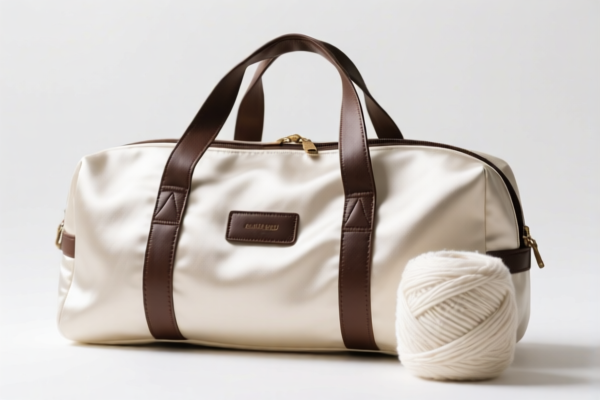
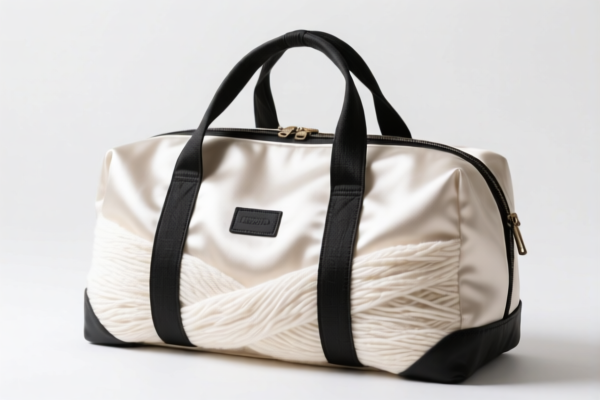
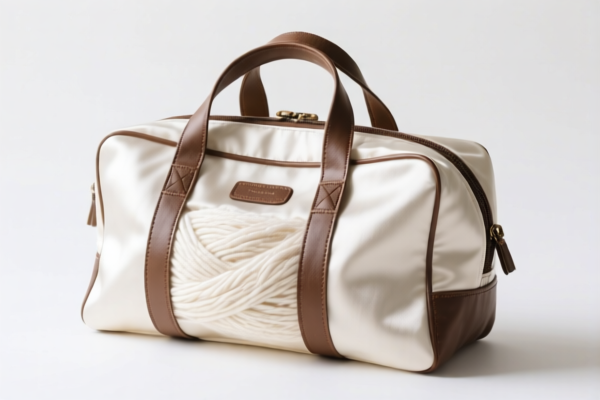
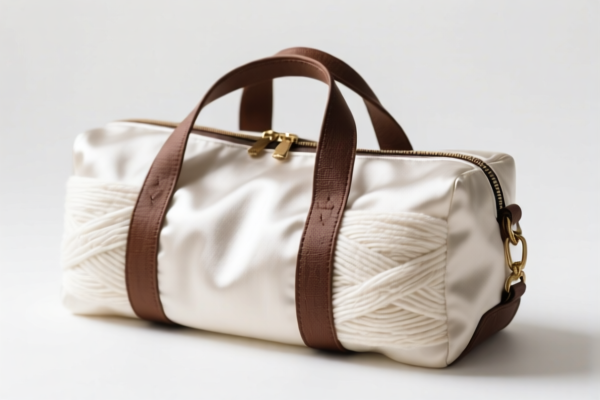
AI Analysis
👜 Silk Cotton Yarn Travel Bag (The "Silk & Cotton" Hybrid)
🌐 HS Code Reference & Customs Clearance Guide | 2026 Latest Tariff Analysis | Professional Level Clearance Strategy
📌 1. Product Definition & Classification: What Exactly Is "Silk Cotton Yarn"?
A "Silk Cotton Yarn Travel Bag" is a specific hybrid textile product. In international trade, the term "Silk Cotton" (or Mian Si) often refers to a yarn blend or a specific weave structure involving Silk and Cotton fibers, or sometimes high-quality synthetic fibers mimicking silk. However, under the Harmonized System (HS), the classification depends heavily on the material composition and the final form.
Crucially, if the bag’s outer surface is primarily made of Silk fabric (even if blended with cotton, provided silk is the defining characteristic or exceeds 50%), it may fall under Chapter 42 or 50 depending on the specific weave and proportion. If it is defined as a "travel bag" made of textile materials, it typically falls under Chapter 42 (Articles of Apparel and Accessories) rather than Chapter 50 (Silk) or Chapter 55 (Synthetic Fiber), as Chapter 42 takes precedence for finished goods like bags.
⚠️ Key Distinction Point:
- If the bag is made of pure Silk fabric or where Silk is the principal material → It may be classified under 4202.22 (Articles of Apparel and Accessories, of Silk).
- If the bag is made of other textile materials (including cotton-silk blends where silk is not the principal component, or if deemed "other textile") → It may fall under 4202.22.70 or even 5007 (if classified by the fabric type before cutting, though less likely for finished bags).
- Note: The provided data suggests a debate between Classifying as "Silk Bag" (4202.22.40) vs. "Other Textile Bag" (4202.22.70) vs. "Silk Fabric Bag" (5007.90.60).
📦 2. HS Code Classification Details (Based on Provided Data)
The following HS Codes are derived strictly from the provided <DATA> set.
| HS Code | Product Description | Applicability Scenario | Tax Rate |
|---|---|---|---|
4202.22.40.10 |
Silk Crossbody Bag or Leisure Bag, Material: Silk, Form: Handbag/Crossbody | Bags explicitly made of Silk fabric, categorized as "Silk" articles | 42.4% |
4202.22.70.00 |
Silk Crossbody Bag or Leisure Bag, Outer Surface: Textile Materials, Contains Silk Characteristics | Bags where the outer surface is textile (including silk blends) but not explicitly classified as pure "Silk" under 40.10 | 42.0% |
5007.90.60.90 |
Silk Leisure Bag, Matching Silk Fabric Category, Form: Finished Bag Goods | Bags classified by their silk fabric component rather than as an article of apparel/accessory (less common for finished bags, but listed in data) | 38.9% |
🔍 Key Insight:
- 4202.22.40.10 is the most specific for "Silk" bags, resulting in the highest tax (42.4%).
- 4202.22.70.00 is a broader "Textile" classification, slightly lower tax (42.0%).
- 5007.90.60.90 is the lowest tax (38.9%) but is arguably the least appropriate for a finished travel bag, as Chapter 50 generally covers raw silk or silk yarns/fabrics, not finished articles like bags (which belong in Chapter 42). Use with caution.
💰 3. 2026 Latest Tariff Rate Breakdown (Including Surcharges)
✅ Applicable Country: United States (US)
✅ Origin: China (CN)
✅ Effective Date: 2025-11-10 onwards
🎯 1. 4202.22.40.10 — Silk Crossbody Bag (Pure Silk Classification)
| Item | Content |
|---|---|
| Base Tariff | 7.4% (ad valorem) |
| Section 301 Surcharge | +25.0% |
| Section 122 Surcharge | +10.0% |
| Total Effective Rate | 42.4% |
| Calculation | CIF Value × 42.4% |
| De Minimis Exemption | ❌ Not Eligible (Section 122 and Section 301 surcharges often void de minimis) |
| Legal Basis | HTSUS:4202.22.40.10 → Section 301 → Section 122 |
📌 Explanation:
- The 7.4% base is the standard Most Favored Nation (MFN) rate for silk bags.
- The 25% is the standard Section 301 tariff for Chinese goods in this category.
- The 10% is the new Section 122 tariff, often applied to specific consumer goods or under specific trade enforcement actions.
- Total: 42.4%. This is a high-cost classification.
🎯 2. 4202.22.70.00 — Other Textile Bags (Silk Characteristics)
| Item | Content |
|---|---|
| Base Tariff | 7.0% (ad valorem) |
| Section 301 Surcharge | +25.0% |
| Section 122 Surcharge | +10.0% |
| Total Effective Rate | 42.0% |
| Calculation | CIF Value × 42.0% |
| De Minimis Exemption | ❌ Not Eligible |
| Legal Basis | HTSUS:4202.22.70.00 → Section 301 → Section 122 |
📌 Note:
- Slightly 0.4% lower than the pure silk classification.
- This classification is useful if the "silk cotton yarn" is considered a blend where silk is not the principal material, or if the manufacturer wants to avoid the stricter "Silk" labeling requirements.
🎯 3. 5007.90.60.90 — Silk Leisure Bag (Fabric-Based Classification)
| Item | Content |
|---|---|
| Base Tariff | 3.9% (ad valorem) |
| Section 301 Surcharge | +25.0% |
| Section 122 Surcharge | +10.0% |
| Total Effective Rate | 38.9% |
| Calculation | CIF Value × 38.9% |
| De Minimis Exemption | ❌ Not Eligible |
| Legal Basis | HTSUS:5007.90.60.90 → Section 301 → Section 122 |
📌 Warning:
- This is the lowest tax (38.9%), but it is risky.
- Chapter 50 (5007) is for Silk Fabrics, not Bags.
- Customs may reclassify a finished bag into Chapter 42, leading to additional duties, penalties, and delays.
- Only use this if you have a strong legal argument that the item is being imported as a fabric roll/sample and not a finished bag, or if the specific product description allows for this interpretation (e.g., "Silk Fabric for Bag Making").
🛠️ 4. Customs Clearance Practical Advice (Avoiding Pitfalls)
✅ 1. Documentation Checklist (Non-Negotiable)
| Document | Required? | Description |
|---|---|---|
| ✅ Product Specification Sheet | ✔️ | Must detail material composition (e.g., "60% Cotton, 40% Silk Yarn") and structure. |
| ✅ Material Composition Declaration | ✔️ | Explicitly state the fiber content. "Silk Cotton Yarn" must be defined (e.g., is it a blend or a weave?). |
| ✅ Product Photos | ✔️ | Clear images of the bag, tags, and any labels showing material content. |
| ✅ Commercial Invoice | ✔️ | Must match the HS Code chosen. If using 5007.90.60.90, describe as "Silk Fabric Samples" (if applicable), not "Travel Bag". |
| ✅ Packing List | ✔️ | Standard for all shipments. |
✅ 2. Declaration Strategy (Key Tactics)
🔥 "Material Dictates Classification, Not Just Form!"
| Scenario | Recommended HS Code | Reasoning |
|---|---|---|
| Bag made of 100% Silk Fabric | 4202.22.40.10 |
Most accurate for pure silk bags. Highest tax (42.4%). |
| Bag made of Silk-Cotton Blend | 4202.22.70.00 |
If silk is not the principal material (>50%), this is safer than 40.10. Tax (42.0%). |
| Importing as Fabric Rolls (Not Bags) | 5007.90.60.90 |
Only if you are importing unsewn fabric. Do not use for finished bags unless you accept the risk of reclassification. Tax (38.9%). |
✅ 3. Special Considerations for "Silk Cotton Yarn"
- Definition of "Silk Cotton": In some contexts, "Silk Cotton" refers to a synthetic fiber (rayon/viscose) or a cotton-silk blend.
- If it is synthetic: It should not be classified under Chapter 50 (Silk).
- If it is blended: The general rule of "principal material" applies. If silk > 50%, use Chapter 42 silk codes. If cotton > 50%, it might even fall under
4202.32(Plastic) or4202.92(Other textile) depending on other factors, but the provided data only lists silk-related codes. - Risk of Misclassification: If you declare a bag as
5007.90.60.90(Fabric) but customs inspectors find a finished bag, they will reclassify to4202.22and charge the difference plus penalties.
🌍 5. Global Market Comparison (2026)
| Country/Region | Recommended HS Code | Estimated Total Tax | Notes |
|---|---|---|---|
| 🇺🇸 USA | 4202.22.70.00 |
42.0% | Avoid 5007 for finished bags. 4202 is safer. |
| 🇨🇳 China | 4202.22.40.00 |
~10-15% | Lower base rates. No Section 301/122. |
| 🇪🇺 EU | 4202.22.00 |
~4-12% | No Section 301. Standard MFN rates apply. |
| 🇬🇧 UK | 4202.22.00 |
~4-12% | Post-Brexit, aligns with EU standards. |
📌 Conclusion for US Market:
- The Section 122 and 301 tariffs make silk bags expensive.
- Optimize by:
1. Reducing Silk Content: If possible, use more cotton or synthetic fibers to move to a lower base rate (if applicable).
2. Country of Origin: If shipped from Vietnam or India, Section 301 may not apply, significantly reducing tax.
3. Pre-Ruling: Apply for a Customs Ruling to confirm if "Silk Cotton Yarn Bag" qualifies for4202.22.70.00instead of4202.22.40.10.
📌 6. Common Mistakes & Pitfalls
❌ Mistake 1: Declaring a finished bag as 5007.90.60.90 to save 3.5%.
👉 Consequence: Customs seizes the shipment, reclassifies to 4202.22, and issues a penalty. Loss of time and money.
❌ Mistake 2: Not disclosing "Silk" content.
👉 Consequence: If the bag is labeled "Silk" but declared as "Polyester", it is fraud. Fines and potential criminal charges.
❌ Mistake 3: Using "Silk Cotton" as a vague term.
👉 Consequence: Customs may ask for a material test report. If you cannot prove the silk content, they may assign the worst-case scenario rate.
✅ Correct Approach:
"Crossbody Bag, Outer Material: 60% Cotton / 40% Silk Yarn Blend, Lining: Polyester. HS Code: 4202.22.70.00"
🎯 7. Conclusion: Strategic Clearance for Silk Bags
🎯 Key Takeaway:
- Tax Savings:
4202.22.70.00(42.0%) is cheaper than4202.22.40.10(42.4%).- Risk Avoidance: Do not use
5007.90.60.90for finished bags unless you are 100% sure of the legal interpretation.- Documentation: Always provide a material composition breakdown.
📌 Pro Tip:
If you are exporting to the US, consider repacking or shipping from a third country (e.g., Vietnam) if the silk content allows for local processing, to avoid Section 301 tariffs.
📣 Immediate Action:
📞 Consult a Customs Broker: Verify if "Silk Cotton Yarn" qualifies for
4202.22.70.00instead of4202.22.40.10.
📄 Prepare Material Test Reports: To prove fiber content.
🚀 Plan for 42% Tariff: Budget accordingly for US imports.
✨ Smart Classification Saves Money!
💼 Your bag's value is defined by its code, not just its style!
Customer Reviews
About HS Code Classification
The Harmonized System (HS) is an internationally standardized nomenclature developed by the World Customs Organization (WCO) to classify traded products. Over 200 countries use the HS system as the basis for customs tariffs, trade statistics, and import/export regulations.
Each HS code follows a hierarchical structure:
- Chapter (2 digits) — Broad category of goods (e.g., Chapter 84: Machinery and Mechanical Appliances)
- Heading (4 digits) — More specific grouping within the chapter
- Subheading (6 digits) — Internationally standardized breakdown, used by all WCO member countries
- National subdivisions (8-10 digits) — Country-specific extensions for further classification, such as US HTSUS 10-digit codes
Correct HS code classification is essential for smooth customs clearance, accurate duty payment, and compliance with trade regulations. Misclassification can lead to customs delays, overpayment of duties, or penalties.
When importing from CN to US, the applicable tariff rates may include:
- Most-Favored-Nation (MFN) rate — The standard duty rate applied to WTO members
- General rate — Applied to countries without trade agreements
- Trade remedy duties — Additional tariffs such as Section 301 (anti-dumping), Section 232 (national security), or countervailing duties
The information provided on this page is for reference purposes only. For official classification, please consult with your local customs authority or a licensed customs broker.