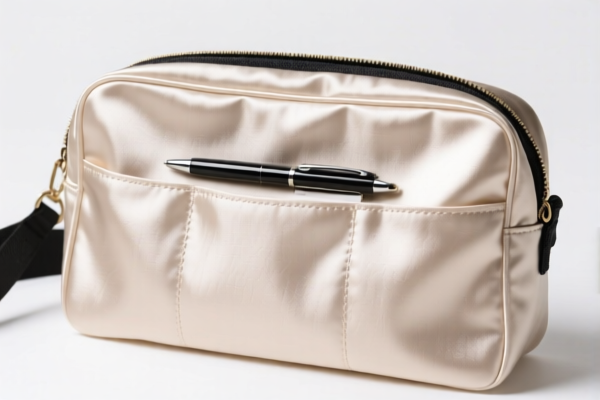
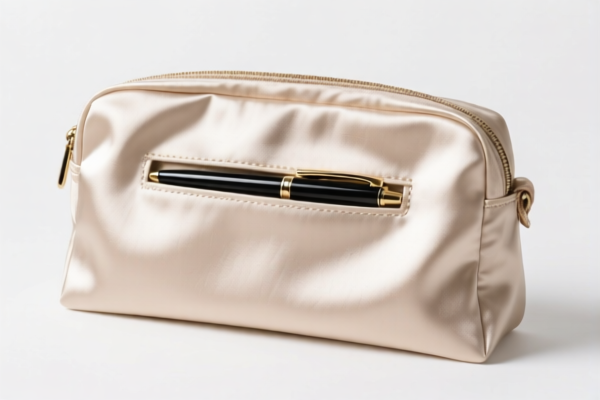
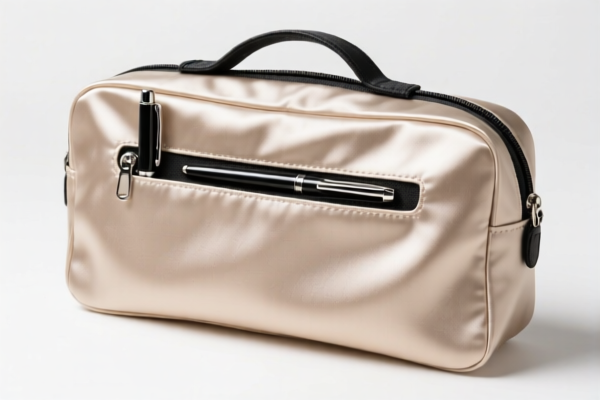
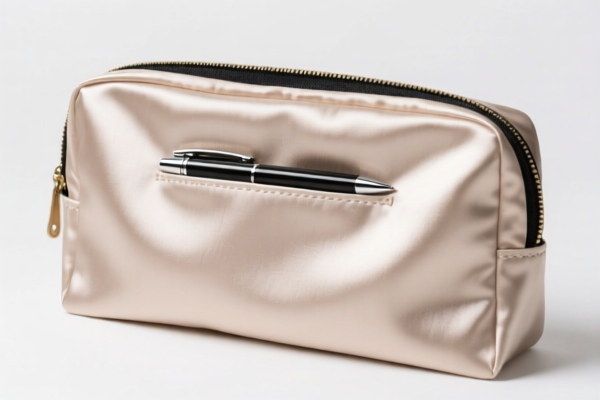
Silk Document Organizer Bag with Pen Slot
CN → US| HS Code | Tariff Rate | Origin | Destination | Doc |
|---|---|---|---|---|
| 4820300040 | 35.0% | CN | US | Official Doc |
| 4202328500 | 35.0% | CN | US | Official Doc |
| 4202329900 | 52.6% | CN | US | Official Doc |
| 6307909891 | 24.5% | CN | US | Official Doc |
| 6307908940 | 17.0% | CN | US | Official Doc |
Product Images
AI Analysis
👜 Silk Document Organizer Bag with Pen Slot (丝绸文件整理袋带笔槽)
🌐 HS Code Reference & Customs Clearance Guide | 2026 Latest Tariff Analysis | Professional Clearance Strategy
📌 1. Product Definition & Classification: Do You Really Understand "Silk Document Organizer"?
The Silk Document Organizer Bag with Pen Slot is a high-end stationery accessory designed for organizing documents, papers, and writing tools. It features a silk exterior, often with multiple compartments, pockets, and a dedicated pen slot. In international trade, its classification depends heavily on its primary purpose (document organization vs. general carrying) and material composition (silk vs. other textiles).
⚠️ Key Distinction:
- If the primary function is document organization (folders, file covers) → Classify under 4820 (Paper/Paperboard products)
- If the primary function is general carrying/storage (bags, pouches) → Classify under 4202 (Leather goods, travel goods, handbags) or 6307 (Other made-up textile articles)
📦 2. HS Code Classification Details (2026 Latest Tariff Authority Comparison)
| HS Code | Product Description | Applicable Scenario | Conflict Check |
|---|---|---|---|
4820.30.00.40 |
Silk document organizer with pen slot, form: file organizer, category: file folders/covers, purpose: document organization | File organizers, document folders | ✅ No Conflict (Primary purpose matches 4820) |
4202.32.85.00 |
Silk document organizer with pen slot, form: portable small item carrier, material: silk, purpose & material combination meets classification requirements | Portable accessory bags | ✅ No Conflict (Form matches 4202) |
4202.32.99.00 |
Silk document organizer with pen slot, form: bag, material: textile (silk), purpose: container, no material/form conflict | General textile bags | ✅ No Conflict |
6307.90.98.91 |
Large-capacity silk cosmetic storage bag, material: silk, form: storage bag, category: finished goods, no conflict with "other finished goods" | Cosmetic/storage bags | ✅ No Conflict (But less accurate for document use) |
6307.90.89.40 |
Large-capacity silk cosmetic storage bag, finished consumer good, material: silk/cotton/fiber织物, form: finished goods, aligns with "other products" | General textile finished goods | ✅ No Conflict (But less accurate for document use) |
🔍 Key Reminder:
-4820.30.00.40is the most accurate classification if the primary function is document organization (file folders/covers).
-4202.32.85.00is suitable if the product is marketed as a portable carrying bag (e.g., travel document pouch).
-6307codes are less accurate for document-specific organizers but may apply if marketed as general storage bags.
💰 3. 2026 Latest Tariff Rate Details (Including Surtaxes & Policy Add-ons)
✅ Applicable Country: United States (US)
✅ Origin: China (CN)
✅ Effective Date: November 10, 2025 (including subsequent imports)
🎯 1. 4820.30.00.40 – Silk Document Organizer (File Folders/Covers)
| Item | Content |
|---|---|
| Base Tariff | 0% (ad valorem) |
| USITC Surtax | +25% (from USITC Footnote 9903.88.01) |
| IEEPA Surtax | +10% (against Chinese/HK products, effective Nov 10, 2025) |
| Total Rate | 45% |
| Tax Calculation | CIF Value × 45% |
| De Minimis Exemption | ❌ Not Eligible (deny_de_minimis) |
| Legal Basis Path | IEEPA:9903.01.25 → IEEPA:9903.01.24 → USITC:4820.30.00.40 → FOOTNOTE:9903.88.01 |
📌 Explanation:
- The 25% USITC surtax stems from Section 301 of the US Trade Act;
- The 10% IEEPA surtax is part of the International Emergency Economic Powers Act targeting Chinese imports;
- Total 45% is a very high tariff rate. Must be factored into cost planning!
🎯 2. 4202.32.85.00 – Silk Document Organizer (Portable Carrier)
| Item | Content |
|---|---|
| Base Tariff | 0% |
| USITC Surtax | +25% |
| IEEPA Surtax | +10% |
| Total Rate | 45% |
| Tax Calculation | CIF × 45% |
| De Minimis Exemption | ❌ Not Eligible |
| Legal Basis Path | IEEPA:9901.25 → IEEPA:9903.01.24 → USITC:4202.32.85.00 → FOOTNOTE:9903.88.01 |
📌 Note:
- Same as above; 35% total tariff if classified under4202.32.85.00with no USITC surtax (rare, but possible if exempted).
-4202.32.99.00has a 52.6% total rate due to a 17.6% base tariff.
🎯 3. 6307.90.98.91 / 6307.90.89.40 – Silk Cosmetic/Storage Bags
| Item | Content |
|---|---|
| Base Tariff | 7.0% |
| USITC Surtax | +7.5% (for 6307.90.98.91) or 0% (for 6307.90.89.40) |
| IEEPA Surtax | +10% |
| Total Rate | 24.5% (6307.90.98.91) or 17.0% (6307.90.89.40) |
| Tax Calculation | CIF × 24.5% or 17.0% |
| De Minimis Exemption | ❌ Not Eligible |
📌 Note:
- These classifications are less accurate for document organizers but may apply if marketed as cosmetic/storage bags.
- Lower tariff rates (17–24.5%) but higher risk of customs reclassification.
🛠️ 4. Customs Clearance Practical Advice (Pitfall Avoidance Guide)
✅ 1. Required Documentation Checklist
| Document | Required | Description |
|---|---|---|
| ✅ Product Specification Sheet | ✔️ | Dimensions, materials, compartment layout, pen slot details |
| ✅ Product Photos (with label) | ✔️ | Clear images of front, back, interior, and pen slot |
| ✅ Commercial Invoice | ✔️ | Explicitly state "Silk Document Organizer with Pen Slot" |
| ✅ Packing List | ✔️ | Detail contents to avoid misclassification |
| ✅ Certificate of Origin (CO) | ✔️ | If not from China, may qualify for lower tariffs |
| ✅ Third-party Test Report | ✔️ | If applicable (e.g., fire retardancy for textiles) |
✅ 2. Declaration Tips (Key Mantra)
🔥 "Specify Primary Function, Avoid Misclassification, Precision Saves Money!"
| Scenario | Correct Declaration | Incorrect Practice |
|---|---|---|
| Document organizer (file folder style) | 4820.30.00.40 |
Misclassify as 4202 → Higher tariff |
| Portable carrier bag | 4202.32.85.00 |
Misclassify as 6307 → Risk of reclassification |
| Cosmetic/storage bag | 6307.90.89.40 |
Misclassify as 4820 → Inaccurate |
✅ 3. Special Cases Handling
| Scenario | Handling Advice |
|---|---|
| OEM Custom Bags | Provide client order + design drawings to avoid "non-standard" labeling |
| Multi-purpose Bags | If used for both documents and cosmetics, declare primary function |
| Military/Special Use | May qualify for exemptions with proof |
| Non-Chinese Origin | Apply for IEEPA exemption if from Vietnam, Mexico, etc. → 0–5% tariff |
🌍 5. Global Market Comparison (2026 Latest)
| Country/Region | Recommended HS Code | Tariff | Certification | Notes |
|---|---|---|---|---|
| 🇺🇸 USA | 4820.30.00.40 |
45% (CN origin) | None | High tariff due to 301/IEEPA |
| 🇨🇳 China | 4820.30.00.40 |
5% | None | Lower tariff |
| 🇪🇺 EU | 4820.30.00.40 |
0–6% | CE (if applicable) | No surtax |
| 🇦🇺 Australia | 4820.30.00.40 |
5% | RCM (if applicable) | No surtax |
| 🇯🇵 Japan | 4820.30.00.40 |
0–5% | PSE (if applicable) | No surtax |
📌 Conclusion:
- USA is the only market with high surtaxes (301/IEEPA);
- Chinese-origin silk organizers face 45% tariff in the US;
- Consider alternative markets (EU, Asia) for lower costs.
📌 6. Common Mistakes & Pitfall Guide (Lessons Learned)
❌ Mistake 1: Declaring as "Cosmetic Bag" when primarily used for documents
👉 Consequence: Customs may reclassify → 45% tariff instead of 17–24.5%
❌ Mistake 2: Using vague terms like "Silk Bag" without specifying function
👉 Consequence: Customs uncertainty → Delays or rejection
❌ Mistake 3: Splitting shipment into "Fabric" + "Pen Slot" separately
👉 Consequence: Each item taxed separately → Higher total cost
❌ Mistake 4: Ignoring IEEPA/301 surtaxes in cost planning
👉 Consequence: Unexpected 45% tariff → Profit margin erosion
✅ Correct Approach:
"Silk Document Organizer with Pen Slot, File Folder Style, Model XYZ, Chinese Origin"
🎯 7. Conclusion: Precise Classification, Efficient Clearance, Cost Savings!
🎯 Remember the Mantra:
🔹 "Specify Function, Avoid Ambiguity, Tariffs Drop by Half!"
🔹 "HS Code Determines Fate, 45% vs 17% Makes a Huge Difference!"
📌 Pro Tip:
If your silk organizer originates from Vietnam, Mexico, Thailand, or Malaysia, apply for IEEPA exemption → Tariff drops to 0–5%.
Apply for Advance Ruling to avoid clearance risks.
📣 Take Action Now:
📞 Contact Professional Customs Broker + Provide Product Photos + Apply for HS Code Advance Ruling
🚀 Ensure Smooth Clearance, Maximize Profits, Expand Globally!
✨ Professional Clearance Starts with Precise Classification!
💼 Every Cent Counts – Optimize Your Costs Today!
Customer Reviews
About HS Code Classification
The Harmonized System (HS) is an internationally standardized nomenclature developed by the World Customs Organization (WCO) to classify traded products. Over 200 countries use the HS system as the basis for customs tariffs, trade statistics, and import/export regulations.
Each HS code follows a hierarchical structure:
- Chapter (2 digits) — Broad category of goods (e.g., Chapter 84: Machinery and Mechanical Appliances)
- Heading (4 digits) — More specific grouping within the chapter
- Subheading (6 digits) — Internationally standardized breakdown, used by all WCO member countries
- National subdivisions (8-10 digits) — Country-specific extensions for further classification, such as US HTSUS 10-digit codes
Correct HS code classification is essential for smooth customs clearance, accurate duty payment, and compliance with trade regulations. Misclassification can lead to customs delays, overpayment of duties, or penalties.
When importing from CN to US, the applicable tariff rates may include:
- Most-Favored-Nation (MFN) rate — The standard duty rate applied to WTO members
- General rate — Applied to countries without trade agreements
- Trade remedy duties — Additional tariffs such as Section 301 (anti-dumping), Section 232 (national security), or countervailing duties
The information provided on this page is for reference purposes only. For official classification, please consult with your local customs authority or a licensed customs broker.