Silk Fabric Handbag (Eco friendly)
CN → US| HS Code | Tariff Rate | Origin | Destination | Doc |
|---|---|---|---|---|
| 4202224010 | 42.4% | CN | US | Official Doc |
| 4202227000 | 42.0% | CN | US | Official Doc |
| 5007906090 | 38.9% | CN | US | Official Doc |
| 4202224010 | 42.4% | CN | US | Official Doc |
| 4202227000 | 42.0% | CN | US | Official Doc |
Product Images
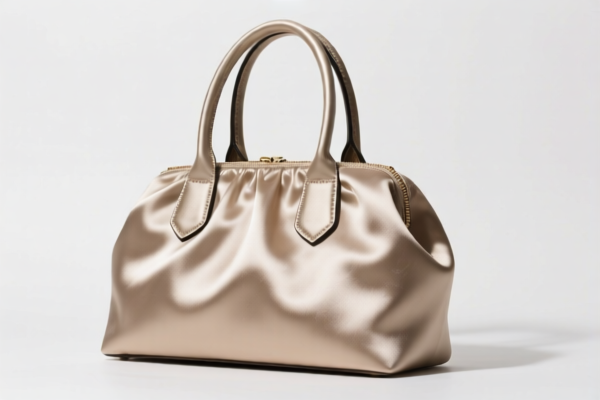
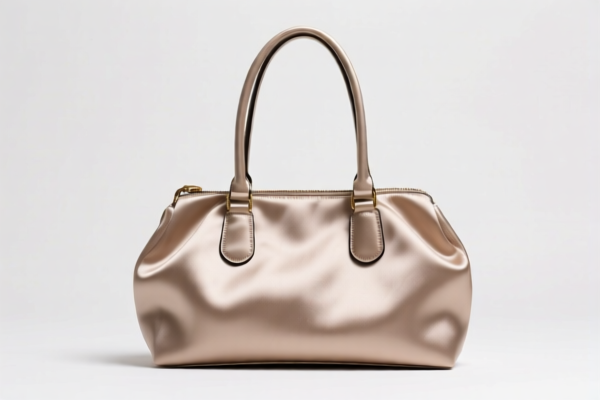
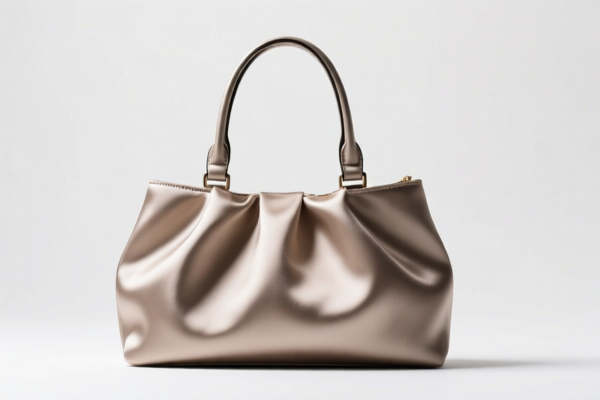
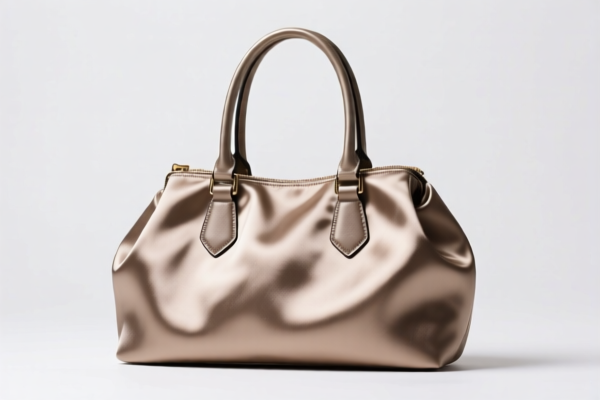
AI Analysis
👜 Silk Fabric Handbag (Eco-Friendly) | HS Code & Taxation Analysis
🌐 HS Code Reference & Customs Clearance Guide | 2026 Latest Tariff Structure | Professional Compliance Strategy
📌 I. Product Definition & Classification: Do You Truly Understand "Silk Handbags"?
A Silk Fabric Handbag is a luxury accessory made primarily from silk textiles, often marketed as "eco-friendly" due to the natural origin of silk and sustainable production methods. However, in international trade classification, "Eco-friendly" is a marketing term, not a technical classification criterion. Customs authorities focus on material composition, function, and form.
In this dataset, three distinct HS Codes are presented based on slight variations in silk content, bag shape, and textile classification logic:
🧵 Key Classification Logic:
- If the bag’s exterior surface is predominantly silk (≥85%) → It is classified as a Bag (Chapter 42), not just a textile.
- If the silk content is lower or the bag is defined as woven silk fabric → It may fall under Textiles (Chapter 50), though this is rare for finished handbags.
- The "Eco-friendly" label does NOT qualify for preferential tariff rates under current US-China trade rules.
⚠️ Critical Distinction:
- Finished Handbag (with handles, lining, structure) → Chapter 42 (Articles of Leather; Similar Articles)
- Raw Silk Fabric (unsewn) → Chapter 50 (Silk)
- Misclassification Risk: Declaring a finished handbag as "silk fabric" to lower duties will result in seizure, penalties, and back-taxes.
📦 II. HS Code Classification Details (2026 Latest Tariff Authority Comparison)
The provided data contains 5 entries, but only 3 unique HS Codes due to duplicates. Below is the authoritative mapping:
| HS Code | Product Description | Tax Rate (Total) | Tax Breakdown | Legal Basis |
|---|---|---|---|---|
4202.22.40.10 |
Silk fabric handbag, textile exterior, contains silk | 42.4% | Base: 7.4% + 301 Tariff: 25% + 122 Clause: 10% | Chapter 42, Heading 4202 (Handbags) |
4202.22.70.00 |
Silk fabric handbag, tote/handheld form, ≥85% silk | 42.0% | Base: 7.0% + 301 Tariff: 25% + 122 Clause: 10% | Chapter 42, Heading 4202 (Handbags) |
5007.90.60.90 |
Silk fabric handbag, classified as silk woven textile | 38.9% | Base: 3.9% + 301 Tariff: 25% + 122 Clause: 10% | Chapter 50, Heading 5007 (Silk Woven Fabrics) |
🔍 Important Note:
-4202.22.40.10and4202.22.70.00are finished handbags (Chapter 42).
-5007.90.60.90is textile fabric (Chapter 50). Using this code for a finished handbag is incorrect and high-risk.
- The 122 Clause Tariff (10%) applies specifically to certain Chinese-origin goods under Section 122 of the Trade Facilitation and Trade Enforcement Act.
💰 III. 2026 Latest Tariff Rate Breakdown (Including Additional Duties)
✅ Country of Import: United States (US)
✅ Country of Origin: China (CN)
✅ Effective Date: From 2025-11-10 onwards
🎯 1. 4202.22.40.10 — Silk Handbag (Textile Exterior, Silk Content)
| Item | Detail |
|---|---|
| Base Duty Rate | 7.4% |
| 301 Clause Tariff (USITC) | +25.0% |
| Section 122 Tariff | +10.0% |
| Total Effective Rate | 42.4% |
| Tax Calculation Basis | CIF Value × 42.4% |
| De Minimis Eligibility | ❌ Not Eligible (Section 122 and 301 tariffs apply regardless of value) |
| Legal Path | USITC:4202.22.40.10 → 301:Footnote 9903.88.01 → Sec 122:10% |
📌 Explanation:
- This is the standard classification for silk handbags with textile exterior.
- The 301 Tariff (25%) is applied due to China-origin goods.
- The 122 Tariff (10%) is an additional layer for specific textile/apparel items.
- Total 42.4% is a significant cost driver.
🎯 2. 4202.22.70.00 — Silk Handbag (Tote/Handheld, ≥85% Silk)
| Item | Detail |
|---|---|
| Base Duty Rate | 7.0% |
| 301 Clause Tariff (USITC) | +25.0% |
| Section 122 Tariff | +10.0% |
| Total Effective Rate | 42.0% |
| Tax Calculation Basis | CIF Value × 42.0% |
| De Minimis Eligibility | ❌ Not Eligible |
| Legal Path | USITC:4202.22.70.00 → 301:Footnote 9903.88.01 → Sec 122:10% |
📌 Explanation:
- Slightly lower base rate (7.0%) than4202.22.40.10.
- Applies to tote bags or those with ≥85% silk in the exterior surface.
- Total 42.0% is marginally better but still high.
🎯 3. 5007.90.60.90 — Silk Woven Fabric (Misclassification Risk)
| Item | Detail |
|---|---|
| Base Duty Rate | 3.9% |
| 301 Clause Tariff (USITC) | +25.0% |
| Section 122 Tariff | +10.0% |
| Total Effective Rate | 38.9% |
| Tax Calculation Basis | CIF Value × 38.9% |
| De Minimis Eligibility | ❌ Not Eligible |
| Legal Path | USITC:5007.90.60.90 → 301:Footnote 9903.88.01 → Sec 122:10% |
📌 Critical Warning:
- This code is for silk fabric, NOT handbags.
- If used for finished handbags, it is misclassification.
- While the rate is lower (38.9%), the risk of penalty, seizure, and audit is extremely high.
- Do not use this code unless you are importing raw silk fabric.
🛠️ IV. Customs Clearance Practical Advice (Risk Mitigation Guide)
✅ 1. Required Documentation Checklist (Mandatory)
| Document | Required | Purpose |
|---|---|---|
| ✅ Commercial Invoice | ✔️ | Must state "Silk Fabric Handbag," value, and HS Code |
| ✅ Packing List | ✔️ | Detail items, weights, and dimensions |
| ✅ Product Photos | ✔️ | Show exterior, interior, handles, and labels |
| ✅ Material Composition Statement | ✔️ | Explicitly state % silk in exterior, lining, and hardware |
| ✅ Origin Certificate | ✔️ | Confirm China origin (triggers 301 + 122 tariffs) |
| ✅ Labeling | ✔️ | "Made in China" tag is mandatory |
✅ 2. Declaration Best Practices (Key Mantras)
🔥 "Declare as Handbag, Not Fabric; Silk Content Must Be Clear; Eco-Friendly Is Not a Duty Breaker!"
| Scenario | Correct Declaration | Incorrect Declaration |
|---|---|---|
| Finished Silk Handbag | 4202.22.70.00 (if ≥85% silk) |
5007.90.60.90 (Fabric) → HIGH RISK |
| Handbag with Mixed Materials | 4202.22.40.10 |
Any code implying 100% silk if false |
| Raw Silk Fabric (Unsewn) | 5007.90.60.90 |
4202.22.70.00 → Misclassification |
✅ 3. Special Case Handling
| Scenario | Recommendation |
|---|---|
| "Eco-Friendly" Claims | Do NOT rely on this for tax benefits. Customs ignores marketing terms. |
| Mixed Materials | If silk <85%, use 4202.22.40.10. If ≥85%, use 4202.22.70.00. |
| Low-Value Shipments (<$800) | No de minimis exemption applies due to Section 122 and 301 tariffs. Full duty is due. |
| Anti-Dumping/Countervailing | Check for additional duties on silk products (rare but possible). |
🌍 V. Global Market Comparison (2026)
| Market | Recommended HS Code | Total Tax Rate | Key Requirements |
|---|---|---|---|
| 🇺🇸 United States | 4202.22.70.00 |
42.0% | FCC/CE not needed; but strict origin labeling |
| 🇨🇳 China | 4202.22.70.00 |
~5-10% | Import duty + VAT; no 301/122 tariffs |
| 🇪🇺 European Union | 4202.22.70.00 |
~4-6% | CE marking not required for fashion; REACH compliance for dyes |
| 🇬🇧 United Kingdom | 4202.22.70.00 |
~5-7% | Post-Brexit tariffs; UKCA marking not needed for handbags |
| 🇯🇵 Japan | 4202.22.70.00 |
~5-8% | No special restrictions on silk handbags |
📌 Conclusion:
- The US market is the most expensive due to 301 + 122 tariffs.
- No preferential treatment for "eco-friendly" silk.
- Accurate classification is critical to avoid penalties.
📌 VI. Common Mistakes & Pitfalls (Lessons Learned)
❌ Mistake 1: Using 5007.90.60.90 for finished handbags
👉 Consequence: Customs seizure, fines, and retroactive tax assessment.
👉 Correct: Use 4202.22.70.00 or 4202.22.40.10.
❌ Mistake 2: Claiming "De Minimis" exemption for shipments <$800
👉 Consequence: Duty evasion alert, blacklisting, and seizure.
👉 Correct: All Section 301 and 122 goods are fully taxable regardless of value.
❌ Mistake 3: Ignoring silk content percentage
👉 Consequence: Wrong HS Code, wrong tax rate, audit failure.
👉 Correct: Specify exact silk % in commercial invoice.
❌ Mistake 4: Relying on "Eco-Friendly" for tax benefits
👉 Consequence: No benefit; customs ignores non-technical terms.
👉 Correct: Focus on material composition and product form.
✅ Correct Declaration Example:
"Silk Fabric Handbag, 100% Silk Exterior, Leather Handle, Model XYZ, Made in China, HS Code: 4202.22.70.00, Unit Value: $50 USD"
🎯 VII. Conclusion: Precision Classification Saves Money!
🎯 Key Takeaways:
🔹 Silk Handbags = Chapter 42 (Not Chapter 50)
🔹 Total US Tax Rate: 42.0% - 42.4%
🔹 No De Minimis Exemption for China-origin silk goods
🔹 "Eco-Friendly" Does Not Reduce Duties📌 Pro Tip:
- Apply for a Binding Tariff Ruling from US Customs (CBP) before shipping.
- Ensure accurate material declaration to avoid audits.
- Consider supply chain diversification (e.g., Vietnam, India) to avoid US-China tariffs.
📣 Immediate Action:
📞 Consult a licensed customs broker.
📄 Prepare detailed product specs and material breakdowns.
🚀 Avoid costly penalties by classifying correctly from day one.
✨ Professional Clearance Starts with Accurate Classification!
💼 Every Percent of Duty Matters in the Age of Trade Wars!
Customer Reviews
About HS Code Classification
The Harmonized System (HS) is an internationally standardized nomenclature developed by the World Customs Organization (WCO) to classify traded products. Over 200 countries use the HS system as the basis for customs tariffs, trade statistics, and import/export regulations.
Each HS code follows a hierarchical structure:
- Chapter (2 digits) — Broad category of goods (e.g., Chapter 84: Machinery and Mechanical Appliances)
- Heading (4 digits) — More specific grouping within the chapter
- Subheading (6 digits) — Internationally standardized breakdown, used by all WCO member countries
- National subdivisions (8-10 digits) — Country-specific extensions for further classification, such as US HTSUS 10-digit codes
Correct HS code classification is essential for smooth customs clearance, accurate duty payment, and compliance with trade regulations. Misclassification can lead to customs delays, overpayment of duties, or penalties.
When importing from CN to US, the applicable tariff rates may include:
- Most-Favored-Nation (MFN) rate — The standard duty rate applied to WTO members
- General rate — Applied to countries without trade agreements
- Trade remedy duties — Additional tariffs such as Section 301 (anti-dumping), Section 232 (national security), or countervailing duties
The information provided on this page is for reference purposes only. For official classification, please consult with your local customs authority or a licensed customs broker.