Silk Fabric Handbags (Sun proof)
CN → US| HS Code | Tariff Rate | Origin | Destination | Doc |
|---|---|---|---|---|
| 5007906090 | 38.9% | CN | US | Official Doc |
| 4202227000 | 42.0% | CN | US | Official Doc |
| 4202224010 | 42.4% | CN | US | Official Doc |
| 6307909891 | 24.5% | CN | US | Official Doc |
| 4202227000 | 42.0% | CN | US | Official Doc |
Product Images
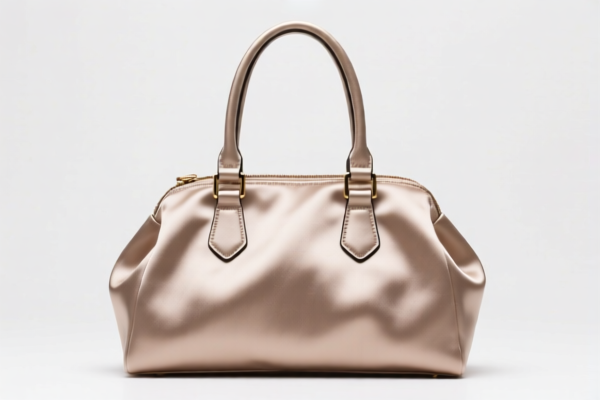
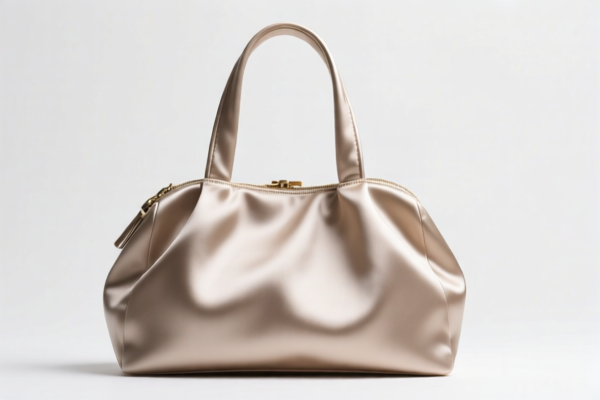
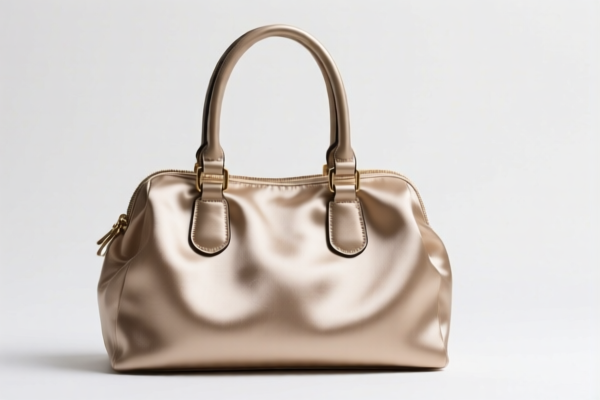
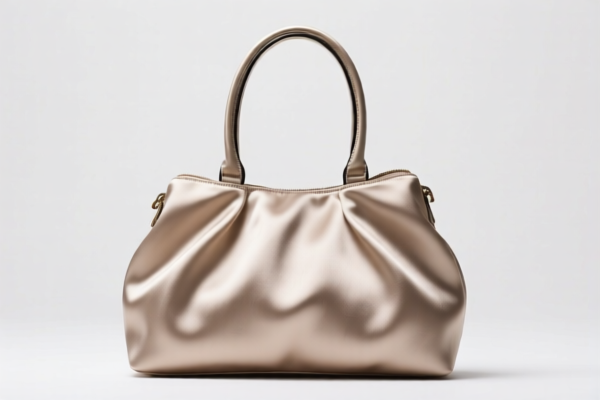
AI Analysis
👜 Silk Fabric Handbags (Sun-Proof)
🌐 HS Code Reference & Customs Clearance Guide | 2026 Latest Tariff Analysis | Professional Logistics Strategy
📌 I. Product Definition & Classification: Do You Really Know "Silk Handbags"?
Silk Fabric Handbags (Sun-Proof) are luxury or semi-luxury accessories used for carrying personal items, characterized by silk material and sun-protection features (often UV-resistant coating or dense weave). In international trade, classification hinges on two core attributes:
- Material Composition: Is it primarily silk (Chapter 50) or another textile?
- Form Factor: Is it a handbag, pocketbook, or a general textile product?
⚠️ Key Classification Logic: - If the bag is primarily made of silk and structured as a handbag → Likely falls under Chapter 42 (Articles of Leather; Travel Goods). - If the "sun-proof" feature involves non-textile coatings or if the silk content is low/secondary → Potential confusion with general textile articles (Chapter 63). - Critical Distinction: The US Customs and Border Protection (CBP) prioritizes the essential character of the good. For a handbag, the "bag" aspect usually trumps the "fabric" aspect unless the fabric is the sole defining feature in a non-bag form.
📦 II. HS Code Classification Details (2026 Latest Tariff Authority Comparison)
Based on the provided data, here are the five potential HS Codes for Silk Fabric Handbags (Sun-Proof):
| HS Code | Product Description | Applicable Scenario | Tax Rate (Total) |
|---|---|---|---|
5007.90.60.90 |
Silk Fabric/Textile Material (Generic) | Matches material attribute (silk) but ignores handbag form. Used if classified strictly as raw textile or unstructured fabric goods. | 38.9% |
4202.22.70.00 (Type A) |
Handbags, Purses, Pocketbooks (Silk >85%) | Form: Handbag. Material: Silk inferred to be >85%. Standard classification for high-quality silk handbags. | 42.0% |
4202.22.40.10 |
Handbags with Silk Content (Specific Sub-category) | Form: Handbag. Material: Silk. Specifics: Fully complies with textile/silk component requirements for specific sub-headings. | 42.4% |
4202.22.70.00 (Type B) |
Handbags (Silk Outer Surface) | Form: Handbag. Material: Silk outer surface. Matches textile and silk characteristics for general handbag classification. | 42.0% |
6307.90.98.91 |
Other Made-Up Textile Articles | Material: Silk. Form: Handbag (classified as "other made-up"). Conflict: No material/form conflict, but lower tax rate. Often used if the bag doesn't meet strict "handbag" definitions or has complex multi-material construction. | 24.5% |
🔍 Key Insight: - Chapter 42 (Handbags) is the standard for finished handbags. Codes
4202.22.70.00and4202.22.40.10are the most likely correct classifications for pure silk handbags. - Chapter 50 (5007...) is risky if the item is a finished bag; CBP may reclassify it as a handbag (4202...), leading to higher duties (42% vs 38.9%). - Chapter 63 (6307...) offers the lowest tax (24.5%) but carries a high risk of reclassification if the product is clearly a handbag. Only use if the bag is non-standard (e.g., tote bag made of loose weave, not structured).
💰 III. 2026 Latest Tariff Rate Breakdown (Including Surcharges & Policy Add-ons)
✅ Applicable Country: United States (US)
✅ Origin: China (CN)
✅ Effective Date: Post-November 2025 (Current Trade War Status)
🎯 1. 5007.90.60.90 – Silk Fabric/Textile (Raw/Unstructured)
| Item | Content |
|---|---|
| Base Tariff | 3.9% |
| Section 301 Surcharge | +25.0% (USITC Footnote) |
| IEEPA Add-on | +10.0% (China-specific) |
| Total Tariff | 38.9% |
| Calculation Basis | CIF Value × 38.9% |
| De Minimis Exemption | ❌ No (Denied for China-origin goods) |
| Legal Path | IEEPA:9903.01.25 → USITC:5007.90.60.90 → FOOTNOTE:9903.88.01 |
📌 Explanation:
- This rate applies if the goods are classified as textile material rather than a finished handbag.
- Risk: If CBP determines the item is a handbag, they will reassess under Chapter 42, potentially increasing the duty to 42%.
🎯 2. 4202.22.70.00 – Handbags (Silk >85%) & 4202.22.70.00 (Silk Outer Surface)
| Item | Content |
|---|---|
| Base Tariff | 7.0% |
| Section 301 Surcharge | +25.0% |
| IEEPA Add-on | +10.0% |
| Total Tariff | 42.0% |
| Calculation Basis | CIF Value × 42.0% |
| De Minimis Exemption | ❌ No |
| Legal Path | IEEPA:9903.01.25 → USITC:4202.22.70.00 → FOOTNOTE:9903.88.01 |
📌 Note:
- This is the standard classification for high-end silk handbags.
- The "Sun-Proof" feature does not change the classification unless it adds significant electronic components (which it doesn't).
- Total Cost: 42% is high but predictable. Budget accordingly.
🎯 3. 4202.22.40.10 – Handbags (Specific Silk Content Sub-category)
| Item | Content |
|---|---|
| Base Tariff | 7.4% |
| Section 301 Surcharge | +25.0% |
| IEEPA Add-on | +10.0% |
| Total Tariff | 42.4% |
| Calculation Basis | CIF Value × 42.4% |
| De Minimis Exemption | ❌ No |
| Legal Path | IEEPA:9903.01.25 → USITC:4202.22.40.10 → FOOTNOTE:9903.88.01 |
📌 Note:
- Slightly higher than4202.22.70.00.
- Use only if the specific silk content matches the criteria for this sub-heading (e.g., exact percentage thresholds defined by USITC).
🎯 4. 6307.90.98.91 – Other Made-Up Textile Articles
| Item | Content |
|---|---|
| Base Tariff | 7.0% |
| Section 301 Surcharge | +7.5% (Reduced for this category?) |
| IEEPA Add-on | +10.0% |
| Total Tariff | 24.5% |
| Calculation Basis | CIF Value × 24.5% |
| De Minimis Exemption | ❌ No |
| Legal Path | IEEPA:9903.01.25 → USITC:6307.90.98.91 → FOOTNOTE:9903.88.01 |
📌 Critical Warning:
- This offers the lowest tax (24.5%).
- However, it is only applicable if the item is not classified as a "handbag" under Chapter 42.
- If CBP inspects the goods and finds it is a standard handbag, they will reclassify it to4202..., leading to back taxes + penalties (42% - 24.5% = 17.5% difference).
- Recommendation: Only use this if the product is a non-standard tote, pouch, or accessory that doesn't meet the legal definition of a "handbag."
🛠️ IV. Customs Clearance Practical Advice (Pitfall Avoidance Guide)
✅ 1. Documentation Checklist (Must-Haves)
| Document | Required? | Description |
|---|---|---|
| ✅ Product Specification Sheet | ✔️ | Detail material composition (e.g., "100% Silk Lining, Silk Outer with UV Coating"). |
| ✅ High-Resolution Photos | ✔️ | Show the bag's structure, handles, closure, and any "Sun-Proof" labels/certifications. |
| ✅ Commercial Invoice | ✔️ | Clearly state "Silk Handbag, UV-Protected." Do not use generic terms like "Textile Bag." |
| ✅ Bill of Lading/Air Waybill | ✔️ | Ensure HS Code matches the declared classification. |
| ✅ Material Test Report | ✔️ | Proof of silk content (e.g., ASTM D123) to support Chapter 42 classification. |
✅ 2. Declaration Strategy (Key Mantra)
🔥 "Structure Defines, Material Supports, Sun-Proof is a Feature, Not a Class!"
| Scenario | Correct Declaration | Wrong Action |
|---|---|---|
| Standard Silk Handbag | 4202.22.70.00 or 4202.22.40.10 |
Classify as 6307... to save tax → High Audit Risk |
| Unstructured Silk Pouch | 6307.90.98.91 |
Classify as 4202... → Higher Tax (42%) |
| Silk Fabric Roll | 5007.90.60.90 |
Classify as Handbag → Rejection/Reclassification |
| Sun-Proof Coating | Mention in description | Do not claim it changes HS Code |
✅ 3. Special Case Handling
| Scenario | Handling Advice |
|---|---|
| OEM Custom Design | Provide design sketches to prove "handbag" structure (handles, compartments). |
| "Sun-Proof" Technology | If the coating is merely topical, it doesn't change classification. If it adds electronic UV sensors, consider Chapter 85! |
| Mixed Materials | If silk is <85%, check if other materials dictate classification. Stick to 4202.22... if silk is dominant. |
| High-Value Luxury Bag | Ensure valuation is accurate. CBP may inspect for "undervaluation" due to low declared price. |
🌍 V. Global Market Comparison (2026 Latest)
| Country/Region | Recommended HS Code | Tariff | Certification | Notes |
|---|---|---|---|---|
| 🇺🇸 USA | 4202.22.70.00 |
42.0% | None (Standard) | Highest Tariff. Consider 6307 only if legally defensible. |
| 🇨🇳 China | 4202.22.70.00 |
5% | None | Low import duty. No Section 301/IEEPA surcharges. |
| 🇪🇺 EU | 4202.22.99 |
4-12% | CE (if applicable) | No US-style surcharges. Varies by exact silk content. |
| 🇬🇧 UK | 4202.22.99 |
4-12% | UKCA | Post-Brexit rules. Similar to EU. |
| 🇦🇺 Australia | 4202.22.99 |
5% | None | Competitive rate. No major surcharges. |
📌 Conclusion:
- USA is the most challenging market due to Section 301 and IEEPA surcharges.
- China, EU, UK, AU have significantly lower or no additional tariffs.
- Strategy: For US exports, ensure accurate classification to avoid penalties. Consider supply chain diversification if tariffs are prohibitive.
📌 VI. Common Errors & Pitfall Guide (Lessons Learned)
❌ Error 1: Classifying a structured handbag as 6307.90.98.91 to save 17.5% in tax.
👉 Consequence: CBP reclassification, back taxes + 10% penalty + storage fees. Total Cost increases by 30%+.
❌ Error 2: Declaring "Sun-Proof Handbag" without specifying material.
👉 Consequence: CBP requests material proof. If delayed, goods are held at port. Demurrage costs apply.
❌ Error 3: Using 5007.90.60.90 for a finished bag.
👉 Consequence: CBP rules that "essential character" is the bag, not the fabric. Reclassified to 4202 (42%).
❌ Error 4: Ignoring IEEPA 10% surcharge.
👉 Consequence: Underpayment of duties. Audit trigger.
✅ Correct Approach:
"Silk Handbag, UV-Coated Outer Shell, Cotton Lining, with Zipper Closure. Model: UV-Silk-01."
🎯 VII. Conclusion: Precision in Classification, Profit in Clearance!
🎯 Key Takeaways:
🔹 "Handbag Form = Chapter 42. Silk Material = Supports 42. Sun-Proof = Description Only."
🔹 "Tax Rate Reality: 42% (Standard) vs. 24.5% (Risky). Choose wisely!"
🔹 "Documentation is Key: Prove the Silk Content, Prove the Bag Structure."
📌 Pro Tip:
If your silk handbags are originating from Vietnam, Mexico, or Thailand, you may qualify for IEEPA Exemption or lower Section 301 rates.
👉 Recommendation: Apply for a Binding Ruling from CBP before shipment if your product structure is borderline between 4202 and 6307.
📣 Immediate Action:
📞 Contact a licensed customs broker.
📦 Provide product photos + material specs.
📝 File for Advance Ruling to lock in the HS Code.
✨ Professional Clearance Starts with Accurate Classification!
💼 Your Every Dollar Saved is a Profit Earned!
Customer Reviews
About HS Code Classification
The Harmonized System (HS) is an internationally standardized nomenclature developed by the World Customs Organization (WCO) to classify traded products. Over 200 countries use the HS system as the basis for customs tariffs, trade statistics, and import/export regulations.
Each HS code follows a hierarchical structure:
- Chapter (2 digits) — Broad category of goods (e.g., Chapter 84: Machinery and Mechanical Appliances)
- Heading (4 digits) — More specific grouping within the chapter
- Subheading (6 digits) — Internationally standardized breakdown, used by all WCO member countries
- National subdivisions (8-10 digits) — Country-specific extensions for further classification, such as US HTSUS 10-digit codes
Correct HS code classification is essential for smooth customs clearance, accurate duty payment, and compliance with trade regulations. Misclassification can lead to customs delays, overpayment of duties, or penalties.
When importing from CN to US, the applicable tariff rates may include:
- Most-Favored-Nation (MFN) rate — The standard duty rate applied to WTO members
- General rate — Applied to countries without trade agreements
- Trade remedy duties — Additional tariffs such as Section 301 (anti-dumping), Section 232 (national security), or countervailing duties
The information provided on this page is for reference purposes only. For official classification, please consult with your local customs authority or a licensed customs broker.