Silk Fabric Handbags (Vintage)
CN → US| HS Code | Tariff Rate | Origin | Destination | Doc |
|---|---|---|---|---|
| 5007906090 | 38.9% | CN | US | Official Doc |
| 4202227000 | 42.0% | CN | US | Official Doc |
| 4202224010 | 42.4% | CN | US | Official Doc |
| 4202227000 | 42.0% | CN | US | Official Doc |
| 4202224010 | 42.4% | CN | US | Official Doc |
Product Images
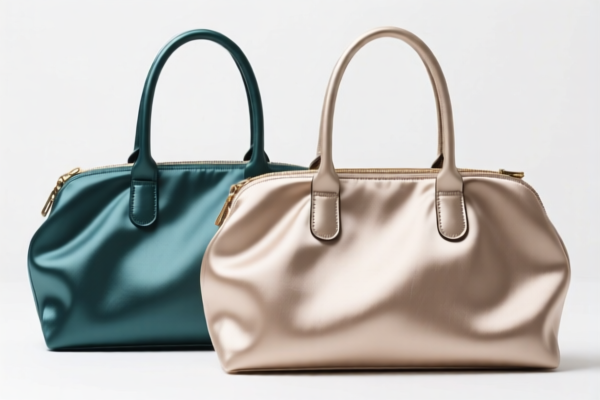
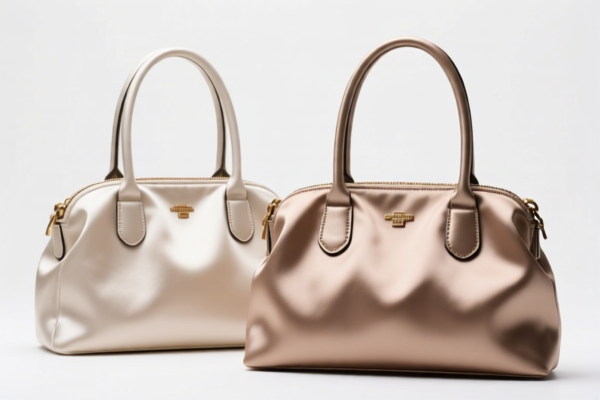
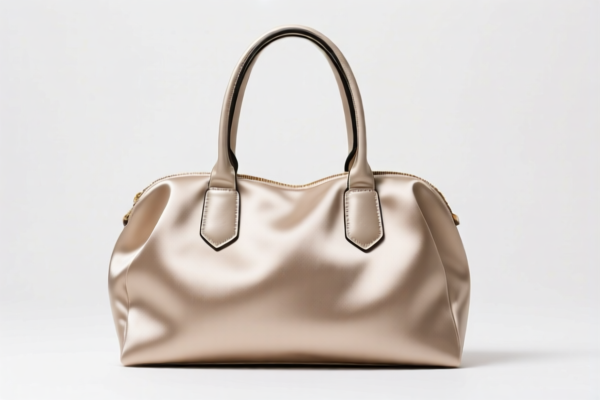
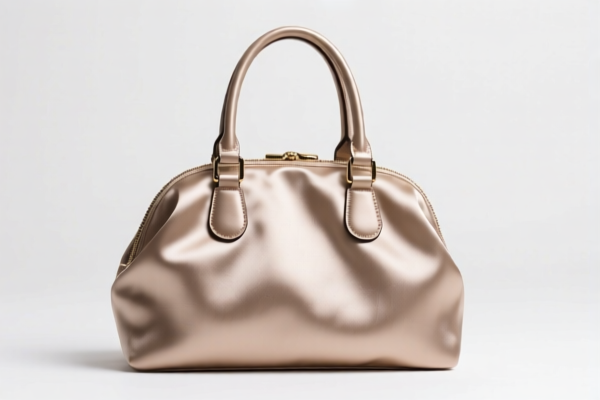
AI Analysis
👜 Silk Fabric Handbags (Vintage)
🌐 HS Code Reference & Customs Clearance Guide | 2026 Latest Tariff Analysis | Professional Clearance Strategy
📌 I. Product Definition & Classification: Do You Really Understand "Silk Handbags"?
Silk Fabric Handbags (Vintage), often referred to as luxury fashion accessories, are defined by their core material attribute (silk) and form factor (handbag/purse). In international trade, classification is not just about what it looks like, but what it is made of.
Key Classification Logic: 1. Form Factor: If it is a handbag, it generally falls under Chapter 42 (Articles of leather; saddlery and harness). 2. Material Composition: If the outer surface is silk (or contains ≥85% silk), it falls under specific subheadings in 4202.22. 3. The "Fabric" Conflict: While "Silk" is a textile (Chapter 50), finished articles like handbags are excluded from Chapter 50 and are classified under Chapter 42. However, the degree of silk content determines the exact subheading.
⚠️ Critical Distinction:
- If the item is purely a piece of silk fabric (not sewn into a bag) → Chapter 50.
- If the item is a finished handbag/purse with silk outer surface → Chapter 42.
- Vintage Status: Does not change HS Code, but may affect valuation and "new/used" declarations.
📦 II. HS Code Classification Details (2026 Latest Tariff Authority Cross-Reference)
Based on the product description "Silk Fabric Handbags," here are the precise classifications derived from the data:
| HS Code | Product Description | Summary of Classification Logic | Total Tax Rate (China → US) |
|---|---|---|---|
| 4202.22.70.00 | Handbags, with outer surface of textile materials, containing ≥85% silk | Form fits handbag; inferred ≥85% silk content based on material description. | 42.0% |
| 4202.22.40.10 | Handbags, with outer surface of textile materials, containing <85% silk | Form fits handbag; fully compliant with textile materials including silk components (but <85%). | 42.4% |
| 5007.90.60.90 | Silk Fabrics (Incorrect for Finished Bags) | Matches material "Silk" & form "Fabric," but inapplicable if it is a finished handbag. Included only for material attribute matching. | 38.9% |
🔍 Key Insight:
- 4202.22.70.00 and 4202.22.40.10 are the correct classifications for finished handbags.
- 5007.90.60.90 is likely a mismatch for a finished handbag, as it refers to raw silk fabric. Using this code for a handbag risks customs rejection.
- The difference between 42.0% and 42.4% depends on whether the silk content is ≥85% or <85%.
💰 III. 2026 Latest Tariff Rate Breakdown (Including Surcharges & Policy Add-ons)
✅ Applicable Country: United States (US)
✅ Origin: China (CN)
✅ Effective Date: From November 10, 2025 (including subsequent imports)
🎯 1. 4202.22.70.00 – Handbags (Outer Surface: Textile, Silk ≥85%)
| Item | Content |
|---|---|
| Base Tariff Rate | 7.0% (ad valorem) |
| Section 301 Surcharge | +25.0% (USITC Footnote 9903.88.01) |
| IEEPA Surcharge | +10.0% (For China/HK products, from Nov 10, 2025) |
| Total Tax Rate | 42.0% |
| Tax Calculation | CIF Value × 42.0% |
| De Minimis Exemption | ❌ Not Eligible (deny_de_minimis) |
| Legal Pathway | IEEPA:9903.01.25 → IEEPA:9903.01.24 → USITC:4202.22.70.00 → FOOTNOTE:9903.88.01 |
📌 Explanation:
- The 7.0% base rate applies to handbags with textile outer surfaces.
- The +25% is the standard Section 301 tariff on most Chinese goods.
- The +10% is the new IEEPA surcharge effective Nov 2025.
- Total 42.0% is a significant cost barrier.
🎯 2. 4202.22.40.10 – Handbags (Outer Surface: Textile, Silk <85%)
| Item | Content |
|---|---|
| Base Tariff Rate | 7.4% (ad valorem) |
| Section 301 Surcharge | +25.0% |
| IEEPA Surcharge | +10.0% |
| Total Tax Rate | 42.4% |
| Tax Calculation | CIF Value × 42.4% |
| De Minimis Exemption | ❌ Not Eligible (deny_de_minimis) |
| Legal Pathway | IEEPA:9903.01.25 → IEEPA:9903.01.24 → USITC:4202.22.40.10 → FOOTNOTE:9903.88.01 |
📌 Note:
- This code applies if the silk content is less than 85%.
- The base rate is slightly higher (7.4% vs 7.0%), leading to a 42.4% total rate.
- Both 4202.22 codes are subject to the same surcharges.
🎯 3. 5007.90.60.90 – Silk Fabrics (Material Match Only)
| Item | Content |
|---|---|
| Base Tariff Rate | 3.9% (ad valorem) |
| Section 301 Surcharge | +25.0% |
| IEEPA Surcharge | +10.0% |
| Total Tax Rate | 38.9% |
| Tax Calculation | CIF Value × 38.9% |
| De Minimis Exemption | ❌ Not Eligible (deny_de_minimis) |
| Legal Pathway | IEEPA:9903.01.25 → IEEPA:9903.01.24 → USITC:5007.90.60.90 → FOOTNOTE:9903.88.01 |
📌 Warning:
- This rate is lower (38.9%), but incorrect for finished handbags.
- Misdeclaring a handbag as "silk fabric" is a customs violation that can lead to penalties, seizure, and back taxes.
- Only use this if you are importing raw silk rolls, not bags.
🛠️ IV. Customs Clearance Practical Advice (Battle-Tested Pitfall Avoidance)
✅ 1. Documentation Checklist (Must-Haves)
| Document | Required | Description |
|---|---|---|
| ✅ Product Specification Sheet | ✔️ | Must detail: Material composition (% Silk, % Other), Dimensions, Closure Type, Lining Material. |
| ✅ Photos (Clear & Detailed) | ✔️ | Show the entire bag, lining, hardware, labels, and material texture to prove silk content. |
| ✅ Commercial Invoice | ✔️ | Clearly state: "Silk Handbag, Vintage Style, Outer Surface: Silk Textile, Model: XYZ." |
| ✅ Packing List | ✔️ | List items clearly. Do not separate "bag" and "fabric" if sold as one unit. |
| ✅ Origin Certificate (CO) | ✔️ | Required for proving China origin (and thus subject to surcharges). |
| ✅ Third-Party Test Report | ⚠️ Recommended | Fiber content analysis to prove ≥85% or <85% silk. Crucial for distinguishing between 4202.22.70.00 and 4202.22.40.10. |
✅ 2. Declaration Tips (Key Mnemonics)
🔥 "Form is Bag, Material is Silk, Declare 42, Not 50!"
| Scenario | Correct Declaration | Wrong Action |
|---|---|---|
| Finished Handbag with Silk | 4202.22.70.00 (if ≥85% silk) or 4202.22.40.10 (if <85%) |
❌ Declare as 5007.90.60.90 (Fabric) → Customs Rejection |
| Raw Silk Fabric | 5007.90.60.90 |
❌ Declare as Handbag → Wrong Classification |
| Mixed Material Bag (e.g., Silk + Leather) | Check main material/outer surface | ❌ Guessing → Risk of Audit |
✅ 3. Special Cases
| Case | Handling Advice |
|---|---|
| Vintage/Antique Bags | Declare as "Used" or "Vintage." While HS Code doesn't change, valuation may differ. Ensure "Vintage" is accurate to avoid fraud claims. |
| OEM Custom Bags | Provide design specs and material invoices to prove silk content. |
| High-Value Luxury Bags | Be prepared for additional scrutiny on valuation. Ensure declared value matches commercial reality. |
🌍 V. Global Market Comparison (2026 Latest)
| Country/Region | Recommended HS Code | Tariff | Certification | Notes |
|---|---|---|---|---|
| 🇺🇸 USA | 4202.22.70.00 |
42.0% (CN Origin) | None specific | High tariff due to 301 + IEEPA |
| 🇨🇳 China | 4202.22.70.00 |
~10-15% | N/A | Lower base tariff, no US surcharges |
| 🇪🇺 EU | 4202.22.70.00 |
~10-12% | CE (if applicable) | No Section 301/IEEPA surcharges |
| 🇬🇧 UK | 4202.22.70.00 |
~12-15% | UKCA | Post-Brexit rules apply |
📌 Conclusion:
- USA has the highest total tax burden (42.0%+) for silk handbags from China.
- EU/UK/China have significantly lower tariffs. Consider supply chain diversification if shipping to the US.
📌 VI. Common Mistakes & Pitfalls (Blood Lessons)
❌ Mistake 1: Declaring a finished handbag as "Silk Fabric" (5007)
👉 Consequence: Customs rejects declaration, fines, and back taxes. The item is not fabric; it is a manufactured good.
❌ Mistake 2: Incorrect Silk Content Declaration
👉 Consequence: Declaring 85% silk when it’s 70% changes the HS code from 4202.22.70.00 (42.0%) to 4202.22.40.10 (42.4%). While the difference is small, inconsistency can trigger audits.
❌ Mistake 3: Ignoring IEEPA Surcharge
👉 Consequence: Failing to account for the new +10% IEEPA tariff effective Nov 2025 leads to underpayment and penalties.
❌ Mistake 4: Declaring as "Textile Article" without specifying Silk
👉 Consequence: Generic declarations delay customs clearance. Be specific: "Outer Surface: Silk."
✅ Correct Practice:
"Silk Handbag, Vintage Style, Outer Surface: 90% Silk, 10% Lining, Model: ABC, Origin: China, Value: $100 USD"
🎯 VII. Conclusion: Professional Declaration, Save Time & Money!
🎯 Remember the Rules:
🔹 "Handbag = Chapter 42, Not Chapter 50!"
🔹 "Silk ≥85% → 4202.22.70.00 (42.0%), Silk <85% → 4202.22.40.10 (42.4%)"
🔹 "Factor in 35% (25% + 10%) surcharges on top of base rate!"
📌 Pro Tip:
If your silk handbags are made in Vietnam, Italy, or France, you can avoid the 25% + 10% surcharges. Consider repackaging or final assembly in non-China countries to optimize costs for the US market.
📣 Immediate Action:
📞 Contact a licensed customs broker + Provide Material Test Reports + Verify IEEPA Compliance
🚀 Clear Customs Smoothly, Maximize Profits!
✨ Professional Clearance Starts with Accurate Classification!
💼 Every dollar of tax saved is profit earned!
Customer Reviews
About HS Code Classification
The Harmonized System (HS) is an internationally standardized nomenclature developed by the World Customs Organization (WCO) to classify traded products. Over 200 countries use the HS system as the basis for customs tariffs, trade statistics, and import/export regulations.
Each HS code follows a hierarchical structure:
- Chapter (2 digits) — Broad category of goods (e.g., Chapter 84: Machinery and Mechanical Appliances)
- Heading (4 digits) — More specific grouping within the chapter
- Subheading (6 digits) — Internationally standardized breakdown, used by all WCO member countries
- National subdivisions (8-10 digits) — Country-specific extensions for further classification, such as US HTSUS 10-digit codes
Correct HS code classification is essential for smooth customs clearance, accurate duty payment, and compliance with trade regulations. Misclassification can lead to customs delays, overpayment of duties, or penalties.
When importing from CN to US, the applicable tariff rates may include:
- Most-Favored-Nation (MFN) rate — The standard duty rate applied to WTO members
- General rate — Applied to countries without trade agreements
- Trade remedy duties — Additional tariffs such as Section 301 (anti-dumping), Section 232 (national security), or countervailing duties
The information provided on this page is for reference purposes only. For official classification, please consult with your local customs authority or a licensed customs broker.