Silk Handbag Eco friendly
CN → US| HS Code | Tariff Rate | Origin | Destination | Doc |
|---|---|---|---|---|
| 5007903090 | 35.8% | CN | US | Official Doc |
| 5007906090 | 38.9% | CN | US | Official Doc |
| 4202224010 | 42.4% | CN | US | Official Doc |
| 4202227000 | 42.0% | CN | US | Official Doc |
Product Images
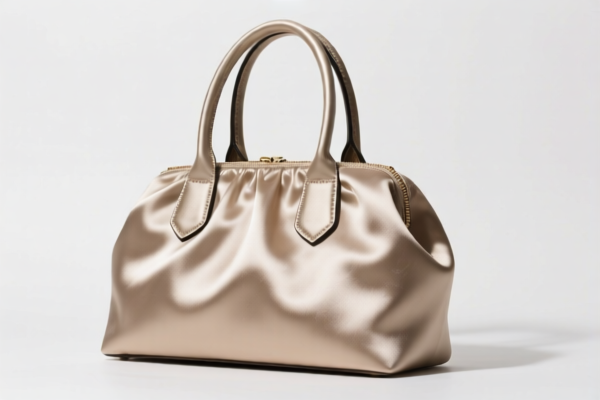
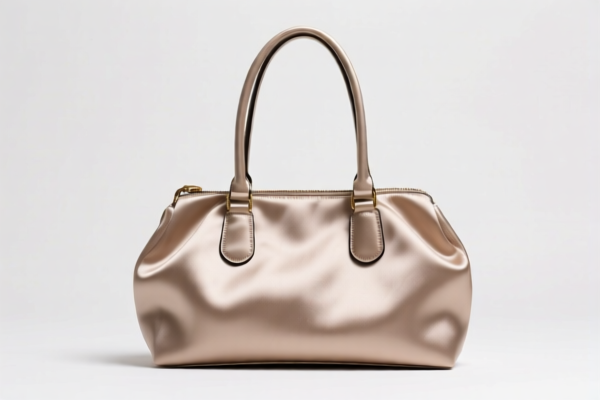
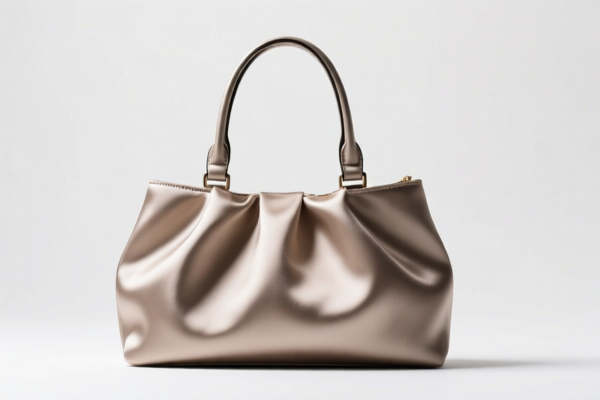
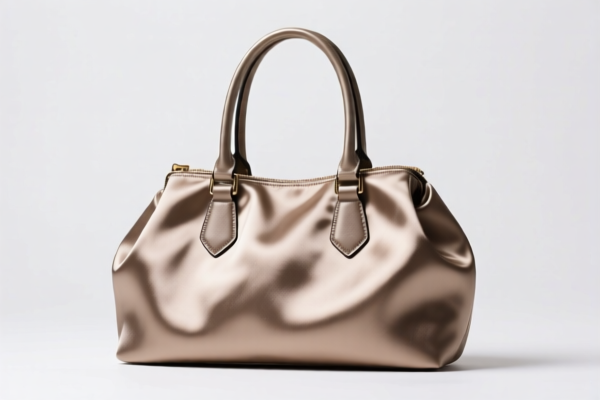
AI Analysis
👜 Silk Handbags: Eco-Friendly Luxury & HS Code Clearance Guide (2026)
🌐 HS Code Reference & Customs Clearance Guide | 2026 Latest Tariff Analysis | Professional-Level Strategy
📌 I. Product Definition: What Makes a "Silk Handbag" Eco-Friendly?
Silk handbags are luxury accessories made primarily from natural protein fibers derived from silkworms. In the context of international trade and sustainability:
🌿 "Eco-Friendly" Silk Characteristics:
- Natural Fibers: Derived from Bombyx mori or wild silkworms, biodegradable under proper conditions.
- Low Chemical Processing: Uses organic dyes, non-toxic adhesives, and minimal water consumption in production.
- Certifications: GOTS (Global Organic Textile Standard), OEKO-TEX®, or similar eco-labels enhance marketability.
⚠️ Key Distinction:
- "Eco-friendly" is a marketing term, not a customs classification criterion.
- Customs classification depends on material composition, construction, and intended use, not environmental claims.
- Silk content ≥85% by weight triggers specific HS subheadings under Chapter 50 (Silk).
📦 II. HS Code Classification Details (2026 Official Tariff)
| HS Code | Product Description | Material Composition | Key Features |
|---|---|---|---|
4202.22.40.10 |
Handbags with outer surface of textile materials, wholly or in part of braid, containing ≥85% silk/silk waste | Silk or silk waste (≥85%) | Braided silk exterior, luxury handbags |
4202.22.70.00 |
Handbags with outer surface of textile materials, other, containing ≥85% silk/silk waste | Silk or silk waste (≥85%) | Non-braided silk exterior, standard luxury handbags |
5007.90.30.90 |
Woven fabrics of silk/silk waste, containing ≥85% silk/silk waste | Raw silk fabric (≥85%) | Fabric only, not finished goods |
5007.90.60.90 |
Woven fabrics of silk/silk waste, other | Silk or silk waste (<85% or unspecified) | Raw silk fabric, lower silk content |
🔍 Critical Note:
- Finished handbags fall under Chapter 42 (Articles of Leather; Travel Goods; Handbags).
- Raw silk fabric falls under Chapter 50 (Silk).
- Do not confuse fabric imports with finished goods. Customs will reject misclassified shipments.
💰 III. 2026 Tariff Rate Breakdown (USA Market)
✅ Applicable Country: United States (US)
✅ Country of Origin: China (CN)
✅ Effective Date: November 10, 2025 (and subsequent imports)
🎯 1. 4202.22.40.10 — Braided Silk Handbags (≥85% Silk)
| Item | Details |
|---|---|
| Base Duty Rate | 0% (ad valorem) |
| Section 301 Additional Duty | +25% (USITC Footnote 9903.88.01) |
| IEEPA Additional Duty | +10% (China/Hong Kong products, effective Nov 10, 2025) |
| Total Duty Rate | 35% |
| Tax Calculation | CIF Value × 35% |
| De Minimis Exemption? | ❌ Not Eligible (deny_de_minimis) |
| Legal Basis Path | IEEPA:9903.01.25 → IEEPA:9903.01.24 → USITC:4202.22.40.10 → FOOTNOTE:9903.88.01 |
📌 Explanation:
- Although base duty is 0%, Section 301 (25%) + IEEPA (10%) result in a 35% total tariff.
- This is a high-duty category for Chinese-origin silk handbags.
- No de minimis exemption applies, even for small shipments.
🎯 2. 4202.22.70.00 — Non-Braided Silk Handbags (≥85% Silk)
| Item | Details |
|---|---|
| Base Duty Rate | 0% (ad valorem) |
| Section 301 Additional Duty | +25% (USITC Footnote 9903.88.01) |
| IEEPA Additional Duty | +10% (China/Hong Kong products, effective Nov 10, 2025) |
| Total Duty Rate | 35% |
| Tax Calculation | CIF Value × 35% |
| De Minimis Exemption? | ❌ Not Eligible |
| Legal Basis Path | IEEPA:9903.01.25 → IEEPA:9903.01.24 → USITC:4202.22.70.00 → FOOTNOTE:9903.88.01 |
📌 Note:
- Identical tariff structure to braided silk handbags.
- Both HS codes suffer the same 35% total duty for Chinese origin.
- "Eco-friendly" claims do not reduce tariff liability.
🎯 3. 5007.90.30.90 & 5007.90.60.90 — Raw Silk Fabric (Not Finished Goods)
| Item | Details |
|---|---|
| Base Duty Rate | 0% (ad valorem) |
| Section 301 Additional Duty | +25% |
| IEEPA Additional Duty | +10% |
| Total Duty Rate | 35% |
| De Minimis Exemption? | ❌ Not Eligible |
📌 Warning:
- If you import raw silk fabric instead of finished handbags, the same 35% duty applies.
- Misdeclaring fabric as "handbag accessories" to avoid duty will result in penalties and seizure.
🛠️ IV. Customs Clearance Practical Advice (Real-World Pitfall Avoidance)
✅ 1. Required Documentation Checklist
| Document | Mandatory? | Purpose |
|---|---|---|
| ✅ Commercial Invoice | ✔️ | Must specify "Silk Handbag, ≥85% Silk Content" |
| ✅ Packing List | ✔️ | Item count, weights, dimensions |
| ✅ Certificate of Origin (CO) | ✔️ | Proves Chinese origin; no preferential rate available |
| ✅ Product Description Sheet | ✔️ | Details material composition, braiding vs. non-braided |
| ✅ Eco-Certification (Optional) | ❌ | GOTS/OEKO-TEX for marketing, not customs |
| ✅ Third-Party Lab Test Report | ✔️ | Verifies silk content ≥85% (critical for correct HS code) |
✅ 2. Declaration Tips (Key Mantra)
🔥 “Declare Silk Content, Not Eco-Friendly! Full Name, Correct Code, Avoid 35% Surprise!”
| Scenario | Correct Declaration | Incorrect Declaration |
|---|---|---|
| Braided silk handbag | 4202.22.40.10 |
Misdeclare as "fabric" → 5007.90.30.90 (same duty, but different inspection) |
| Non-braided silk handbag | 4202.22.70.00 |
Misdeclare as "leather handbag" → 4202.21.xx (different duty, high penalty) |
| Raw silk fabric | 5007.90.30.90 or 5007.90.60.90 |
Declare as "handbag" → Seizure + Penalty |
| Mixed material handbag (<85% silk) | Different HS code (not in this list) | Declare as "≥85% silk" → Misclassification Penalty |
✅ 3. Special Cases & Handling
| Scenario | Handling Advice |
|---|---|
| OEM Custom Silk Handbags | Provide design specs, silk content test report, and client order. Avoid being flagged as "unknown origin." |
| Handbags with Silk Lining (<85% Silk) | Classify under textile handbags (not silk-specific HS codes). Duty may still be 35% if Section 301 applies. |
| "Eco-Friendly" Marketing Claims | Include in marketing materials, not customs declaration. Customs ignores sustainability labels. |
| Small Shipments (De Minimis) | ❌ Not Eligible. Even $800 shipments incur 35% duty. Plan accordingly. |
🌍 V. Global Market Comparison (2026)
| Country/Region | Recommended HS Code | Duty Rate (China Origin) | Certification Requirements | Notes |
|---|---|---|---|---|
| 🇺🇸 USA | 4202.22.40.10 / 4202.22.70.00 |
35% (25% + 10%) | No special certs required | High duty; no de minimis |
| 🇨🇳 China | 4202.22.40.10 / 4202.22.70.00 |
5% (Import Duty) | CCC (if applicable) | Lower duty for domestic sales |
| 🇪🇺 EU | 4202.22.40.10 / 4202.22.70.00 |
4% | CE (if applicable), REACH | No Section 301; moderate duty |
| 🇬🇧 UK | 4202.22.40.10 / 4202.22.70.00 |
4% | UKCA | Post-Brexit alignment with EU |
| 🇯🇵 Japan | 4202.22.40.10 / 4202.22.70.00 |
8% | No special certs | Moderate duty |
📌 Conclusion:
- USA imposes the highest duty (35%) on Chinese silk handbags.
- EU and UK offer lower rates (4%) but require compliance with REACH/CE.
- Japan has moderate duty (8%) with no special certifications.
- "Eco-friendly" does not reduce tariffs in any major market.
📌 VI. Common Mistakes & Pitfalls (Lessons Learned)
❌ Mistake 1: Declaring silk handbags as "fabric" to avoid scrutiny
👉 Consequence: Customs audits silk content; if <85%, penalty for misclassification.
❌ Mistake 2: Assuming "eco-friendly" reduces duty
👉 Consequence: Zero reduction. Duty remains 35%. Misleading declarations lead to penalties.
❌ Mistake 3: Using vague descriptions like "silk handbag" without specifying content
👉 Consequence: Customs assigns default code; potential for higher duty or delay.
❌ Mistake 4: Ignoring Section 301 and IEEPA tariffs
👉 Consequence: Unexpected 35% charge at border; cash flow disruption.
✅ Correct Practice:
"Silk Handbag, Braided Exterior, 90% Silk Content, Model XYZ, GOTS Certified, Made in China"
🎯 VII. Conclusion: Smart Classification, Lower Costs, Smooth Clearance!
🎯 Key Takeaways:
🔹 "Eco-friendly" is for marketing, not customs. Duty is based on material composition.
🔹 Both braided and non-braided silk handbags (≥85% silk) incur 35% duty in the USA.
🔹 No de minimis exemption for silk handbags from China.
🔹 Accurate declaration is critical: Silk content test reports are mandatory.
📌 Pro Tip:
If your silk handbags are originating from Vietnam, Italy, or France, you may qualify for lower or zero duty under preferential trade agreements.
Consider pre-clearance rulings to confirm HS code and duty rate before shipment.
📣 Immediate Action Required:
📞 Contact a licensed customs broker + Provide product specs + Request HS Code Advance Ruling
🚀 Ensure smooth clearance, accurate duty payment, and market competitiveness!
✨ Professional clearance starts with precise classification!
💼 Every cent saved counts—avoid 35% surprises!
Customer Reviews
About HS Code Classification
The Harmonized System (HS) is an internationally standardized nomenclature developed by the World Customs Organization (WCO) to classify traded products. Over 200 countries use the HS system as the basis for customs tariffs, trade statistics, and import/export regulations.
Each HS code follows a hierarchical structure:
- Chapter (2 digits) — Broad category of goods (e.g., Chapter 84: Machinery and Mechanical Appliances)
- Heading (4 digits) — More specific grouping within the chapter
- Subheading (6 digits) — Internationally standardized breakdown, used by all WCO member countries
- National subdivisions (8-10 digits) — Country-specific extensions for further classification, such as US HTSUS 10-digit codes
Correct HS code classification is essential for smooth customs clearance, accurate duty payment, and compliance with trade regulations. Misclassification can lead to customs delays, overpayment of duties, or penalties.
When importing from CN to US, the applicable tariff rates may include:
- Most-Favored-Nation (MFN) rate — The standard duty rate applied to WTO members
- General rate — Applied to countries without trade agreements
- Trade remedy duties — Additional tariffs such as Section 301 (anti-dumping), Section 232 (national security), or countervailing duties
The information provided on this page is for reference purposes only. For official classification, please consult with your local customs authority or a licensed customs broker.