Silk Lightweight Crossbody Bag
CN → US| HS Code | Tariff Rate | Origin | Destination | Doc |
|---|---|---|---|---|
| 4202224010 | 42.4% | CN | US | Official Doc |
| 4202227000 | 42.0% | CN | US | Official Doc |
| 5007906090 | 38.9% | CN | US | Official Doc |
Product Images
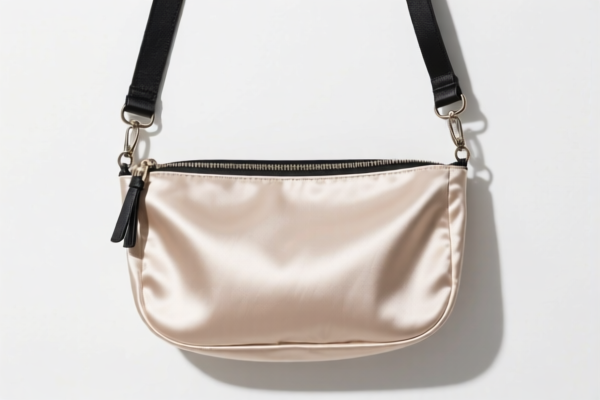
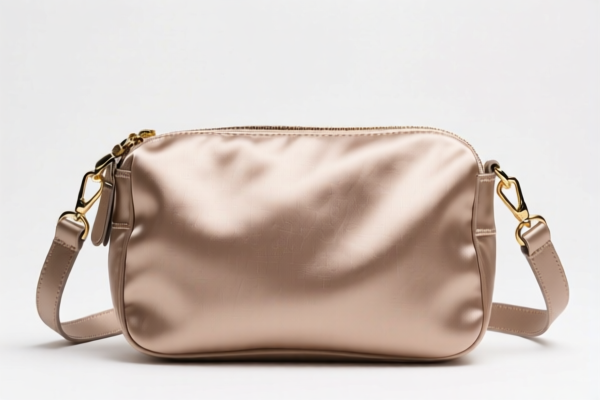
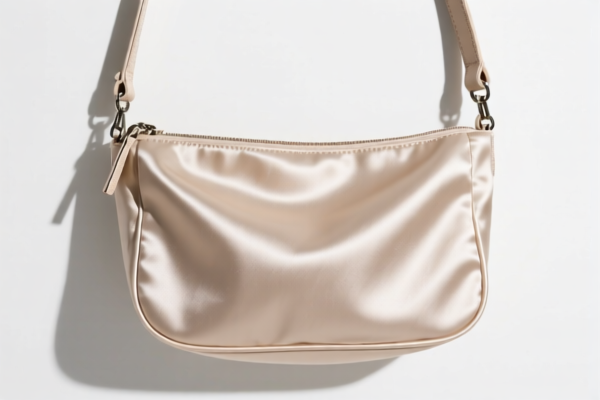
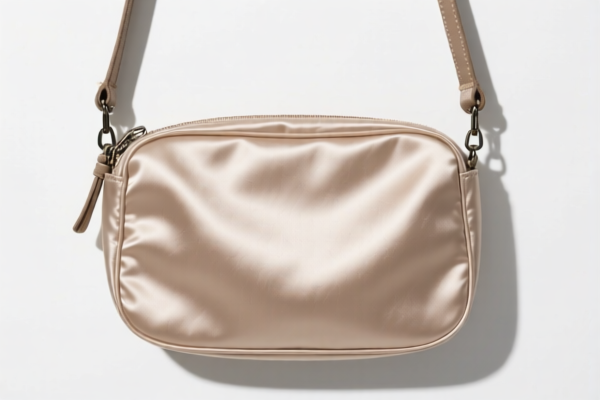
AI Analysis
👜 Silk Lightweight Crossbody Bag (Silk Handbag)
🌐 HS Code Reference & Customs Clearance Guide | 2026 Latest Tariff Analysis | Professional Clearance Strategy
📌 1. Product Definition & Classification: What Exactly is a "Silk Crossbody Bag"?
A Silk Lightweight Crossbody Bag is a fashion accessory designed to be worn across the body, typically featuring a strap longer than a standard clutch. In international trade, the classification depends heavily on the material composition and the specific article type.
The key distinction lies in whether the bag is classified as a general "bag of textile materials" (Chapter 42) or if the silk fabric itself dictates a different classification based on specific sub-headings for accessories.
⚠️ Key Classification Distinction:
- If the bag’s exterior surface is textile material (silk) and fits the definition of a handbag/crossbody bag → It generally falls under HS Code 4202 (Articles of apparel, clothing accessories, handbags, etc.).
- If the product is considered a "bag of textile materials" but the silk content triggers specific fabric-based subheadings, it may still fall under 4202.22 (Handbags with outer surface of textile materials).
- Crucial Note: Do not classify under Chapter 50 (Silk) for the finished bag. Chapter 50 applies to raw silk or silk fabrics, not finished leather/textile goods. The "Bag" designation takes precedence in Chapter 42.
📦 2. HS Code Classification Details (2026 Latest Tariff Reference)
Based on the provided data, here are the three applicable HS Codes for Silk Lightweight Crossbody Bags:
| HS Code | Product Description | Application Scenario | Tax Rate (Total) |
|---|---|---|---|
4202.22.40.10 |
Silk Crossbody Bag; Form fits the category of handbags/crossbody bags; Material is silk. | Standard silk crossbody bag, explicit "crossbody" or "handbag" classification. | 42.4% |
4202.22.70.00 |
Silk Crossbody Bag; Form fits handbag; Outer surface is textile material, with silk characteristics. | Silk handbag/crossbody bag where the primary feature is "textile material exterior." | 42.0% |
5007.90.60.90 |
Silk Leisure Bag; Matches material and form; Fits the characteristics of the silk fabric category. | Note: This code is less standard for finished bags in many jurisdictions but is listed here as a specific "Silk Fabric Category" match. | 38.9% |
🔍 Critical Warning:
-4202.22is the standard chapter for Handbags with an outer surface of textile materials. Silk is a textile.
-5007is typically for Woven Fabrics of Silk. Using this for a finished bag is risky unless specifically justified as a "silk fabric article" rather than a "bag." The data provided lists it, but4202.22is the more conventional classification for finished bags.
- Always verify with local customs if5007.90.60.90is accepted for finished goods in your destination country.
💰 3. 2026 Latest Tariff Rate Breakdown (Including Surcharges & Policy Add-ons)
✅ Applicable Country: United States (US)
✅ Country of Origin: China (CN)
✅ Effective Date: From November 10, 2025 (including subsequent imports)
🎯 1. 4202.22.40.10 —— Silk Crossbody Bag (Handbag Category)
| Item | Content |
|---|---|
| Base Duty Rate | 7.4% |
| USITC Surcharge (Section 301) | +25.0% |
| Section 122 Surcharge | +10.0% |
| Total Tax Rate | 42.4% |
| Tax Calculation | CIF Value × 42.4% |
| De Minimis Eligibility | ❌ No (deny_de_minimis) |
| Legal Basis Path | USITC:4202.22.40.10 → FOOTNOTE:Section301 → Section122 |
📌 Explanation:
- The 7.4% is the standard Most Favored Nation (MFN) duty for handbags made of textile materials.
- The 25.0% is the additional tariff under U.S. Trade Law Section 301 against Chinese goods.
- The 10.0% is an additional surcharge under Section 122 (often applied to specific categories or as part of broader trade measures).
- Total: 42.4%. This is a very high duty rate for fashion accessories.
🎯 2. 4202.22.70.00 —— Silk Crossbody Bag (Textile Material Category)
| Item | Content |
|---|---|
| Base Duty Rate | 7.0% |
| USITC Surcharge (Section 301) | +25.0% |
| Section 122 Surcharge | +10.0% |
| Total Tax Rate | 42.0% |
| Tax Calculation | CIF Value × 42.0% |
| De Minimis Eligibility | ❌ No (deny_de_minimis) |
| Legal Basis Path | USITC:4202.22.70.00 → FOOTNOTE:Section301 → Section122 |
📌 Note:
- This code is slightly cheaper in base duty (7.0% vs 7.4%) but results in the same high total rate due to identical surcharges.
- The difference in base duty (0.4%) is negligible but can add up for large shipments.
🎯 3. 5007.90.60.90 —— Silk Leisure Bag (Fabric Category)
| Item | Content |
|---|---|
| Base Duty Rate | 3.9% |
| USITC Surcharge (Section 301) | +25.0% |
| Section 122 Surcharge | +10.0% |
| Total Tax Rate | 38.9% |
| Tax Calculation | CIF Value × 38.9% |
| De Minimis Eligibility | ❌ No (deny_de_minimis) |
| Legal Basis Path | USITC:5007.90.60.90 → FOOTNOTE:Section301 → Section122 |
📌 Caution:
- While this code has the lowest total rate (38.9%), it classifies the item under Silk Fabric (Chapter 50) rather than Handbags (Chapter 42).
- Risk: Customs may challenge this classification, arguing that a finished bag is not "fabric." If reclassified to4202.22, you will owe additional duties and penalties.
- Recommendation: Only use this code if you have a strong legal basis (e.g., product is sold as a "silk kit" or "fabric roll" intended to be bagged by the buyer). For a pre-made bag,4202.22is safer.
🛠️ 4. Customs Clearance Practical Advice (Battle-Tested Pitfall Guide)
✅ 1. Documentation Checklist (Non-Negotiable)
| Document | Required | Description |
|---|---|---|
| ✅ Product Spec Sheet | ✔️ | Must specify: Material (100% Silk or Silk Blend), Dimensions, Strap Length, Closure Type. |
| ✅ Composition Label | ✔️ | Clear photo of the interior label stating fiber content (e.g., "100% Silk"). |
| ✅ Product Photos | ✔️ | Front, back, interior, and strap details. Show it is a finished bag, not raw fabric. |
| ✅ Commercial Invoice | ✔️ | Describe as "Silk Crossbody Handbag," not just "Silk Product." |
| ✅ Packing List | ✔️ | Detailed breakdown of items per box. |
| ✅ Country of Origin Certificate | ✔️ | If claiming preferential treatment (not applicable here for China-US due to tariffs). |
✅ 2. Declaration Strategy (Key Mnemonic)
🔥 “Bag is Textile, Silk is Material, Chapter 42 is Key!”
| Scenario | Correct Declaration | Wrong Practice |
|---|---|---|
| Finished Silk Bag | 4202.22.xx.xx |
5007.90.xx.xx (Risk of reclassification) |
| Silk Fabric Rolls | 5007.90.xx.xx |
4202.22.xx.xx (Misclassification) |
| Bag + Fabric Kit | Split shipment if possible | Mixed declaration → High risk of seizure |
✅ 3. Special Case Handling
| Situation | Advice |
|---|---|
| Silk Blend (e.g., Silk/Cotton) | Declare the predominant fiber. If Silk >50%, still 4202.22. |
| Luxury Brand vs. Generic | Brand name does not change HS Code. Price affects Dutiable Value. |
| Gift Sets (Bag + Silk Scarf) | Declare separately. Scarf may fall under 6213 or 6217. Bag under 4202. |
🌍 5. Global Market Comparison (2026 Latest)
| Country/Region | Recommended HS Code | Tariff (China Origin) | Certifications | Notes |
|---|---|---|---|---|
| 🇺🇸 USA | 4202.22.40.10 / 4202.22.70.00 |
42.0% - 42.4% | None specific for bags | High tariffs due to Section 301 & 122. |
| 🇨🇳 China | 4202.22.99.90 |
~10% | None | Lower base duty. |
| 🇪🇺 EU | 4202.22.90 |
~12% + VAT | CE (if functional) | No Section 301 equivalent. |
| 🇬🇧 UK | 4202.22.90 |
~12% + VAT | UKCA | Post-Brexit rules apply. |
📌 Conclusion:
- The US market is extremely expensive for silk bags due to cumulative tariffs (Base + Section 301 + Section 122).
- Cost Impact: A $100 bag incurs ~$42 in duties alone.
- Strategy: Consider price adjustment or tariff engineering (e.g., sourcing from non-China countries if possible) to mitigate costs.
📌 6. Common Mistakes & Pitfall Guide (Blood & Tears Lessons)
❌ Mistake 1: Declaring a finished silk bag as "Silk Fabric" (5007)
👉 Consequence: Customs may reject it, reclassify to 4202, and charge additional duties + penalties.
👉 Fix: Use 4202.22 for finished bags.
❌ Mistake 2: Ignoring Section 122 Surcharge
👉 Consequence: Underpayment by 10%.
👉 Fix: Always include +10% in cost calculations for US imports from China.
❌ Mistake 3: Assuming De Minimis ($800) applies
👉 Consequence: Packages may be seized or held because silk bags are excluded from de minimis relief for Chinese goods.
👉 Fix: Prepare for full duty payment even for small shipments.
🎯 7. Conclusion: Professional Declaration, Save Time, Reduce Costs!
🎯 Remember:
🔹 "Silk Bag = Chapter 42, Not Chapter 50!"
🔹 "Total Tax ~42%: Base (7%) + 301 (25%) + 122 (10%)"
🔹 "No De Minimis for Chinese Silk Bags in the US!"
📌 Pro Tip:
If your silk bags are sourced from Vietnam, India, or Turkey, you may avoid Section 301 tariffs (0% or reduced), significantly lowering the total duty to ~3-7%.
Recommend pre-classification rulings for large volumes to avoid clearance delays.
📣 Immediate Action:
📞 Contact a professional customs broker + Provide product photos + Verify HS Code
🚀 Let your silk bags clear smoothly, export efficiently, and maximize profits!
✨ Professional clearance starts with accurate classification!
💼 Every penny of cost deserves precise calculation!
Customer Reviews
About HS Code Classification
The Harmonized System (HS) is an internationally standardized nomenclature developed by the World Customs Organization (WCO) to classify traded products. Over 200 countries use the HS system as the basis for customs tariffs, trade statistics, and import/export regulations.
Each HS code follows a hierarchical structure:
- Chapter (2 digits) — Broad category of goods (e.g., Chapter 84: Machinery and Mechanical Appliances)
- Heading (4 digits) — More specific grouping within the chapter
- Subheading (6 digits) — Internationally standardized breakdown, used by all WCO member countries
- National subdivisions (8-10 digits) — Country-specific extensions for further classification, such as US HTSUS 10-digit codes
Correct HS code classification is essential for smooth customs clearance, accurate duty payment, and compliance with trade regulations. Misclassification can lead to customs delays, overpayment of duties, or penalties.
When importing from CN to US, the applicable tariff rates may include:
- Most-Favored-Nation (MFN) rate — The standard duty rate applied to WTO members
- General rate — Applied to countries without trade agreements
- Trade remedy duties — Additional tariffs such as Section 301 (anti-dumping), Section 232 (national security), or countervailing duties
The information provided on this page is for reference purposes only. For official classification, please consult with your local customs authority or a licensed customs broker.