Silk Powder Box with Puff
CN → USProduct Images
AI Analysis
🎀 Silk Powder Box with Puff (Cosmetic Compacts)
🌐 HS Code Reference & Customs Clearance Guide | 2026 Latest Tariff Analysis | Professional Entry Strategy
📌 I. Product Definition & Classification: Do You Know Your "Powder Box"?
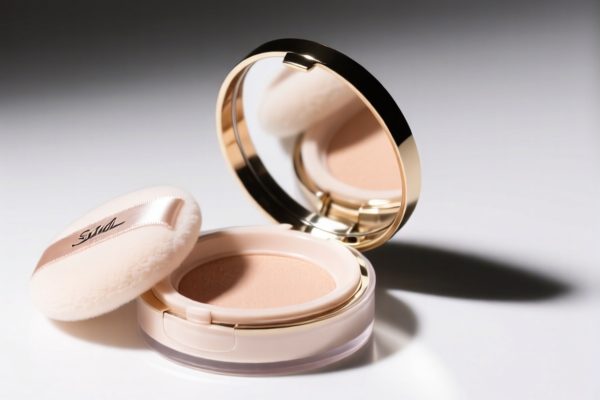
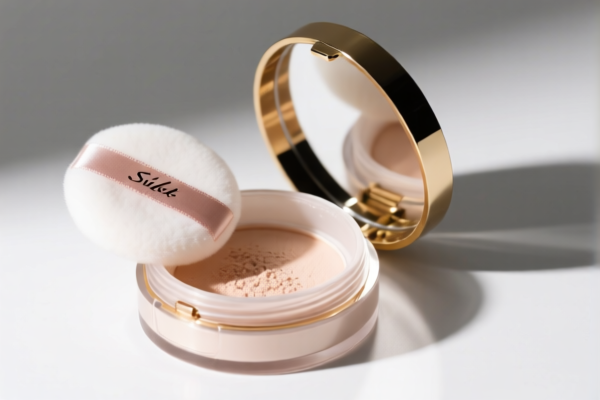
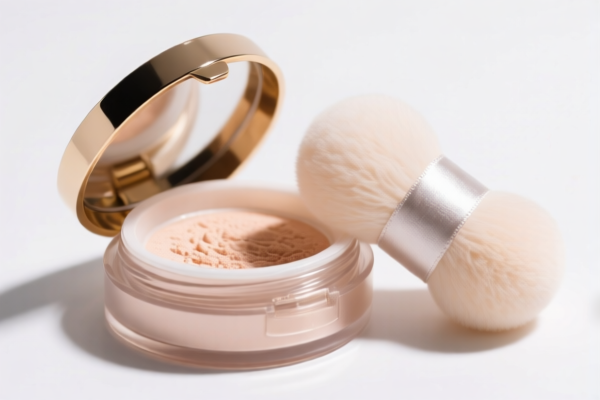
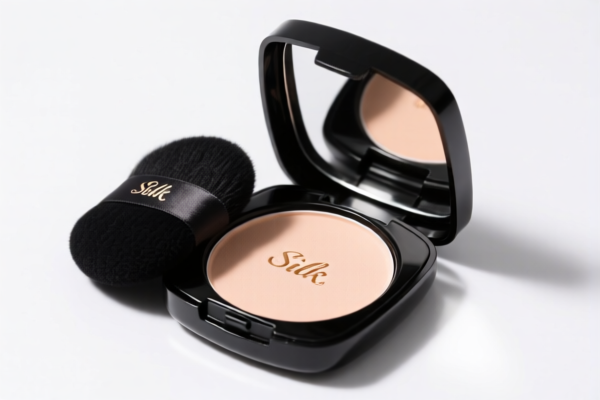
A "Silk Powder Box with Puff" refers to a small container used for holding face powder, typically made of silk-covered wood, plastic, or metal, accompanied by a cosmetic puff (applicator). In international trade, the classification depends heavily on the primary material and functional design.
There are two primary classification paths:
- Cosmetic Containers (Plastic/Wood/Other Materials):
- If the box is primarily made of plastic, wood, or other materials (even if covered in silk fabric), it is classified as a container for cosmetics.
- HS Code:
4202.92(Plastic) or4415/4421(Wood) or4202.99(Other materials).
- Cosmetic Cases/Set (Leather/Silk as Case Material):
- If the item is considered a "case" specifically for cosmetics, and the outer material is silk (textile) or leather, it might fall under Chapter 42.
- HS Code:
4202.92(Plastic outer) or4202.99(Textile/Other).
⚠️ Key Distinction Point:
- If the "Silk" is merely a fabric cover on a hard plastic or wooden core → It is classified based on the core material (usually Plastic or Wood) or as a textile case (4202.99) if sold as a "case".
- If it is a textile pouch (soft, no hard shell) → Classify as a textile bag (4202.92if plastic-lined,4202.99if other textile).
- Most Common Commercial Scenario: Hard-shell compacts (plastic/wood core with silk fabric wrap) are typically classified under Chapter 42 (Articles of leather; articles of travel goods, handbags and similar containers) or Chapter 39 (Plastics) if the plastic component is dominant.
📦 II. HS Code Classification Details (2026 Latest Tariff Authority Comparison)
| HS Code | Product Description | Application Scenario | Primary Material |
|---|---|---|---|
4202.92.00.00 |
Travel, personal or toilet sacks and bags: With outer surface of plastics | Plastic-core powder box with silk fabric wrap; Pouches with plastic lining | ✅ Plastic (Core/Outer) |
4202.99.00.00 |
Other travel, personal or toilet sacks and bags: Other | Wooden/Steel-core box with silk covering; Pure textile pouches | ✅ Textile/Other |
3926.90.99.00 |
Other articles of plastics | If considered a simple plastic container without "bag/case" characteristics | ✅ Plastic |
6307.90.98.90 |
Other made-up articles | If the "puff" is sold separately as a textile item (rare for this combo) | ✅ Textile |
3307.30.00.00 |
Pre-shaving, deodorant or bath powders | If the powder is included (Note: Usually classified separately from container) | ❌ Cosmetic |
🔍 Critical Reminder:
- The container is classified under Chapter 42 (if it has a case/bag structure) or Chapter 39 (if it's a simple rigid container).
- The puff (cosmetic sponge) is typically included with the container or classified separately under3307.30if sold alone, but usually, the "box with puff" is treated as a set or the container dominates the classification.
- US Customs (CBP) Practice: Often classifies plastic-based cosmetic compacts with fabric covers under4202.92.00.00(Plastics outer) if the plastic provides the structure, or4202.99.00.00if the textile/silk is the defining outer surface.
💰 III. 2026 Latest Tariff Rate Details (Including Surcharge & Policy Add-ons)
✅ Applicable Country: United States (US)
✅ Country of Origin: China (CN)
✅ Effective Time: From November 10, 2025 (Including subsequent imports)
🎯 1. 4202.92.00.00 – Cosmetic Cases/Bags (Plastic Outer)
| Item | Content |
|---|---|
| Base Rate | 0% (ad valorem) |
| USITC Additional Duty | +25% (From USITC Footnote 9903.88.01) |
| IEEPA Additional Duty | +10% (For China/HK products, from Nov 10, 2025) |
| Total Rate | 45% |
| Tax Calculation | CIF Value × 45% |
| De Minimis Eligibility | ❌ Not Eligible (deny_de_minimis) |
| Legal Basis Path | IEEPA:9903.01.25 → IEEPA:9903.01.24 → USITC:4202.92.00.00 → FOOTNOTE:9903.88.01 |
📌 Explanation:
- The 25% USITC surcharge comes from Section 301 of the Trade Act;
- The 10% IEEPA surcharge is the additional tariff on Chinese goods;
- Total 45%, which is very high, must be anticipated in advance!
🎯 2. 4202.99.00.00 – Other Cosmetic Cases/Bags (Non-Plastic/Textile Outer)
| Item | Content |
|---|---|
| Base Rate | 0% |
| USITC Additional Duty | +25% |
| IEEPA Additional Duty | +10% |
| Total Rate | 45% |
| Tax Calculation | CIF × 45% |
| De Minimis Eligibility | ❌ Not Eligible |
| Legal Basis Path | IEEPA:9901.25 → IEEPA:9903.01.24 → USITC:4202.99.00.00 → FOOTNOTE:9903.88.01 |
📌 Note:
- Same as above, belongs to "Cases", same tax rate;
- Even if it is "Silk-covered wooden box" or "Textile pouch", as long as it is a cosmetic case, this tariff applies.
🛠️ IV. Customs Clearance Practical Advice (Real-World Pitfall Avoidance)
✅ 1. Preparation Checklist (缺一不可)
| Material | Required | Description |
|---|---|---|
| ✅ Product Specification Sheet | ✔️ | Size, material composition (e.g., "Plastic core with silk fabric"), dimensions |
| ✅ Photos (Front/Back/Inside) | ✔️ | Clear view of the box structure and the puff attached |
| ✅ Material Composition Statement | ✔️ | Explicitly state: "Outer: Silk Fabric; Core: Plastic/Wood" |
| ✅ Commercial Invoice | ✔️ | Description: "Silk Cosmetic Powder Box with Puff, HS Code 4202.92/99" |
| ✅ Packing List | ✔️ | Quantity, weight, unit price |
| ✅ Certificate of Origin (CO) | ✔️ | If not from China, to apply for preferential rates |
✅ 2. Declaration Techniques (Key Mnemonic)
🔥 "Material Core Determines Code, Silk is Just a Cover!"
| Scenario | Correct Declaration | Wrong Practice |
|---|---|---|
| Plastic core with silk wrap | 4202.92.00.00 |
Misdeclare as Textile Bag (4202.99) → Same rate, but risks audit |
| Wooden core with silk wrap | 4202.99.00.00 |
Misdeclare as Wood Product (4415) → Wrong Chapter |
| Pure Textile Pouch (Soft) | 4202.99.00.00 |
Misdeclare as Plastic → Higher scrutiny |
| Powder Included | Declare Container + Cosmetic Separately | Combine into one line → Confusion |
✅ 3. Special Situation Handling
| Situation | Handling Advice |
|---|---|
| OEM Custom Boxes | Provide customer order + design drawings to avoid "non-standard" labeling |
| Silk is Real vs. Fake | Declare "Silk-like Fabric" or "Polyester Silk" if not real silk to avoid duty on genuine silk (Chapter 50/51) which may have different rates |
| Sold as Set with Powder | If the value of the box is significant, declare separately. If minor, may be included, but CBP may scrutinize "Set" classification |
| High-End Luxury Items | Provide brand authorization and invoices to prove value |
🌍 V. Global Market Customs Clearance Comparison (2026 Latest)
| Country/Region | Recommended HS Code | Tariff | Certification Requirement | Notes |
|---|---|---|---|---|
| 🇺🇸 USA | 4202.92.00.00 or 4202.99.00.00 |
45% (China) | No specific cosmetic cert for empty containers | High due to Section 301 |
| 🇨🇳 China | 4202.99.00.00 |
5-6% | CCC (if electronic, but these are manual) | Low duty |
| 🇪🇺 EU | 4202.99.00.00 |
12% | CE (if applicable to packaging materials) | No additional surcharges |
| 🇦🇺 Australia | 4202.99.00.00 |
5% | ACCC (Safety standards for cosmetics packaging) | Low duty |
| 🇯🇵 Japan | 4202.99.00.00 |
10% | PSE (Not applicable for static items) | Moderate duty |
📌 Conclusion:
- USA is the only market with high additional surcharges for cosmetic cases from China;
- Cost for China-origin cosmetic boxes in US is extremely high, suggest early evaluation of supply chain or origin change.
📌 VI. Common Mistakes & Pitfall Guide (Lessons Learned)
❌ Mistake 1: Declaring as "Silk Textile" (5007 or 6006)
👉 Consequence: If it's a rigid box, it's not a textile fabric → Reclassification + Penalty!
❌ Mistake 2: Declaring as "Plastic Container" (3926) instead of "Case" (4202)
👉 Consequence: 3926 may have different duty rates, but CBP often prefers 4202 for cosmetic cases with textile/plastic composite → Risk of Audit
❌ Mistake 3: Not declaring the "Puff"
👉 Consequence: If the puff is valuable, it should be declared. If ignored, CBP may assess additional duty on the missing item.
❌ Mistake 4: Using "Makeup Box" without HS Code
👉 Consequence: Vague description leads to Delays and Inspection
✅ Correct Practice:
"Silk-Fabric Covered Plastic Cosmetic Powder Case with Puff, Model XYZ, HS Code 4202.92.00.00"
🎯 VII. Conclusion: Professional Declaration, Save Time and Money!
🎯 Remember the Mnemonic:
🔹 "Silk Cover, Plastic Core → 4202.92, 45% Tax!"
🔹 "HS Code Determines Fate, 25% Surcharge Adds Pain, Declare Correctly, Avoid Pain!"
📌 Tips:
If your cosmetic boxes are originally from Vietnam, Mexico, Thailand, Malaysia, you can apply for IEEPA Exemption, and the tax rate is only 0%~5%.
Recommend applying for an Advance Ruling early to avoid customs risks.
📣 Immediate Action:
📞 Contact a professional customs broker + Provide Product Photos + Apply for HS Code Advance Ruling
🚀 Let your cosmetic boxes, clear customs smoothly, export efficiently, double profits!
✨ Professional Customs Clearance Starts with Accurate Classification!
💼 Every cent of your cost deserves to be calculated precisely!
Customer Reviews
About HS Code Classification
The Harmonized System (HS) is an internationally standardized nomenclature developed by the World Customs Organization (WCO) to classify traded products. Over 200 countries use the HS system as the basis for customs tariffs, trade statistics, and import/export regulations.
Each HS code follows a hierarchical structure:
- Chapter (2 digits) — Broad category of goods (e.g., Chapter 84: Machinery and Mechanical Appliances)
- Heading (4 digits) — More specific grouping within the chapter
- Subheading (6 digits) — Internationally standardized breakdown, used by all WCO member countries
- National subdivisions (8-10 digits) — Country-specific extensions for further classification, such as US HTSUS 10-digit codes
Correct HS code classification is essential for smooth customs clearance, accurate duty payment, and compliance with trade regulations. Misclassification can lead to customs delays, overpayment of duties, or penalties.
When importing from CN to US, the applicable tariff rates may include:
- Most-Favored-Nation (MFN) rate — The standard duty rate applied to WTO members
- General rate — Applied to countries without trade agreements
- Trade remedy duties — Additional tariffs such as Section 301 (anti-dumping), Section 232 (national security), or countervailing duties
The information provided on this page is for reference purposes only. For official classification, please consult with your local customs authority or a licensed customs broker.