Silk Shoulder Bag
CN → US| HS Code | Tariff Rate | Origin | Destination | Doc |
|---|---|---|---|---|
| 4202224010 | 42.4% | CN | US | Official Doc |
| 4202227000 | 42.0% | CN | US | Official Doc |
| 5007906090 | 38.9% | CN | US | Official Doc |
Product Images
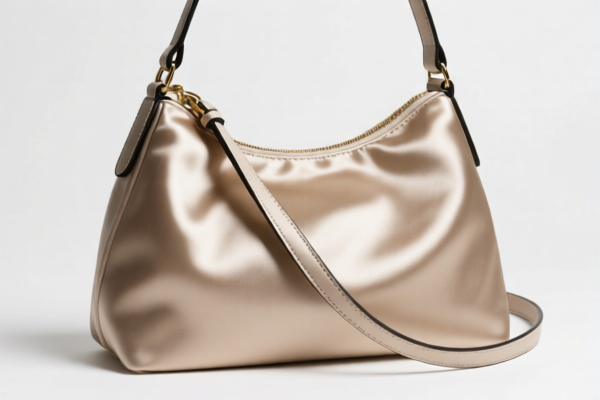

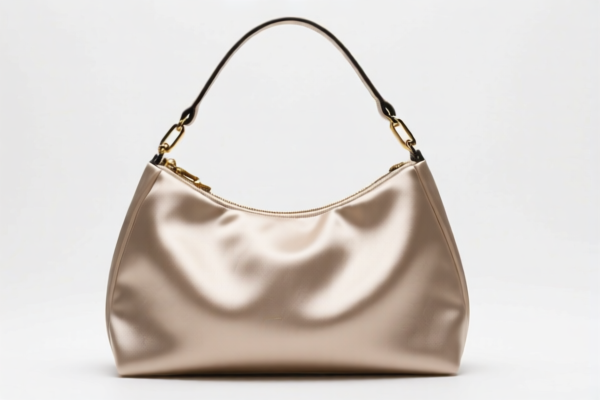
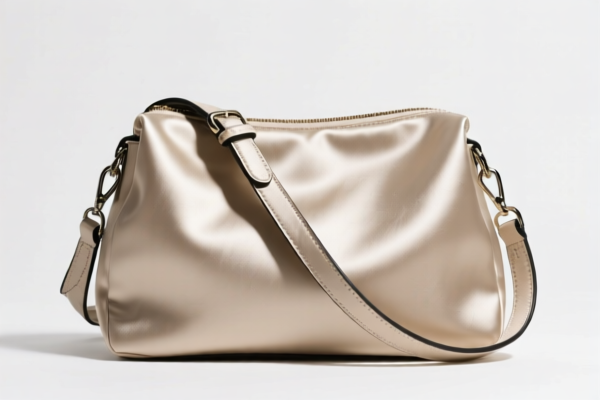
AI Analysis
👜 Silk Shoulder Bag (Handbags of Textile Materials)
🌐 HS Code Reference & Customs Clearance Guide | 2026 Latest Tariff Analysis | Professional Entry Strategy
📌 I. Product Definition & Classification: Do You Really Know “Silk Shoulder Bags”?
A silk shoulder bag is a personal accessory designed for carrying small items, characterized by its textile exterior (specifically silk) and shoulder/crossbody strap. In international trade, the classification depends heavily on whether the item is considered a "finished handbag" (Chapter 42) or a "silk fabric/article" (Chapter 50).
Key Distinction: * Finished Handbag (Chapter 42): If the bag has a structured form, lining, handles/straps, and fasteners (zipper, button), it is classified as a "handbag," regardless of the primary material being textile. * Raw/Semi-Finished Silk (Chapter 50): If the item is merely a folded piece of silk fabric or a very simple pouch without standard handbag components, it might be misclassified here (though rare for finished bags).
⚠️ Critical Classification Point:
- Most commercial shoulder bags, totes, and handbags made of silk (even if 85%+ silk) fall under Chapter 42 (Articles of Leather; Travel Goods, Handbags).
- Misclassifying a finished bag as "Silk Fabric" (Chapter 50) is a common error that leads to higher tariffs or customs seizures for incorrect declaration.
📦 II. HS Code Classification Details (2026 Latest Tariff Authority Comparison)
Based on the provided data, here are the valid HS Codes for Silk Shoulder Bags, categorized by their specific material description and tax implications.
| HS Code | Product Description | Suitability for Silk Shoulder Bag | Tax Rate (Total) |
|---|---|---|---|
4202.22.40.10 |
Silk Crossbody/Handbag Straight-to-the-point: Silk exterior, handbag/crossbody form. |
✅ Highly Recommended Specific code for silk handbags/crossbodies. |
42.4% |
4202.22.70.00 |
Silk Leisure/Crossbody Bag Textile exterior with silk characteristics, leisure/handbag form. |
✅ Recommended General textile handbag code, applicable if silk content is <100% or mixed. |
42.0% |
5007.90.60.90 |
Silk Leisure Bag Silk material, bag-like finished form, fits silk fabric category. |
⚠️ Risky/Lower Tariff Treated as "Silk Fabric/Article" rather than "Handbag." Lower base tax but higher risk of re-classification. |
38.9% |
4202.22.40.10 |
Silk Embellished Handbag Silk fabric, handbag form, decorative beads/pearls. |
✅ Specific Use For bags with significant embellishments (beads, pearls) but still primarily silk handbags. |
42.4% |
4202.22.70.00 |
Silk Embellished Handbag Silk fabric, handbag form, meets specific >85% silk requirement. |
✅ Specific Use High-silk content bags with embellishments, grouped under general textile handbags. |
42.0% |
🔍 Key Insight:
- Code5007.90.60.90has the lowest total tax (38.9%), but it classifies the item as a "Silk Article" rather than a "Handbag." Customs may challenge this if the bag has a structured handle/strap, demanding re-classification to Chapter 42 (42.0-42.4%).
- Codes4202.22.40.10and4202.22.70.00are the safest and most accurate for standard silk shoulder bags, as they explicitly recognize the "Handbag" form factor.
💰 III. 2026 Latest Tariff Rate Breakdown (Including Additional Taxes & Policies)
✅ Applicable Country: United States (US)
✅ Origin: China (CN)
✅ Effective Date: From November 10, 2025 (and subsequent imports)
🎯 1. 4202.22.40.10 – Silk Crossbody/Handbag (The Premium Silk Choice)
| Item | Detail |
|---|---|
| Base Duty Rate | 7.4% |
| USITC Additional Duty (Section 301) | +25.0% |
| IEEPA Additional Duty (Section 122) | +10.0% |
| Total Effective Duty Rate | 42.4% |
| Calculation Basis | CIF Value × 42.4% |
| De Minimis Exemption | ❌ Not Applicable (High duty rate disqualifies from 800.303 exemption) |
| Legal Basis Path | USITC:4202.22.40.10 → 301 Footnote: 9903.88.01 → IEEPA:9903.01.25 |
📌 Explanation:
- The base rate of 7.4% reflects the standard duty for handbags of textile materials.
- The 25% Section 301 tariff is a mandatory addition for most Chinese-made consumer goods.
- The 10% Section 122 tariff is a specific levy on silk and certain other goods from China.
- Total 42.4% is a significant cost driver. Profit margins must account for this.
🎯 2. 4202.22.70.00 – Silk Leisure/Textile Handbag (The Standard Choice)
| Item | Detail |
|---|---|
| Base Duty Rate | 7.0% |
| USITC Additional Duty (Section 301) | +25.0% |
| IEEPA Additional Duty (Section 122) | +10.0% |
| Total Effective Duty Rate | 42.0% |
| Calculation Basis | CIF Value × 42.0% |
| De Minimis Exemption | ❌ Not Applicable |
| Legal Basis Path | USITC:4202.22.70.00 → 301 Footnote: 9903.88.01 → IEEPA:9903.01.24 |
📌 Note:
- Slightly lower base rate (7.0% vs 7.4%) makes this 0.4% cheaper than4202.22.40.10.
- Ideal for bags where the silk content is high but not exclusively "premium silk handbag" designated, or for general textile handbags with silk features.
🎯 3. 5007.90.60.90 – Silk Leisure Bag (The Low-Tax Risk Choice)
| Item | Detail |
|---|---|
| Base Duty Rate | 3.9% |
| USITC Additional Duty (Section 301) | +25.0% |
| IEEPA Additional Duty (Section 122) | +10.0% |
| Total Effective Duty Rate | 38.9% |
| Calculation Basis | CIF Value × 38.9% |
| De Minimis Exemption | ❌ Not Applicable |
| Legal Basis Path | USITC:5007.90.60.90 → 301 Footnote: 9903.88.01 → IEEPA:9903.01.25 |
📌 Warning:
- While 38.9% is the lowest rate, classifying a finished shoulder bag (with straps/handles) as a "Silk Fabric Article" (Chapter 50) is legally contentious.
- Customs may inspect the bag, determine it is a "Handbag" (Chapter 42), and re-classify it, leading to penalties, back taxes, and delays.
- Use only if the item is genuinely a soft silk pouch without structural handbag elements.
🛠️ IV. Customs Clearance Practical Advice (Real-World Pitfall Guide)
✅ 1. Required Documentation Checklist
| Document | Must Provide | Purpose |
|---|---|---|
| ✅ Product Specification Sheet | ✔️ | Must detail: Material composition (e.g., 100% Silk), Dimensions, Closure type. |
| ✅ Product Photos | ✔️ | Clear images of the bag, including handles/straps, interior lining, and brand tag. Proves it is a "handbag." |
| ✅ Commercial Invoice | ✔️ | Must state: "Silk Shoulder Bag, HS Code [Insert Code], Made in China." |
| ✅ Packing List | ✔️ | Details quantity, weight, and packaging type. |
| ✅ Bill of Lading/Air Waybill | ✔️ | Standard shipping document. |
| ✅ IEEPA 301/122 Compliance Declaration | ✔️ | Confirm origin and tariff applicability. |
📌 Tip: Ensure the invoice description matches the HS Code. If using
5007..., describe as "Silk Pouch." If using4202..., describe as "Silk Handbag."
✅ 2. Declaration Strategy (Key Mantras)
🔥 “Be Specific: Say ‘Handbag’, Not Just ‘Bag’. Say ‘Silk’, Not ‘Textile’.”
| Scenario | Correct Declaration | Incorrect Declaration | Consequence |
|---|---|---|---|
| Standard Silk Shoulder Bag | 4202.22.70.00"Silk Textile Handbag" |
5007.90.60.90"Silk Fabric Bag" |
Risk of re-classification & penalty. |
| Premium Silk Crossbody | 4202.22.40.10"Silk Crossbody Handbag" |
4202.22.70.00"Handbag" |
Slightly higher tax, but safer. |
| Silk Bag with Beads | 4202.22.40.10"Silk Embellished Handbag" |
6307.90.98"Other Textile Articles" |
Incorrect chapter (63 is for other textiles). |
| Soft Silk Pouch (No Strap) | 5007.90.60.90"Silk Pouch" |
4202.22.40.10"Handbag" |
Overpayment of tax. |
✅ 3. Special Circumstances Handling
| Scenario | Handling Advice |
|---|---|
| Mixed Material (Silk + Leather Trim) | If leather trim is >5% by weight/value, it may still fall under 4202 but could trigger different sub-codes. Declare as "Silk with Leather Accents." |
| OEM/White Label Bags | Provide a letter from the buyer confirming the product is a "Handbag." Avoid vague terms like "Accessory." |
| High-Value Luxury Silk Bags | Ensure accurate CIF value. Under-valuation triggers audits. Luxury brands often face higher scrutiny for "Handbag" classifications. |
| Beaded/Embellished Bags | Use 4202.22.40.10. The presence of beads does not change the HS Code if the base is still a handbag. |
🌍 V. Global Market Comparison (2026 Update)
| Country/Region | Recommended HS Code | Base Tariff | Total Tariff (US Origin) | Notes |
|---|---|---|---|---|
| 🇺🇸 USA | 4202.22.70.00 |
7.0% | 42.0% | High due to 301/122 tariffs. |
| 🇺🇸 USA (Risky) | 5007.90.60.90 |
3.9% | 38.9% | Low risk of re-classification if no straps. |
| 🇪🇺 EU | 4202.22.00 |
~6-8% | ~6-8% | No Section 301/122. Lower total cost. |
| 🇨🇳 China (Import) | 4202.22.00 |
10-15% | ~10-15% | Higher base duty, no US-style additional tariffs. |
| 🇬🇧 UK | 4202.22.00 |
~6-10% | ~6-10% | Post-Brexit tariffs apply. |
📌 Conclusion:
- The US market is the most expensive for silk bags due to additional tariffs (35% total extra).
- Chapter 42 is the standard for handbags. Do not try to bypass this with Chapter 50 unless the item is truly not a handbag.
📌 VI. Common Mistakes & Pitfalls (Lessons Learned)
❌ Mistake 1: Classifying a structured shoulder bag with a strap as 5007.90.60.90 (Silk Fabric).
👉 Consequence: Customs may deem it "Handbag," reclassify to 4202, and charge back taxes + penalties.
❌ Mistake 2: Under-declaring the value to reduce tax.
👉 Consequence: With 42% duty, even a 10% value error results in significant underpayment.
❌ Mistake 3: Using vague terms like "Silk Accessory" on the invoice.
👉 Consequence: Customs cannot determine HS Code accurately → Delay in clearance.
❌ Mistake 4: Ignoring the 122 Section Tariff.
👉 Consequence: Some importers forget the 10% IEEPA levy, leading to unexpected charges at border.
✅ Correct Practice:
"Women's Silk Crossbody Handbag, 100% Silk Exterior, Adjustable Strap, Zipper Closure, Model XYZ, Made in China."
🎯 VII. Conclusion: Professional Declaration, Save Time & Money
🎯 Remember the Mantra:
🔹 "Handbag Form = Chapter 42. Fabric Only = Chapter 50."
🔹 "Silk Bags in US = ~42% Duty. Plan Your Margin!"
🔹 "Be Precise: 'Silk Handbag' Beats 'Silk Bag' every time."
📌 Pro Tip:
If your silk bags are shipped from Vietnam, Mexico, or Thailand (with substantial transformation), you may qualify for IEEPA/301 Exemptions, reducing the duty to 0-5%.
Recommend pre-advance ruling from US Customs (CBP) if your shipment value exceeds $100,000.
📣 Immediate Action:
📞 Consult a licensed customs broker.
📦 Provide clear photos of the bag (handles, lining, closure).
🚀 Ensure your Commercial Invoice explicitly states "Handbag" and HS Code 4202.22.70.00 (or 4202.22.40.10).
✨ Professional Clearance Starts with Accurate Classification!
💼 Every Percent of Duty Saved is Pure Profit!
Customer Reviews
About HS Code Classification
The Harmonized System (HS) is an internationally standardized nomenclature developed by the World Customs Organization (WCO) to classify traded products. Over 200 countries use the HS system as the basis for customs tariffs, trade statistics, and import/export regulations.
Each HS code follows a hierarchical structure:
- Chapter (2 digits) — Broad category of goods (e.g., Chapter 84: Machinery and Mechanical Appliances)
- Heading (4 digits) — More specific grouping within the chapter
- Subheading (6 digits) — Internationally standardized breakdown, used by all WCO member countries
- National subdivisions (8-10 digits) — Country-specific extensions for further classification, such as US HTSUS 10-digit codes
Correct HS code classification is essential for smooth customs clearance, accurate duty payment, and compliance with trade regulations. Misclassification can lead to customs delays, overpayment of duties, or penalties.
When importing from CN to US, the applicable tariff rates may include:
- Most-Favored-Nation (MFN) rate — The standard duty rate applied to WTO members
- General rate — Applied to countries without trade agreements
- Trade remedy duties — Additional tariffs such as Section 301 (anti-dumping), Section 232 (national security), or countervailing duties
The information provided on this page is for reference purposes only. For official classification, please consult with your local customs authority or a licensed customs broker.