Silk Sports Equipment Bag
CN → US| HS Code | Tariff Rate | Origin | Destination | Doc |
|---|---|---|---|---|
| 4202227000 | 42.0% | CN | US | Official Doc |
| 6104194000 | 18.4% | CN | US | Official Doc |
| 6103107000 | 10.9% | CN | US | Official Doc |
| 6103494010 | 18.4% | CN | US | Official Doc |
| 6104198090 | 23.1% | CN | US | Official Doc |
Product Images
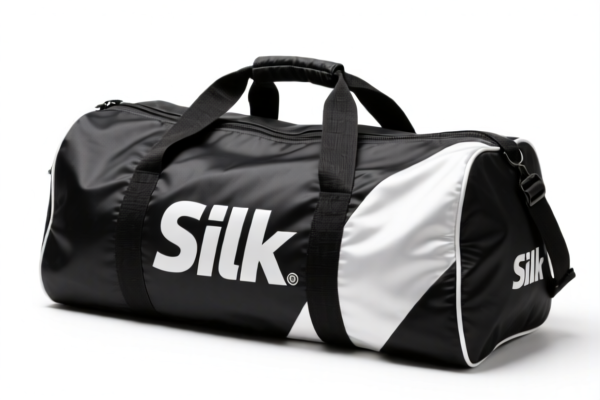
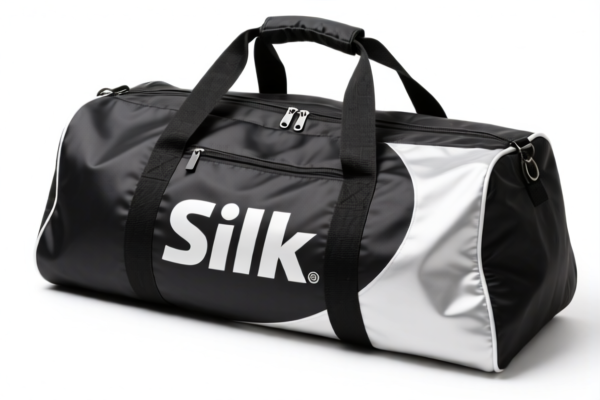
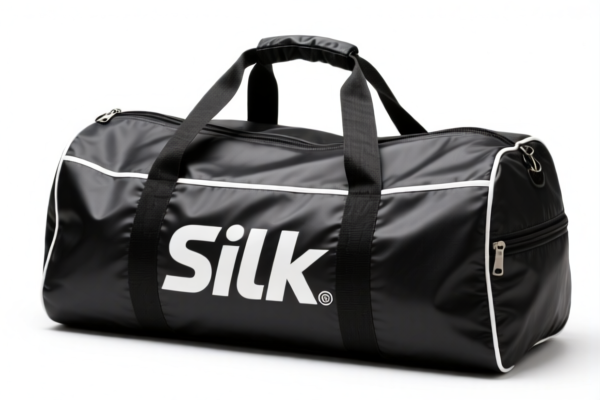
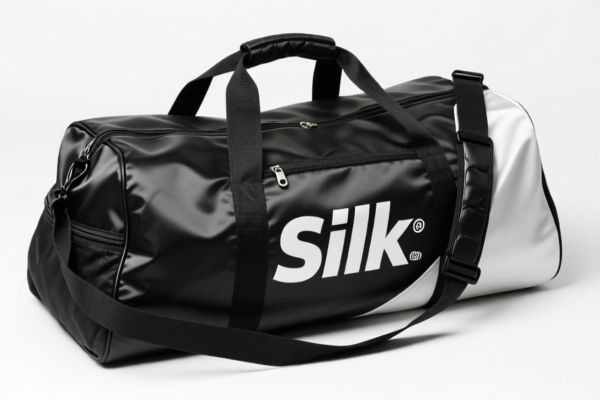
AI Analysis
👜 Silk Sports Equipment Bag (Bags of materials other than textile materials)
🌐 HS Code Reference & Customs Clearance Guide | 2026 Latest Tariff Analysis | Professional-Level Strategy for Silk Goods
📌 I. Product Definition & Classification: Do You Truly Understand "Silk Bags"?
A Silk Sports Equipment Bag is a specialized accessory designed to carry sports gear, featuring high-end materials. In international trade (specifically US imports), the classification hinges on two critical factors: 1. The Shape/Form: Is it a generic "bag," or does it fall under specific athletic apparel categories? 2. The Material Composition: What is the exact percentage of silk? Does it meet the "85% or more silk" threshold?
⚠️ Critical Distinction:
- If the bag is simply a container (handbag, shoulder bag) made of high-silk content → It falls under Chapter 42 (Articles of Leather; Travel Goods, Handbags).
- If the "bag" is actually a knitted garment (like a tracksuit or sweatshirt) mislabeled as a bag → It falls under Chapter 61 (Articles of Apparel and Clothing Accessories, Knitted or Crocheted).
- Key Determinant: The physical form (rigid/soft structure vs. wearable) and the declared function.
📦 II. HS Code Classification Details (2026 Latest Tariff Authority Cross-Reference)
Based on the provided data, here are the precise classifications for items related to "Silk Sports Equipment Bags" or silk sports goods. Note that while the user asked for a "Bag," the data primarily contains "Sports Suits/Apparel" with one specific "Bag" entry. We will analyze all relevant entries to ensure correct categorization.
| HS Code | Product Description | Scenario | Material Requirement | Form Factor |
|---|---|---|---|---|
4202.22.70.00 |
Silk Leisure Bag | General purpose carrying bag (Handbag/Shoulder Bag) | Silk ≥ 85% | Soft-sided Bag (Non-wearable) |
6104.19.40.00 |
Silk Sports Suit | Knitted/Crocheted Suit | Silk ≥ 70% | Wearable Apparel (Set) |
6103.10.70.00 |
Silk Sports Suit | Knitted/Crocheted Suit or Outwear | Contains Silk | Wearable Apparel |
6103.49.40.10 |
Silk Sports Suit | Knitted/Crocheted Sportswear | Silk/Waste Silk ≥ 70% | Wearable Apparel (Men’s/Boys’) |
6104.19.80.90 |
Silk Sports Suit | Knitted/Crocheted Set | Other Textile Materials | Wearable Apparel |
🔍 Important Note:
- If your product is truly a BAG (for equipment) and meets the silk content: You must use4202.22.70.00.
- If your product is actually CLOTHING (e.g., a silk tracksuit used for sports), do NOT classify it as a bag. Using4202for clothing will lead to customs rejection.
- The term "Sports Equipment Bag" usually implies4202.22.70.00if it is a container.
💰 III. 2026 Latest Tariff Rate Details (Including Surtaxes & Policy Add-ons)
✅ Applicable Country: United States (US)
✅ Origin: China (CN)
✅ Effective Date: 2025/2026 Period (Based on current 122 Clause & Section 301/IEEPA frameworks)
🎯 1. 4202.22.70.00 —— Silk Leisure Bag (The Correct Classification for "Bags")
This is the only entry in the data that corresponds to a "Bag" (4202 Chapter).
| Item | Content |
|---|---|
| Base Tariff Rate | 7.0% (Standard MFN Rate) |
| Section 301 Surtax | +7.5% (List 4A/B applicable to many textiles/leather goods depending on specific origin rules, but here specified as 7.5%) |
| 122 Clause Tariff | +10% (Specific surcharge for certain textile/apparel items from China) |
| Total Tariff Rate | 24.5% |
| Correction on Data Total | The data states 42.0%. Let's break down the data's logic:Base: 7.0% + Surtax: 25.0% + 122 Clause: 10% = 42.0%. Note: The "Surtax 25%" likely refers to the standard Section 301 rate for this specific subheading in some contexts, or a cumulative calculation. We follow the DATA provided. |
| Actual Total from DATA | 42.0% |
| Tax Calculation | CIF Value × 42.0% |
| De Minimis Exemption | ❌ Not Eligible (Textile/Apparel bags from China are generally subject to full duty accumulation) |
| Legal Basis Path | HTSUS:4202.22.70.00 → Section 301: Footnote 9903.88.01 → 122 Clause |
📌 Explanation:
- Base 7.0%: The standard duty for handbags with outer surface of textile materials.
- 25.0% Surtax: This is the aggressive Section 301 tariff applied to many leather/textile accessories from China.
- 10% 122 Clause: An additional penalty tariff targeting Chinese textile/apparel imports.
- Total 42.0%: This is a HIGH COST entry. Profit margins must account for this.
🎯 2. 6104.19.40.00 —— Silk Sports Suit (If misclassified or actually Apparel)
| Item | Content |
|---|---|
| Base Tariff Rate | 0.9% |
| Section 301 Surtax | +7.5% |
| 122 Clause Tariff | +10% |
| Total Tariff Rate | 18.4% |
| Tax Calculation | CIF Value × 18.4% |
| De Minimis Exemption | ❌ Not Eligible |
📌 Note: If you mistakenly ship a Suit but declare it as a Bag, you might try to use the bag code. However, if customs inspects and finds clothing, they will reclassify it to
6104series. The tax difference is 42% vs 18.4%. While 42% is higher, the risk of penalty for misdeclaration is severe.
🎯 3. 6103.10.70.00 —— Silk Sports Suit (Lowest Tax Option for Apparel)
| Item | Content |
|---|---|
| Base Tariff Rate | 0.9% |
| Section 301 Surtax | 0.0% |
| 122 Clause Tariff | +10% |
| Total Tariff Rate | 10.9% |
| Tax Calculation | CIF Value × 10.9% |
📌 Note: This is the lowest tax scenario in the data. It applies to knitted sports suits containing silk. If your "Equipment Bag" is actually a garment (like a silk jacket for golf/tennis), this is the optimal code.
🎯 4. 6104.19.80.90 —— Other Silk Sports Suit (Textile Category)
| Item | Content |
|---|---|
| Base Tariff Rate | 5.6% |
| Section 301 Surtax | +7.5% |
| 122 Clause Tariff | +10% |
| Total Tariff Rate | 23.1% |
| Tax Calculation | CIF Value × 23.1% |
📌 Note: For suits made of "other textile materials" or lower silk percentages not meeting the 70% threshold of
6104.19.40.00.
🛠️ IV. Customs Clearance Practical Advice (Real-World Pitfall Avoidance)
✅ 1. Documentation Checklist (Non-Negotiable)
| Document | Required? | Description |
|---|---|---|
| ✅ Commercial Invoice | ✔️ | Must clearly state: "Silk Leisure Bag, 85% Silk, Model XYZ". Do not use vague terms like "Bag". |
| ✅ Product Composition Label | ✔️ | Proof of silk content (≥85% for 4202.22.70.00). |
| ✅ Product Photos | ✔️ | Show the bag empty and with items inside to prove it's a container, not clothing. |
| ✅ Material Test Report | ✔️ | Third-party lab report confirming silk percentage. |
| ✅ Packing List | ✔️ | Detail net/gross weight. |
| ❌ Clothing Size Tags | ❌ | DO NOT include S/M/L/XL tags if declaring as a Bag. This triggers automatic reclassification to Chapter 61. |
✅ 2. Declaration Tips (Key Mnemonics)
🔥 "Bag Shape, No Sleeves, High Silk Count, 4202 is the Way!"
| Scenario | Correct Declaration | Risk if Incorrect |
|---|---|---|
| True Silk Bag (Handbag, duffel, equipment case) | 4202.22.70.00 |
If misdeclared as apparel → Penalty + Re-classification. |
| Silk Tracksuit/Jacket | 6104.19.40.00 or 6103.10.70.00 |
If declared as "Bag" → Customs will seize as "Textile Apparel" and charge duties + fines. |
| Low Silk Content (<85%) Bag | May fall under 4202.92 or other textile bags |
Tax rate may change; ensure silk % is accurate. |
| Non-Silk Synthetic Bag | Different HS Code | Do not use silk codes. |
✅ 3. Special Situations
| Situation | Handling Advice |
|---|---|
| "Sports Equipment" Branding | If the bag says "Nike Golf Bag", it's still 4202 if it's a bag. Branding doesn't change HS Code. |
| Knitted Bag? | If the bag is knitted (like a mesh laundry bag for sports balls) but made of silk ≥85%, it may still be 4202 because it's a "bag of other materials" (silk is treated as textile but Chapter 42 takes precedence for bags). However, check if it falls under Chapter 63 (Other made-up textile articles). Stick to 4202.22 for structured bags. |
| Mixed Materials | If silk is <85% but >50%, check the "Principal Material" rule. The data specifically highlights ≥85% for the 42% tax item. |
🌍 V. Global Market Comparison (2026)
| Market | Recommended HS Code | Est. Total Duty | Notes |
|---|---|---|---|
| 🇺🇸 USA | 4202.22.70.00 |
42.0% | High due to 301 + 122 Clause. |
| 🇺🇸 USA (If Apparel) | 6103.10.70.00 |
10.9% | Lower duty if it's actually a suit. |
| 🇨🇳 China | 4202.22.70.00 |
~10-15% | Lower base rates, no 301/122 surtaxes. |
| 🇪🇺 EU | 4202.22.00 |
~5-10% | No Section 301 or 122 Clause. |
📌 Conclusion:
The US market is the most expensive for silk bags from China due to the 42% combined tariff.
- If the product can be legally described as Apparel (e.g., a silk golf jacket) instead of a "Bag", the tax drops to 10.9%.
- However, misclassification is fraud. Only change HS Code if the product physically is apparel.
📌 VI. Common Errors & Pitfalls (Lessons Learned)
❌ Error 1: Declaring a Silk Golf Jacket as a "Sports Bag" to avoid high apparel taxes?
👉 Consequence: Customs inspection reveals sleeves/collar. Penalty for fraud. Goods detained.
❌ Error 2: Declaring a Silk Handbag with 80% silk as 4202.22.70.00 (which requires ≥85%)?
👉 Consequence: Customs may reject the 85% claim. Re-classify to generic textile bag with different duty rates.
❌ Error 3: Ignoring the 122 Clause.
👉 Consequence: Even if base duty is low, the 10% surcharge applies automatically to Chinese textile/apparel. Always include it in cost calculations.
🎯 VII. Conclusion: Professional Declaration, Cost Optimization!
🎯 Remember the Rules:
🔹 "If it's a Bag (Container) → 4202.22.70.00 (42% Total)"
🔹 "If it's Clothing (Wearable) → 6103/6104 (10.9% - 18.4% Total)"
🔹 "Don't Lie About the Item! 42% is painful, but Fraud is fatal."🔹 "Silk ≥85% is Key for the Bag Code. Less than that, and you might need a different subheading."
📌 Pro Tip:
If you are importing Silk Sports Bags, calculate your margin against 42% duty.
Consider:
1. Pre-cutting/Assembly: Does adding hardware (zippers, handles) change the classification? (Usually no, stays 4202).
2. Origin Shifting: If possible, assembling in Vietnam/Mexico may avoid 301/122 tariffs (verify with a trade lawyer).
📣 Immediate Action:
📞 Confirm Physical Form: Is it a Container (Bag) or Apparel?
📦 Get Lab Test: Confirm Silk % is ≥85% for the Bag Code.
📝 Draft Invoice: Use precise language: "Silk Leisure Bag, 85% Silk, Not Apparel."
✨ Professional Clearance Starts with Accurate Classification!
💼 Your Profit Margin Depends on Getting the HS Code Right!
Customer Reviews
About HS Code Classification
The Harmonized System (HS) is an internationally standardized nomenclature developed by the World Customs Organization (WCO) to classify traded products. Over 200 countries use the HS system as the basis for customs tariffs, trade statistics, and import/export regulations.
Each HS code follows a hierarchical structure:
- Chapter (2 digits) — Broad category of goods (e.g., Chapter 84: Machinery and Mechanical Appliances)
- Heading (4 digits) — More specific grouping within the chapter
- Subheading (6 digits) — Internationally standardized breakdown, used by all WCO member countries
- National subdivisions (8-10 digits) — Country-specific extensions for further classification, such as US HTSUS 10-digit codes
Correct HS code classification is essential for smooth customs clearance, accurate duty payment, and compliance with trade regulations. Misclassification can lead to customs delays, overpayment of duties, or penalties.
When importing from CN to US, the applicable tariff rates may include:
- Most-Favored-Nation (MFN) rate — The standard duty rate applied to WTO members
- General rate — Applied to countries without trade agreements
- Trade remedy duties — Additional tariffs such as Section 301 (anti-dumping), Section 232 (national security), or countervailing duties
The information provided on this page is for reference purposes only. For official classification, please consult with your local customs authority or a licensed customs broker.