Silk Tissue Box
CN → US| HS Code | Tariff Rate | Origin | Destination | Doc |
|---|---|---|---|---|
| 3924901050 | 13.3% | CN | US | Official Doc |
| 3924905650 | 20.9% | CN | US | Official Doc |
| 6307909891 | 24.5% | CN | US | Official Doc |
| 4202929700 | 52.6% | CN | US | Official Doc |
| 6307908995 | 17.0% | CN | US | Official Doc |
Product Images
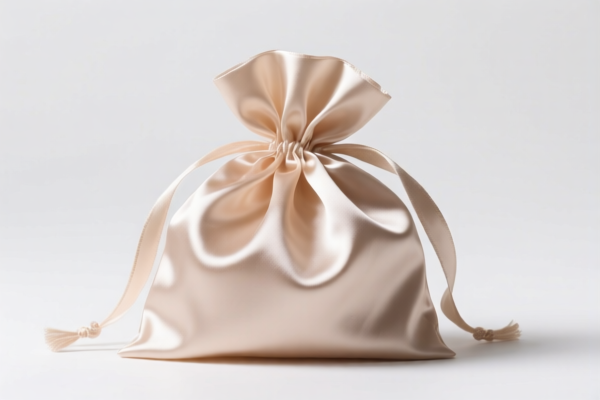
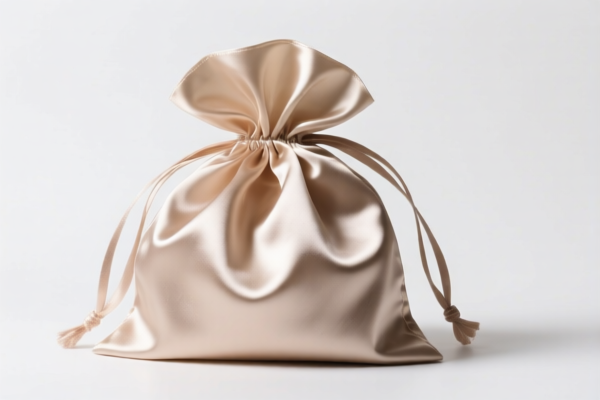
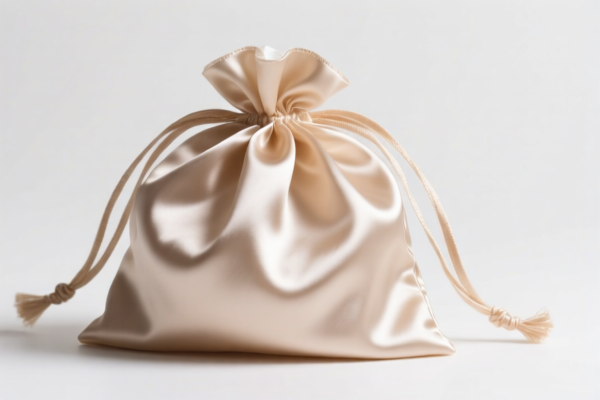
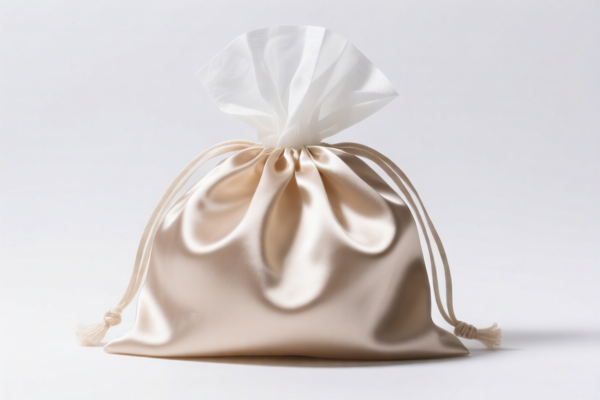
AI Analysis
🧶 Silk Tissue Box (Silk Tissue Organizer/Dispenser)
🌐 HS Code Reference & Customs Clearance Guide | 2026 Latest Tariff Analysis | Professional Entry Strategy
📌 I. Product Definition & Classification: Do You Really Know the "Silk Tissue Box"?
The "Silk Tissue Box" is a decorative or functional household item used to store and dispense facial tissues. In international trade, its classification depends entirely on the primary material and manufacturing process. It is not a single uniform category but splits into two main branches:
- Hard/Plastic-based Boxes: If the box is made of plastic (even if decorated with silk or containing a silk lining) or if the "silk" is merely a decorative overlay on a plastic container.
- Key Trait: Rigid structure, molded plastic body.
- Textile/Fabric-based Boxes: If the box is primarily constructed from silk, cotton, or other woven fabrics, often shaped as a pouch, pouch-like container, or covered case.
- Key Trait: Flexible, sewn, textile-heavy.
⚠️ Critical Distinction:
- If the item is a rigid plastic container with silk printing or lining → It falls under Chapter 39 (Plastics) or Chapter 42 (Articles of Leather/Plastics).
- If the item is a fabric pouch/case used to hold tissues → It falls under Chapter 63 (Other Made-up Textile Articles).
📦 II. HS Code Classification Details (2026 Latest Tariff Authority Match)
Based on the provided data <DATA>, here is the precise mapping for Silk Tissue Boxes depending on material inference:
| HS Code | Summary Description | Material Inference | Application Scenario |
|---|---|---|---|
| 3924.90.10.50 | Plastic Household Articles | Based on plastic material inference; belongs to plastic household products. | Rigid plastic tissue boxes, possibly with silk decals or internal silk liners. |
| 3924.90.56.50 | Other Household Plastic Articles | Based on plastic material inference; belongs to other household goods. | Plastic tissue dispensers not elsewhere specified; rigid cases. |
| 6307.90.98.91 | Other Made-up Textile Articles | Based on textile/fabric material inference; belongs to other manufactured goods. | Fabric-covered tissue boxes, silk pouches holding tissues. |
| 4202.92.97.00 | Articles of Plastic Sheet/Textile Materials | Based on textile or plastic sheet material inference; belongs to similar containers. | Hybrid items: e.g., a structured box made of plastic sheet or textile-wrapped rigid core. |
| 6307.90.89.95 | Bedding-like Textile Articles | Based on cotton/textile material inference; belongs to bedspreads and similar articles. | Soft, quilted, or bedding-style fabric tissue holders (less common for standard tissue boxes, but possible for decorative home decor). |
🔍 Key Insight:
- The vast majority of "Silk Tissue Boxes" that are rigid will be classified under 3924 (Plastics) because the structure is plastic.
- "Silk" in the name often refers to the decoration or lining, not the structural material. Customs looks at the chief material.
- If the box is truly made of sewn silk fabric (like a pouch), it goes to 6307 (Textiles).
💰 III. 2026 Latest Tariff Rate Breakdown (Including Surtaxes & Policy Add-ons)
✅ Applicable Country: USA (US)
✅ Origin: China (CN)
✅ Effective Date: November 10, 2025 (and onwards)
🎯 1. Plastic-Based Tissue Boxes (HS: 3924.90.10.50 / 3924.90.56.50)
These are the most common commercial classifications for rigid "silk-printed" or "silk-lined" plastic boxes.
A. HS Code 3924.90.10.50
- Summary: Plastic household articles.
- Total Tax: 13.3%
| Item | Content |
|---|---|
| Base Tariff | 3.3% |
| Section 301 Surcharge | 0.0% |
| Section 122 Surcharge | 10.0% |
| Total Effective Rate | 13.3% |
| Calculation | CIF Value × 13.3% |
| De Minimis Exemption | ❌ Not Eligible (Deny De Minimis) |
| Legal Basis | IEEPA:9903.01.25 / USITC Footnote 122 |
📌 Explanation:
- This code benefits from 0% Section 301 surcharge.
- However, it is subject to the Section 122 tariff (10%), which applies to certain imports affecting national security or trade imbalance.
- Total burden is moderate (13.3%) compared to other categories.
B. HS Code 3924.90.56.50
- Summary: Other household plastic articles.
- Total Tax: 20.9%
| Item | Content |
|---|---|
| Base Tariff | 3.4% |
| Section 301 Surcharge | 7.5% |
| Section 122 Surcharge | 10.0% |
| Total Effective Rate | 20.9% |
| Calculation | CIF Value × 20.9% |
| De Minimis Exemption | ❌ Not Eligible |
| Legal Basis | Section 301 (7.5%) + Section 122 (10%) |
📌 Explanation:
- This code attracts a 7.5% Section 301 tariff (part of the broader tariff list).
- Combined with Section 122 (10%), the total is higher than3924.90.10.50.
- Use this code only if the product does not fit the specific definition of3924.90.10.50.
🎯 2. Textile/Fabric-Based Tissue Boxes (HS: 6307.90.98.91 / 6307.90.89.95)
If your product is truly a fabric pouch or sewn silk case.
A. HS Code 6307.90.98.91
- Summary: Other made-up textile articles.
- Total Tax: 24.5%
| Item | Content |
|---|---|
| Base Tariff | 7.0% |
| Section 301 Surcharge | 7.5% |
| Section 122 Surcharge | 10.0% |
| Total Effective Rate | 24.5% |
| Calculation | CIF Value × 24.5% |
| De Minimis Exemption | ❌ Not Eligible |
| Legal Basis | Section 301 + Section 122 |
📌 Explanation:
- Higher base rate (7.0%) than plastic counterparts.
- Subject to both Section 301 (7.5%) and Section 122 (10%).
- Total 24.5% makes fabric boxes more expensive to import than plastic ones.
B. HS Code 6307.90.89.95
- Summary: Bedding-like textile articles (e.g., bedspreads).
- Total Tax: 17.0%
| Item | Content |
|---|---|
| Base Tariff | 7.0% |
| Section 301 Surcharge | 0.0% |
| Section 122 Surcharge | 10.0% |
| Total Effective Rate | 17.0% |
| Calculation | CIF Value × 17.0% |
| De Minimis Exemption | ❌ Not Eligible |
| Legal Basis | Section 122 Only |
📌 Explanation:
- 0% Section 301 makes this code cheaper than6307.90.98.91.
- Only applies if the item can be classified as "bedding-like" (e.g., quilted, decorative throw).
- Risk: If customs disagrees with the "bedding" classification, they may reclassify to6307.90.98.91(24.5%).
🎯 3. Hybrid/Special Container (HS: 4202.92.97.00)
If the box is a structured container made of plastic sheeting or textile-wrapped rigid form.
A. HS Code 4202.92.97.00
- Summary: Articles of plastic sheet or textile materials (similar containers).
- Total Tax: 52.6%
| Item | Content |
|---|---|
| Base Tariff | 17.6% |
| Section 301 Surcharge | 25.0% |
| Section 122 Surcharge | 10.0% |
| Total Effective Rate | 52.6% |
| Calculation | CIF Value × 52.6% |
| De Minimis Exemption | ❌ Not Eligible |
| Legal Basis | Section 301 (25%) + Section 122 (10%) |
📌 Explanation:
- HIGHEST TAX RATE among all options.
- Attributed to high base duty (17.6%) and 25% Section 301 surcharge.
- Avoid this classification unless the product is explicitly a "container" under Chapter 42 and does not fit Chapter 39 or 63 better.
- Only use if no other category fits the "container" definition strictly.
🛠️ IV. Customs Clearance Practical Advice (Pitfall Avoidance Guide)
✅ 1. Preparation Checklist (Non-negotiable)
| Document | Required | Purpose |
|---|---|---|
| ✅ Product Photos | ✔️ | Show full view, material texture, and closure mechanism. |
| ✅ Material Composition Statement | ✔️ | Explicitly state: "Outer: Plastic, Lining: Silk" OR "Entirely Silk Fabric". |
| ✅ Specification Sheet | ✔️ | Dimensions, weight, packaging type. |
| ✅ Commercial Invoice | ✔️ | Must match the HS Code description exactly. |
| ✅ Origin Certificate | ✔️ | Required for Section 122/301 determination. |
💡 Tip: For "Silk Tissue Box," if it is plastic with silk print, declare it as "Plastic Tissue Box". Do not over-emphasize "Silk" in the name if it doesn't change the material classification. Customs may flag "Silk" and request proof of textile content.
✅ 2. Declaration Strategy (Key Mantra)
🔥 "Material Rules All, Structure Defines, Name Must Match, Tax Follows Truth!"
| Scenario | Recommended HS Code | Why? |
|---|---|---|
| Rigid Plastic Box with silk design | 3924.90.10.50 |
Lowest Tax (13.3%). Best for cost optimization. |
| Rigid Plastic Box (less common) | 3924.90.56.50 |
Higher tax (20.9%). Use only if 10.50 is rejected. |
| Fabric/Silk Pouch | 6307.90.98.91 |
Correct for textile. Tax 24.5%. |
| Quilted/Bedding-style Fabric Box | 6307.90.89.95 |
Lower Tax (17.0%) if eligible. Risky if not bedding-like. |
| Structured Container (Hybrid) | 4202.92.97.00 |
Avoid! Tax 52.6%. Only if forced by structure. |
✅ 3. Special Considerations
- "Silk" Labeling Risk: If you declare "Silk" but the item is 90% plastic, customs may investigate for fraud. Be honest about material composition.
- Section 122 vs 301:
- Codes with 0% 301 (
3924.90.10.50,6307.90.89.95) are preferable. - Codes with 25% 301 (
4202.92.97.00) are costly. - De Minimis: All these codes are NOT eligible for de minimis (Section 321) exemption. You must pay duties upfront.
🌍 V. Global Market Comparison (2026)
| Country | Recommended HS | Tariff (China Origin) | Notes |
|---|---|---|---|
| 🇺🇸 USA | 3924.90.10.50 |
13.3% | Best for plastic boxes. Avoid 4202 (52.6%). |
| 🇪🇺 EU | 3924.90.10 |
~5-7% | No Section 122/301. Lower duties. |
| 🇨🇳 China | 3924.90.10 |
5% | Export-friendly, but import to US bears cost. |
| 🇬🇧 UK | 3924.90.10 |
~5-7% | Post-Brexit tariffs align closer to EU. |
📌 Conclusion:
- The US market is the most challenging due to Section 122 and 301 tariffs.
- Plastic-based classification (3924.90.10.50) is the sweet spot for minimizing costs (13.3% vs 52.6%).
📌 VI. Common Mistakes & Pitfalls (Lessons Learned)
❌ Mistake 1: Declaring a Plastic Box as Silk to look "premium."
👉 Consequence: Customs reclassifies to textile HS Code (6307) → Tax jumps from 13.3% to 24.5% or triggers fraud investigation.
❌ Mistake 2: Using HS 4202 for a simple tissue box.
👉 Consequence: Tax explodes to 52.6%. This code is for high-end containers/bags, not basic household items.
❌ Mistake 3: Assuming "Silk" means Textile.
👉 Consequence: If the structure is plastic, it’s Plastic. If the structure is fabric, it’s Textile. Material = Structure.
❌ Mistake 4: Ignoring Section 122.
👉 Consequence: Many importers forget Section 122 (10%). All listed codes include it. Budget accordingly.
✅ Correct Practice:
"Plastic Tissue Dispenser, Decorative Print, Model XYZ. Material: 90% ABS Plastic, 10% Silk Lining."
→ Declares 3924.90.10.50 → 13.3% Tax.
🎯 VII. Conclusion: Smart Classification, Maximum Profit!
🎯 Remember the Mantra:
🔹 "Plastic Box? Go 3924.90.10.50 (13.3%)."
🔹 "Fabric Pouch? Go 6307.90.98.91 (24.5%)."
🔹 "Avoid 4202.92.97.00 (52.6%) unless forced!"
🔹 "Silk is often decoration, not material. Check the structure!"
📌 Pro Tip:
- If you can modify the product to be fully plastic with printed design instead of actual silk lining, you keep the 13.3% rate and reduce material costs.
- Always apply for an Advance Ruling if the product is hybrid (plastic+fabric) to lock in the lower tax rate.
📣 Immediate Action:
📞 Contact your Customs Broker with the exact material composition.
🚀 Choose3924.90.10.50if plastic-based.
💼 Save 39.3% by avoiding4202(52.6% vs 13.3%).
✨ Professional Clearance Starts with Accurate Classification!
💼 Your Bottom Line Depends on the First Line of the Declaration!
Customer Reviews
About HS Code Classification
The Harmonized System (HS) is an internationally standardized nomenclature developed by the World Customs Organization (WCO) to classify traded products. Over 200 countries use the HS system as the basis for customs tariffs, trade statistics, and import/export regulations.
Each HS code follows a hierarchical structure:
- Chapter (2 digits) — Broad category of goods (e.g., Chapter 84: Machinery and Mechanical Appliances)
- Heading (4 digits) — More specific grouping within the chapter
- Subheading (6 digits) — Internationally standardized breakdown, used by all WCO member countries
- National subdivisions (8-10 digits) — Country-specific extensions for further classification, such as US HTSUS 10-digit codes
Correct HS code classification is essential for smooth customs clearance, accurate duty payment, and compliance with trade regulations. Misclassification can lead to customs delays, overpayment of duties, or penalties.
When importing from CN to US, the applicable tariff rates may include:
- Most-Favored-Nation (MFN) rate — The standard duty rate applied to WTO members
- General rate — Applied to countries without trade agreements
- Trade remedy duties — Additional tariffs such as Section 301 (anti-dumping), Section 232 (national security), or countervailing duties
The information provided on this page is for reference purposes only. For official classification, please consult with your local customs authority or a licensed customs broker.