Silk Travel Backpack
CN → US| HS Code | Tariff Rate | Origin | Destination | Doc |
|---|---|---|---|---|
| 4202224010 | 42.4% | CN | US | Official Doc |
| 4202227000 | 42.0% | CN | US | Official Doc |
| 5007906090 | 38.9% | CN | US | Official Doc |
| 6307909891 | 24.5% | CN | US | Official Doc |
| 4202328500 | 35.0% | CN | US | Official Doc |
Product Images
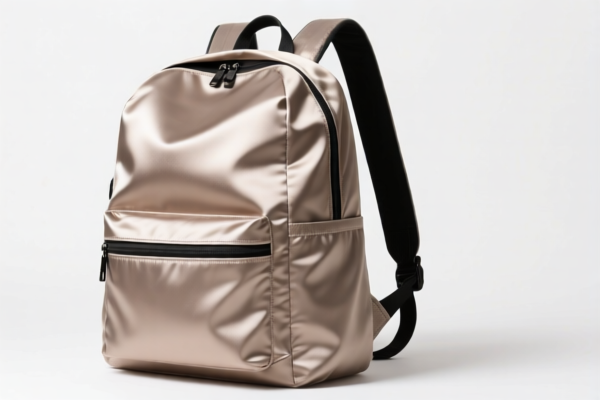
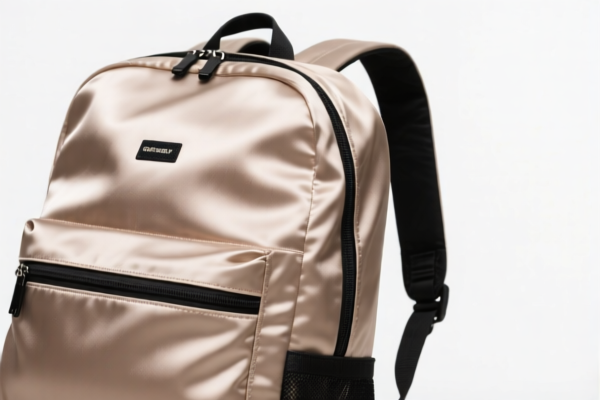
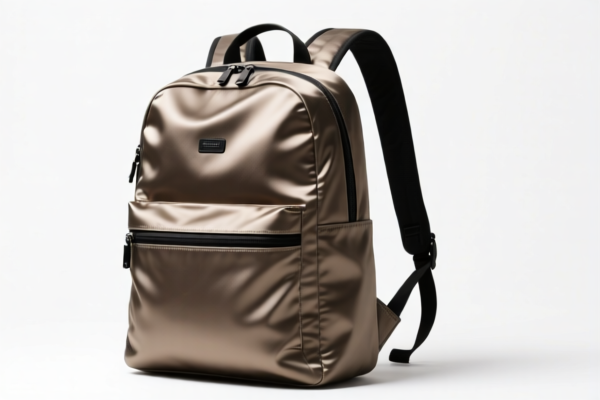
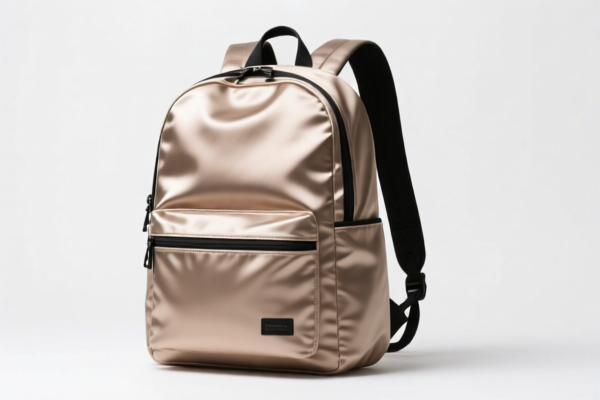
AI Analysis
🎒 Silk Travel Backpack: HS Code Classification & US Customs Clearance Guide (2026)
🌐 HS Code Reference & Clearance Guide | Latest Tariff Analysis | Professional Customs Strategy
📌 I. Product Definition & Classification: What is a "Silk Travel Backpack"?
A Silk Travel Backpack is a versatile bag designed for carrying personal items during travel, characterized by its material (silk) and structure. In international trade, the classification depends heavily on form, function, and material composition.
Unlike standard luggage (HS 4202.12/15), backpacks made of textile materials (including silk) often fall under different subheadings based on whether they are "suitcases," "briefcases," or "satchels/backpacks."
⚠️ Key Distinction Points:
- If the bag is rigid, has a handle, and resembles a suitcase → HS 4202.12/15 (Suitcases, Travel Bags).
- If the bag is flexible, worn on the back/side, and made of textile/silk → HS 4202.22/32 (Satchels, Backpacks, Pouches).
- Critical Factor: Silk is a textile material, but bags made entirely of silk are often classified under Chapter 42 (Articles of Leather; Saddle Harness) rather than Chapter 50/63, because Chapter 42 covers "bags" specifically.
📦 II. HS Code Classification Details (2026 Latest Tariff Authority)
| HS Code | Product Description | Application Scenario | Tax Rate (Total) | Key Feature |
|---|---|---|---|---|
4202.22.40.10 |
Silk cross-body or casual bags, shaped like handbags/satchels | Fashionable side bags, casual wear, structured silk bags | 42.4% | Form: Handbag/Satchel shape |
4202.22.70.00 |
Silk cross-body or casual bags, handbag shape, textile surface with silk | Handheld silk bags, structured fashion items | 42.0% | Form: Handbag shape |
5007.90.60.90 |
Silk casual bags, matching material & shape, fits silk fabric category | Unstructured silk bags, loosely defined forms | 38.9% | Material: Raw Silk Fabric |
6307.90.98.91 |
Silk toiletry bag, shaped as a finished bag, fits "other made-up articles" | Small toiletry kits, pouches, non-bag forms | 24.5% | Form: Toiletry Kit/Pouch |
4202.32.85.00 |
Silk toiletry bag, shaped for small personal items, high silk content | Small pouches, coin purses, compact silk cases | 35.0% | Form: Small Personal Item |
🔍 Important Note:
- Backpacks typically fall under HS 4202.22 if they are satchel-style or cross-body.
- If the "backpack" is large and rigid, it might be classified as 4202.12/15, but none of these HS codes are listed in your provided data.
- Therefore, we assume the "Silk Travel Backpack" in question is fashion-oriented, flexible, and cross-body/satchel-style (as per the provided HS codes).
- Do not use5007or6307unless the item is not a bag (e.g., raw fabric or a toiletry kit).
💰 III. 2026 Latest Tariff Rate Breakdown (Including Surtaxes & Policy Add-ons)
✅ Applicable Country: United States (US)
✅ Origin: China (CN)
✅ Effective Date: November 10, 2025 (and onwards)
🎯 1. 4202.22.40.10 – Silk Cross-body/Casual Bag (Handbag Shape)
| Item | Content |
|---|---|
| Base Rate | 7.4% (Ad Valorem) |
| USITC Surtax (301) | +25.0% |
| IEEPA Surtax (122) | +10.0% |
| Total Tariff | 42.4% |
| Calculation | CIF Value × 42.4% |
| De Minimis Exemption | ❌ No (deny_de_minimis) |
| Legal Basis | USITC:4202.22.40.10 → Footnote:9903.88.01 + IEEPA:9903.01.25 |
📌 Explanation:
- This is a high-tariff item. The 301 tariff (25%) is mandatory for Chinese-made bags.
- The 122 IEEPA tariff (10%) applies to all goods from China under this provision.
- Total burden: 42.4%. This significantly impacts profit margins.
🎯 2. 4202.22.70.00 – Silk Handbag (Textile Surface with Silk)
| Item | Content |
|---|---|
| Base Rate | 7.0% |
| USITC Surtax (301) | +25.0% |
| IEEPA Surtax (122) | +10.0% |
| Total Tariff | 42.0% |
| Calculation | CIF Value × 42.0% |
| De Minimis Exemption | ❌ No |
| Legal Basis | USITC:4202.22.70.00 → Footnote:9903.88.01 + IEEPA:9903.01.25 |
📌 Note:
- Slightly lower than4202.22.40.10due to a lower base rate (7.0% vs 7.4%).
- Applies to handbags with textile surfaces containing silk.
🎯 3. 5007.90.60.90 – Silk Casual Bag (Fabric Category)
| Item | Content |
|---|---|
| Base Rate | 3.9% |
| USITC Surtax (301) | +25.0% |
| IEEPA Surtax (122) | +10.0% |
| Total Tariff | 38.9% |
| Calculation | CIF Value × 38.9% |
| De Minimis Exemption | ❌ No |
| Legal Basis | USITC:5007.90.60.90 → Footnote:9903.88.01 + IEEPA:9903.01.25 |
📌 Warning:
- This HS Code is for silk fabric articles that do not fit standard bag categories.
- Risk: Customs may reclassify this as a bag under Chapter 42, leading to higher tariffs or penalties. Only use if the item is not a functional bag (e.g., a scarf-shaped accessory).
🎯 4. 6307.90.98.91 – Silk Toiletry Bag
| Item | Content |
|---|---|
| Base Rate | 7.0% |
| USITC Surtax (301) | +7.5% |
| IEEPA Surtax (122) | +10.0% |
| Total Tariff | 24.5% |
| Calculation | CIF Value × 24.5% |
| De Minimis Exemption | ❌ No |
| Legal Basis | USITC:6307.90.98.91 → Footnote:9903.88.01 + IEEPA:9903.01.25 |
📌 Strategy:
- This is the lowest tariff option (24.5%) among the provided codes.
- Only applicable if the item is a toiletry bag (small pouch for cosmetics/toiletries).
- Misclassification Risk: If you declare a backpack as a toiletry bag, customs will seize it or reclassify it, leading to fines.
🎯 5. 4202.32.85.00 – Silk Toiletry Bag (Small Personal Items)
| Item | Content |
|---|---|
| Base Rate | 0.0% |
| USITC Surtax (301) | +25.0% |
| IEEPA Surtax (122) | +10.0% |
| Total Tariff | 35.0% |
| Calculation | CIF Value × 35.0% |
| De Minimis Exemption | ❌ No |
| Legal Basis | USITC:4202.32.85.00 → Footnote:9903.88.01 + IEEPA:9903.01.25 |
📌 Note:
- Base rate is 0%, but surtaxes still apply.
- Applies to small pouches, coin purses, or compact cases.
- Not suitable for a full-sized backpack.
🛠️ IV. Practical Clearance Advice (Pitfall Avoidance)
✅ 1. Required Documentation Checklist
| Document | Required | Notes |
|---|---|---|
| ✅ Product Specifications | ✔️ | Material (100% Silk?), Dimensions, Weight, Lining Material |
| ✅ Product Photos | ✔️ | Clear images of front, back, inside, labels, and zippers |
| ✅ Commercial Invoice | ✔️ | Must state "Silk [Bag Type]" and "Country of Origin: China" |
| ✅ Packing List | ✔️ | Item count, packaging type |
| ✅ Certificates | ✔️ | If applicable: Silk Origin Certificate, Textile Composition Report |
✅ 2. Declaration Tips (Key Mantra)
🔥 "Correct Form, Correct HS, Avoid 100% Penalty!"
| Scenario | Correct Declaration | Wrong Declaration |
|---|---|---|
| Fashion Cross-body Bag | 4202.22.40.10 |
5007.90.60.90 (Risk of Re-classification) |
| Handheld Silk Bag | 4202.22.70.00 |
4202.22.40.10 (Minor Tariff Difference) |
| Small Toiletry Pouch | 6307.90.98.91 |
4202.32.85.00 (Higher Tariff) |
| Large Backpack (Not Listed) | N/A | Do not force-fit into provided HS codes |
⚠️ Critical Warning:
- If the item is a large backpack (not a satchel or pouch), none of the above HS codes may be accurate.
- You may need to use HS 4202.12/15 (Suitcases/Travel Bags), which has different tariffs.
- Always consult a customs broker if the item does not fit the "satchel/pouch" description.
✅ 3. Special Cases
| Situation | Handling Advice |
|---|---|
| OEM Custom Bags | Provide design sketches and material specs to justify HS Code. |
| Mixed Materials | If silk is <50%, it may be classified as textile (Chapter 63), changing the tariff. |
| Gift Items | Same rules apply; no de minimis exemption for China-origin goods under IEEPA. |
| High-Value Silk | Ensure value declaration matches market price to avoid customs valuation disputes. |
🌍 V. Global Market Comparison (2026)
| Country/Region | Recommended HS Code | Tariff (China Origin) | Notes |
|---|---|---|---|
| 🇺🇸 USA | 4202.22.40.10 |
42.4% | High due to 301 + 122 tariffs |
| 🇨🇳 China | 4202.22.40.10 |
~5-10% | Lower tariff, no surtaxes |
| 🇪🇺 EU | 4202.22.40.10 |
~4-7% | No US-style surtaxes |
| 🇬🇧 UK | 4202.22.40.10 |
~4-7% | Post-Brexit rules apply |
| 🇯🇵 Japan | 4202.22.40.10 |
~0-10% | Varies by trade agreement |
📌 Conclusion:
- USA is the most expensive market for silk bags due to additional tariffs.
- Consider shipping to non-US markets or warehousing in third countries (e.g., Mexico, Vietnam) if eligible for tariff exemptions.
📌 VI. Common Mistakes & Pitfalls (Lessons Learned)
❌ Mistake 1: Declaring a backpack as a "Toiletry Bag" (6307.90.98.91) to save tariffs.
👉 Consequence: Customs will reclassify, impose penalties, and delay shipment. Tariff difference: 24.5% vs 42.4%.
❌ Mistake 2: Using 5007.90.60.90 for a structured handbag.
👉 Consequence: High risk of audit. Customs may argue it’s a bag under Chapter 42. Tariff difference: 38.9% vs 42.4%.
❌ Mistake 3: Ignoring the IEEPA 122 Tariff (10%).
👉 Consequence: Under-declaration. Customs will assess back-tariffs + interest.
✅ Best Practice:
Use the most accurate HS Code based on form and function. For a fashion backpack/satchel, use
4202.22.40.10or4202.22.70.00.
🎯 VII. Conclusion: Professional Declaration, Cost Control
🎯 Key Takeaways:
🔹 "Silk Backpacks face 24.5%–42.4% tariffs in the US."
🔹 "Toiletry bags have lower tariffs (24.5%) but must be small/pouch-shaped."
🔹 "Never misclassify to save costs; the risk of penalties outweighs savings."
📌 Pro Tip:
If your silk backpack is not a fashion satchel but a functional travel backpack, consider HS 4202.12/15 (not listed in your data). Contact a customs broker for accurate classification.
📣 Action Item:
📞 Contact a Customs Broker → Provide Photos + Specs → Get Pre-Ruling → Avoid Delays.
✨ Professional Clearance Starts with Accurate Classification!
💼 Every Percent of Tariff Counts!
Customer Reviews
About HS Code Classification
The Harmonized System (HS) is an internationally standardized nomenclature developed by the World Customs Organization (WCO) to classify traded products. Over 200 countries use the HS system as the basis for customs tariffs, trade statistics, and import/export regulations.
Each HS code follows a hierarchical structure:
- Chapter (2 digits) — Broad category of goods (e.g., Chapter 84: Machinery and Mechanical Appliances)
- Heading (4 digits) — More specific grouping within the chapter
- Subheading (6 digits) — Internationally standardized breakdown, used by all WCO member countries
- National subdivisions (8-10 digits) — Country-specific extensions for further classification, such as US HTSUS 10-digit codes
Correct HS code classification is essential for smooth customs clearance, accurate duty payment, and compliance with trade regulations. Misclassification can lead to customs delays, overpayment of duties, or penalties.
When importing from CN to US, the applicable tariff rates may include:
- Most-Favored-Nation (MFN) rate — The standard duty rate applied to WTO members
- General rate — Applied to countries without trade agreements
- Trade remedy duties — Additional tariffs such as Section 301 (anti-dumping), Section 232 (national security), or countervailing duties
The information provided on this page is for reference purposes only. For official classification, please consult with your local customs authority or a licensed customs broker.