Silk Weekend Travel Bag
CN → US| HS Code | Tariff Rate | Origin | Destination | Doc |
|---|---|---|---|---|
| 4202227000 | 42.0% | CN | US | Official Doc |
| 5007906090 | 38.9% | CN | US | Official Doc |
| 4202224010 | 42.4% | CN | US | Official Doc |
| 4202224010 | 42.4% | CN | US | Official Doc |
| 4202227000 | 42.0% | CN | US | Official Doc |
Product Images
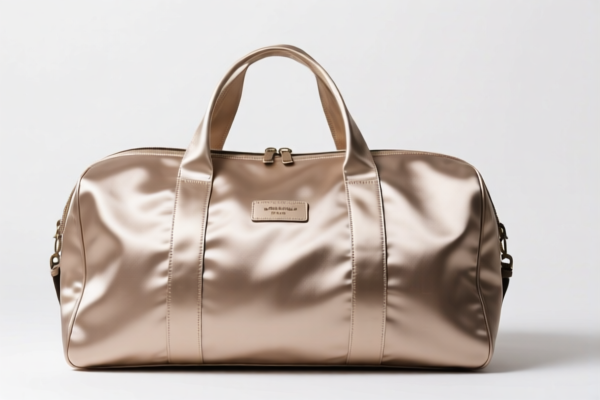
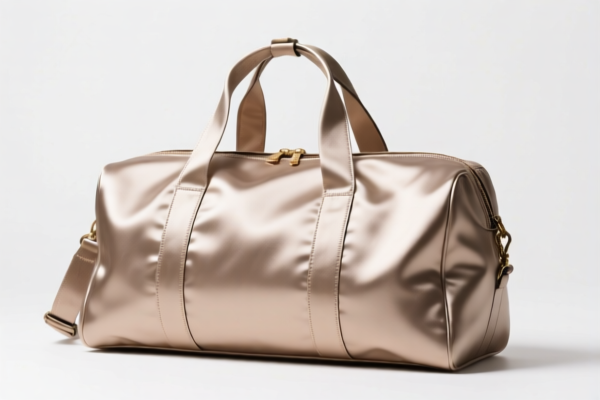
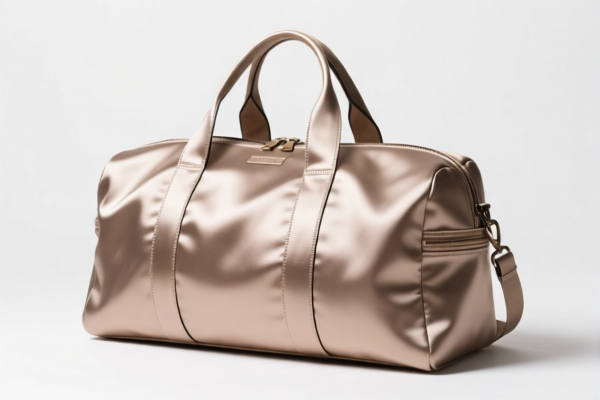
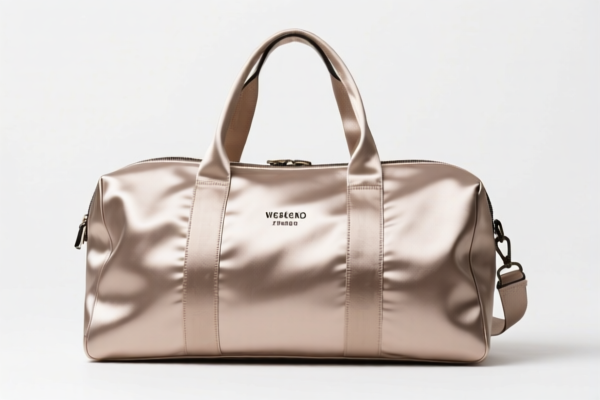
AI Analysis
👜 Silk Weekend Travel Bag (Fashionable Silk Weekend Bag)
🌐 HS Code Reference & Clearance Guide | 2026 Latest Tariff Analysis | Professional Customs Strategy
📌 One, Product Definition and Classification: Do You Truly Understand "Silk Weekend Bags"?
A Silk Weekend Travel Bag is a high-end fashion accessory designed for short trips, characterized by its luxurious fabric and portable form. In international trade, its classification depends heavily on the primary material and the specific structure (handheld vs. slung).
Key Classification Distinction: - Classified as "Finished Goods" (Chapter 42): If the bag is composed of silk or textile materials and includes handles, zippers, or lining, it is typically classified under Chapter 42 (Articles of leather or of composition leather; saddlery and harness; travel goods, handbags...). - Classified as "Textile Fabric" (Chapter 50): Rarely applicable for finished bags unless declared incorrectly as raw silk fabric, which is a common compliance error.
⚠️ Critical Compliance Point:
- If the outer surface is 100% Silk (or ≥85% silk), it falls under specific subheadings in Chapter 42.
- If the description is vague (e.g., just "silk bag"), customs may scrutinize the HS Code to ensure it matches the material composition.
- Wrong Classification Risk: Misclassifying a finished bag as raw silk fabric can lead to severe penalties, as tariffs differ significantly.
📦 Two, HS Code Classification Details (Based on Provided Data)
| HS Code | Product Description | Material/Form Logic | Applicable Scenario |
|---|---|---|---|
4202.22.70.00 |
Silk Handbag / Weekend Bag | Outer surface: Textile materials (Silk ≥85%). Form: Handheld/Shoulder bag. | Classic weekend travel bags, structured handbags with silk exterior. |
5007.90.60.90 |
Silk Fabric (Misclassified/Alternative) | Outer surface: Silk textile. Note: This HS usually applies to fabrics, but data links it to "silk bag" matching textile characteristics. | Risk Alert: Only use if specifically argued as a textile item, but generally discouraged for finished bags. |
4202.22.40.10 |
Silk Leisure Bag (Handbag/Crossbody) | Outer surface: Textile materials. Form: Handbag/Crossbody. | Casual leisure bags, totes, and crossbody bags with silk exteriors. |
4202.22.40.10 |
Silk Crossbody Bag | Outer surface: Silk. Form: Crossbody/Slung bag. | Bags with long straps for shoulder wear, made primarily of silk. |
🔍 Key Insight:
-4202.22...is the correct chapter for finished bags with textile exteriors.
-4202.22.40.10and4202.22.70.00are the primary contenders, differing slightly by specific sub-item definitions (e.g., specific leisure vs. general textile exterior).
-5007.90.60.90is an outlier in the provided data, linking a finished bag to a fabric HS code. Exercise caution: Customs may reject this if the item is clearly a finished good with hardware (zippers, handles).
💰 Three, 2026 Latest Tariff Rate Breakdown (Including Additional Taxes)
✅ Applicable Country: United States (US)
✅ Origin: China (CN)
✅ Effective Date: Current trade policies (Section 301 & IEEPA)
🎯 1. 4202.22.70.00 & 4202.22.40.10 —— Silk Bags (Finished Goods)
| Item | Content |
|---|---|
| Base Tariff Rate | 7.0% - 7.4% (Ad Valorem) Note: Slight variation exists between sub-codes 40.10 (7.4%) and 70.00 (7.0%). |
| Section 301 Additional Tariff | +25.0% Applied to most Chinese textile/fashion goods. |
| IEEPA / Section 122 Additional Tariff | +10.0% Specific trade policy surcharge. |
| Total Tariff Rate | 42.0% - 42.4% High burden for luxury items. |
| Tax Calculation | CIF Value × Total Rate |
| De Minimis Exemption? | ❌ No Valued over $800 is not exempt; even under $800, these goods are subject to full assessment if not de minimis eligible, but typically Section 301 applies to all imports. |
| Legal Basis Path | HTSUS:4202.22 → USITC Footnote → IEEPA:9903.01.24 (301 Tariff) → Section 122/IEEPA (10% Tariff) |
📌 Explanation:
- The Base Rate (~7%) is the standard MFN rate for textile handbags.
- The 25% is the standard Section 301 tariff on Chinese goods in this category.
- The 10% is an additional policy surcharge.
- Total Impact: For a $1,000 bag, you pay $420-$424 in duties alone.
🎯 2. 5007.90.60.90 —— Alternative Classification (Fabric-Based Logic)
| Item | Content |
|---|---|
| Base Tariff Rate | 3.9% |
| Section 301 Additional Tariff | +25.0% |
| IEEPA / Section 122 Additional Tariff | +10.0% |
| Total Tariff Rate | 38.9% |
| Tax Calculation | CIF Value × 38.9% |
📌 Warning:
- While the total rate is 3.1% - 3.5% lower than Chapter 42 codes, this classification is high-risk.
- Customs may argue that a "bag" is not "fabric," leading to audits, re-classification, and penalties.
- Recommendation: Only use if you have a strong legal precedent or pre-ruling supporting this classification.
🛠️ Four, Clearance Practical Advice (Real-World Pitfall Guide)
✅ 1. Required Documentation Checklist (Mandatory)
| Document | Required? | Description |
|---|---|---|
| ✅ Commercial Invoice | ✔️ | Must clearly state "Silk Weekend Bag," material content (e.g., 100% Silk), and HS Code. |
| ✅ Product Description | ✔️ | Detail: "Handheld/Shoulder bag, silk exterior, textile lining, metal hardware." |
| ✅ Material Composition Statement | ✔️ | Explicitly state silk percentage (e.g., "100% Silk") to justify Chapter 42. |
| ✅ Product Photos | ✔️ | Show bag structure, handles, lining, and brand label. |
| ✅ Origin Certificate | ✔️ | Proof of Chinese origin to apply Section 301 rates accurately. |
✅ 2. Declaration Tips (Key Strategies)
🔥 "Be Specific, Avoid Ambiguity!"
| Scenario | Correct Declaration | Incorrect Declaration |
|---|---|---|
| Silk Handbag | "Women's Silk Handbag, 100% Silk Outer, Leather Handle" | "Bag" or "Luggage" (Too vague) |
| Silk Crossbody | "Silk Crossbody Bag, Textile Material, Section 42" | "Silk Fabric" (Misclassification) |
| Material Claim | "100% Silk" | "Silk-like" or "Polyester blend" (If it's silk) |
- Accuracy is Key: If the bag is 100% silk, declare it as such. If it has a leather trim, the primary material (silk) still dictates Chapter 42.
- Avoid "5007" unless necessary: Do not use
5007.90.60.90unless you have a specific legal strategy, as it looks suspicious for a finished bag.
✅ 3. Special Cases
| Case | Handling Advice |
|---|---|
| Mixed Material Bag | If silk is <85%, check if it falls under "Other Textile Materials." Tariff rates may vary. |
| OEM/Custom Bags | Provide customer design specs to prove "finished good" status. |
| Samples | If value < $800, de minimis might apply, but Section 301 taxes often still apply. Check current CBP guidelines. |
🌍 Five, Global Market Comparison (2026 Snapshot)
| Country/Region | Recommended HS Code | Estimated Tariff (China Origin) | Notes |
|---|---|---|---|
| 🇺🇸 United States | 4202.22.70.00 |
42.0% | High due to Section 301 + 122. |
| 🇪🇺 European Union | 4202.22 |
~4-12% | No Section 301, but VAT applies. |
| 🇨🇳 China | 4202.22 |
~10% | Import duty + VAT (13%). |
| 🇬🇧 United Kingdom | 4202.22 |
~12% | Post-Brexit tariff rules apply. |
📌 Conclusion:
- US Market is the most expensive due to punitive tariffs.
- EU/UK/Asia are more cost-effective for silk goods.
- Strategy: Consider diversifying production outside China for US-bound goods to mitigate 25%+ tariffs.
📌 Six, Common Mistakes & Pitfalls (Lessons Learned)
❌ Mistake 1: Declaring a "Silk Bag" as "Silk Fabric" (5007)
👉 Consequence: Customs rejection, delay, and potential penalty for misdeclaration.
👉 Fix: Use Chapter 42 for finished goods.
❌ Mistake 2: Ignoring Section 301 & IEEPA Tariffs
👉 Consequence: Underpayment of duties, leading to back-taxes and interest.
👉 Fix: Always include 25% + 10% in cost calculations for US imports from China.
❌ Mistake 3: Vague Product Description ("Bag")
👉 Consequence: Customs assigns highest duty rate or requests additional info.
👉 Fix: Use specific terms: "Silk Handbag," "Crossbody Bag," "Textile Exterior."
✅ Correct Practice:
"Silk Weekend Travel Bag, 100% Silk Outer, Textile Material, Handheld/Shoulder Carry, Model XYZ, Made in China."
🎯 Seven, Conclusion: Professional Declaration, Cost Control, Risk Mitigation
🎯 Key Takeaways:
🔹 "Finished Bag = Chapter 42": Never classify a finished bag as fabric (
5007) without strong legal backing.
🔹 "Total Tariff ~42%": Budget for 42.0%-42.4% duty for US imports.
🔹 "Be Specific": Clear descriptions prevent delays.
📌 Pro Tip:
If your silk bags are sourced from Vietnam, Italy, or Turkey, you may avoid Section 301 tariffs, reducing the total duty to ~7-12%.
Recommendation: Conduct a Pre-Ruling with CBP if shipping large volumes to ensure HS Code accuracy.
📣 Immediate Action:
📞 Consult a licensed customs broker.
📄 Prepare detailed product specs and material declarations.
🚀 Secure your supply chain and optimize your duty costs!
✨ Expert Clearance Starts with Accurate Classification!
💼 Every Percentage Point Counts in Global Trade!
Customer Reviews
About HS Code Classification
The Harmonized System (HS) is an internationally standardized nomenclature developed by the World Customs Organization (WCO) to classify traded products. Over 200 countries use the HS system as the basis for customs tariffs, trade statistics, and import/export regulations.
Each HS code follows a hierarchical structure:
- Chapter (2 digits) — Broad category of goods (e.g., Chapter 84: Machinery and Mechanical Appliances)
- Heading (4 digits) — More specific grouping within the chapter
- Subheading (6 digits) — Internationally standardized breakdown, used by all WCO member countries
- National subdivisions (8-10 digits) — Country-specific extensions for further classification, such as US HTSUS 10-digit codes
Correct HS code classification is essential for smooth customs clearance, accurate duty payment, and compliance with trade regulations. Misclassification can lead to customs delays, overpayment of duties, or penalties.
When importing from CN to US, the applicable tariff rates may include:
- Most-Favored-Nation (MFN) rate — The standard duty rate applied to WTO members
- General rate — Applied to countries without trade agreements
- Trade remedy duties — Additional tariffs such as Section 301 (anti-dumping), Section 232 (national security), or countervailing duties
The information provided on this page is for reference purposes only. For official classification, please consult with your local customs authority or a licensed customs broker.