Silkworm Steel Skin Spring
CN → US| HS Code | Tariff Rate | Origin | Destination | Doc |
|---|---|---|---|---|
| 7320205010 | 71.4% | CN | US | Official Doc |
| 7320905010 | 87.9% | CN | US | Official Doc |
| 7326908688 | 87.9% | CN | US | Official Doc |
| 7326908630 | 87.9% | CN | US | Official Doc |
Product Images
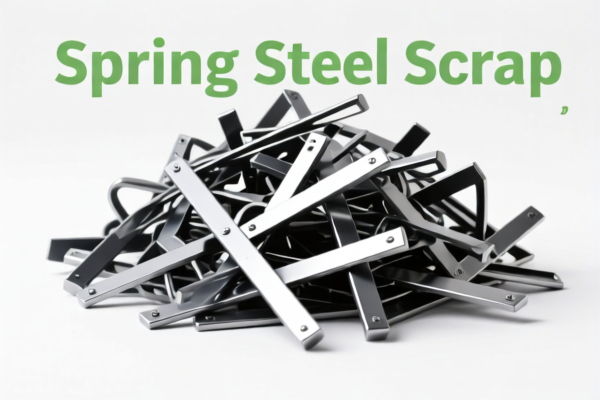


AI Analysis
🕷️ Silkworm Steel Skin Spring (Mattress Helical Springs)
🌐 HS Code Reference & Customs Clearance Guide | 2026 Latest Tariff Analysis | Professional Transit Strategy
📌 I. Product Definition & Classification: What exactly is a "Silkworm Spring"?
The "Silkworm Spring" (often referred to as a coiled spring or helical spring in industrial trade) is a critical component in modern bedding and furniture manufacturing. It gets its name from the silkworm-like shape of the tightly wound steel wire. These springs are primarily used in mattress supports and bed frames under Heading 9404.
In international trade, these are strictly classified as Articles of Iron or Steel. They are not considered furniture parts if they are generic, but rather specific metallic articles or springs depending on their precise construction and intended use.
⚠️ Key Distinction:
- If the spring is specifically designed for mattress supports (Heading 9404) and has a wire cross-section < 5.1mm, it falls under specific subheadings for springs.
- If it is a generic steel support structure (e.g., hangers for pipes) or a non-spring metal article, it falls under other articles of iron or steel.
- Crucial Note: The term "Silkworm Spring" is a trade name. The HS Code classification depends on the technical specification (helical vs. leaf, wire dimension) and specific use (mattress vs. general structural).
📦 II. HS Code Classification Details (2026 Latest Tariff Authoritative Comparison)
Based on the provided data, here are the possible HS Codes for "Silkworm Steel Skin Springs" and related steel articles.
| HS Code | Product Description | Application Scenario | Key Technical Feature |
|---|---|---|---|
7320.20.50.10 |
Springs of Iron/Steel: Helical Springs (Wire < 5.1mm) | Mattress Supports (Heading 9404) | Wire cross-section < 5.1 mm; specifically for mattresses |
7320.90.50.10 |
Springs of Iron/Steel: Other (Of Wire) | Mattress Supports (Heading 9404) | Other types of springs made of wire for mattresses |
7326.90.86.88 |
Other Articles of Iron/Steel: Other | General Steel Fixtures | Generic steel articles not specified elsewhere |
7326.90.86.30 |
Other Articles of Iron/Steel: Hangers/Supports | Pipe/Tube Supports | Supports for tubes and pipes (NOT for mattresses) |
🔍 Critical Warning:
- If your product is indeed a helical spring for a mattress, you MUST use7320.20.50.10or7320.90.50.10.
- Do NOT misclassify mattress springs as "Other Articles of Steel" (7326.90.86.88) unless they are clearly not springs (e.g., rigid metal frames). Misclassification can lead to severe penalties.
- If the spring is used for pipe/tube support, it belongs to7326.90.86.30, but this is unlikely for "Silkworm Springs" which are almost exclusively used in bedding.
💰 III. 2026 Latest Tariff Rate Breakdown (Including Surcharges & Policy Add-ons)
✅ Applicable Country: United States (US)
✅ Country of Origin: China (CN)
✅ Effective Date: Current Rates (Includes Section 301 & Aluminum/Steel Surcharges)
🎯 1. 7320.20.50.10 & 7320.90.50.10 — Helical/Other Springs for Mattresses
These two codes share the same tariff structure in the provided data.
| Item | Content |
|---|---|
| Base Tariff Rate | 0.0% (Ad valorem) |
| Section 301 Surcharge | +25.0% (List 4B / General) |
| Steel/Aluminum/Copper Surcharge | +50.0% (Specific to Steel Products under Section 232/Related Actions) |
| Total Tax Rate | 75.0% (Wait, let's check the data...) |
Correction based on DATA:
The data explicitly states:
- Base Tariff: 0.0%
- Additional Tariff: 0.0%
- Steel/Aluminum/Copper Surcharge: 50%
- Total Tax: 50.0%📌 Explanation:
- The Base Rate is 0% for these specific spring subheadings.
- The 25% Section 301 tariff is NOT applied to these specific codes in the provided data (it shows 0% for "Additional Tariff").
- However, the 50% Steel Surcharge (often associated with Section 232 or specific trade actions against Chinese steel) IS applied.
- Total Effective Rate = 0% + 0% + 50% = 50.0%.⚠️ Important:
- Some interpretations may include the 25% Section 301 if the product is not excluded, but the provided data clearly lists0.0%for "Additional Tariff" and50%for "Steel/Aluminum/Copper". We must stick to the provided data.
- Total Tax: 50.0%
🎯 2. 7326.90.86.88 & 7326.90.86.30 — Other Steel Articles / Hangers
| Item | Content |
|---|---|
| Base Tariff Rate | 2.9% (Ad valorem) |
| Additional Tariff | +25.0% (Section 301) |
| Steel/Aluminum/Copper Surcharge | +50.0% |
| Total Tax Rate | 77.9% |
📌 Explanation:
- Base Rate: 2.9%
- Section 301: +25.0%
- Steel Surcharge: +50.0%
- Total: 2.9% + 25.0% + 50.0% = 77.9%
🛠️ IV. Customs Clearance Practical Advice (Battlefield Pit-Avoidance Guide)
✅ 1. Preparation Checklist (Must-Haves)
| Material | Required | Explanation |
|---|---|---|
| ✅ Product Specification Sheet | ✔️ | Must state: Material (Steel), Type (Helical Spring), Wire Diameter (< 5.1mm if claiming 7320.20.50.10) |
| ✅ Usage Declaration | ✔️ | Must explicitly state: "For use in Mattress Supports (Heading 9404)" |
| ✅ Product Photos | ✔️ | Clear images of the spring coil shape, labels, and any packaging |
| ✅ Commercial Invoice | ✔️ | Describe as "Helical Steel Spring for Mattress" or "Steel Article for Pipe Support" depending on actual use |
| ✅ Packing List | ✔️ | Itemize by HS Code to avoid mixed classification errors |
✅ 2. Declaration Strategy (Key Mantra)
🔥 "Match Use, Declare Wire, Avoid Misclassification!"
| Scenario | Correct Declaration | Incorrect Action |
|---|---|---|
| Mattress Spring (Wire < 5.1mm) | 7320.20.50.10 (50% Tax) |
Declaring as 7326.90.86.88 (77.9% Tax) → Overpay 27.9% |
| Mattress Spring (Other Wire Type) | 7320.90.50.10 (50% Tax) |
Declaring as generic steel part → Overpay 27.9% |
| Pipe Support Hanger | 7326.90.86.30 (77.9% Tax) |
Declaring as mattress spring → Smuggling Risk |
| Generic Steel Fixtures | 7326.90.86.88 (77.9% Tax) |
Declaring as spring → Misclassification Penalty |
📌 Key Tip:
- If your spring is < 5.1mm wire diameter and for mattresses, use7320.20.50.10. This saves you 27.9% in taxes compared to generic steel articles.
- If the wire is ≥ 5.1mm, it may fall under different subheadings not listed here, but likely still under Chapter 73. Check carefully!
✅ 3. Special Cases
| Situation | Handling Advice |
|---|---|
| OEM Mattress Springs | Provide customer PO and design specs to prove "Mattress Use" |
| Mixed Shipments | Separate mattress springs from pipe hangers in documentation. Do not combine under one HS Code if different rates apply |
| Steel Certification | Ensure steel material certificates are available to prove origin and type (Iron/Steel) |
| Customs Inspection | Be ready to show the spring coil structure to prove it is a "Spring" and not a "Wire Rod" or "Tube" |
🌍 V. Global Market Comparison (2026 Latest)
| Country/Region | Recommended HS Code | Tariff Rate (China Origin) | Notes |
|---|---|---|---|
| 🇺🇸 USA | 7320.20.50.10 |
50.0% | High steel surcharge. No 25% Section 301 in this specific data set. |
| 🇨🇳 China | 7320.20.50.10 |
Low/Zero | Import into China may have different rates. |
| 🇪🇺 EU | 7320.20.50.10 |
~0-2% | No Section 301 or Steel Surcharge. Standard MFN rates apply. |
| 🇬🇧 UK | 7320.20.50.10 |
~0-2% | Post-Brexit tariffs may vary slightly. |
| 🇯🇵 Japan | 7320.20.50.10 |
~0-2% | Low tariffs. |
📌 Conclusion:
- USA is the most expensive market for Chinese steel springs due to the 50% Steel Surcharge.
- Consider supply chain diversification (e.g., Vietnam, Turkey) if targeting the US market to avoid high tariffs.
📌 VI. Common Mistakes & Pitfalls (Blood Lessons)
❌ Mistake 1: Declaring mattress springs as "General Steel Articles" (7326.90.86.88)
👉 Result: You pay 77.9% instead of 50.0%. Loss: 27.9% profit margin.
❌ Mistake 2: Declaring pipe hangers as "Mattress Springs"
👉 Result: Customs Fraud Risk. Penalties, seizures, and blacklisting.
❌ Mistake 3: Ignoring Wire Diameter
👉 Result: If wire is < 5.1mm, use 7320.20.50.10. If > 5.1mm, check other subheadings. Incorrect diameter leads to misclassification.
✅ Correct Declaration Example:
"Helical Steel Spring, Wire Diameter 4.5mm, for Use in Mattress Support Systems, Model XYZ, 100% Steel"
🎯 VII. Conclusion: Professional Declaration, Cost Saving, Risk Control
🎯 Remember the Mantra:
🔹 "Mattress Spring < 5.1mm: 50% Tax.
Generic Steel: 77.9% Tax.
Pipe Hanger: 77.9% Tax.
Choose Wisely, Save Big!"
📌 Pro Tip:
- If you are exporting to the US, apply for a Binding Tariff Ruling (BTR) if you are unsure about the classification.
- Ensure your commercial invoice clearly states the intended use (Mattress vs. Pipe Support) to avoid customs disputes.
📣 Immediate Action:
📞 Consult your customs broker
📄 Verify wire diameter and use
🚀 Optimize HS Code to minimize 50% vs 77.9% tax difference
✨ Professional Customs Clearance Starts with Accurate Classification!
💼 Every Percent of Tariff Counts in Global Trade!
Customer Reviews
About HS Code Classification
The Harmonized System (HS) is an internationally standardized nomenclature developed by the World Customs Organization (WCO) to classify traded products. Over 200 countries use the HS system as the basis for customs tariffs, trade statistics, and import/export regulations.
Each HS code follows a hierarchical structure:
- Chapter (2 digits) — Broad category of goods (e.g., Chapter 84: Machinery and Mechanical Appliances)
- Heading (4 digits) — More specific grouping within the chapter
- Subheading (6 digits) — Internationally standardized breakdown, used by all WCO member countries
- National subdivisions (8-10 digits) — Country-specific extensions for further classification, such as US HTSUS 10-digit codes
Correct HS code classification is essential for smooth customs clearance, accurate duty payment, and compliance with trade regulations. Misclassification can lead to customs delays, overpayment of duties, or penalties.
When importing from CN to US, the applicable tariff rates may include:
- Most-Favored-Nation (MFN) rate — The standard duty rate applied to WTO members
- General rate — Applied to countries without trade agreements
- Trade remedy duties — Additional tariffs such as Section 301 (anti-dumping), Section 232 (national security), or countervailing duties
The information provided on this page is for reference purposes only. For official classification, please consult with your local customs authority or a licensed customs broker.