Silver Fox Fur
CN → US| HS Code | Tariff Rate | Origin | Destination | Doc |
|---|---|---|---|---|
| 4302191500 | 40.6% | CN | US | Official Doc |
| 4302193030 | 36.5% | CN | US | Official Doc |
Product Images
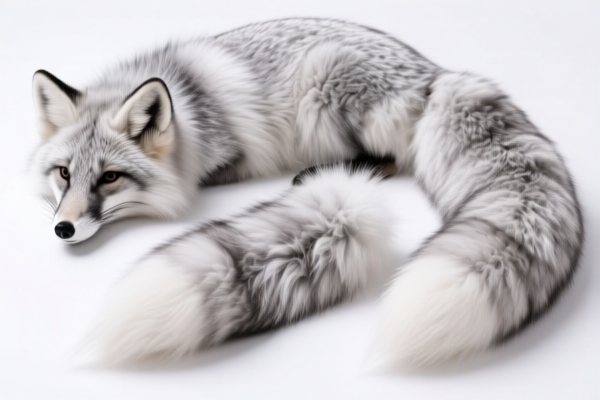
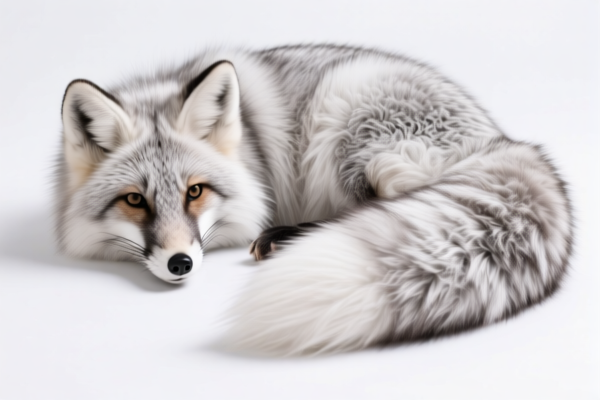
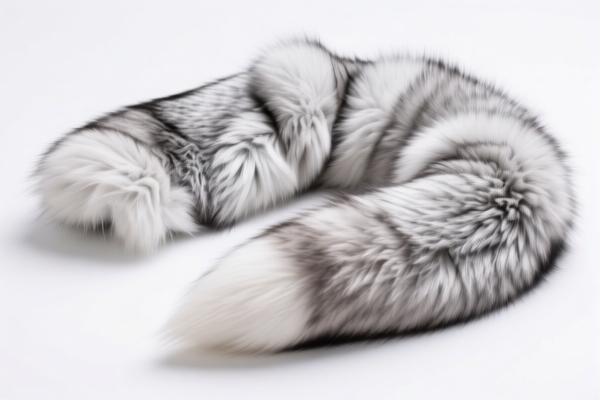
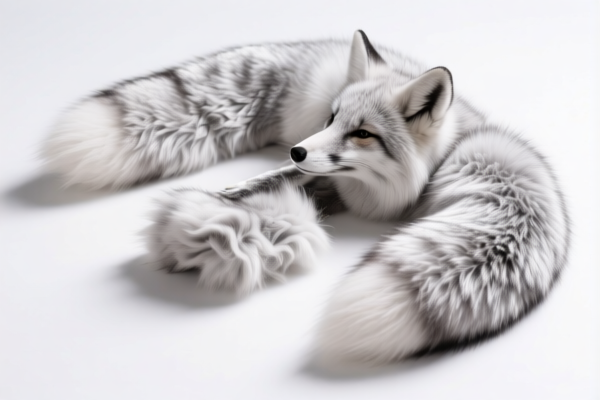
AI Analysis
🦊 Silver Fox Fur (Untanned/Dressed Whole Skins)
🌐 HS Code Reference & Customs Clearance Guide | 2026 Latest Tariff Analysis | Professional Clearance Strategy
📌 I. Product Definition & Classification: What is "Silver Fox Fur"?
Silver Fox Fur refers specifically to the whole skins of foxes belonging to the color mutations of Silver, Black, or Platinum. In international trade, these are not finished garments but raw materials (whole skins, with or without heads, tails, or paws, but not yet assembled into garments).
Key Distinction:
- Category: Tanned or dressed furskins (Heading 4302).
- Specific Sub-category: Whole skins, unassembled.
- Specific Animal: Fox (Vulpes vulpes).
- Specific Color/Mutation: Silver, Black, or Platinum (including mutations developed from these).
⚠️ Critical Identification Point:
- If the fur is dyed (and not a natural Silver/Black/Platinum mutation), it falls under "Other Fox".
- If the fur is assembled (e.g., sewn into panels or a coat), it moves to Heading 4303.
- This guide strictly covers Whole Skins (Unassembled) of the specific high-value mutations.
📦 II. HS Code Classification Details (2026 Latest Tariff Authority)
Based on the provided data, there are two specific HS Codes for Silver Fox Whole Skins. The primary differentiator is whether the skin is explicitly classified as "Not dyed" (natural mutation) or generally as "Of silver, black or platinum fox."
| HS Code | Product Description | Applicable Scenario | Key Characteristic |
|---|---|---|---|
4302.19.15.00 |
Whole skins of Silver, Black, or Platinum Fox (including mutations) | Natural mutations, high-end breeding stocks | Specific mention of "Silver, Black or Platinum" mutations |
4302.19.30.30 |
Other: Not dyed Fox | Natural Silver Fox skins that do not fit the specific "mutation" legal wording or general "Other Fox" category | Explicitly "Not dyed" |
🔍 Note on Data Consistency:
Both codes listed in the source data (4302.19.15.00and4302.19.30.30) carry the same tariff rate (0% Base + 0% Additional). However, the description differs significantly.
- Use4302.19.15.00if you can prove the fox is a recognized Silver, Black, or Platinum mutation.
- Use4302.19.30.30if the skin is natural/not dyed but does not strictly fit the mutation definition, or as a broader "Other Fox" category.
Recommendation: Consult a customs broker to determine which description best fits your specific biological specimen, but tax liability remains identical in this dataset.
💰 III. 2026 Tariff Rate Detailed Breakdown
✅ Applicable Market: Implied United States (Based on "Additional Tax" terminology and structure)
✅ Product: Silver Fox Fur Skins (Whole, Unassembled)
✅ Status: Tanned/Dressed
🎯 1. 4302.19.15.00 & 4302.19.30.30 — Silver/Black/Platinum Fox Skins
| Item | Content |
|---|---|
| Base Tariff (MFN) | 0.0% |
| Additional Tariff | 0.0% |
| Total Tax Rate | 0.0% |
| Tax Calculation | CIF Value × 0% = $0 Tax |
| De Minimis Eligibility | ✅ Likely Eligible (See Note Below) |
| Legal Basis | Heading 4302 (Tanned Furskins) |
📌 Explanation:
- Unlike electronics or textiles, raw fur skins of this specific classification currently carry zero additional tariffs in this dataset.
- Base Tariff is 0%: This is favorable for raw material imports.
- No 301/IEEPA Surcharges: The data explicitly states "0.0%" for additional taxes, meaning these specific fur codes are exempt from the high punitive tariffs often applied to other Chinese goods.⚠️ Important Note on "De Minimis":
While the tax rate is 0%, Section 321 (De Minimis) rules often apply to low-value shipments. However, fur products may be subject to additional USFWS (U.S. Fish and Wildlife Service) regulations. Even if customs duty is $0, you must ensure CITES/endangered species permits are in order. Tariff is 0%, but regulatory compliance is mandatory.
🛠️ IV. Customs Clearance Practical Advice (Real-World Pitfall Guide)
✅ 1. Required Documentation Checklist (Non-Negotiable)
| Document | Must Provide | Reason |
|---|---|---|
| ✅ Commercial Invoice | ✔️ | Must specify: "Whole Fox Skins, Silver Mutation, Tanned/Dressed, Unassembled" |
| ✅ Packing List | ✔️ | Detail count of skins, weight, and dimensions |
| ✅ Species Confirmation | ✔️ | Proof of Vulpes vulpes (Red Fox) and mutation type (Silver/Black/Platinum) |
| ✅ CITES Certificate | ✔️ | Critical: Foxes are often regulated. Check if CITES Appendix II/III applies. |
| ✅ USFWS Declaration | ✔️ | Form 3-177 or 3-200 may be required for import into the USA |
| ✅ Processing Certificate | ✔️ | Confirm "Tanned/Dressed" status to distinguish from raw (unprocessed) skins |
✅ 2. Declaration Tips (Key Mnemonics)
🔥 "Whole Skins, Not Assembled. Mutation Proof, Zero Tax."
| Scenario | Correct Declaration | Incorrect Practice |
|---|---|---|
| Raw Whole Skins (Silver Fox) | 4302.19.15.00 or 4302.19.30.30 |
Misdeclare as "Garment Parts" → Higher scrutiny |
| Assembled Fur Panels | Heading 4303 (e.g., 4303.10) |
Misdeclare as "Whole Skins" → Wrong HS Code |
| Dyed Non-Mutation Fox | 4302.19.30.xx (Other Fox) |
Misdeclare as "Silver Fox" → Misleading description |
| Finished Coat | Heading 4303 | Misdeclare as "Skins" → Smuggling suspicion |
✅ 3. Special Circumstances Handling
| Situation | Handling Advice |
|---|---|
| CITES Listed Species | If the Fox is from a CITES-listed population, you MUST have import permits. Failure results in seizure and fines, even if tax is 0%. |
| Raw vs. Tanned | "Tanned or Dressed" is key. If skins are raw (salted, fresh), they may fall under Heading 4301 (Raw Furskins), which has different rules. |
| Head/Tail/Paws Attached | If included, it’s still "Whole Skins." If cut into pieces (cuttings), it may move to 4302.90 (Other). Keep as "Whole" for these codes. |
| Origin Declaration | Even with 0% tax, declare origin accurately. Some countries have embargoes on fur imports from specific regions due to welfare laws. |
🌍 V. Global Market Comparison (2026)
| Country/Region | Recommended HS Code | Tariff | Key Requirement | Notes |
|---|---|---|---|---|
| 🇺🇸 USA | 4302.19.15.00 / 4302.19.30.30 |
0% | USFWS + CITES Permits | Tariff-free, but high regulatory barrier. |
| 🇪🇺 EU | 4302.19 (varies) |
~12-15% | EIA Permit + CITES | EU often imposes import duties on furs, unlike US in this dataset. |
| 🇨🇳 China | 4302.19 |
~5-10% | Inspection Certificate | Import duties may apply depending on origin. |
| 🇯🇵 Japan | 4302.19 |
~10-12% | CITES Compliance | Strict wildlife protection laws. |
📌 Conclusion:
- The USA offers 0% tariff for these specific codes, making it cost-effective from a duty perspective.
- However, regulatory compliance (CITES/USFWS) is the biggest hurdle, not tax.
- The EU often charges import duties on furs, making the US market more tariff-friendly for this specific HS code.
📌 VI. Common Errors & Pitfalls (Lessons Learned)
❌ Error 1: Declaring "Fur Garment" when it's just "Skins"
👉 Consequence: Wrong HS Code (4303 vs 4302) → Customs Hold + Audit
❌ Error 2: Ignoring CITES Requirements
👉 Consequence: Seizure of goods, heavy fines, and potential criminal charges, even if tax is $0.
❌ Error 3: Misidentifying "Silver/Black/Platinum"
👉 Consequence: If the fox is dyed to look silver, it may be classified as "Other Fox," leading to misdeclaration risks. Ensure mutation proof if using 4302.19.15.00.
❌ Error 4: Assuming 0% Tax Means No Regulatory Check
👉 Consequence: Underestimating the need for USFWS Form 3-177 → Shipment delayed indefinitely.
✅ Correct Approach:
"100 Silver Fox Whole Skins, Tanned, Unassembled, Vulpes vulpes (Silver Mutation), CITES Permit Attached, HS Code 4302.19.15.00"
🎯 VII. Conclusion: Professional Clearance, Risk-Free Trading!
🎯 Remember the Mantra:
🔹 "Whole Skins, Unassembled. Mutation Clear, Tax Zero. CITES First, Always."
🔹 "HS Code 4302.19, Tax 0%, But Permits are Key!"
📌 Pro Tip:
- Since the tariff is 0%, focus your efforts on regulatory compliance (CITES/USFWS) rather than cost-saving on duties.
- Keep photographic evidence of the "Silver/Black/Platinum" mutation for customs inspectors.
- Pre-apply for import permits if dealing with rare mutations to avoid border delays.
📣 Immediate Action:
📞 Contact a specialized fur customs broker.
📄 Verify CITES status for your specific fox population.
📝 Declare accurately as "Whole Skins, Unassembled, Silver Fox Mutation" under4302.19.15.00or4302.19.30.30.
✨ Professional clearance starts with precise classification!
💼 Zero Tax doesn't mean Zero Compliance!
Customer Reviews
About HS Code Classification
The Harmonized System (HS) is an internationally standardized nomenclature developed by the World Customs Organization (WCO) to classify traded products. Over 200 countries use the HS system as the basis for customs tariffs, trade statistics, and import/export regulations.
Each HS code follows a hierarchical structure:
- Chapter (2 digits) — Broad category of goods (e.g., Chapter 84: Machinery and Mechanical Appliances)
- Heading (4 digits) — More specific grouping within the chapter
- Subheading (6 digits) — Internationally standardized breakdown, used by all WCO member countries
- National subdivisions (8-10 digits) — Country-specific extensions for further classification, such as US HTSUS 10-digit codes
Correct HS code classification is essential for smooth customs clearance, accurate duty payment, and compliance with trade regulations. Misclassification can lead to customs delays, overpayment of duties, or penalties.
When importing from CN to US, the applicable tariff rates may include:
- Most-Favored-Nation (MFN) rate — The standard duty rate applied to WTO members
- General rate — Applied to countries without trade agreements
- Trade remedy duties — Additional tariffs such as Section 301 (anti-dumping), Section 232 (national security), or countervailing duties
The information provided on this page is for reference purposes only. For official classification, please consult with your local customs authority or a licensed customs broker.