Silver Halide Continuous Tone Art Grade Photo Paper
CN → US| HS Code | Tariff Rate | Origin | Destination | Doc |
|---|---|---|---|---|
| 3701996060 | 35.0% | CN | US | Official Doc |
| 3701996030 | 35.0% | CN | US | Official Doc |
| 4823906700 | 35.0% | CN | US | Official Doc |
| 4823908680 | 35.0% | CN | US | Official Doc |
Product Images
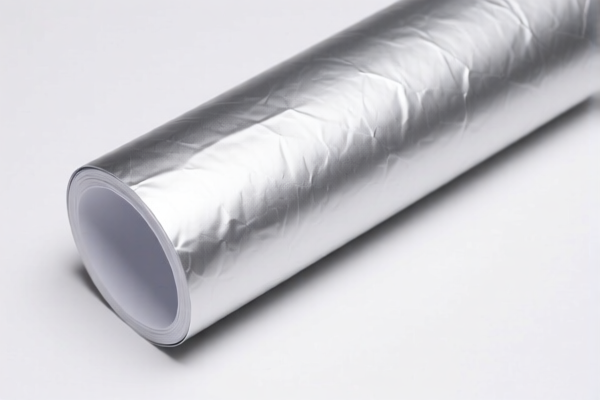
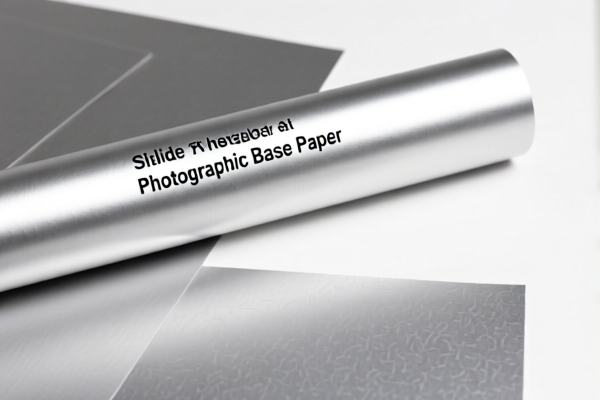
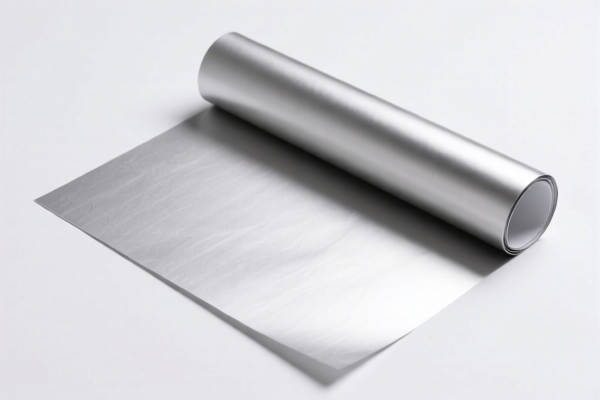
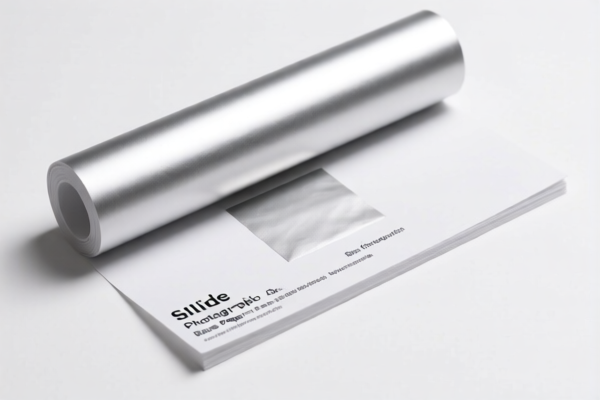
AI Analysis
🎞️ Silver Halide Continuous Tone Art Grade Photo Paper
🌐 HS Code Reference & Customs Clearance Guide | 2026 Latest Tariff Analysis | Professional Logistics Strategy
📌 I. Product Definition & Classification: What Exactly Is This Product?
Silver Halide Continuous Tone Art Grade Photo Paper is a high-end photographic medium characterized by its analog chemical reaction mechanism rather than digital ink deposition. It differs significantly from standard inkjet paper.
Core Characteristics: 1. Material Basis: It is fundamentally a paper substrate coated with light-sensitive silver halide emulsions. 2. Technology: It uses laser exposure (continuous tone) rather than liquid inkjet printing. The image is formed by exposing the coated paper to a laser, developing it chemically, and fixing it. 3. Classification Dilemma: The main customs challenge lies in whether to classify it as a Photographic Material (Chapter 37) due to its light-sensitive nature, or as a Paper Product (Chapter 48) due to its physical substrate.
⚠️ Key Distinction Point:
- If classified as Photographic Material: It falls under HS Code 3701.99, acknowledging its functional sensitivity to light. - If classified as Paper Product: It falls under HS Code 4823.90, acknowledging its physical form as a coated, processed paper sheet.Note: In the provided data, both interpretations are presented with identical tariff outcomes, but the logical reasoning differs.
📦 II. HS Code Classification Details (2026 Latest Tariff Authority Cross-Reference)
| HS Code | Product Description | Reasoning Logic | Classification Category |
|---|---|---|---|
3701.99.60.60 |
Silver Halide Continuous Tone Laser Printing Photo Paper | Classified as Light-Sensitive Material. It fits the category of "Photographic Plates and Films" but is not paper/textile base in the functional sense of photographic media. | Photographic Materials |
3701.99.60.30 |
Silver Halide Continuous Tone Laser Printing Photo Paper | Classified as a Light-Sensitive Medium. Its core material is silver halide, and its form is a light-sensitive flat panel. | Photographic Materials |
4823.90.67.00 |
Silver Halide Continuous Tone Laser Printing Photo Paper | Classified as a Paper/Cardboard Product. The core material is photo paper (paper substrate), and the form is a coated paper product after processing. | Paper Products |
4823.90.86.80 |
Silver Halide Continuous Tone Laser Printing Photo Paper | Classified as a Cut Paper Product. The core material is paper, and the form is paper cut into specific sizes, fitting the "Other Paper Products" logic. | Paper Products |
🔍 Key Reminder:
- Regardless of whether the importer argues for Chapter 37 (function-based) or Chapter 48 (material-based), the total tariff burden remains identical in this specific dataset. - Consistency in declaration logic is crucial to avoid customs audits, even if the final tax amount is the same.
💰 III. 2026 Latest Tariff Rate Breakdown (Including Additional Taxes & Policy Surcharges)
✅ Applicable Country: United States (US)
✅ Country of Origin: China (CN)
✅ Effective Time: Current rates applied to imports from China
🎯 1. All HS Codes (3701.99.60.60, 3701.99.60.30, 4823.90.67.00, 4823.90.86.80)
| Item | Content |
|---|---|
| Base Tariff | 0.0% (ad valorem) |
| Section 301 Additional Tariff | +25.0% |
| Section 122 Tariff (IEEPA) | +10.0% |
| Total Tax Rate | 35.0% |
| Tax Calculation | CIF Value × 35% |
| De Minimis Eligibility | ❌ Not Eligible (High tariff rates typically exclude low-value shipments from de minimis exemption, especially under Section 301/122). |
| Legal Basis Path | USITC:3701/4823 → Section 301: Footnote 9903.88.01 → IEEPA: Section 122 |
📌 Explanation of Tax Components:
- "Base Tariff 0%": Photo paper and certain coated papers often have low or zero base MFN tariffs.
- "Section 301 Tariff 25%": This is the standard punitive tariff imposed by the US Trade Representative (USTR) on a wide range of Chinese goods, including photographic supplies and paper products.
- "Section 122 Tariff 10%": This refers to additional tariffs imposed under Section 122 of the Trade Act of 1974, often used for national security or economic protection reasons, specifically targeting certain Chinese imports.
- Total 35%: This is a significant cost. Importers must price this into their landed cost calculation.
🛠️ IV. Customs Clearance Practical Advice (Combat Pitfall Guide)
✅ 1. Documentation Checklist (Indispensable)
| Document | Required | Description |
|---|---|---|
| ✅ Product Specification Sheet | ✔️ | Must detail: Silver halide emulsion type, laser exposure compatibility, paper weight, coating thickness. |
| ✅ Technical Data Sheet (TDS) | ✔️ | Proof that it is not inkjet paper. Crucial for distinguishing from HS 4823.90.90 (standard paper). |
| ✅ Composition Analysis | ✔️ | To support either Chapter 37 (chemical content) or Chapter 48 (paper base) argument. |
| ✅ Commercial Invoice | ✔️ | Must clearly state: "Silver Halide Laser Photo Paper," not just "Photo Paper." |
| ✅ Packing List | ✔️ | Weight and dimensions. |
| ✅ Origin Certificate | ✔️ | Proof of Chinese origin to apply correct Section 301/122 rates. |
✅ 2. Declaration Strategy (Key Mantras)
🔥 "Logic Must Match, Tax is Fixed, Choose Chapter Wisely!"
| Scenario | Recommended HS Code | Reasoning | Risk if Incorrect |
|---|---|---|---|
| Emphasize Light Sensitivity | 3701.99.60.60 or 3701.99.60.30 |
Focus on the functional use as a photographic medium. | If customs disagrees with "photographic," they may revert to paper codes, but tax is same. However, consistency prevents flags. |
| Emphasize Physical Form | 4823.90.67.00 or 4823.90.86.80 |
Focus on the substrate (coated paper) and size. | If declared as standard paper, customs might question why it's not 4823.90.50 (lower tax if not subject to 301, though unlikely here). |
📌 Crucial Tip:
Since the tax rate is identical (35%) for all four codes, the choice is primarily for logistical consistency and customs compliance clarity.
- Use 3701.xx if your business is primarily photographic labs.
- Use 4823.90 if your business is primarily paper distribution.
Do not switch codes randomly for the same shipment without changing the business description.
✅ 3. Special Case Handling
| Scenario | Handling Advice |
|---|---|
| "Art Grade" Marketing | Ensure the description includes "Art Grade" to distinguish from industrial or high-volume commercial paper, though tax is the same. |
| Mixed Shipments | If shipping with inkjet paper (different HS), separate shipments. Mixing 3701 and 4823 (non-301 items) in one declaration is risky. |
| Samples | Even samples may be subject to 35% if they are commercially representative. Check de minimis thresholds carefully. |
| Customs Audit | Be prepared to provide a sample to prove the silver halide coating exists. |
🌍 V. Global Market Comparison (2026 Latest)
| Country/Region | Recommended HS Code | Tariff (China Origin) | Certification | Notes |
|---|---|---|---|---|
| 🇺🇸 USA | 3701.99.60.60 / 4823.90.86.80 |
35% (25% Sec 301 + 10% Sec 122) | None specific | High tariff barrier. |
| 🇨🇳 China | 3701.99 |
~5-6% | CCC (if applicable) | Low base tariff. |
| 🇪🇺 EU | 3701.99 |
~5% | REACH | No Section 301 equivalent. |
| 🇯🇵 Japan | 3701.99 |
~5-6% | PSE (if electrical parts included) | No extra punitive tariffs. |
📌 Conclusion:
- The 35% tariff is US-specific due to trade policies.
- For other markets, this product is much cheaper to import.
- Consider transshipment or third-country origin strategies if viable for high-volume shipments to the US.
📌 VI. Common Mistakes & Pitfalls (Blood & Tears Lessons)
❌ Mistake 1: Declaring as "Inkjet Photo Paper"
👉 Consequence: Wrong HS Code (likely 4823.90.90). If audited, customs will reclassify to 3701 and assess 35% + penalties.
Truth: Laser silver halide is chemically different from inkjet dye/sublimation.
❌ Mistake 2: Ignoring "Section 122" Tariff
👉 Consequence: Underpaying by 10%. Customs will demand back taxes + interest.
Truth: Always check for Section 122 applicability in 2026.
❌ Mistake 3: Inconsistent Product Description
👉 Consequence: Customs query delay.
Truth: Match the HS Code logic. If 3701, say "Light-sensitive." If 4823, say "Coated Paper."
🎯 VII. Conclusion: Professional Declaration Saves Time & Money
🎯 Remember the Mantra:
🔹 "Silver Halide = Light Sensitive OR Coated Paper."
🔹 "US Import = 35% Total (0+25+10)."
🔹 "Consistency is Key, Tax is Fixed."
📌 Pro Tip:
If you are importing large volumes, apply for a Pre- ruling (Advance Ruling) from US Customs (CBP). Even though the tax is the same, a pre-ruling provides legal certainty on the classification (3701 vs 4823), preventing future disputes during audits.
📣 Immediate Action:
📞 Contact your customs broker.
📤 Provide TDS showing Laser Exposure compatibility.
💰 Calculate landed cost with 35% tariff.
🚀 Ensure smooth clearance for your high-end photo supplies!
✨ Professional clearance starts with precise classification!
💼 Your profit margin depends on accurate tariff calculation!
Customer Reviews
About HS Code Classification
The Harmonized System (HS) is an internationally standardized nomenclature developed by the World Customs Organization (WCO) to classify traded products. Over 200 countries use the HS system as the basis for customs tariffs, trade statistics, and import/export regulations.
Each HS code follows a hierarchical structure:
- Chapter (2 digits) — Broad category of goods (e.g., Chapter 84: Machinery and Mechanical Appliances)
- Heading (4 digits) — More specific grouping within the chapter
- Subheading (6 digits) — Internationally standardized breakdown, used by all WCO member countries
- National subdivisions (8-10 digits) — Country-specific extensions for further classification, such as US HTSUS 10-digit codes
Correct HS code classification is essential for smooth customs clearance, accurate duty payment, and compliance with trade regulations. Misclassification can lead to customs delays, overpayment of duties, or penalties.
When importing from CN to US, the applicable tariff rates may include:
- Most-Favored-Nation (MFN) rate — The standard duty rate applied to WTO members
- General rate — Applied to countries without trade agreements
- Trade remedy duties — Additional tariffs such as Section 301 (anti-dumping), Section 232 (national security), or countervailing duties
The information provided on this page is for reference purposes only. For official classification, please consult with your local customs authority or a licensed customs broker.