Silver Halide Continuous Tone Artistic Grade Photographic Paper
CN → US| HS Code | Tariff Rate | Origin | Destination | Doc |
|---|---|---|---|---|
| 3703103060 | 38.7% | CN | US | Official Doc |
| 3701996060 | 35.0% | CN | US | Official Doc |
| 3701996030 | 35.0% | CN | US | Official Doc |
| 4823906700 | 35.0% | CN | US | Official Doc |
| 4823908680 | 35.0% | CN | US | Official Doc |
Product Images
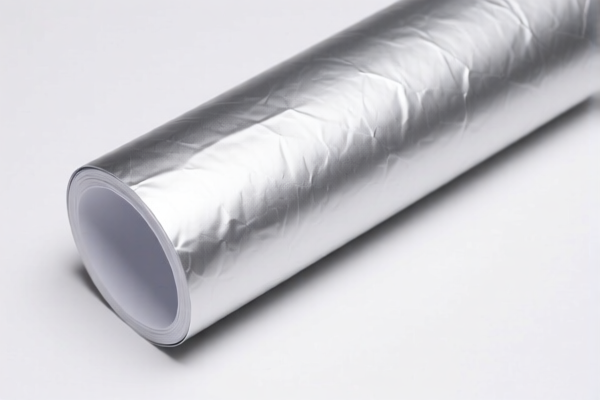
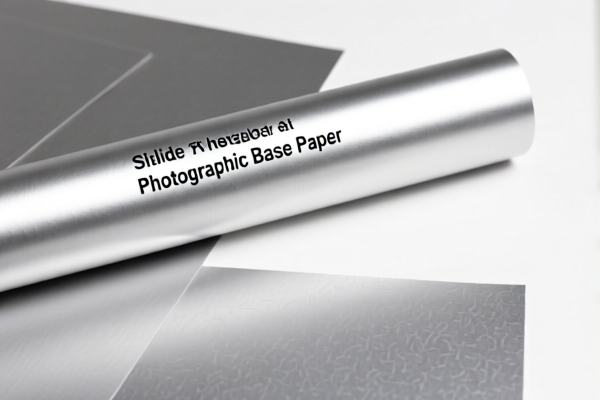
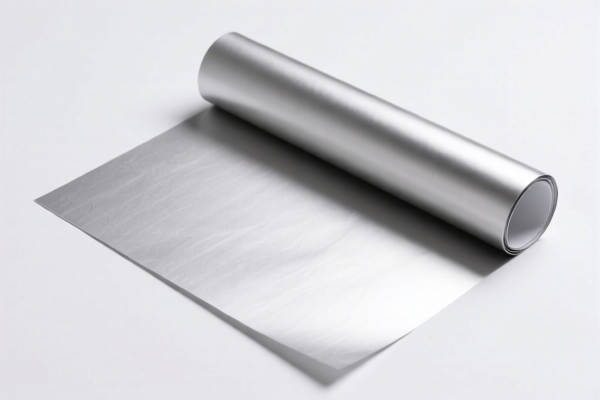
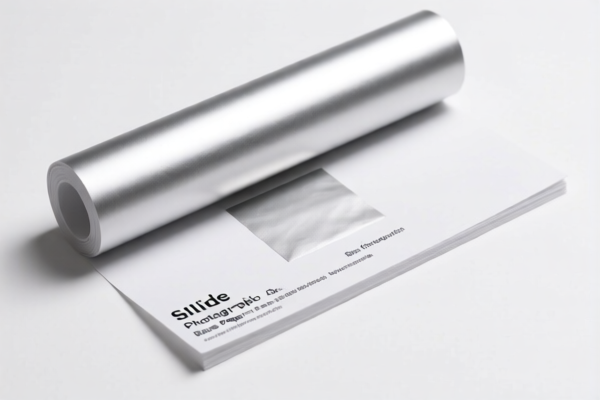
AI Analysis
📸 Silver Halide Continuous Tone Artistic Grade Photographic Paper
🌐 HS Code Reference & Customs Clearance Guide | 2026 Latest Tariff Analysis | Professional Strategy for High-Value Imaging Materials
📌 I. Product Definition & Classification: Decoding "Artistic Grade Photographic Paper"
Silver Halide Continuous Tone Artistic Grade Photographic Paper represents the pinnacle of professional and fine art imaging. Unlike standard digital prints, this material relies on silver halide chemistry within an emulsion layer coated on a paper substrate. It is characterized by its continuous tone output (smooth gradients without visible halftone dots), making it ideal for gallery-quality reproductions, fine art prints, and high-end photography.
In international trade, this product is often misclassified due to its hybrid nature: it is physically a paper product but functionally a chemical/sensitized material. The correct HS Code depends heavily on whether the customs authority views it primarily as a sensitized photographic material (Chapter 37) or a coated paper product (Chapter 48).
⚠️ Critical Distinction Point:
- If the primary characteristic is its light-sensitive silver halide emulsion used for professional/continuous tone imaging → Chapter 37 (Sensitized Materials).
- If the primary characteristic is viewed as a generic coated paper with minimal specialized chemical value or if specific "sensitized" criteria aren't met → Chapter 48 (Paper Products).
- Result: This discrepancy leads to five different HS Codes in the provided dataset, with varying duty structures.
📦 II. HS Code Classification Details (2026 Authoritative Reference)
Based on the provided data, there are 5 potential HS Codes for this product. While they share similar tax rates (35-38.7%), their legal basis and description vary significantly.
| HS Code | Product Summary (From Data) | Primary Category | Tax Detail Breakdown |
|---|---|---|---|
3703.10.30.60 |
Silver Halide Continuous Tone Professional Photographic Paper Made of silver halide; Use: Continuous tone photographic paper |
Sensitized Paper (Ch 37) | Base: 3.7% Add'l: 25.0% (Section 301) Add'l: 10% (Section 122) Total: 38.7% |
3701.99.60.60 |
Silver Halogen Continuous Tone Laser Print Photographic Paper Sensitized material; Form: Continuous tone print paper |
Sensitized Plates/Films (Ch 37) | Base: 0.0% Add'l: 25.0% Add'l: 10% Total: 35.0% |
3701.99.60.30 |
Silver Halogen Continuous Tone Laser Print Photographic Paper Material: Silver halogen; Form: Sensitized flat material |
Sensitized Plates/Films (Ch 37) | Base: 0.0% Add'l: 25.0% Add'l: 10% Total: 35.0% |
4823.90.67.00 |
Silver Halogen Continuous Tone Laser Print Photographic Paper Material: Photo paper; Class: Coated paper products |
Paper Products (Ch 48) | Base: 0.0% Add'l: 25.0% Add'l: 10% Total: 35.0% |
4823.90.86.80 |
Silver Halogen Continuous Tone Laser Print Photographic Paper Material: Photo paper; Class: Paper/Fiberboard products |
Paper Products (Ch 48) | Base: 0.0% Add'l: 25.0% Add'l: 10% Total: 35.0% |
🔍 Key Observation:
- Chapter 37 Codes (3703...,3701...) classify the item as a sensitized material.3703typically covers sensitized paper for photographic use, while3701covers other sensitized materials (like plates/films).
- Chapter 48 Codes (4823...) classify the item as a finished paper product. This is often a "fallback" classification if the "sensitized" nature is deemed less significant than the paper substrate, or if the product is marketed specifically for laser/inkjet printing rather than traditional darkroom silver halide processing.
- Tax Difference: The3703.10.30.60code carries a 3.7% base tariff, whereas all other codes have a 0% base tariff. However, the additional duties (25% + 10%) remain constant across all 5 codes, resulting in a 3.7% difference in total liability (38.7% vs 35.0%).
💰 III. 2026 Latest Tariff Rate Breakdown (Including Additional Duties)
✅ Applicable Country: United States (US)
✅ Origin: China (CN)
✅ Effective Date: Ongoing (Section 301 & 122 Tariffs)
🎯 1. 3703.10.30.60 – Silver Halide Professional Photographic Paper (Highest Duty)
| Item | Content |
|---|---|
| Base Tariff | 3.7% (ad valorem) |
| Section 301 Additional Tariff | +25.0% (USITC Footnote for China-origin goods) |
| Section 122 Additional Tariff | +10.0% (Specific provision for certain photo materials/goods) |
| Total Tariff | 38.7% |
| Calculation Basis | CIF Value × 38.7% |
| De Minimis Exemption | ❌ Not Eligible (Valuation > $800) |
| Legal Reference | HTSUS 3703.10.30.60 → Section 301 List 3/4 → Section 122 |
📌 Explanation:
- This code is the most specific for "professional photographic paper."
- The 3.7% base rate reflects the historical tariff for sensitized photographic paper.
- The 25% is the standard punitive tariff on Chinese goods.
- The 10% is a specific additional duty, often applied to goods that may compete with domestic manufacturing or are subject to specific trade remedies.
🎯 2. 3701.99.60.60 & 3701.99.60.30 – Silver Halogen Sensitized Materials (Standard Duty)
| Item | Content |
|---|---|
| Base Tariff | 0.0% |
| Section 301 Additional Tariff | +25.0% |
| Section 122 Additional Tariff | +10.0% |
| Total Tariff | 35.0% |
| Calculation Basis | CIF Value × 35.0% |
| De Minimis Exemption | ❌ Not Eligible |
📌 Note:
- These codes fall under 3701 (Other sensitized plates/films/materials).
- The 0% base rate suggests that "other sensitized materials" have lower historical base duties than "photographic paper" (3703).
- Risk: Customs may challenge this classification if the product is explicitly marketed as "photographic paper" rather than a general "sensitized material."
🎯 3. 4823.90.67.00 & 4823.90.86.80 – Coated Paper Products (Standard Duty)
| Item | Content |
|---|---|
| Base Tariff | 0.0% |
| Section 301 Additional Tariff | +25.0% |
| Section 122 Additional Tariff | +10.0% |
| Total Tariff | 35.0% |
| Calculation Basis | CIF Value × 35.0% |
| De Minimis Exemption | ❌ Not Eligible |
📌 Note:
- These codes classify the item as a paper product (Chapter 48).
- This classification is often used for laser/inkjet photographic papers that may not rely heavily on darkroom chemical processes.
- Risk: If the product is truly "Silver Halide" (requiring chemical development), classifying it under Chapter 48 may be considered misclassification, leading to audits and penalties.
🛠️ IV. Customs Clearance Practical Advice (Real-World Pitfall Guide)
✅ 1. Documentation Checklist (Essential)
| Document | Required | Purpose |
|---|---|---|
| ✅ Product Spec Sheet | ✔️ | Clearly state: "Silver Halide Emulsion," "Continuous Tone," "Professional Grade." |
| ✅ Composition Analysis | ✔️ | Detail the chemical layers (emulsion, subbing layer, paper base) to justify Chapter 37. |
| ✅ Product Photos | ✔️ | Show packaging, label, and the paper texture (glossy/matte). |
| ✅ Commercial Invoice | ✔️ | Description must match HS Code intent (e.g., "Sensitized Photographic Paper" vs. "Coated Paper"). |
| ✅ Certificate of Origin | ✔️ | Proves China origin, triggering Section 301/122 duties. |
| ✅ Packing List | ✔️ | Ensure weight and dimensions match commercial invoice. |
✅ 2. Declaration Strategy (Key Mnemonics)
🔥 "Chemical Nature Rules, Paper Base Follows; Chapter 37 for Pros, Chapter 48 for Risks!"
| Scenario | Recommended HS Code | Why? |
|---|---|---|
| True Silver Halide Paper (needs chemical development) | 3703.10.30.60 |
Most accurate for "professional photographic paper." Justifies "Sensitized" status. |
| Laser/Inkjet "Photo Paper" (dry printing, minimal chemistry) | 4823.90.67.00 / 4823.90.86.80 |
If the "silver halide" content is negligible or it's marketed for digital printers only. |
| Ambiguous "Sensitized Material" | 3701.99.60.60 |
A middle-ground if it doesn't fit neatly into "paper" but is clearly sensitized. |
🚨 Warning:
- Do NOT declare as generic "Paper" without mentioning "Sensitized" or "Silver Halide." This can lead to seizure for misdeclaration.
- Do NOT assume Chapter 48 is safer. If the product is clearly "Silver Halide Photographic Paper," Customs will likely reclassify it to Chapter 37, potentially applying penalties for underpayment if the base rates differ (though in this dataset, the total is similar, the legal basis is critical for compliance).
✅ 3. Special Cases & Mitigation
| Situation | Recommendation |
|---|---|
| OEM/White Label | Ensure the supplier’s spec sheet explicitly mentions "Silver Halide Emulsion" to support Chapter 37 classification. |
| Mixed Containers | If mixing with non-sensitized paper, declare separately. Mixing can trigger full container inspection. |
| Section 122 Impact | The 10% additional duty is significant. Consider if any alternative origin (e.g., Vietnam, India) qualifies for exemption from Section 122 (if applicable) or Section 301. |
| Pre-Ruling | Apply for a CBP Binding Ruling before shipment. This provides legal certainty on whether 3703 or 4823 applies. |
🌍 V. Global Market Comparison (2026 Latest)
| Country/Region | Recommended HS Code | Total Tariff (China Origin) | Notes |
|---|---|---|---|
| 🇺🇸 USA | 3703.10.30.60 or 4823.90.67.00 |
35.0% - 38.7% | High duties due to Section 301 & 122. |
| 🇨🇳 China | 3703.10.30 / 4823.90 |
3.7% - 0% (Import Duty) | Low base duty, no Section 301/122. |
| 🇪🇺 EU | 3703.10 / 4823.90 |
3.5% - 0% | No Section 301 equivalent. Check local VAT. |
| 🇬🇧 UK | 3703.10 / 4823.90 |
3.5% - 0% | Post-Brexit tariff schedule applies. |
| 🇯🇵 Japan | 3703.10 / 4823.90 |
3.2% - 0% | JLPT/JETRO guidelines may apply. |
📌 Conclusion:
- USA is the most challenging market due to 35-38.7% total duties.
- Europe/Asia markets have significantly lower base duties, but still require accurate classification.
- Profit Margin Impact: At 38.7% duty, only high-end "Fine Art" pricing can absorb the cost. Bulk "Printer Paper" margins will be severely compressed.
📌 VI. Common Errors & Pitfalls (Lessons Learned)
❌ Error 1: Declaring as "Printing Paper" (4816/4802)
👉 Consequence: Customs will reclassify to 4823 or 3703, apply 35-38.7% instead of a lower base rate, and charge penalties for misdeclaration.
❌ Error 2: Ignoring "Silver Halide" in the description
👉 Consequence: If the product is chemically sensitized but declared as plain paper, it violates HTSUS Note 5 to Chapter 37. This can lead to seizure or forced export.
❌ Error 3: Assuming "Continuous Tone" means "Digital Print"
👉 Consequence: "Continuous Tone" is a physical characteristic of silver halide paper. Digital prints are "Halftone." Mislabeling can cause classification errors.
✅ Correct Approach:
"Silver Halide Emulsion Coated Photographic Paper, Continuous Tone, Professional Grade, For Darkroom Use, Model XYZ, China Origin"
🎯 VII. Conclusion: Precision in Classification Saves Money
🎯 Remember:
🔹 "Silver Halide = Chapter 37; Paper Base = Chapter 48."
🔹 "Section 122 Hits Hard – 10% is a Lot for Low-Margin Goods!"
🔹 "Get a Pre-Ruling – It’s Cheap Insurance Against a 38% Tariff Shock!"
📌 Pro Tip:
If your product is primarily for laser/inkjet and the silver halide content is minimal, argue for Chapter 48 (4823.90.67.00) to align with commercial reality, but ensure you have technical data to prove it’s not "professional darkroom paper" to avoid Chapter 37 scrutiny.
📣 Immediate Action:
📞 Contact your Customs Broker + Provide Product Spec Sheet + Request HS Code Pre-Ruling
🚀 Optimize your supply chain to absorb the 35-38.7% duty or explore origin diversification if feasible.
✨ Professional Clearance Starts with Accurate Classification!
💼 Every percentage point of duty counts – know your code!
Customer Reviews
About HS Code Classification
The Harmonized System (HS) is an internationally standardized nomenclature developed by the World Customs Organization (WCO) to classify traded products. Over 200 countries use the HS system as the basis for customs tariffs, trade statistics, and import/export regulations.
Each HS code follows a hierarchical structure:
- Chapter (2 digits) — Broad category of goods (e.g., Chapter 84: Machinery and Mechanical Appliances)
- Heading (4 digits) — More specific grouping within the chapter
- Subheading (6 digits) — Internationally standardized breakdown, used by all WCO member countries
- National subdivisions (8-10 digits) — Country-specific extensions for further classification, such as US HTSUS 10-digit codes
Correct HS code classification is essential for smooth customs clearance, accurate duty payment, and compliance with trade regulations. Misclassification can lead to customs delays, overpayment of duties, or penalties.
When importing from CN to US, the applicable tariff rates may include:
- Most-Favored-Nation (MFN) rate — The standard duty rate applied to WTO members
- General rate — Applied to countries without trade agreements
- Trade remedy duties — Additional tariffs such as Section 301 (anti-dumping), Section 232 (national security), or countervailing duties
The information provided on this page is for reference purposes only. For official classification, please consult with your local customs authority or a licensed customs broker.