Silver Halide Continuous Tone Laser Print Paper
CN → US| HS Code | Tariff Rate | Origin | Destination | Doc |
|---|---|---|---|---|
| 3701996060 | 35.0% | CN | US | Official Doc |
| 3701996030 | 35.0% | CN | US | Official Doc |
| 4823906700 | 35.0% | CN | US | Official Doc |
| 4823908680 | 35.0% | CN | US | Official Doc |
Product Images
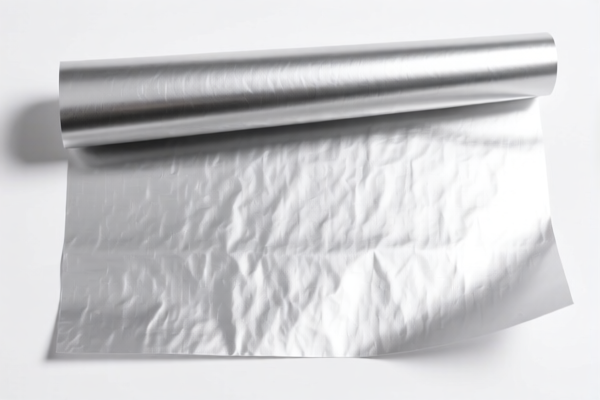
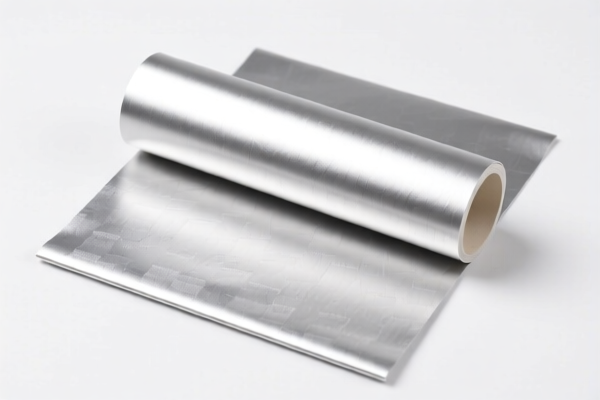
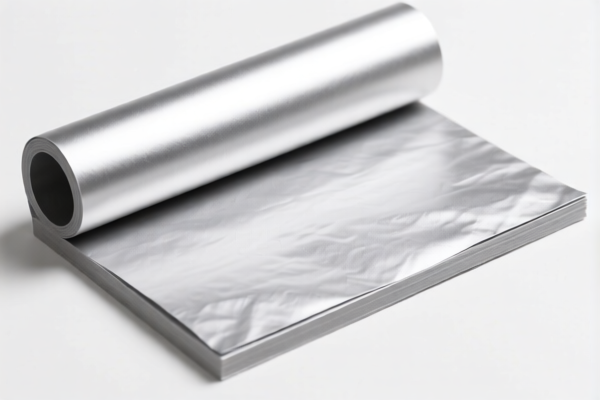
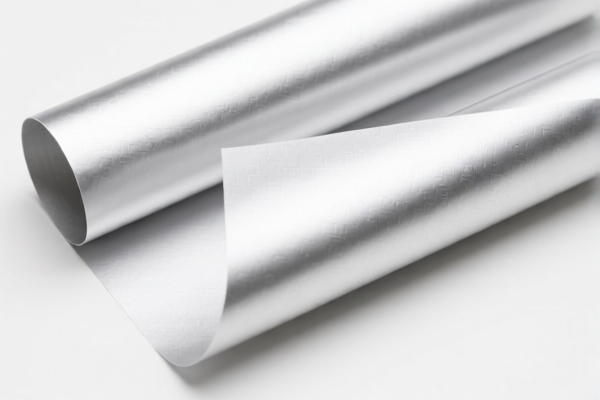
AI Analysis
📄 Silver Halide Continuous Tone Laser Print Paper
🌐 HS Code Reference & Customs Clearance Guide | 2026 Latest Tariff Analysis | Professional Entry Strategy
📌 Part 1: Product Definition & Classification – Do You Truly Understand "Photo Paper"?
Silver Halide Continuous Tone Laser Print Paper is a specialized photo printing medium. In international trade, the classification debate centers on its chemical composition vs. physical form.
1. Photographic/Sensitive Material Approach (HS 3701.99.60):
Based on the presence of "Silver Halide" (AgX), it exhibits chemical sensitivity to light and develops into a continuous-tone image. This aligns with the attributes of "Photographic Plates and Films" under Chapter 37.
2. Paper/Cardboard Product Approach (HS 4823.90):
Based on the substrate material, it is physically a "Paper" product. It falls under "Coated Paper" or "Other Paper Articles," similar to coated printing papers used in general offset printing.
⚠️ Key Distinction Point:
- If the classification focuses on the functional chemical property (light-sensitive, develops into photos) →归入 3701.99.60 (Photographic Material).
- If the classification focuses on the physical substrate (paper fiber, coated surface) → 归入 4823.90 (Paper Product).
📦 Part 2: HS Code Classification Details (2026 Latest Tariff Authority Comparison)
| HS Code | Product Description | Application Scenario | Classification Logic |
|---|---|---|---|
3701.99.60.60 |
Photographic plates and films, in the flat, whether or not sensitized but not exposed; other; continuous-tone laser print paper. | High-end professional photo printing, digital darkroom workflows. | Focus on "Silver Halide" and "Continuous Tone" attributes. Classified as sensitive material. |
3701.99.60.30 |
Photographic plates and films, in the flat, whether or not sensitized but not exposed; other; silver halide laser print paper. | Similar to above, emphasizing the Silver Halide chemical component. | Focus on "Silver Halide" sensitivity and Functional Unity with graphic arts films. |
4823.90.67.00 |
Other paper, paperboard, cardboard, cellulose wadding and webs of cellulose fibers, cut to size or shape; other; other. | General commercial printing, marketing materials where chemical sensitivity is ignored. | Focus on "Paper Material" and "Coated Paperboard" consistency. |
4823.90.86.80 |
Other paper, paperboard, cardboard, cellulose wadding and webs of cellulose fibers, cut to size or shape; other; other; other; other. | Standard photo paper treated as a finished paper product. | Focus on "Paper/Cardboard" core material and "Cut to Specific Size" logic. |
🔍 Key Reminder:
- The term "Silver Halide" is the critical keyword for Chapter 37 classification. If the product explicitly contains silver halide compounds for image development, customs may lean towards 3701.
- If the product is marketed simply as "Laser Photo Paper" without emphasizing chemical sensitivity, customs may classify it under 4823 (Paper) based on material composition.
- Misclassification Risk: Classifying a chemically sensitive product as plain paper (4823) when it should be (3701) can lead to customs audits or penalties for incorrect declaration of "sensitive materials."
💰 Part 3: 2026 Latest Tariff Rate Details (Including Surcharges & Policy Add-ons)
✅ Applicable Country: United States (US)
✅ Origin: China (CN)
✅ Effective Time: From November 10, 2025 (including subsequent imports)
🎯 1. 3701.99.60.60 & 3701.99.60.30 —— Silver Halide Continuous Tone Laser Print Paper (Photographic Material)
| Item | Content |
|---|---|
| Base Tax Rate | 0% (ad valorem) |
| USITC Surcharge | +25% (From USITC Footnote 9903.88.01, Section 301 Tariffs) |
| IEEPA Surcharge | +10% (Targeting China/HK products, from November 10, 2025) |
| Total Tax Rate | 35.0% |
| Tax Calculation | CIF Value × 35% |
| De Minimis Exemption | ❌ Not Available (deny_de_minimis) |
| Legal Basis Path | IEEPA:9903.01.25 → IEEPA:9903.01.24 → USITC:3701.99.60.60 → FOOTNOTE:9903.88.01 |
📌 Explanation:
- The 25% USITC surcharge is applied under Section 301 of the Trade Act.
- The 10% IEEPA surcharge is the additional tariff on Chinese goods under the International Emergency Economic Powers Act.
- Total 35%: This is a high tariff rate. Even though the base rate is 0%, the surcharges make it expensive.
- Important: Both sub-headings (60 and 30) have identical tax structures in this context.
🎯 2. 4823.90.67.00 & 4823.90.86.80 —— Laser Print Paper (Paper Product)
| Item | Content |
|---|---|
| Base Tax Rate | 0% (ad valorem) |
| USITC Surcharge | +25% (From USITC Footnote 9903.88.01, Section 301 Tariffs) |
| IEEPA Surcharge | +10% (Targeting China/HK products, from November 10, 2025) |
| Total Tax Rate | 35.0% |
| Tax Calculation | CIF Value × 35% |
| De Minimis Exemption | ❌ Not Available (deny_de_minimis) |
| Legal Basis Path | IEEPA:9903.01.25 → IEEPA:9903.01.24 → USITC:4823.90.67.00 → FOOTNOTE:9903.88.01 |
📌 Note:
- Interestingly, both photographic material (3701) and paper product (4823) classifications result in the same total tax rate of 35% for Chinese origin goods under current US policies.
- This means cost savings may not be the primary driver for choosing one HS Code over the other, unless there are specific regulatory exemptions or quota differences not mentioned in the provided data.
- Regulatory Risk: If declared as Paper (4823) but identified as Sensitive Material (3701) by customs, it may trigger inspections for chemical/pharmaceutical regulations, causing delays.
🛠️ Part 4: Customs Clearance Practical Advice (Combat Pitfall Guide)
✅ 1. Preparation Checklist (None Can Be Omitted)
| Material | Must Provide | Explanation |
|---|---|---|
| ✅ Product Specification Sheet | ✔️ | Must explicitly state "Silver Halide" content if claiming HS 3701, or "Paper Substrate" if claiming 4823. |
| ✅ Composition Analysis Report | ✔️ | To prove the presence or absence of light-sensitive silver halide compounds. |
| ✅ Product Photos | ✔️ | Clear images of the packaging, showing warnings like "Keep Away from Light" if sensitive. |
| ✅ Commercial Invoice | ✔️ | Must match the HS Code description precisely (e.g., "Silver Halide Photographic Paper" vs. "Coated Printing Paper"). |
| ✅ Packing List | ✔️ | Detail the quantity, weight, and dimensions. |
| ✅ Certificate of Origin (CO) | ✔️ | Essential for determining applicability of surcharges. |
✅ 2. Declaration Tips (Key Mantras)
🔥 "Declare Precisely, Avoid Ambiguity; 'Silver Halide' Triggers Chapter 37, 'Paper' Triggers Chapter 48!"
| Scenario | Correct Declaration Method | Incorrect Practice |
|---|---|---|
| Product explicitly contains Silver Halide and is for photo development | 3701.99.60.60 or 3701.99.60.30 |
Mislabel as "Paper" → Risk of customs audit for sensitive materials. |
| Product is standard coated paper with no photo-chemical function | 4823.90.67.00 or 4823.90.86.80 |
Mislabel as "Photographic Material" → Unnecessary complexity. |
| OEM/White Label products | Provide supplier declaration + test report | Vague description "Photo Paper" → Customs discretion → Possible reclassification. |
✅ 3. Special Handling
| Situation | Recommendation |
|---|---|
| Mixed Shipments (Paper + Photo Paper) | Declare separately! Do not bundle. Different HS codes require different documentation. |
| "Laser Photo Paper" without Silver Halide | If it's just toner-adhesive coated paper, use 4823. Do not claim "Silver Halide" if absent. |
| Customs Inquiry on Chemical Composition | Provide a Letter of Guarantee from the manufacturer stating the exact chemical makeup. |
| Risk of Retrospective Audit | Keep all test reports and supplier communications for at least 5 years. |
🌍 Part 5: Global Main Market Customs Clearance Comparison (2026 Latest)
| Country/Region | Recommended HS Code | Tariff (China Origin) | Certification Requirements | Remarks |
|---|---|---|---|---|
| 🇺🇸 United States | 3701.99.60.60 / 4823.90.xxxx |
35% (Base 0% + 25% + 10%) | None specific for paper, but chemical compliance may apply | High tariff burden due to IEEPA/301. |
| 🇨🇳 China | 3701.99 / 4823.90 |
5% - 10% (Varies) | CCC (if applicable) | Lower tariffs, but strict environmental checks on chemical imports. |
| 🇪🇺 European Union | 3701.99 / 4823.90 |
0% - 4% (Most Favored Nation) | REACH (Chemicals), EPR | REACH compliance crucial for "Silver Halide" classification. |
| 🇬🇧 United Kingdom | 3701.99 / 4823.90 |
0% - 4% | UKCA, RECH | Post-Brexit rules apply. |
| 🇯🇵 Japan | 3701.99 / 4823.90 |
0% - 3% | PSE (if electronic packaging) | Generally low tariffs. |
📌 Conclusion:
- The US market is the most critical due to the 35% total tariff.
- Classification choice (3701 vs. 4823) does not change the tax cost in this specific data set, but it significantly changes the regulatory compliance burden.
- Chapter 37 (Photographic) may trigger stricter chemical/pharmaceutical inspections.
- Chapter 48 (Paper) is generally easier to clear but may be challenged if the product is chemically sensitive.
📌 Part 6: Common Errors & Pitfall Guide (Blood and Tears Lessons)
❌ Error 1: Declaring "Silver Halide Paper" as "Copy Paper" (4808/4802)
👉 Consequence: 35% tariff applies anyway if origin is China, but risk of fraud penalty for misdeclaration.
❌ Error 2: Ignoring "Silver Halide" content in specifications
👉 Consequence: Customs may classify as "Photographic Material" (3701) retroactively, leading to back taxes and demurrage charges.
❌ Error 3: Bundling Photo Paper with General Paper in one HS Code
👉 Consequence: Partial rejection of the declaration. The entire shipment may be held for inspection.
❌ Error 4: Using vague descriptions like "Photo Paper"
👉 Consequence: Customs broker uncertainty → Delayed clearance → Storage fees.
✅ Correct Approach:
"Silver Halide Continuous Tone Laser Print Paper, Sensitized, 100 sheets, 8x10 inch, Model XYZ, Contains Silver Nitrate Compounds, For Photographic Development Only."
🎯 Part 7: Conclusion – Precise Classification Saves Time and Money
🎯 Remember the Mantra:
🔹 "Silver Halide means Chapter 37; Paper means Chapter 48."
🔹 "Tax is 35% regardless, but Compliance Risk Differs!"
🔹 "Be Specific, Be Accurate, Be Safe!"
📌 Pro Tip:
If your product is NOT sensitive to light (i.e., no silver halide), ensure your documentation explicitly states "Non-Sensitive" and "Not for Photographic Development" to support a 4823 classification, which may be easier to clear despite the same tax rate.
📣 Immediate Action:
📞 Contact a licensed customs broker + Provide Product Sample + Request Pre-Ruling for HS Code confirmation.
🚀 Ensure your REACH (if exporting to EU) or EPA (if applicable in US) compliance is up to date for chemical-containing papers.
✨ Professional Customs Clearance Starts with Accurate Classification!
💼 Every Percent of Tax Saved is Pure Profit!
Customer Reviews
About HS Code Classification
The Harmonized System (HS) is an internationally standardized nomenclature developed by the World Customs Organization (WCO) to classify traded products. Over 200 countries use the HS system as the basis for customs tariffs, trade statistics, and import/export regulations.
Each HS code follows a hierarchical structure:
- Chapter (2 digits) — Broad category of goods (e.g., Chapter 84: Machinery and Mechanical Appliances)
- Heading (4 digits) — More specific grouping within the chapter
- Subheading (6 digits) — Internationally standardized breakdown, used by all WCO member countries
- National subdivisions (8-10 digits) — Country-specific extensions for further classification, such as US HTSUS 10-digit codes
Correct HS code classification is essential for smooth customs clearance, accurate duty payment, and compliance with trade regulations. Misclassification can lead to customs delays, overpayment of duties, or penalties.
When importing from CN to US, the applicable tariff rates may include:
- Most-Favored-Nation (MFN) rate — The standard duty rate applied to WTO members
- General rate — Applied to countries without trade agreements
- Trade remedy duties — Additional tariffs such as Section 301 (anti-dumping), Section 232 (national security), or countervailing duties
The information provided on this page is for reference purposes only. For official classification, please consult with your local customs authority or a licensed customs broker.