Silver Halide Continuous Tone Professional Photography Paper
CN → US| HS Code | Tariff Rate | Origin | Destination | Doc |
|---|---|---|---|---|
| 3701996060 | 35.0% | CN | US | Official Doc |
| 3701996030 | 35.0% | CN | US | Official Doc |
| 4823906700 | 35.0% | CN | US | Official Doc |
| 4823908680 | 35.0% | CN | US | Official Doc |
Product Images
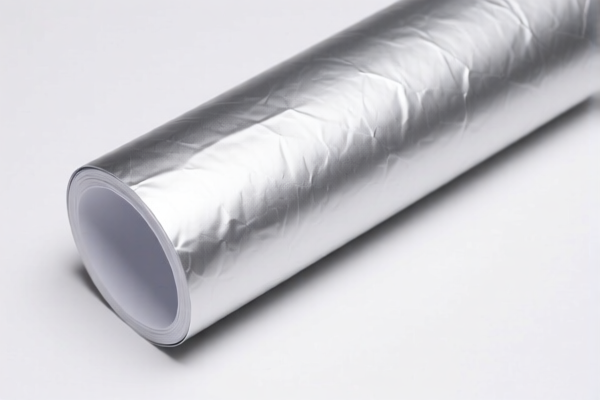
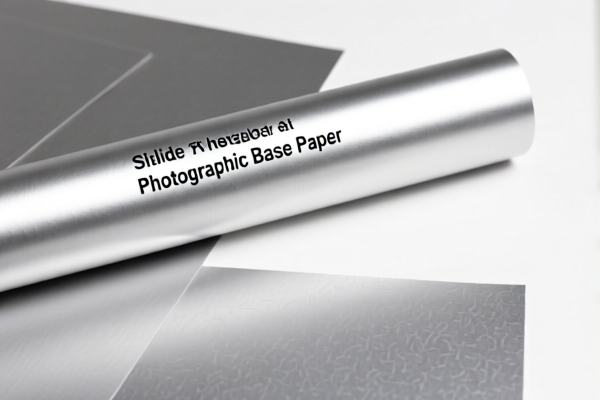
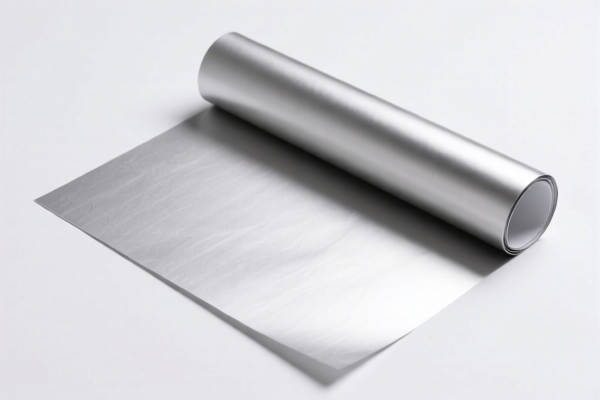
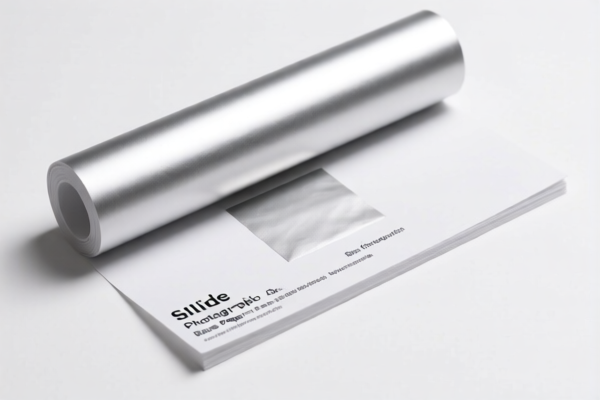
AI Analysis
📸 Silver Halide Continuous Tone Professional Photography Paper
🌐 HS Code Classification & Customs Clearance Guide | 2026 Latest Tariff Analysis | Professional Compliance Strategy
📌 I. Product Definition & Classification: What Is "Silver Halide Photo Paper"?
Silver Halide Continuous Tone Professional Photography Paper is a specialized imaging medium used in high-end professional printing and graphic arts. Unlike digital inkjet prints, this paper relies on silver halide chemistry to create continuous tone images (no visible dots/pixels) through thermal or chemical development processes.
In international trade, this product sits at the intersection of chemical photo materials and paper products, leading to frequent classification disputes. The correct HS Code depends on whether the customs authority prioritizes the functional material (sensitized emulsion) or the physical substrate (paper/coating).
⚠️ Key Distinction:
- If viewed as a sensitized recording medium (active chemical component) → Chapter 37 (Photographic Goods)
- If viewed as a processed coated paper (passive substrate) → Chapter 48 (Paper Products)
- Note: Despite the lower duty potential in Chapter 48, Chapter 37 codes are often preferred for their specificity in "sensitized materials." However, both are currently subject to heavy US tariffs due to trade policies.
📦 II. HS Code Classification Details (2026 Latest Tariff Reference)
| HS Code | Product Description | Rationale Summary | Category Type |
|---|---|---|---|
| 3701.99.60.60 | Silver halide continuous tone laser printing paper | Classified as sensitized material. Form is continuous tone printing paper. Fits the broad category of photographic plates/films that are non-paper/non-textile sensitized materials. | 🎞️ Sensitized Medium (Chapter 37) |
| 3701.99.60.30 | Silver halide continuous tone laser printing paper | Because the material is silver halide sensitized material and the form is a sensitized flat sheet, it belongs to the sensitized media category. | 🎞️ Sensitized Medium (Chapter 37) |
| 4823.90.67.00 | Silver halide continuous tone laser printing paper | Core material is photography paper, which is a paper/cardboard product. Form is processed coated paper. Fits the classification of coated paper or coated cardboard products. | 📄 Coated Paper Product (Chapter 48) |
| 4823.90.86.80 | Silver halide continuous tone laser printing paper | Core material is photography paper (paper/cardboard category). Form is cut to specific sizes. Fits the logic of "other paper articles" classification. | 📄 Cut Paper Product (Chapter 48) |
🔍 Critical Insight:
- Chapters 37 vs. 48: While Chapter 37 codes (3701.xx) describe the chemical function (sensitization), Chapter 48 codes (4823.xx) describe the physical form (coated/cut paper).
- US Customs Practice: US CBP often scrutinizes these items. While 3701 is technically more precise for "sensitized" goods, many importers use 4823 codes to argue for paper-based classification. However, the tariff impact is identical in the current trade environment (see below).
- No Duty Advantage: Due to Section 301 and IEEPA tariffs, both paths result in a 35% total duty. Do not rely on Chapter 48 for lower duties under current US-China trade rules.
💰 III. 2026 Latest Tariff Rate Breakdown (Including Surtaxes & Policy Add-ons)
✅ Applicable Country: United States (US)
✅ Country of Origin: China (CN)
✅ Effective Date: November 10, 2025 (and subsequent imports)
🎯 1. HS Code 3701.99.60.60 & 3701.99.60.30 (Sensitized Materials)
| Item | Detail |
|---|---|
| Base Tariff | 0.0% (Most-favored-nation rate) |
| Section 301 Surcharge | +25.0% |
| 122 Clause Tariff (IEEPA) | +10.0% (Targeted at Chinese goods) |
| Total Effective Rate | 35.0% |
| Tax Calculation | CIF Value × 35% |
| De Minimis Eligibility | ❌ Not Eligible |
| Legal Basis Path | Section 301: 9903.01.24 → IEEPA: 9903.01.25 → USITC: 3701.99.60.xx |
📌 Explanation:
- The 25% is the standard Section 301 tariff on Chinese goods in this category.
- The 10% is an additional surcharge applied under IEEPA (International Emergency Economic Powers Act) specifically targeting certain Chinese imports.
- Combined 35% is a significant cost driver. There is no "de minimis" (Section 321) exemption for these HS codes when entering the US.
🎯 2. HS Code 4823.90.67.00 & 4823.90.86.80 (Coated/Cut Paper)
| Item | Detail |
|---|---|
| Base Tariff | 0.0% |
| Section 301 Surcharge | +25.0% |
| 122 Clause Tariff (IEEPA) | +10.0% |
| Total Effective Rate | 35.0% |
| Tax Calculation | CIF Value × 35% |
| De Minimis Eligibility | ❌ Not Eligible |
| Legal Basis Path | Section 301: 9903.01.24 → IEEPA: 9903.01.25 → USITC: 4823.90.xx.xx |
📌 Note:
- Even though these codes fall under Chapter 48, they are explicitly listed in the US Harmonized Tariff Schedule Supplementary Notes as subject to the same trade remedies as Chapter 37 items if they meet specific criteria.
- Result: No difference in final landed cost compared to Chapter 37 codes.
🛠️ IV. Customs Clearance Practical Advice (Pitfall Avoidance Guide)
✅ 1. Required Documentation Checklist
| Document | Mandatory? | Description |
|---|---|---|
| ✅ Product Specification Sheet | ✔️ | Must detail: Emulsion type (Silver Halide), Base type (Resin-Coated Paper), Sensitivity, Format (Continuous Tone). |
| ✅ Composition Analysis | ✔️ | Proof of silver halide content to justify Chapter 37 classification if preferred. |
| ✅ Commercial Invoice | ✔️ | Must clearly state "Silver Halide Continuous Tone Photo Paper" and "Origin: China." |
| ✅ Packing List | ✔️ | Specify dimensions, weight, and quantity. |
| ✅ Certification/Compliance | ✔️ | If applicable, provide MSDS (Material Safety Data Sheet) due to chemical components. |
✅ 2. Declaration Tips (Key Mantra)
🔥 "Material First, Substrate Second. Be Specific, Avoid Ambiguity!"
| Scenario | Recommended Declaration | Incorrect Practice |
|---|---|---|
| Professional Lab Paper | 3701.99.60.60 or 3701.99.60.30Desc: "Silver Halide Sensitized Continuous Tone Paper for Professional Laser Printing" |
Describing it generically as "Photo Paper" or "Coated Paper" → Risk of reclassification & delays. |
| Retail/Consumer Paper | Still 3701 preferred, but 4823 may be used if no sensitization is evident. |
Declaring as "Copy Paper" → Major Red Flag, leads to audits. |
| Unsensitized Base Paper | 4823.90.67.00Desc: "Uncoated/Coated Paper Base, NOT Sensitized" |
Mislabeling unsensitized paper as sensitized → Overpaying duties (if rates differed) or misdeclaration. |
⚠️ Warning:
- Do not declare this as "Office Supplies" or "Standard Copy Paper."
- Ensure the invoice explicitly mentions "Silver Halide" and "Continuous Tone" to align with HS Code 3701 descriptions.
- If using Chapter 48 codes, be prepared to explain why the sensitization process is secondary to the paper substrate (though both incur 35% duty, consistency in description is key for audit trails).
✅ 3. Special Case Handling
| Case | Recommendation |
|---|---|
| New Product Introduction | Request a Binding Tariff Information (BTI) or US CBP Ruling if importing large volumes. This locks in the classification for 5 years. |
| Mixed Shipments | If shipping with unsensitized paper, declare separately. Do not lump into one line item to avoid confusion. |
| Third-Party Warehousing | If stored in a US warehouse, ensure the classification is already determined to avoid duties being triggered upon entry. |
🌍 V. Global Market Comparison (2026 Latest)
| Country/Region | Recommended HS Code | Estimated Duty (China Origin) | Notes |
|---|---|---|---|
| 🇺🇸 USA | 3701.99.60.60 / 4823.90.67.00 |
35% | High barrier due to Section 301 + IEEPA. No de minimis. |
| 🇨🇳 China | 3701.99.60 / 4823.90.67 |
~10-13% | Lower duties, but export restrictions may apply depending on tech level. |
| 🇪🇺 EU | 3701.99.00 |
~6.5% | Generally lower duties. Focus on "Sensitized" classification. |
| 🇯🇵 Japan | 3701.99.000 |
~6-7% | Stable tariff environment. |
📌 Conclusion:
- The USA is the most challenging market for this product due to the 35% combined tariff.
- No significant duty advantage exists between Chapter 37 and Chapter 48 for US imports from China at this time.
- Strategy: Focus on accurate description to avoid penalties, rather than trying to game the tariff system, as the rates are harmonized by trade policy.
📌 VI. Common Mistakes & Pitfalls (Blood & Tears Lessons)
❌ Mistake 1: Declaring as "Generic Coated Paper" (HS 4823) without mentioning sensitization.
👉 Consequence: Customs may classify it as "Sensitized" (HS 3701) or reject the declaration for lack of detail. In this specific case, the duty is the same, but inconsistency can trigger audits.
❌ Mistake 2: Assuming "De Minimis" ($800) applies.
👉 Consequence: False! Section 321 de minimis does not apply to goods from China under IEEPA/Section 301 in this category. All shipments are subject to duty calculation.
❌ Mistake 3: Mixing "Silver Halide" with "Inkjet" paper in one HS Code.
👉 Consequence: Inkjet paper is usually Chapter 48 or 49. Mixing them causes classification errors and potential penalties.
✅ Correct Practice:
"Silver Halide Continuous Tone Photographic Paper, Laser Printing Type, Sensitized, Resin-Coated Base, Origin China, HS 3701.99.60.60"
🎯 VII. Conclusion: Professional Declaration, Cost Control & Compliance
🎯 Key Takeaways:
🔹 "35% is the floor, not the ceiling." With Section 301 and IEEPA, expect at least 35% duty.
🔹 "Be Specific." Use terms like "Silver Halide" and "Continuous Tone" to match HS 3701 descriptions.
🔹 "Check for Rulings." If volumes are high, get a CBP ruling to secure the classification.
📌 Pro Tip:
If you are importing into the US, calculate the Landed Cost including the 35% duty before pricing. Do not rely on China Ex-Works price alone. Consider sourcing from Vietnam or Mexico if possible, as these origins may qualify for IEEPA exemptions or lower Section 301 rates (check current FTAs and rules of origin carefully).
📣 Immediate Action:
📞 Engage a Customs Broker: Provide the spec sheet and request a Pre-Ruling.
📦 Audit Your Invoice: Ensure "Origin: China" and "Product Description" match the HS Code exactly.
🚀 Optimize Supply Chain: Evaluate alternative origins to mitigate the 35% tariff burden.
✨ Precision in Classification, Profit in Clearance!
💼 Your Bottom Line Depends on These Digits!
Customer Reviews
About HS Code Classification
The Harmonized System (HS) is an internationally standardized nomenclature developed by the World Customs Organization (WCO) to classify traded products. Over 200 countries use the HS system as the basis for customs tariffs, trade statistics, and import/export regulations.
Each HS code follows a hierarchical structure:
- Chapter (2 digits) — Broad category of goods (e.g., Chapter 84: Machinery and Mechanical Appliances)
- Heading (4 digits) — More specific grouping within the chapter
- Subheading (6 digits) — Internationally standardized breakdown, used by all WCO member countries
- National subdivisions (8-10 digits) — Country-specific extensions for further classification, such as US HTSUS 10-digit codes
Correct HS code classification is essential for smooth customs clearance, accurate duty payment, and compliance with trade regulations. Misclassification can lead to customs delays, overpayment of duties, or penalties.
When importing from CN to US, the applicable tariff rates may include:
- Most-Favored-Nation (MFN) rate — The standard duty rate applied to WTO members
- General rate — Applied to countries without trade agreements
- Trade remedy duties — Additional tariffs such as Section 301 (anti-dumping), Section 232 (national security), or countervailing duties
The information provided on this page is for reference purposes only. For official classification, please consult with your local customs authority or a licensed customs broker.