Silver Halide Continuous Tone Single Sided Photo Paper
CN → US| HS Code | Tariff Rate | Origin | Destination | Doc |
|---|---|---|---|---|
| 3703103060 | 38.7% | CN | US | Official Doc |
| 3701996060 | 35.0% | CN | US | Official Doc |
| 3702440160 | 38.7% | CN | US | Official Doc |
| 3705000000 | 35.0% | CN | US | Official Doc |
| 3701996030 | 35.0% | CN | US | Official Doc |
Product Images
AI Analysis
📸 Silver Halide Continuous Tone Single Sided Photo Paper
🌐 HS Code Reference & Customs Clearance Guide | 2026 Latest Tariff Analysis | Professional Clearance Strategy
📌 I. Product Definition & Classification: Do You Truly Understand "Photo Paper"?
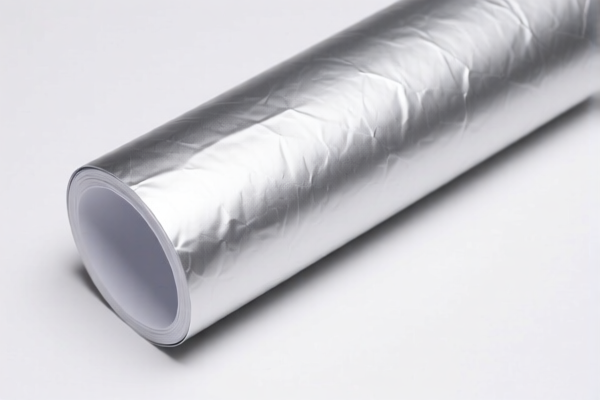
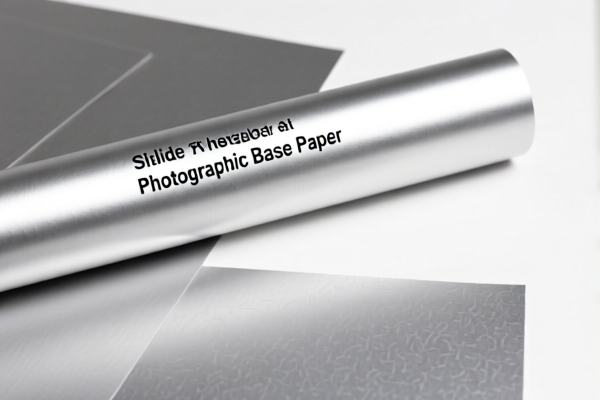
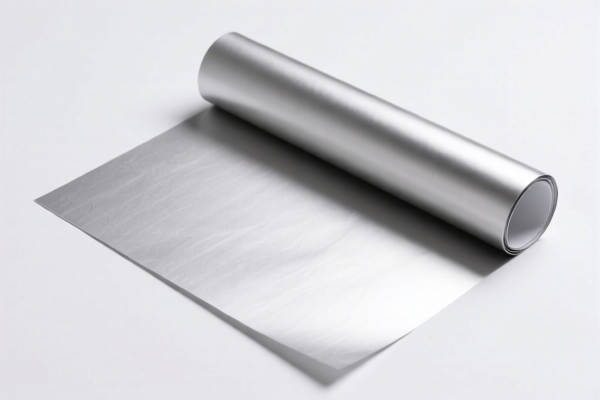
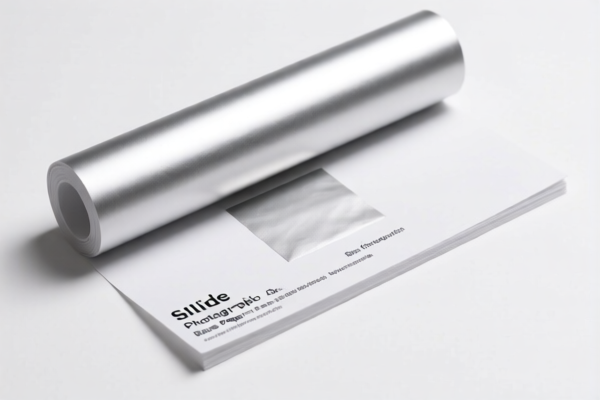
Silver Halide Continuous Tone Single Sided Photo Paper is a specialized light-sensitive material used in professional photography and imaging. Unlike traditional grain-based films, it offers continuous tone reproduction. In international trade, its classification depends heavily on its substrate material (paper vs. other) and state (exposed vs. unexposed).
Key Distinction:
- If it is on a paper base → It falls under Chapter 37, specifically heading 3703.
- If it is unexposed photographic paper → It is treated as a raw material for imaging.
- Note: If the product were exposed or on a non-paper base (like polyester film), it would fall under different codes (e.g., 3701 or 3702).
⚠️ Critical Classification Point:
- Paper Base + Unexposed + Continuous Tone → HS 3703.10.30.60
- Do NOT confuse with photographic film (non-paper) which falls under 3702.
📦 II. HS Code Classification Details (2026 Latest Tariff Authority Match)
Based on the provided data, here is the precise mapping for "Silver Halide Continuous Tone Single Sided Photo Paper":
| HS Code | Product Description | Key Attributes | Tax Rate |
|---|---|---|---|
3703.10.30.60 |
Silver Halide Continuous Tone Professional Photo Paper | Substrate: Silver Halide; Form: Paper; Tone: Continuous | 38.7% |
3701.99.60.60 |
Silver Halide Continuous Tone Positive Film | Substrate: Non-paper (Film/Plate); Form: Photographic Plate/Film | 35.0% |
3702.44.01.60 |
Silver Halide Continuous Tone Positive Film | Substrate: Non-paper; Form: Roll Film (Unexposed) | 38.7% |
3705.00.00.00 |
Silver Halide Continuous Tone Positive Plate/Film | Exposed & Developed State | 35.0% |
3701.99.60.30 |
Graphic Arts Film (Silver Halide) | Non-paper, Flat Material, Graphic Arts Application | 35.0% |
🔍 Why
3703.10.30.60?
The prompt specifies "Photo Paper". In the HS Nomenclature: - 3703 covers "Photo paper and paperboard, sensitized, unexposed, of any kind." - 3701/3702 cover photographic plates, films, and other sensitized materials other than paper. - Therefore, any product explicitly described as "Paper" (even if coated with silver halide) must be classified under 3703, not 3701 or 3702.
💰 III. 2026 Latest Tariff Rate Breakdown (Including Surcharges & Policy Add-ons)
✅ Applicable Country: United States (US)
✅ Origin: China (CN)
✅ Effective Time: 2025 November 10 onwards (for subsequent imports)
🎯 1. 3703.10.30.60 —— Silver Halide Continuous Tone Professional Photo Paper
| Item | Content |
|---|---|
| Basic Tariff | 3.7% (ad valorem) |
| Section 301 Surtax | +25.0% (USITC Footnote related to China-origin goods) |
| IEEPA Surtax (Section 122/301) | +10.0% (Specific China-related surcharge) |
| Total Tariff Rate | 38.7% |
| Tax Calculation | CIF Value × 38.7% |
| De Minimis Eligibility | ❌ NO (deny_de_minimis) |
| Legal Pathway | IEEPA:9903.01.25 → USITC:3703.10.30.60 → FOOTNOTE:9903.88.01 |
📌 Explanation:
- Basic Tariff (3.7%): Standard MFN rate for sensitized photo paper. - Section 301 (25%): Trump-era tariffs that remain in effect for many Chinese manufactured goods, including specialized chemical/photo products. - IEEPA/122 Clause (10%): Additional surcharge for Chinese-origin goods under specific emergency powers or trade enforcement clauses. - Total (38.7%): This is a high-cost import. Buyers must factor this into landed cost calculations.⚠️ Comparison with Other Codes:
- If misclassified as3701.99.60.60(Film/Plate) or3705.00.00.00(Exposed), the tax would be 35.0%.
- However, misclassification carries legal risks. Accuracy is paramount.
🛠️ IV. Customs Clearance Practical Advice (Battle-Proven Pitfall Guide)
✅ 1. Required Documentation Checklist (Non-negotiable)
| Document | Mandatory? | Description |
|---|---|---|
| ✅ Product Specification Sheet | ✔️ | Must clearly state: "Paper Base," "Unexposed," "Continuous Tone," "Silver Halide Coating." |
| ✅ Commercial Invoice | ✔️ | Description must match HS Code precisely: "Unexposed Silver Halide Continuous Tone Photo Paper." |
| ✅ Packing List | ✔️ | Weight and dimensions of paper rolls/sheets. |
| ✅ Certificate of Origin (CO) | ✔️ | To confirm China origin (triggering surcharges). |
| ✅ Material Safety Data Sheet (MSDS) | ✔️ | Silver halide chemicals may require hazardous material handling docs. |
| ✅ Proof of Non-Exposure | ✔️ | If questioned, provide lab reports or manufacturer certification that films are unexposed. |
✅ 2. Declaration Tips (Key Mnemonic)
🔥 “Paper goes to 3703, Film goes to 3701/02, Exposed goes to 3705!”
| Scenario | Correct HS Code | Error Consequence |
|---|---|---|
| Photo Paper (Paper Base) | 3703.10.30.60 |
Misdeclaring as film (3702) → Customs audit, penalties, potential 3.7% underpayment + interest. |
| Photographic Film (Plastic/Polyester Base) | 3702.44.01.60 |
Misdeclaring as paper → Wrong duty rate, supply chain delay. |
| Exposed/Developed Photo | 3705.00.00.00 |
Misdeclaring as unexposed → Violation of import laws for sensitive media. |
| Graphic Arts Film | 3701.99.60.30 |
Used for printing plates, not direct photography. |
✅ 3. Special Considerations for Photo Paper
| Situation | Handling Advice |
|---|---|
| Bleached/Chemical Coating | Ensure the MSDS accurately reflects silver halide content. Some labs may flag it for chemical review. |
| Bulk Rolls vs. Cut Sheets | Classification remains the same, but packaging weight impacts CIF value calculation. |
| Mixed Shipment (Paper + Film) | Do not combine in one line item if possible. Declare separately to avoid classification ambiguity. |
| High-Value Luxury Paper | Consider applying for HTS Exclusions if available (rare for China-origin, but check periodically). |
🌍 V. Global Market Clearance Comparison (2026 Latest)
| Country/Region | Recommended HS Code | Tariff (China Origin) | Certification Req. | Notes |
|---|---|---|---|---|
| 🇺🇸 USA | 3703.10.30.60 |
38.7% | FDA/USDA (if organic chemicals) | High tariffs due to Section 301 + IEEPA. |
| 🇨🇳 China | 3703.10.30.60 |
~3-6% | N/A | Low import duty, but check for anti-dumping duties on specific chemical components. |
| 🇪🇺 EU | 3703.10 |
0-4% | REACH (Chemicals) | Strict REACH compliance for silver halide compounds required. |
| 🇬🇧 UK | 3703.10 |
0-4% | UKCA | Post-Brexit rules mirror EU but require UK-specific documentation. |
| 🇯🇵 Japan | 3703.10 |
3.2% | JIS | Standard MFN rate applies; no major surcharges. |
📌 Conclusion:
- The USA is the most difficult market for this product due to the 38.7% effective tariff rate.
- EU/UK/Japan offer significantly lower tariff barriers but stricter chemical compliance (REACH/JIS).
- Strategy: For US imports, calculate if the margin covers 38.7% duty + logistics. Consider sourcing from non-China origins if possible to avoid IEEPA/301 surcharges.
📌 VI. Common Mistakes & Pitfall Guide (Lessons Learned)
❌ Mistake 1: Declaring Photo Paper as "Photographic Film" (3702)
👉 Consequence: Customs may accept initially but flag later for "Material Mismatch." If paper is detected, penalties apply. Also, if paper is cheaper, you underpay duty → Audit Risk.
❌ Mistake 2: Ignoring the "Continuous Tone" vs. "Halftone" distinction
👉 Consequence: Different sub-headings within 3703. "Continuous Tone" is specific. Mislabeling as "Halftone" (if applicable) can lead to incorrect HS code selection.
❌ Mistake 3: Forgetting to declare "Unexposed"
👉 Consequence: If the customs officer suspects exposure (e.g., black light leaks), it may be reclassified as 3705 (exposed) or treated as a controlled item.
❌ Mistake 4: Combining Paper and Film in one invoice line
👉 Consequence: Customs cannot assign a single HS Code. Declaration rejected → Delay & Storage Fees.
✅ Correct Practice:
"Unexposed Silver Halide Coated Continuous Tone Photo Paper, Paper Base, 500 Sheets, 10x12 inch, Model XYZ"
🎯 VII. Conclusion: Precision in Classification Saves Money
🎯 Key Takeaway:
🔹 Paper = 3703
🔹 Film/Plate = 3701/3702
🔹 Exposed = 3705
🔹 US Tariff = 38.7% (High Risk)
📌 Pro Tip:
If you are importing this into the US, budget for 38.7% duty.
- Mitigation:
1. Ensure your supplier provides detailed material specs (proof of paper base).
2. Apply for Advance Ruling from US Customs if volume is high.
3. Consider warehousing in a foreign trade zone (FTZ) if eligible to defer duty payment.
📣 Immediate Action:
📞 Verify with your broker: "Is my product definitely paper-based?"
📊 Calculate Landed Cost: CIF + 38.7% + Insurance + Broker Fees.
🚀 Avoid misclassification: One wrong digit in HS Code can cost you thousands in penalties.
✨ Professional clearance starts with precise classification!
💼 Your profit margin depends on accurate tax planning!
Customer Reviews
About HS Code Classification
The Harmonized System (HS) is an internationally standardized nomenclature developed by the World Customs Organization (WCO) to classify traded products. Over 200 countries use the HS system as the basis for customs tariffs, trade statistics, and import/export regulations.
Each HS code follows a hierarchical structure:
- Chapter (2 digits) — Broad category of goods (e.g., Chapter 84: Machinery and Mechanical Appliances)
- Heading (4 digits) — More specific grouping within the chapter
- Subheading (6 digits) — Internationally standardized breakdown, used by all WCO member countries
- National subdivisions (8-10 digits) — Country-specific extensions for further classification, such as US HTSUS 10-digit codes
Correct HS code classification is essential for smooth customs clearance, accurate duty payment, and compliance with trade regulations. Misclassification can lead to customs delays, overpayment of duties, or penalties.
When importing from CN to US, the applicable tariff rates may include:
- Most-Favored-Nation (MFN) rate — The standard duty rate applied to WTO members
- General rate — Applied to countries without trade agreements
- Trade remedy duties — Additional tariffs such as Section 301 (anti-dumping), Section 232 (national security), or countervailing duties
The information provided on this page is for reference purposes only. For official classification, please consult with your local customs authority or a licensed customs broker.