Silver Halide Film
CN → US| HS Code | Tariff Rate | Origin | Destination | Doc |
|---|---|---|---|---|
| 3701996060 | 35.0% | CN | US | Official Doc |
| 3701996030 | 35.0% | CN | US | Official Doc |
| 3705000000 | 35.0% | CN | US | Official Doc |
| 3702320130 | 38.7% | CN | US | Official Doc |
| 3701996060 | 35.0% | CN | US | Official Doc |
Product Images
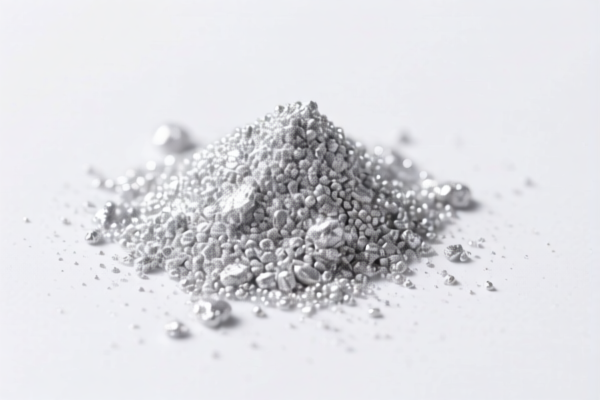
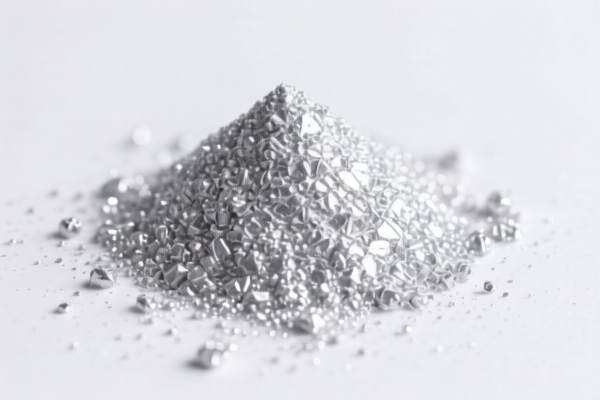
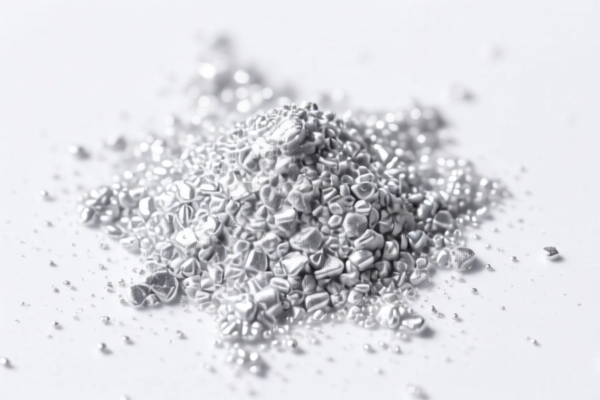
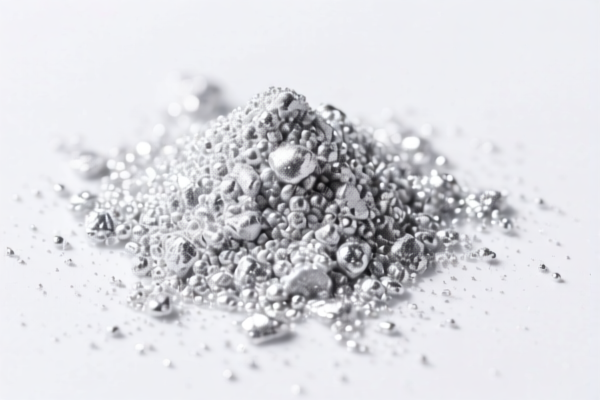
AI Analysis
🎞️ Silver Halide Film (卤化银微缩胶片/感光菲林)
🌐 HS Code Reference & Customs Clearance Guide | 2026 Latest Tariff Analysis | Professional Clearance Strategy
📌 1. Product Definition & Classification: What Exactly is "Silver Halide Film"?
Silver Halide Film refers to photosensitive materials coated with light-sensitive silver salts (such as silver chloride, bromide, or iodide). In international trade, these are primarily used for microfilming, graphic arts, or photographic records. The key to classification lies in the material form (flexible base vs. rigid plate) and the specific application (continuous tone, microform, or graphic arts).
⚠️ Key Distinction Point:
- If it is a flexible strip/roll used for microfilming (archives, records) → Typically falls under 3701 or 3705.
- If it is a continuous tone positive film (graphic arts) → Falls under 3701.99.
- If it contains 3.7% base duty (uncommon for pure silver halide, but possible for specific processed films) → Check 3702.32.
📦 2. HS Code Classification Details (2026 Latest Tariff Authority Comparison)
| HS Code | Product Description | Applicable Scenario | Material/Base Type |
|---|---|---|---|
3701.99.60.60 |
Halide Microfilm or Continuous Tone Positive Film | Archival microfilming, high-precision graphic arts | Flexible, non-paper base |
3701.99.60.30 |
Halide Microfilm | Graphic arts film characteristics, flexible base | Flexible, non-paper base |
3705.00.00.00 |
Halide Microfilm Plates/Films | Photographic boards and films, distinct from motion picture film | Rigid Plate or Flexible Film |
3702.32.01.30 |
Halide Microfilm (Special Category) | Specific material/usage requirements | Flexible base (Note: Different tax rate) |
🔍 Focus Reminder:
- Most standard silver halide microfilm (flexible) is classified under 3701 or 3705.
- 3705.00.00.00 is often used for plates or specific film types that do not conflict with motion picture film categories.
- 3702.32.01.30 is a distinct category with a higher base duty (3.7%), indicating it may be a processed or specific type of photographic film rather than raw microfilm.
💰 3. 2026 Latest Tariff Rate Details (Including Additional Taxes & Policies)
✅ Applicable Country: United States (US)
✅ Origin: China (CN)
✅ Effective Date: From November 10, 2025 (and subsequent imports)
🎯 1. 3701.99.60.60 & 3701.99.60.30 —— Halide Microfilm / Continuous Tone Positive Film
| Item | Content |
|---|---|
| Base Duty Rate | 0.0% (Ad Valorem) |
| USITC Additional Tax | +25.0% (From USITC Footnote) |
| 122-Clause Tax (IEEPA) | +10.0% (Targeted at China/HK products) |
| Total Tax Rate | 35.0% |
| Tax Calculation | CIF Value × 35% |
| De Minimis Exemption | ❌ Not Applicable (deny_de_minimis) |
| Legal Basis Path | USITC:3701.99.60.60 → FOOTNOTE:301_TARIFF → IEEPA:9903.01.25 |
📌 Explanation:
- The 35% total rate consists of 0% base + 25% Section 301 additional duty + 10% 122-Clause duty.
- This is a high tariff category. Even though the base duty is 0%, the additional taxes significantly increase the cost.
- Critical Note: Both3701.99.60.60(Continuous Tone) and3701.99.60.30(Microfilm) share the same 35% rate.
🎯 2. 3705.00.00.00 —— Halide Microfilm (Photographic Boards/Films)
| Item | Content |
|---|---|
| Base Duty Rate | 0.0% (Ad Valorem) |
| USITC Additional Tax | +25.0% |
| 122-Clause Tax (IEEPA) | +10.0% |
| Total Tax Rate | 35.0% |
| Tax Calculation | CIF Value × 35% |
| De Minimis Exemption | ❌ Not Applicable |
| Legal Basis Path | USITC:3705.00.00.00 → FOOTNOTE:301_TARIFF → IEEPA:9903.01.25 |
📌 Note:
- This code is often used for plates or specific film types.
- Same tariff structure as 3701: 0% + 25% + 10% = 35%.
- Ensure the product does not conflict with "motion picture film" (which may have different classifications).
🎯 3. 3702.32.01.30 —— Halide Microfilm (Special Category)
| Item | Content |
|---|---|
| Base Duty Rate | 3.7% (Ad Valorem) |
| USITC Additional Tax | +25.0% |
| 122-Clause Tax (IEEPA) | +10.0% |
| Total Tax Rate | 38.7% |
| Tax Calculation | CIF Value × 38.7% |
| De Minimis Exemption | ❌ Not Applicable |
| Legal Basis Path | USITC:3702.32.01.30 → FOOTNOTE:301_TARIFF → IEEPA:9903.01.25 |
📌 Warning:
- This code has a higher total tax (38.7%) due to the 3.7% base duty.
- This classification is likely for a specific type of processed film that does not qualify for the 0% base duty of standard microfilm.
- Avoid this code unless the product strictly matches the material/usage description of3702.32.
🛠️ 4. Customs Clearance Practical Advice (Real-World Pitfall Avoidance Guide)
✅ 1. Preparation Checklist (Missing Documents = Delay)
| Document | Required? | Description |
|---|---|---|
| ✅ Product Specification Sheet | ✔️ | Must specify: Type (Microfilm/Positive), Base Material (Polyester/Cellulose), Dimensions, Sensitivity. |
| ✅ Material Composition Statement | ✔️ | Confirm Non-Paper Base. If it is paper-based, it may be classified differently (e.g., under 4901). |
| ✅ Product Photos (Clear) | ✔️ | Show the film roll/can, label, and any markings indicating "Halide," "Microfilm," or "Continuous Tone." |
| ✅ Commercial Invoice | ✔️ | Clearly state: "Halide Silver Film for Microfilming/Graphic Arts, Not Motion Picture Film." |
| ✅ Packing List | ✔️ | Detail net/gross weight. Separate any protective containers. |
✅ 2. Declaration Tips (Key Mantra)
🔥 "Flexible Base? Go 3701. Rigid Plate? Go 3705. Paper? Wrong Category! Declare Precisely to Save Costs."
| Scenario | Correct HS Code | Incorrect Code | Consequence |
|---|---|---|---|
| Standard Flexible Microfilm | 3701.99.60.60 / .30 or 3705.00.00.00 |
3702.32.01.30 |
Overpaying tax (35% vs 38.7%) |
| Continuous Tone Positive Film | 3701.99.60.60 |
3705.00.00.00 |
Possible misclassification if not a plate |
| Motion Picture Film (Cinema) | ❌ Not Covered | 3701/3705 |
Different HS code, different tax |
| Paper-Based Photographic Paper | ❌ Not Covered | 3701/3702/3705 |
Falls under Chapter 49 (Paper) |
✅ 3. Special Situation Handling
| Situation | Handling Advice |
|---|---|
| OEM Custom Microfilm | Provide client order + technical drawings. Prove it is for archival/record keeping, not consumer photography. |
| Mixed Packaging (Film + Canister) | Declare as a single unit. Do not split the film and the canister into separate line items. |
| Sensitive Industry Use (Gov/Military) | May require additional security clearance. Ensure no dual-use restrictions apply. |
| "122-Clause" Tag | Always check if the product is subject to 122-Clause duties. For China-origin goods, yes. |
🌍 5. Global Market Clearance Comparison (2026 Latest)
| Country/Region | Recommended HS Code | Tariff (China Origin) | Certification | Notes |
|---|---|---|---|---|
| 🇺🇸 USA | 3701.99.60.60 / 3705.00.00.00 |
35.0% (Base 0% + 25% + 10%) | No specific FDA/CE for film itself | High additional duties. 3702.32 is 38.7%. |
| 🇨🇳 China | 3701.99.60.60 |
Low/Zero | N/A | Export duty may apply. |
| 🇪🇺 EU | 3701 or 3705 |
0% (Most likely) | REACH Compliance | No Section 301 or 122 taxes. |
| 🇬🇧 UK | 3701 or 3705 |
0% | UKCA | Post-Brexit tariffs similar to EU. |
| 🇯🇵 Japan | 3701 or 3705 |
0% | JIS Standard | No major additional tariffs. |
📌 Conclusion:
- USA is the only major market with high additional tariffs (35-38.7%) for these products.
- EU, UK, and Japan are tariff-friendly (0% base duty, no additional punitive taxes).
- Cost Impact: Shipping to the US adds 35%+ to the landed cost. Consider transshipment or supply chain diversification if volume is high.
📌 6. Common Mistakes & Pitfall Guide (Lessons Learned)
❌ Mistake 1: Declaring "Photographic Film" without specifying "Microfilm" or "Continuous Tone."
👉 Result: Customs may classify it under a default higher-duty category or request detailed breakdown.
❌ Mistake 2: Confusing Microfilm with Motion Picture Film.
👉 Result: Motion picture film has different HS codes and potentially different tax treatments. Misclassification leads to penalties.
❌ Mistake 3: Not distinguishing between Flexible Film and Paper-Based Film.
👉 Result: Paper-based film falls under Chapter 49 (Printed Matter), not Chapter 37. Wrong HS Code = High Risk.
❌ Mistake 4: Ignoring the 122-Clause (10%) additional duty.
👉 Result: Underestimating landed cost. 35% vs 25% is a significant difference for high-value archival materials.
✅ Correct Declaration Example:
"Halide Silver Microfilm, Polyester Base, Continuous Tone Positive, for Archival Purposes, Not for Motion Picture Projection, HS Code: 3701.99.60.60"
🎯 7. Conclusion: Professional Classification Saves Money!
🎯 Key Takeaways:
🔹 "Flexible Microfilm = 35% Tax (USA). Rigid Plate = 35% Tax (USA). Special Processed = 38.7% Tax (USA)."
🔹 "Always verify if it's Paper-Based. If yes, HS Code changes completely!"
🔹 "122-Clause 10% is mandatory for China-origin goods. Plan your pricing accordingly."
📌 Pro Tip:
If your Silver Halide Film is sourced from Vietnam, Malaysia, or Mexico, you may be eligible for IEEPA Exemptions, reducing the tariff to 0-5%.
Recommend applying for an Advance Ruling with CBP (Customs and Border Protection) to confirm the exact HS Code before shipment.
📣 Immediate Action:
📞 Contact your Customs Broker + Provide Product Specs + Verify Origin
🚀 Ensure Smooth Clearance, Minimize Tariffs, and Maximize Profits!
✨ Professional Clearance Starts with Accurate Classification!
💼 Every Penny of Tax is Worth Saving!
Customer Reviews
About HS Code Classification
The Harmonized System (HS) is an internationally standardized nomenclature developed by the World Customs Organization (WCO) to classify traded products. Over 200 countries use the HS system as the basis for customs tariffs, trade statistics, and import/export regulations.
Each HS code follows a hierarchical structure:
- Chapter (2 digits) — Broad category of goods (e.g., Chapter 84: Machinery and Mechanical Appliances)
- Heading (4 digits) — More specific grouping within the chapter
- Subheading (6 digits) — Internationally standardized breakdown, used by all WCO member countries
- National subdivisions (8-10 digits) — Country-specific extensions for further classification, such as US HTSUS 10-digit codes
Correct HS code classification is essential for smooth customs clearance, accurate duty payment, and compliance with trade regulations. Misclassification can lead to customs delays, overpayment of duties, or penalties.
When importing from CN to US, the applicable tariff rates may include:
- Most-Favored-Nation (MFN) rate — The standard duty rate applied to WTO members
- General rate — Applied to countries without trade agreements
- Trade remedy duties — Additional tariffs such as Section 301 (anti-dumping), Section 232 (national security), or countervailing duties
The information provided on this page is for reference purposes only. For official classification, please consult with your local customs authority or a licensed customs broker.