Silver Halide Photo Paper
CN → US| HS Code | Tariff Rate | Origin | Destination | Doc |
|---|---|---|---|---|
| 3703103060 | 38.7% | CN | US | Official Doc |
| 3703103090 | 38.7% | CN | US | Official Doc |
| 3707906000 | 35.0% | CN | US | Official Doc |
| 2942003500 | 41.5% | CN | US | Official Doc |
| 3703103060 | 38.7% | CN | US | Official Doc |
Product Images
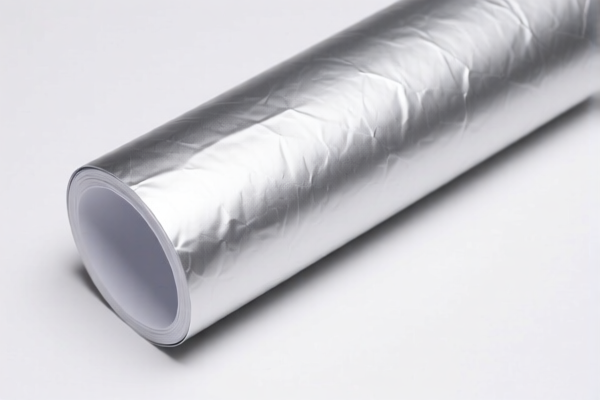
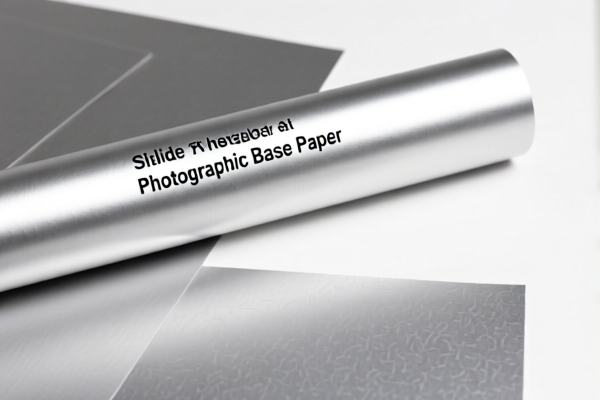
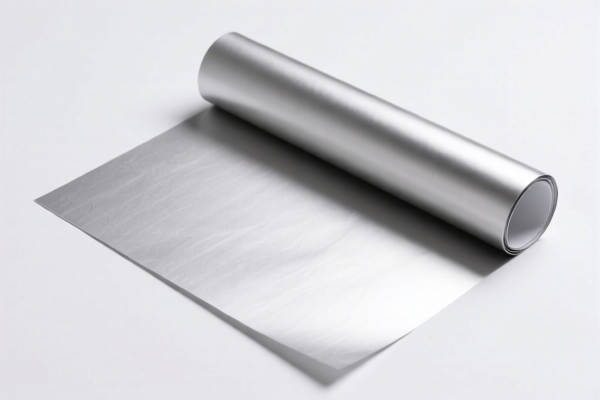
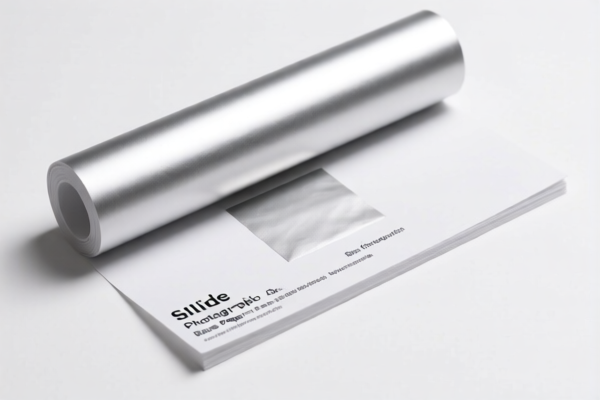
AI Analysis
🎞️ Silver Halide Photo Paper (卤化银相纸)
🌐 HS Code Reference & Customs Clearance Guide | 2026 Latest Tariff Analysis | Professional Entry Strategies
📌 I. Product Definition & Classification: Understanding "Silver Halide Photo Paper"
Silver Halide Photo Paper is a light-sensitive material used in traditional photography, printing, and technical reproduction. It consists of a paper base coated with an emulsion containing silver halide crystals. In international trade, classification depends heavily on the form (roll vs. sheet), width, and specific use.
According to the provided data, this product primarily falls under Chapter 37 (Photographic or Cinematographic Goods), specifically: * 3703: Photo paper, paperboard, and textiles, sensitized, unexposed, in rolls of a width exceeding 610 mm. * 3707: Prepared photo emulsions and other prepared photographic goods (for chemical agents/stabilizers).
⚠️ Key Distinction Point:
- If the product is photo paper in rolls >610mm → Classified under 3703.
- If the product is a chemical stabilizer for this paper → Classified under 3707 or 2942 (depending on chemical composition).
📦 II. HS Code Classification Details (Based on Provided Data)
| HS Code | Product Description | Applicable Scenario | Tax Summary |
|---|---|---|---|
3703.10.30.60 |
Silver halide photo paper rolls, width >610mm, consistent with roll-fed sensitized material characteristics | Large format photography, wide-format printers, general photographic use | Total Tax: 38.7% |
3703.10.30.90 |
Silver halide photo paper rolls, width >610mm, for line reproduction (e.g., technical drawings, maps) | Technical line copying, microfilm generation, industrial documentation | Total Tax: 38.7% |
3707.90.60.00 |
Silver halide photo paper stabilizer, classified as unmixed photographic chemicals | Chemical agent used to stabilize the developed image (liquid or powder) | Total Tax: 35.0% |
2942.00.35.00 |
Silver halide photo paper stabilizer, containing halogenated organic compounds | Chemical agent classified as "Other Organic Chemicals" due to specific organic halogen content | Total Tax: 41.5% |
🔍 Focus Reminder:
- Photo Paper (3703): The tax rate is uniform at 38.7% regardless of whether it's for general photos or line reproduction.
- Stabilizers (3707/2942): The classification varies by chemical nature. If it's a simple photographic preparation, it's 35.0%. If it's an organic halogen compound, it jumps to 41.5%.
- No Sheet Paper: The data provided specifically mentions rolls >610mm. Standard sheet paper may have different codes not listed here.
💰 III. 2026 Latest Tariff Rate Detailed Explanation (Including Surcharges)
✅ Applicable Country: United States (US)
✅ Country of Origin: China (CN)
✅ Effective Date: From Nov 10, 2025 (inclusive)
🎯 1. 3703.10.30.60 & 3703.10.30.90 —— Silver Halide Photo Paper Rolls
| Item | Content |
|---|---|
| Basic Tariff | 3.7% (Ad Valorem) |
| Section 301 Surcharge | +25.0% (Based on USITC Footnote for Chinese goods) |
| Section 122 Surcharge | +10.0% (Specific policy surcharge) |
| Total Tax Rate | 38.7% |
| Tax Calculation | CIF Value × 38.7% |
| De Minimis Eligibility | ❌ Not Eligible (High duty rate prevents small package exemption in many cases) |
| Legal Path | Base Tariff: 3.7% → Section 301: 25.0% → Sec 122: 10.0% |
📌 Explanation:
- The 3.7% is the standard MFN (Most Favored Nation) duty for Chapter 37.
- The 25.0% is the standard Section 301 tariff for most Chinese imports.
- The 10.0% is an additional "Section 122" surcharge, bringing the total burden to 38.7%.
- Cost Impact: This is a high-cost item for importers. Price competitiveness must be carefully managed.
🎯 2. 3707.90.60.00 —— Photo Paper Stabilizer (Photographic Chemicals)
| Item | Content |
|---|---|
| Basic Tariff | 0.0% |
| Section 301 Surcharge | +25.0% |
| Section 122 Surcharge | +10.0% |
| Total Tax Rate | 35.0% |
| Tax Calculation | CIF Value × 35.0% |
| De Minimis Eligibility | ❌ Not Eligible |
📌 Note:
- While the basic tariff is 0%, the surcharges are the same as the paper.
- This is 3.7% cheaper than the photo paper itself.
- Properly identifying the chemical as a "prepared photographic product" is key to avoiding the higher organic chemical rate.
🎯 3. 2942.00.35.00 —— Stabilizer (Organic Halogen Compound)
| Item | Content |
|---|---|
| Basic Tariff | 6.5% |
| Section 301 Surcharge | +25.0% |
| Section 122 Surcharge | +10.0% |
| Total Tax Rate | 41.5% |
| Tax Calculation | CIF Value × 41.5% |
| De Minimis Eligibility | ❌ Not Eligible |
📌 Warning:
- If the stabilizer contains specific organic halogen compounds, it may be classified under 2942 (Organic Chemicals) instead of 3707 (Photographic Goods).
- The basic rate jumps from 0% to 6.5%, making the total tax 41.5%, which is the highest in this dataset.
- Strategy: Ensure the MSDS and technical description support classification under 3707 (Photographic Preparations) rather than 2942 (General Organic Chemicals) if possible, to save 2.8%.
🛠️ IV. Customs Clearance Practical Advice (Pitfall Avoidance Guide)
✅ 1. Required Documentation Checklist
| Document | Required | Notes |
|---|---|---|
| ✅ Product Spec Sheet | ✔️ | Must specify: Type (Roll/Sheet), Width, Emulsion Type, Light Sensitivity. |
| ✅ Technical Data Sheet (TDS) | ✔️ | Critical for chemical stabilizers. Must clarify if it's a "preparation for photographic use" (3707) vs. "organic compound" (2942). |
| ✅ Commercial Invoice | ✔️ | Clearly state: "Silver Halide Photo Paper, Roll, Width >610mm" or "Photographic Stabilizer." |
| ✅ MSDS (Material Safety Data Sheet) | ✔️ | Mandatory for chemicals/stabilizers. Helps determine HS Code (3707 vs 2942). |
| ✅ Origin Certificate | ✔️ | If not from China, may avoid surcharges. For China-origin, confirm Section 301 applicability. |
| ✅ Photos of Product | ✔️ | Show packaging, labels, and the material itself to prove it's "sensitized photo paper." |
✅ 2. Declaration Tips (Key Formulas)
🔥 "Roll Width >610mm is Key! Chemicals Need MSDS!"
| Scenario | Correct Declaration | Incorrect Practice |
|---|---|---|
| Photo Paper Rolls | HS 3703.10.30.x0 + "Width >610mm" |
Declaring as "Office Paper" (Wrong Chapter) |
| Sheet Photo Paper | (Not in provided data, but generally 3703.90) |
Misclassifying as 3703 (which is for rolls >610mm) |
| Stabilizer (General) | HS 3707.90.60.00 + "Photographic Stabilizer" |
Declaring as "Cleaner" or generic "Chemical" |
| Stabilizer (Organic Halogen) | HS 2942.00.35.00 + "Organic Halogen Compound" |
Trying to force 3707 without proof → Audits & Penalties |
✅ 3. Special Handling
| Situation | Handling Advice |
|---|---|
| Mixed Shipment (Paper + Chemicals) | Separate Lines: Declare Photo Paper (3703) and Stabilizer (3707/2942) on separate lines to avoid confusion and potential downgrading. |
| Width Exactly 610mm | If width is ≤610mm, it does not fit 3703.10. It may fall under 3703.90 (Other). Check specific subheadings for smaller rolls. |
| Used/Developed Paper | If already exposed/developed, it is not "unexposed sensitized" material. It may be classified as waste or general goods, not 3703. |
🌍 V. Global Market Comparison (2026 Latest)
| Region | Recommended HS Code | Tariff (China Origin) | Notes |
|---|---|---|---|
| 🇺🇸 USA | 3703.10.30.60/90 |
38.7% | High Section 301 + 122 duties. |
| 🇨🇳 China | 3703.10.30 |
~4-6% | Low base duty, no surcharges. |
| 🇪🇺 EU | 3703.10 |
0-4% | Generally low duties, but VAT applies. |
| 🇯🇵 Japan | 3703.10 |
0-3% | Competitive market, low tariffs. |
📌 Conclusion:
- USA is the most challenging market due to the 38.7% effective rate.
- Paper vs. Chemical: Stabilizers are slightly cheaper to import into the US (35-41.5%) than the paper itself (38.7%), but classification risk is higher for chemicals.
📌 VI. Common Mistakes & Pitfall Guide (Lessons Learned)
❌ Mistake 1: Declaring rolls with width ≤610mm as 3703.10
👉 Consequence: Customs may reject or reclassify, causing delays. 3703.10 is specifically for >610mm.
❌ Mistake 2: Declaring Stabilizer as "Office Supplies" or "General Chemical"
👉 Consequence: Loss of specific HS Code recognition, potential misclassification under higher duties or regulatory bans.
❌ Mistake 3: Confusing "Photo Paper" with "Printer Paper"
👉 Consequence: Photo paper is sensitized (light-reactive). Printer paper is not. Misdeclaration leads to seizure or fines.
❌ Mistake 4: Ignoring the Section 122 surcharge
👉 Consequence: Underestimating landed cost by 10%. Profit margins can be wiped out.
✅ Correct Practice:
"Silver Halide Photo Paper, Roll, Width 762mm, Unexposed, Sensitized, Model XYZ"
"Photographic Stabilizer for Silver Halide Process, Chemical Composition: [List Key Ingredients]"
🎯 VII. Conclusion: Precise Classification, Cost Control!
🎯 Remember the Mantra:
🔹 "Rolls >610mm are 3703; Sheets are elsewhere."
🔹 "Stabilizers: 3707 (35%) vs 2942 (41.5%) - Know your chemistry!"
🔹 "Total Cost = CIF × 38.7% (Paper) or 35-41.5% (Chemicals)."
✨ Professional Clearance Starts with Accurate Classification!
💼 Every percentage point counts in the age of Section 301 & 122!
📣 Immediate Action:
📞 Provide Product Specs & MSDS → Verify HS Code → Calculate Landed Cost
🚀 Ensure Smooth Customs Clearance, Maximize Margins!
Customer Reviews
About HS Code Classification
The Harmonized System (HS) is an internationally standardized nomenclature developed by the World Customs Organization (WCO) to classify traded products. Over 200 countries use the HS system as the basis for customs tariffs, trade statistics, and import/export regulations.
Each HS code follows a hierarchical structure:
- Chapter (2 digits) — Broad category of goods (e.g., Chapter 84: Machinery and Mechanical Appliances)
- Heading (4 digits) — More specific grouping within the chapter
- Subheading (6 digits) — Internationally standardized breakdown, used by all WCO member countries
- National subdivisions (8-10 digits) — Country-specific extensions for further classification, such as US HTSUS 10-digit codes
Correct HS code classification is essential for smooth customs clearance, accurate duty payment, and compliance with trade regulations. Misclassification can lead to customs delays, overpayment of duties, or penalties.
When importing from CN to US, the applicable tariff rates may include:
- Most-Favored-Nation (MFN) rate — The standard duty rate applied to WTO members
- General rate — Applied to countries without trade agreements
- Trade remedy duties — Additional tariffs such as Section 301 (anti-dumping), Section 232 (national security), or countervailing duties
The information provided on this page is for reference purposes only. For official classification, please consult with your local customs authority or a licensed customs broker.