Silver Halide Photographic Paper Roll (Technical Drawing Reproduction)
CN → US| HS Code | Tariff Rate | Origin | Destination | Doc |
|---|---|---|---|---|
| 3703103030 | 38.7% | CN | US | Official Doc |
| 3703103090 | 38.7% | CN | US | Official Doc |
| 4911996000 | 17.5% | CN | US | Official Doc |
| 4911911500 | 17.5% | CN | US | Official Doc |
| 4802556000 | 35.0% | CN | US | Official Doc |
Product Images
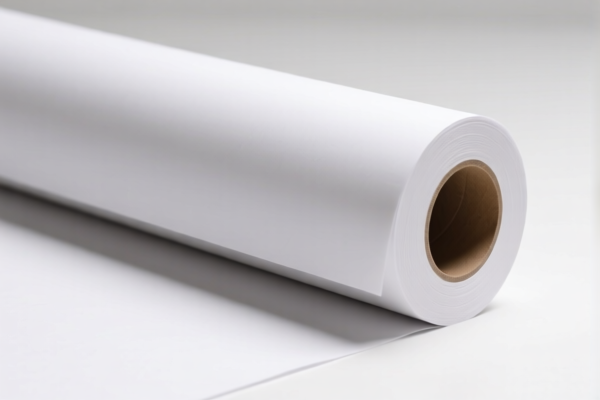

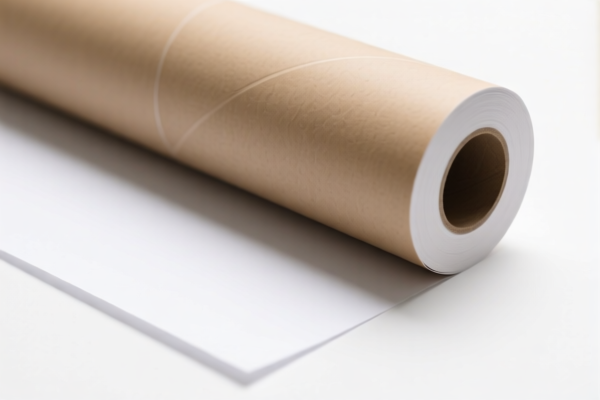

AI Analysis
📸 Silver Halide Photographic Paper Roll (Technical Drawing Reproduction)
🌐 HS Code Reference & Customs Clearance Guide | 2026 Latest Tariff Analysis | Professional Clearance Strategy
📌 I. Product Definition & Classification: What Exactly Are You Shipping?
Silver Halide Photographic Paper Roll (Technical Drawing Reproduction) refers to high-precision light-sensitive media used primarily in engineering, architecture, and industrial sectors for reproducing technical drawings, blueprints, and schematics.
In international trade, this product is often misunderstood because it sits at the intersection of photographic chemicals and printed matter. The classification hinges on two critical factors: 1. Material Composition: Is it a coated silver-halide emulsion (light-sensitive) or simple coated paper (non-sensitive)? 2. Form & Function: Is it sold as raw photographic material for further processing, or as a finished print/printed document?
⚠️ Key Distinction:
- If the paper contains silver halide emulsion and requires chemical development to produce an image → It is Photographic Material (Chapter 37).
- If the paper is uncoated or merely a printed copy without light-sensitive layers → It is Paper or Printed Matter (Chapter 48 or 49).
📦 II. HS Code Classification Details (2026 Latest Tariff Authority Cross-Reference)
Based on the provided data, here are the five possible classifications. Note that the correct one depends on the specific technical attributes of your roll.
| HS Code | Product Description & Summary | Tax Category | Total Tax Rate | Key Classification Logic |
|---|---|---|---|---|
3703.10.30.30 |
Silver Halide Paper Material: Silver Halide Form: Roll Use: Line Copy Reproduction |
Photographic Material | 38.7% | Standard silver halide paper for line copying. |
3703.10.30.90 |
Silver Halide Paper (Other) Material: Silver Halide Form: Roll Use: Line Copy Reproduction |
Photographic Material | 38.7% | Fully compliant with silver halide paper standards; includes variations not specifically listed in .30.30. |
4911.99.60.00 |
Other Printed Matter Material: Paper-based Form: Scroll/Printed Roll Use: Mechanical Drawing Copy |
Printed Matter | 17.5% | Inferred as paper medium; classified as "other printed matter" for mechanical drawing reproduction. |
4911.91.15.00 |
Pictures/Designs (Printed Rolls) Material: Printed Roll Use: Mechanical Drafting Copy |
Printed Matter | 17.5% | Printed matter category; falls under "pictures, designs" due to graphic content. |
4802.55.60.00 |
Sensitized Photographic Paper (Uncoated Paper Compatible) Material: Sensitized Base Form: Roll Category: Sensitized Paper |
Paper/Pulp | 35.0% | Material is a sensitized base; compatible with uncoated paper attributes but explicitly classified under sensitized paper. |
🔍 Critical Analysis:
- Classes 3703 (38.7%tax) are for light-sensitive paper. If your roll needs developing fluids, it likely belongs here.
- Classes 4911 (17.5%tax) are for printed items. If the drawing is already printed on non-sensitive paper, use these.
- Class 4802 (35.0%tax) is a specific subset for sensitized paper that doesn't fit standard photographic categories perfectly but is still light-sensitive.
💰 III. 2026 Latest Tariff Rate Breakdown (Including Surcharges & Policy Add-ons)
✅ Applicable Country: United States (US)
✅ Origin: China (CN) (Assumed based on "122 Clause" reference in source data)
✅ Effective Time: Current applicable rates (including Trade Act Section 301 and IEEPA penalties)
🎯 1. 3703.10.30.30 & 3703.10.30.90 — Silver Halide Photographic Paper
| Item | Content |
|---|---|
| Base Tariff | 3.7% (Ad Valorem) |
| Section 301 Additional Tariff | 25.0% |
| Section 122 Clause Tariff | 10.0% |
| Total Tax Rate | 38.7% |
| Tax Calculation | CIF Value × 38.7% |
| De Minimis Eligibility | ❌ No (Highly restricted for chemical/photographic goods) |
| Legal Basis Path | HTSUS:3703.10.30 → Section 301: Footnote 9903.88.01 → Section 122 Authority |
📌 Explanation:
- 3.7% Base: Standard MFN rate for photographic paper.
- 25% Section 301: Retaliatory tariff on Chinese goods.
- 10% Section 122: Often applied to specific categories of goods; combined with 301, it significantly increases the cost.
- Total 38.7%: This is a very high duty rate. Importers must calculate landed cost carefully.
🎯 2. 4911.99.60.00 & 4911.91.15.00 — Other Printed Matter / Pictures
| Item | Content |
|---|---|
| Base Tariff | 0.0% |
| Section 301 Additional Tariff | 7.5% |
| Section 122 Clause Tariff | 10.0% |
| Total Tax Rate | 17.5% |
| Tax Calculation | CIF Value × 17.5% |
| De Minimis Eligibility | ⚠️ Check Specifics (Often restricted for large volume commercial shipments, but lower base risk than Chapter 37) |
| Legal Basis Path | HTSUS:4911.91.15 → Section 301: Footnote 9903.06.10 → Section 122 Authority |
📌 Explanation:
- 0% Base: Many printed papers have zero base duty.
- 7.5% Section 301: Lower than the 25% applied to photographic chemicals.
- 10% Section 122: Still applies.
- Total 17.5%: Significantly cheaper than Chapter 37, IF the product can be legally classified as "printed matter" rather than "photographic material."
🎯 3. 4802.55.60.00 — Sensitized Paper
| Item | Content |
|---|---|
| Base Tariff | 0.0% |
| Section 301 Additional Tariff | 25.0% |
| Section 122 Clause Tariff | 10.0% |
| Total Tax Rate | 35.0% |
| Tax Calculation | CIF Value × 35.0% |
| De Minimis Eligibility | ❌ No |
| Legal Basis Path | HTSUS:4802.55.60 → Section 301: Footnote 9903.88.01 → Section 122 Authority |
📌 Explanation:
- This sits in the middle. The base is 0%, but it attracts the 25% Section 301 tariff (like Chapter 37), leading to a 35.0% total rate.
🛠️ IV. Customs Clearance Practical Advice (Battle-Tested Pitfall Guide)
✅ 1. Documentation Checklist (Non-Negotiable)
| Document | Required? | Notes |
|---|---|---|
| ✅ Technical Data Sheet (TDS) | ✔️ Must | Must explicitly state: "Contains Silver Halide Emulsion" OR "Printed Paper Only". This is the #1 factor for HS Code classification. |
| ✅ Product Photos | ✔️ Must | Clear image of the roll end (coating side) and packaging. Show any labels like "B&W Paper," "Diazo," or "Vantage." |
| ✅ Commercial Invoice | ✔️ Must | Description must be precise: "Silver Halide Photographic Paper, Roll, for Technical Drawing Reproduction" vs. "Printed Engineering Drawings on Paper." |
| ✅ CoA (Certificate of Analysis) | ✔️ Recommended | For Chapter 37 (3703), customs may require proof of sensitivity/chemical composition. |
| ✅ Packaging List | ✔️ Must | Detail number of rolls, core diameter, and width. |
✅ 2. Declaration Strategy (Key Mnemonic)
🔥 "Sensitive = Chapter 37 (38.7%) | Printed = Chapter 49 (17.5%) | Sensitized Base = Chapter 48 (35%)"
| Scenario | Correct HS Code | Error Consequence |
|---|---|---|
| Roll requires chemical developer | 3703.10.30.30 / .90 |
If misdeclared as "Paper" (4911), you face penalties and back taxes (17.5% vs 38.7%). |
| Roll is pre-printed drawings, no chemicals | 4911.99.60.00 / .91.15 |
If misdeclared as "Photographic Paper," you overpay taxes unnecessarily. |
| Roll is sensitized but not standard photo paper | 4802.55.60.00 |
Risk of reclassification if "sensitized" nature isn't documented. |
✅ 3. Special Case Handling
| Situation | Recommendation |
|---|---|
| Mixed Shipment | If shipping both "pre-printed rolls" and "blank silver halide rolls," split the invoice. Do not mix them in one HS Code line. |
| Diazo/Vantage Papers | These are often not silver halide. They are chemical-sensitive but not photographic. Ensure you do not use 3703 unless it explicitly says "Silver Halide." They may fall under 3702 or 4911. |
| Origin Marking | Ensure "Made in China" is clearly marked on the outer packaging. Section 301 tariffs apply regardless of minor packaging changes. |
🌍 V. Global Market Customs Comparison (2026 Latest)
| Country/Region | Recommended HS Code | Tariff (China Origin) | Certification/Notes |
|---|---|---|---|
| 🇺🇸 USA | 3703.10.30.30 (if Silver Halide) |
38.7% | High risk of Section 301 penalty. Strict documentation on "Silver Halide" content. |
| 🇨🇳 China | 3703.10.30.30 |
~5-10% | Lower tariffs, but VAT (13%) applies. |
| 🇪🇺 EU | 3703.10.30 (CN8) |
0% | No additional tariffs, but strict REACH compliance for chemical coatings. |
| 🇬🇧 UK | 3703.10.30 |
0% | Post-Brexit, generally low duties, but customs declarations are strict. |
📌 Conclusion:
- USA is the most expensive market due to the cumulative 38.7% tariff on silver halide products.
- EU/UK offer better duty rates but have stricter chemical safety (REACH) requirements.
- If possible, consider if the product can be legally classified as "Pre-printed Material" (4911) to save 21.2% in duties, but only if it is factually accurate.
📌 VI. Common Errors & Pitfall Guide (Lessons Learned from Past Customs Holds)
❌ Error 1: Declaring "Photographic Paper" as "Copy Paper" (4802.55 or 4901).
👉 Consequence: Customs lab test reveals silver halide. Reclassification + Penalty + Storage Fees.
❌ Error 2: Omitting "Silver Halide" in the description.
👉 Consequence: CBP may suspect undeclared hazardous chemicals. Detention for inspection.
❌ Error 3: Using "Printed Roll" for blank sensitized paper.
👉 Consequence: Underpayment of duties. Audit risk and back-tariff assessment.
✅ Correct Practice:
"Silver Halide Photographic Paper, Roll, 24 inches x 1000 feet, for Technical Drawing Reproduction, Contains Chemical Emulsion, NOT Pre-Printed."
🎯 VII. Conclusion: Precision Classification Saves Millions
🎯 Remember the Golden Rules:
🔹 "Silver Halide = Chapter 37 (38.7% US Tax)"
🔹 "Pre-Printed = Chapter 49 (17.5% US Tax)"
🔹 "Sensitized Base = Chapter 48 (35.0% US Tax)"
🔹 "Description Must Match Physical Reality"
📌 Pro Tip:
If your product is Diazo or Vantage paper (common for technical drawings), confirm if it is truly "Silver Halide." If not, it may qualify for a lower tax rate under different HS codes (e.g., 3702 or 4911). Always consult the Technical Data Sheet before filing.
📣 Immediate Action:
📞 Verify Emulsion Type: Check with your supplier: "Is this Silver Halide or Diazo/Vantage?"
📄 Prepare TDS: Get the Certificate of Composition from the manufacturer.
🚀 File Accurate Entry: Misclassification costs more than the duty difference. Protect your margin!
✨ Professional Clearance Starts with Accurate Classification!
💼 Every percent of duty saved is pure profit earned!
Customer Reviews
About HS Code Classification
The Harmonized System (HS) is an internationally standardized nomenclature developed by the World Customs Organization (WCO) to classify traded products. Over 200 countries use the HS system as the basis for customs tariffs, trade statistics, and import/export regulations.
Each HS code follows a hierarchical structure:
- Chapter (2 digits) — Broad category of goods (e.g., Chapter 84: Machinery and Mechanical Appliances)
- Heading (4 digits) — More specific grouping within the chapter
- Subheading (6 digits) — Internationally standardized breakdown, used by all WCO member countries
- National subdivisions (8-10 digits) — Country-specific extensions for further classification, such as US HTSUS 10-digit codes
Correct HS code classification is essential for smooth customs clearance, accurate duty payment, and compliance with trade regulations. Misclassification can lead to customs delays, overpayment of duties, or penalties.
When importing from CN to US, the applicable tariff rates may include:
- Most-Favored-Nation (MFN) rate — The standard duty rate applied to WTO members
- General rate — Applied to countries without trade agreements
- Trade remedy duties — Additional tariffs such as Section 301 (anti-dumping), Section 232 (national security), or countervailing duties
The information provided on this page is for reference purposes only. For official classification, please consult with your local customs authority or a licensed customs broker.