Silver Halide Photographic Paper and Film Developer
CN → US| HS Code | Tariff Rate | Origin | Destination | Doc |
|---|---|---|---|---|
| 3707100090 | 38.0% | CN | US | Official Doc |
| 3703906000 | 37.8% | CN | US | Official Doc |
| 3703903090 | 38.7% | CN | US | Official Doc |
| 3707100005 | 38.0% | CN | US | Official Doc |
| 2843290100 | 38.7% | CN | US | Official Doc |
Product Images
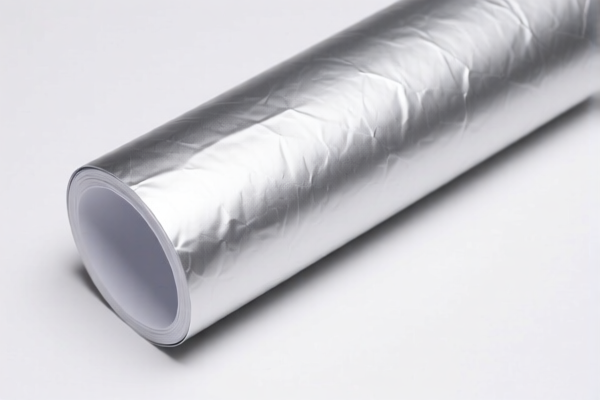
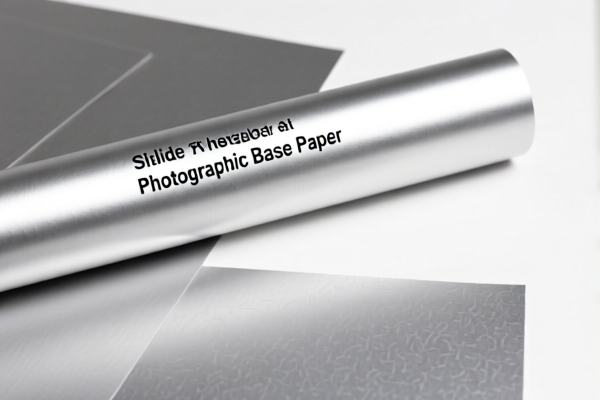
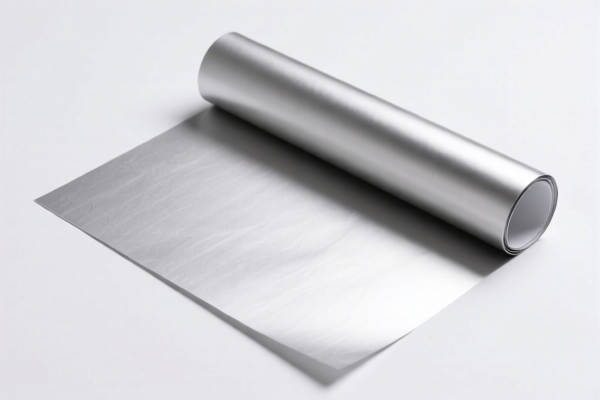
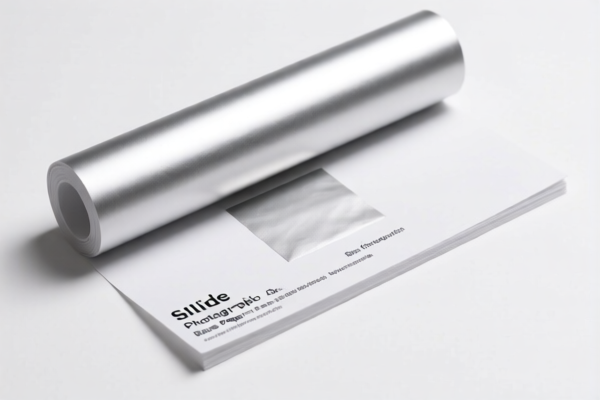
AI Analysis
📸 Silver Halide Photographic Paper & Film Developer | Chemicals | Sensitized Materials
🌐 HS Code Classification & Customs Clearance Guide | 2024/2025 Tariff Analysis | Professional Compliance Strategy
📌 I. Product Definition & Classification: Understanding "Silver Halide" Chemistry
The input product "Silver Halide Photographic Paper and Film Developer" presents a complex classification challenge because it mixes sensitized materials (Paper/Film containing Silver Halide) with chemical developers (the processing agent).
In international trade (HS Code system), classification depends on the primary nature and state of the goods at the time of importation:
- Sensitized Photographic Paper/Film: If the product is already coated with silver halide emulsion and is unexposed, it falls under Chapter 37 (Photographic Goods).
- Photographic Chemicals (Developers): If the product is the liquid/powder developer used to process the film, it falls under Chapter 37 (Sensitized Emulsions/Chemicals).
- Silver Compounds: If the product is purely raw silver salts (Silver Halides) not yet emulsified, it may fall under Chapter 28 (Inorganic Chemicals).
⚠️ Key Distinction:
- If the shipment is "Photographic Paper/Film": It is a finished good ready for use (needs exposure/development). → Chapter 37.03
- If the shipment is "Developer Chemical": It is a processing agent. → Chapter 37.07
- If the shipment is Raw Silver Halide Emulsion: It is a chemical intermediate. → Chapter 28.43
📦 II. HS Code Classification Details (Based on Provided Data)
The following HS Codes are derived from the provided JSON data, reflecting the closest matches for "Silver Halide Photographic Paper and Film Developer." Note that the data suggests a mix of interpretations depending on whether the item is the paper/film or the chemical.
| HS Code | Product Description (from Data) | Match Logic & Attributes | Total Tax Rate |
|---|---|---|---|
3703.90.60.00 |
Photographic Paper, Board (Unsensitized/Sensitized?) |
Match Key: Contains "Photographic Paper" (照相纸). Logic: Silver halide is a light-sensitive material. Fits the description of sensitized paper/board. State: Unexposed, sensitized. |
37.8% |
3703.90.30.90 |
Other Silver Halide Paper | Match Key: "Silver Halide" (卤化银) material + "Film/Sensitized Emulsion" (胶片/感光乳剂). Logic: Fits "Other Silver Halide Paper" (卤化银纸(其他)). State: Sensitized, unexposed. |
38.7% |
3707.10.00.90 |
Sensitized Emulsions (Photographic Chemicals) |
Match Key: "Sensitized Emulsion" (感光乳剂) material match. Logic: "Silver Halide" is a common component of photographic chemicals. Fits "Chemical preparations for photography." |
38.0% |
3707.10.00.05 |
Photographic Chemical Preparations | Match Key: "Sensitized Emulsion" (感光乳剂) purpose match. Logic: "Silver Halide" is a chemical agent. Fits "Other chemical preparations for photography." |
38.0% |
2843.29.01.00 |
Silver Compounds (Raw Chemicals) |
Match Key: "Silver" (银) in Silver Halide. Logic: If the product is pure Silver Halide compound (not yet emulsified into film/paper), it is a贵金属 compound (precious metal compound). |
38.7% |
🔍 Critical Classification Note:
- The term "Developer" usually implies a chemical (Chapter 37.07 or 38.24). However, the data provided heavily weights Chapter 37.03 (Paper/Film) and 37.07 (Emulsions).
- If the product is both paper and developer in one package, customs may treat them as separate or prioritize the main content.
- Chapter 28.43 is only applicable if the product is pure silver halide salts, not the final paper or developer solution.
💰 III. 2024/2025 Tariff Rate Breakdown (Detailed Tax Clauses)
✅ Applicable Region: United States (US)
✅ Origin: China (CN)
✅ Effective Date: 2025/2026 (based on current trade policies)
All rates below include Base Duty, Section 301 Tariff (25%), and Section 122/IEEPA Tariff (10%).
🎯 1. 3703.90.60.00 – Photographic Paper (Sensitized)
| Item | Details |
|---|---|
| Base Duty | 2.8% |
| Section 301 Tariff | +25.0% (USITC Footnote for Chinese Goods) |
| Section 122/IEEPA | +10.0% (Additional levy on Chinese imports) |
| Total Tax Rate | 37.8% |
| Calculation | CIF Value × 37.8% |
| De Minimis Exemption | ❌ Not Eligible (High tariff rate blocks de minimis) |
| Legal Basis | USITC:3703.90.60.00 → USITC Footnote 9903.88.01 → IEEPA:9903.01.24 |
📌 Explanation:
- This is the lowest rate among the options for photographic paper/film.
- Section 301 (25%) is the standard penalty for Chinese-origin goods.
- Section 122 (10%) is an additional political/economic tariff.
🎯 2. 3703.90.30.90 – Other Silver Halide Paper
| Item | Details |
|---|---|
| Base Duty | 3.7% |
| Section 301 Tariff | +25.0% |
| Section 122/IEEPA | +10.0% |
| Total Tax Rate | 38.7% |
| Calculation | CIF Value × 38.7% |
| De Minimis Exemption | ❌ Not Eligible |
| Legal Basis | USITC:3703.90.30.90 → USITC Footnote 9903.88.01 → IEEPA:9903.01.24 |
📌 Explanation:
- Slightly higher base duty (3.7% vs 2.8%) leads to a higher total rate.
- Used for "Other" types of silver halide paper not covered by more specific codes.
🎯 3. 3707.10.00.90 & 3707.10.00.05 – Sensitized Emulsions / Chemical Preparations
| Item | Details |
|---|---|
| Base Duty | 3.0% |
| Section 301 Tariff | +25.0% |
| Section 122/IEEPA | +10.0% |
| Total Tax Rate | 38.0% |
| Calculation | CIF Value × 38.0% |
| De Minimis Exemption | ❌ Not Eligible |
| Legal Basis | USITC:3707.10.00.xx → USITC Footnote 9903.88.01 → IEEPA:9903.01.24 |
📌 Explanation:
- If the product is classified as a chemical (developer/emulsion) rather than paper, this is the standard rate.
- Base duty is 3.0%, making it cheaper than3703.90.30.90but more expensive than3703.90.60.00.
🎯 4. 2843.29.01.00 – Silver Compounds (Inorganic Chemicals)
| Item | Details |
|---|---|
| Base Duty | 3.7% |
| Section 301 Tariff | +25.0% |
| Section 122/IEEPA | +10.0% |
| Total Tax Rate | 38.7% |
| Calculation | CIF Value × 38.7% |
| De Minimis Exemption | ❌ Not Eligible |
| Legal Basis | USITC:2843.29.01.00 → USITC Footnote 9903.88.01 → IEEPA:9903.01.24 |
📌 Explanation:
- Only applicable if the product is pure silver halide (chemical raw material), not the final photographic product.
- Misclassification here can lead to severe penalties if the product is actually a finished paper or developer.
🛠️ IV. Customs Clearance Practical Advice (Risk Mitigation)
✅ 1. Required Documentation Checklist
| Document | Required? | Purpose |
|---|---|---|
| ✅ Product Specification Sheet | ✔️ | Must clearly state: "Silver Halide," "Photographic Paper/Film," "Developer" (if applicable). |
| ✅ Composition Analysis | ✔️ | For 2843.29.01.00, prove it is a chemical compound. For 3707, prove it is an emulsion/chemical prep. |
| ✅ Product Photos | ✔️ | Show packaging, label, and physical state (roll, sheet, bottle). |
| ✅ Commercial Invoice | ✔️ | Must specify HS Code and Chinese Origin. |
| ✅ Certificate of Origin | ✔️ | Required for Section 301 tariff assessment. |
| ✅ Safety Data Sheet (SDS) | ✔️ | If classified as chemical (3707 or 2843), SDS is mandatory for hazardous material review. |
✅ 2. Classification Strategy & Key Phrases
🔥 "Know Your State: Paper vs. Chemical vs. Raw Material"
| Product State | Recommended HS Code | Key Declaration Phrase | Risk Level |
|---|---|---|---|
| Coated Paper/Film (Unexposed) | 3703.90.60.00 |
"Sensitized Photographic Paper, Silver Halide, Unexposed" | 🟢 Low (Lowest Tax) |
| Other Paper | 3703.90.30.90 |
"Silver Halide Photographic Paper, Other Type" | 🟡 Medium |
| Developer/Emulsion (Liquid/Powder) | 3707.10.00.xx |
"Photographic Sensitized Emulsion/Chemical, for Film Processing" | 🟡 Medium |
| Pure Silver Salt (Raw) | 2843.29.01.00 |
"Silver Halide Compound, Inorganic Chemical, Raw Material" | 🔴 High (Requires proof) |
⚠️ Warning:
- Do not mix "Paper" and "Developer" in the same HS Code if they are separate items. Declare them separately.
- If the product is a "Kit" (Paper + Developer), customs may classify based on the essential character (usually the paper if it's the main value) or split the shipment.
✅ 3. Special Handling Tips
| Scenario | Advice |
|---|---|
| Misclassification Risk | If you declare 2843.29.01.00 for photographic paper, customs will reject it. Provide technical data proving it is not a raw chemical. |
| Section 301 Exemption | Unfortunately, no exemption exists for these codes from Section 301 or IEEPA tariffs. Plan for ~38% tax. |
| De Minimis (Section 321) | Do not use de minimis for these items. The high tariff rate (37.8–38.7%) means even small shipments will be taxed heavily, and de minimis is often blocked for high-tariff goods. |
| Labeling | Ensure labels clearly state "Silver Halide" and "Photographic Use" to support Chapter 37 classification. Avoid vague terms like "Chemical." |
🌍 V. Global Market Comparison (2024/2025)
| Region | Recommended HS Code | Est. Tariff (China Origin) | Notes |
|---|---|---|---|
| 🇺🇸 USA | 3703.90.60.00 / 3707.10.00.00 |
37.8% – 38.7% | High tariffs due to Section 301 + IEEPA. |
| 🇨🇳 China | 3703.90.60.00 |
~5–10% | Domestic market, lower duties. |
| 🇪🇺 EU | 3703.90.60.00 |
~0–6.5% | No Section 301 equivalent, but check REACH compliance for chemicals. |
| 🇯🇵 Japan | 3703.90.60.00 |
~5–8% | Stable tariffs, no major retaliatory duties. |
| 🇬🇧 UK | 3703.90.60.00 |
~5–10% | Post-Brexit tariffs apply. |
📌 Conclusion:
- USA is the most expensive market for these goods due to trade policies.
- EU and Asia are more favorable for cost management.
📌 VI. Common Mistakes & Pitfalls
❌ Mistake 1: Classifying Photographic Paper as 2843.29.01.00 (Silver Compounds).
👉 Result: Customs rejection. Paper is a manufactured good, not a raw chemical.
👉 Fix: Use 3703.90.60.00.
❌ Mistake 2: Classifying Developer as 3703.90.60.00 (Paper).
👉 Result: Penalty for misdeclaration. Developer is a chemical, not paper.
👉 Fix: Use 3707.10.00.00.
❌ Mistake 3: Ignoring Section 122/IEEPA tariffs.
👉 Result: Underpaying duties by 10%.
👉 Fix: Always add 10% to the base + 301 rate.
❌ Mistake 4: Using De Minimis for high-tariff goods.
👉 Result: Shipment held at border, taxes assessed anyway, plus storage fees.
👉 Fix: Declare properly with full HS Code and tax payment.
🎯 VII. Conclusion: Smart Classification, Cost Control
🎯 Key Takeaways:
🔹 "Paper is 3703, Chemical is 3707, Silver Salt is 2843."
🔹 "Total Tax is ~38% for China Origin."
🔹 "No De Minimis. No Exemption."
✅ Best Practice:
- Use 3703.90.60.00 for photographic paper/film to minimize tax (37.8%).
- Use 3707.10.00.05 for developers/emulsions (38.0%).
- Provide clear documentation to avoid misclassification.
📌 Pro Tip:
If you are importing large volumes, consider Advance Rulings (Ruling Letter) from US Customs (CBP) to secure the correct HS Code and avoid disputes.
📣 Immediate Action:
📞 Contact a licensed customs broker to review your specific product structure.
📄 Prepare SDS and Product Specs before shipment.
💸 Budget for ~38% tax in your cost model.
✨ Precise Classification, Smooth Clearance, Profitable Trade!
💼 Every dollar saved on misclassification is pure profit!
Customer Reviews
About HS Code Classification
The Harmonized System (HS) is an internationally standardized nomenclature developed by the World Customs Organization (WCO) to classify traded products. Over 200 countries use the HS system as the basis for customs tariffs, trade statistics, and import/export regulations.
Each HS code follows a hierarchical structure:
- Chapter (2 digits) — Broad category of goods (e.g., Chapter 84: Machinery and Mechanical Appliances)
- Heading (4 digits) — More specific grouping within the chapter
- Subheading (6 digits) — Internationally standardized breakdown, used by all WCO member countries
- National subdivisions (8-10 digits) — Country-specific extensions for further classification, such as US HTSUS 10-digit codes
Correct HS code classification is essential for smooth customs clearance, accurate duty payment, and compliance with trade regulations. Misclassification can lead to customs delays, overpayment of duties, or penalties.
When importing from CN to US, the applicable tariff rates may include:
- Most-Favored-Nation (MFN) rate — The standard duty rate applied to WTO members
- General rate — Applied to countries without trade agreements
- Trade remedy duties — Additional tariffs such as Section 301 (anti-dumping), Section 232 (national security), or countervailing duties
The information provided on this page is for reference purposes only. For official classification, please consult with your local customs authority or a licensed customs broker.