Silver Halide Sensitizing Microfilm
CN → US| HS Code | Tariff Rate | Origin | Destination | Doc |
|---|---|---|---|---|
| 3701996060 | 35.0% | CN | US | Official Doc |
| 3701996030 | 35.0% | CN | US | Official Doc |
| 3705000000 | 35.0% | CN | US | Official Doc |
| 3702320130 | 38.7% | CN | US | Official Doc |
| 3703906000 | 37.8% | CN | US | Official Doc |
Product Images
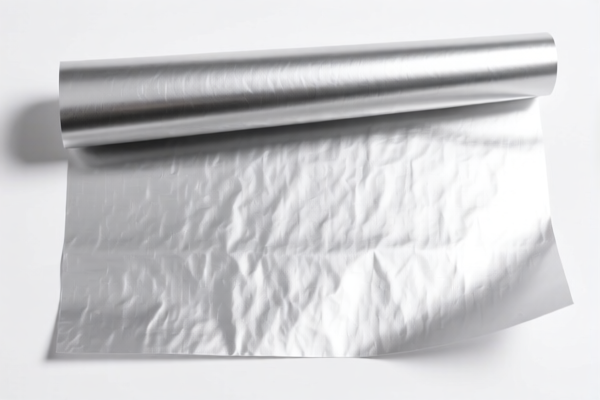
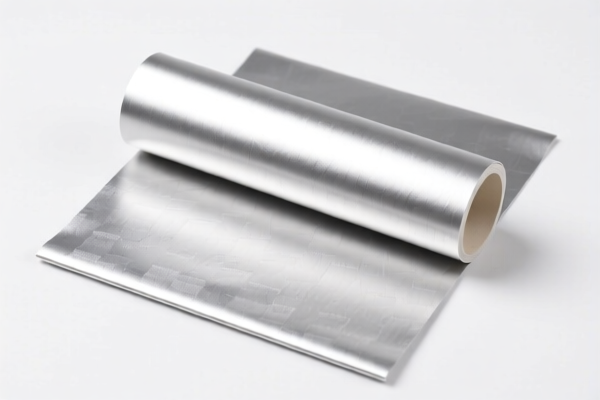
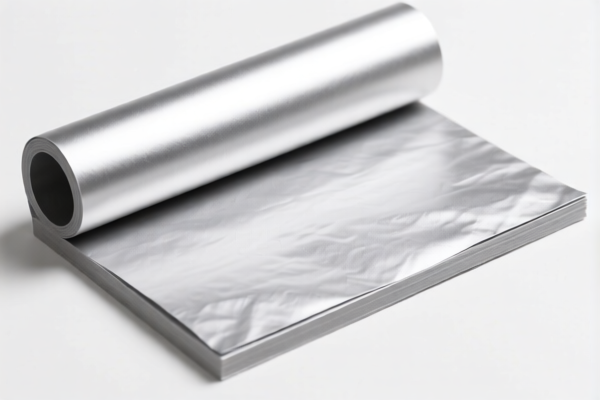
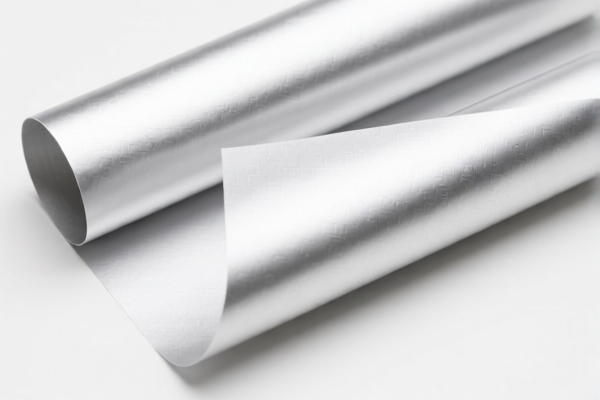
AI Analysis
🎞️ Silver Halide Sensitizing Microfilm (卤化银感光微缩胶片)
🌐 HS Code Reference & Customs Clearance Guide | 2026 Latest Tariff Analysis | Professional Strategy
📌 I. Product Definition & Classification: What Exactly Is "Silver Halide Sensitizing Microfilm"?
Silver Halide Sensitizing Microfilm refers to photographic film coated with light-sensitive silver halide emulsion, specifically designed for micrographic purposes (such as archival storage, document reduction, or industrial inspection). In international trade, its classification depends heavily on its physical state (exposed vs. unexposed), material composition (non-paper/non-textile), and specific usage category.
⚠️ Key Distinction Point:
- If it is unexposed, non-paper, non-textile, and used for micrography → It generally falls under Heading 3701 or 3705.
- If it is considered a specific type of photographic paper base (less common for "film" but possible if described ambiguously) → 3702/3703.
- Crucial Note: The data provided indicates that this product is subject to significant additional tariffs (Section 301 + IEEPA) when imported into the US from China.
📦 II. HS Code Classification Matrix (Based on Provided Data)
| HS Code | Product Description Summary | Total Tax Rate | Key Characteristics |
|---|---|---|---|
3701.99.60.60 |
Unexposed Silver Halide Microfilm Fits the form of sensitized film, non-paper, non-cardboard, non-textile material. |
35.0% | Pure film base; strictly unexposed; fits "other photographic plates/film" category. |
3701.99.60.30 |
Graphic Art Silver Halide Film Classified as graphic arts film; sensitized material; non-paper/non-textile. |
35.0% | Emphasizes "graphic arts" usage; similar material profile to 3701.99.60.60. |
3705.00.00.00 |
Photographic Plates & Film Basic attributes of photographic plates/film; no conflict with motion picture film exclusions. |
35.0% | General category for photographic plates/film; broad application if specific microfilm codes don't apply. |
3702.32.01.30 |
Silver Halide Microfilm (Paper/Support?) Material is silver halide; form and use fit microfilm characteristics. |
38.7% | Higher Tax Base: Implies a different base material or structure leading to a 3.7% basic duty vs 0%. |
3703.90.60.00 |
Silver Halide Photographic Paper/Emulsion Contains core keyword "photographic paper"; sensitized; unexposed; paper-based material. |
37.8% | Misclassification Risk: If declared as "film" but classified here, it assumes a paper base, triggering a 2.8% basic duty. |
🔍 Critical Analysis:
- Most microfilm classifications (3701,3705) carry a 0% basic duty but hit 35% total due to trade barriers.
- Codes involving paper bases (3702,3703) carry a basic duty (2.8%-3.7%) plus the same trade barriers, resulting in 37.8%-38.7% total rates.
- Conclusion: The form (film vs. paper) and specific subheading matter for the basic rate, but the additional tariffs dominate the cost.
💰 III. 2026 Latest Tariff Rate Breakdown (Including Surcharges)
✅ Applicable Country: United States (US)
✅ Country of Origin: China (CN)
✅ Effective Date: 2025/2026 Period (Current Trade Policy)
🎯 1. Codes 3701.99.60.60, 3701.99.60.30, 3705.00.00.00
(Non-Paper/Non-Textile Microfilm & Photo Plates)
| Item | Details |
|---|---|
| Basic Tariff | 0.0% (Ad Valorem) |
| Section 301 Surcharge | +25.0% (USITC Footnote for Chapter 37 items under certain conditions) |
| IEEPA Surcharge | +10.0% (Section 122 Clause: Targeted Chinese goods) |
| Total Effective Rate | 35.0% |
| Calculation | CIF Value × 35% |
| De Minimis Exemption? | ❌ NO (deny_de_minimis). These items are explicitly excluded from the $800 threshold exemption. |
| Legal Basis Path | USITC:3701/3705 → FOOTNOTE:Section301 → IEEPA:9903.01.25 |
📌 Explanation:
- The 0% basic duty reflects that photographic materials are often considered technical/scientific tools.
- However, 35% is the landing cost due to geopolitical trade measures. This is a high-cost item for importers.
🎯 2. Code 3703.90.60.00
(Silver Halide Photographic Paper/Emulsion)
| Item | Details |
|---|---|
| Basic Tariff | 2.8% |
| Section 301 Surcharge | +25.0% |
| IEEPA Surcharge | +10.0% |
| Total Effective Rate | 37.8% |
| Calculation | CIF Value × 37.8% |
| De Minimis Exemption? | ❌ NO |
📌 Explanation:
- The higher rate is driven by the 2.8% basic duty on photographic paper.
- Risk: If customs determines your "film" is actually on a paper-like support or misidentified, this rate applies.
🎯 3. Code 3702.32.01.30
(Silver Halide Microfilm - Specific Structure)
| Item | Details |
|---|---|
| Basic Tariff | 3.7% |
| Section 301 Surcharge | +25.0% |
| IEEPA Surcharge | +10.0% |
| Total Effective Rate | 38.7% |
| Calculation | CIF Value × 38.7% |
| De Minimis Exemption? | ❌ NO |
📌 Explanation:
- This is the highest cost scenario in the provided data.
- It implies a specific sub-classification where the base material or manufacturing process attracts a higher basic duty. Avoid this classification if possible by ensuring accurate description as standard microfilm (3701/3705).
🛠️ IV. Customs Clearance Operational Advice (Pitfall Avoidance)
✅ 1. Essential Documentation Checklist
| Document | Mandatory? | Purpose |
|---|---|---|
| Product Specification Sheet | ✔️ | Must clearly state: "Silver Halide Emulsion," "Microfilm Format," "Unexposed." |
| Material Composition Statement | ✔️ | Explicitly confirm: "Non-paper, Non-textile, Non-cardboard" to justify HS Code 3701 (0% basic duty) vs 3703 (2.8%). |
| Declaration of Non-Exposure | ✔️ | Must state "Unexposed/Sensitized" to distinguish from 3706 (Exposed) which may have different treatment. |
| Commercial Invoice | ✔️ | Description must match HS Code summary exactly (e.g., "Silver Halide Microfilm, Unexposed, for Archival Storage"). |
| Certificate of Origin (CO) | ✔️ | To confirm Chinese origin for accurate IEEPA/Section 301 application. |
✅ 2. Declaration Strategy (Crucial Mnemonics)
🔥 "Film Non-Paper, 3701 is King; Paper Base, 3703 Ring! No De Minimis, Pay 35%+"
| Scenario | Correct Classification | Wrong Classification | Consequence |
|---|---|---|---|
| Pure Film Base (Plastic/Cellulose Acetate) | 3701.99.60.60 or 3701.99.60.30 |
3703.90.60.00 |
Lower Tax (35% vs 37.8%) |
| Paper-Based "Film" (Rare, but exists) | 3703.90.60.00 |
3701.99.60.60 |
Penalty for Misclassification |
| Any Microfilm (CN Origin) | N/A | Claim "De Minimis" ($800) | Confiscation/Seizure (Excluded) |
| Microfilm for Motion Pictures | 3706 (Not in data) |
3701 |
Different Tax Rate (Check 3706 specifically) |
✅ 3. Special Handling Tips
| Situation | Recommendation |
|---|---|
| Avoid "Photographic Paper" Keywords | If using 3701, ensure the description says "Film" not "Paper." Using "Paper" in the description for 3701 will trigger an audit. |
| Specify "Unexposed" | Failure to specify "Unexposed" may lead to classification under exposed film categories, which have different duty structures. |
| High Duty Awareness | Since the total tax is 35%-38.7%, factor this into your landed cost immediately. Do not assume low-duty for "scientific" equipment. |
| Pre-Ruling Request | Given the complex interaction of Section 301 and IEEPA on Chapter 37, consider filing an Advance Ruling with CBP to lock in the 3701 classification. |
🌍 V. Global Market Comparison (2026 Context)
| Market | Recommended HS Code | Est. Duty (CN Origin) | Key Requirement |
|---|---|---|---|
| 🇺🇸 USA | 3701.99.60.60 / 3705.00.00.00 |
35.0% | No De Minimis. Must pay full 35%. |
| 🇨🇳 China | 3701 / 3705 |
~6-13% (Import Duty) | Standard MFN rates. No Section 301. |
| 🇪🇺 EU | 3701 / 3705 |
0% | Generally free trade for photographic materials. |
| 🇬🇧 UK | 3701 / 3705 |
0% | Post-Brexit trade terms may vary; check UK Global Tariff. |
| 🇯🇵 Japan | 3701 / 3705 |
3-4% | Low basic duty; no major trade surcharges on this item. |
📌 Conclusion:
- The USA is the most expensive market due to the 35% effective rate.
- Other major markets (EU, Japan, UK) typically levy 0% to 6% basic duties.
- Strategy: If selling globally, be prepared for US clients to demand significant price discounts to offset the 35% tax burden.
📌 VI. Common Mistakes & Pitfalls (Blood & Tears Lessons)
❌ Mistake 1: Declaring "Microfilm" as "General Paper Product"
👉 Result: Misclassification to 3506 or 4823, leading to penalties and audit.
👉 Correction: Always use "Silver Halide" and "Photographic" keywords.
❌ Mistake 2: Assuming "Scientific Equipment" gets 0% Tax
👉 Result: Chapter 37 is not exempt from Section 301/IEEPA.
👉 Correction: Budget for 35% tax.
❌ Mistake 3: Splitting Shipment to Avoid De Minimis
👉 Result: Since these items are deny_de_minimis, splitting shipments does NOT avoid the 35% tax. It only adds shipping costs.
👉 Correction: Declare accurately; do not attempt evasion.
❌ Mistake 4: Confusing "Microfilm" with "Digital Scans"
👉 Result: Digital files (software/data) may fall under different chapters (e.g., 8523), but physical film is strictly 3701/3705.
👉 Correction: Physical medium = Chapter 37.
✅ Correct Declaration Template:
"Unexposed Silver Halide Microfilm, Photographic Grade, Non-Paper Base, Non-Textile, For Archival Storage, Model: XYZ, CN Origin"
🎯 VII. Conclusion: Professional Declaration Saves Money!
🎯 Key Takeaway:
🔹 "Non-Paper Film, 3701 Rule; Paper Base, Higher Duty! US Market, 35% Tax, No Exceptions!"
🔹 "HS Code 3701/3705 is your friend; 3702/3703 is a cost trap."
📌 Action Item:
- Confirm material base is NOT paper.
- Use HS Code
3701.99.60.60or3705.00.00.00for the lowest base duty (0%).- Calculate Landed Cost with 35% Tax included.
- Do not use de minimis shipping for this item.
✨ Precision in Classification, Profit in Clearance!
💼 Don't let 35% tax eat your margins. Get it right the first time!
Customer Reviews
About HS Code Classification
The Harmonized System (HS) is an internationally standardized nomenclature developed by the World Customs Organization (WCO) to classify traded products. Over 200 countries use the HS system as the basis for customs tariffs, trade statistics, and import/export regulations.
Each HS code follows a hierarchical structure:
- Chapter (2 digits) — Broad category of goods (e.g., Chapter 84: Machinery and Mechanical Appliances)
- Heading (4 digits) — More specific grouping within the chapter
- Subheading (6 digits) — Internationally standardized breakdown, used by all WCO member countries
- National subdivisions (8-10 digits) — Country-specific extensions for further classification, such as US HTSUS 10-digit codes
Correct HS code classification is essential for smooth customs clearance, accurate duty payment, and compliance with trade regulations. Misclassification can lead to customs delays, overpayment of duties, or penalties.
When importing from CN to US, the applicable tariff rates may include:
- Most-Favored-Nation (MFN) rate — The standard duty rate applied to WTO members
- General rate — Applied to countries without trade agreements
- Trade remedy duties — Additional tariffs such as Section 301 (anti-dumping), Section 232 (national security), or countervailing duties
The information provided on this page is for reference purposes only. For official classification, please consult with your local customs authority or a licensed customs broker.