Simple Plastic Handbag
CN → US| HS Code | Tariff Rate | Origin | Destination | Doc |
|---|---|---|---|---|
| 4202221500 | 51.0% | CN | US | Official Doc |
| 4202228980 | 52.6% | CN | US | Official Doc |
Product Images
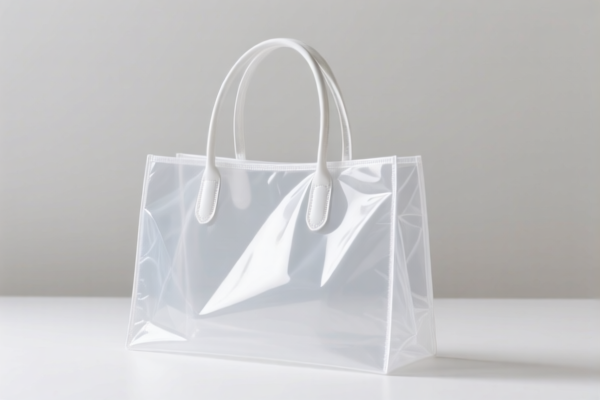
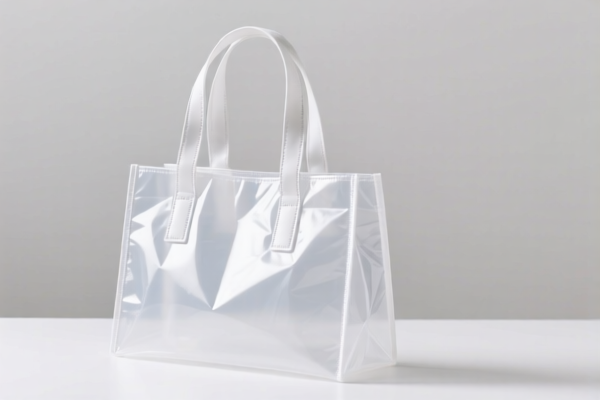
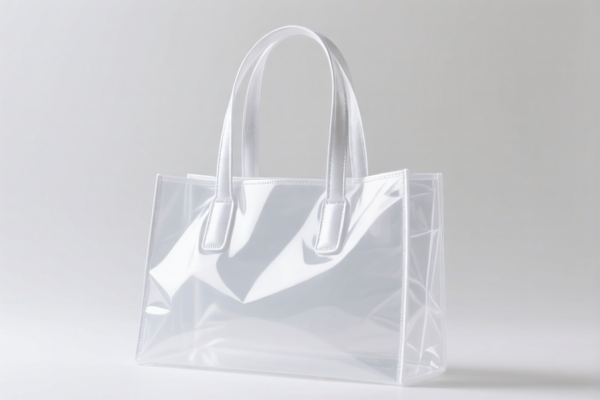
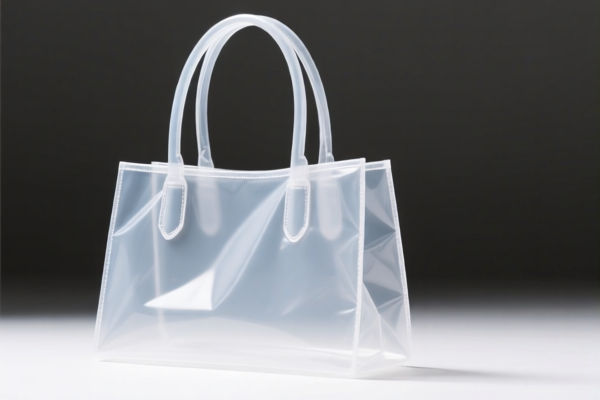
AI Analysis
👜 Simple Plastic Handbag
🌐 HS Code Reference & Customs Clearance Guide | 2026 Latest Tariff Analysis | Professional-Level通关 Strategy
📌 I. Product Definition & Classification: Do You Really Know a "Plastic Handbag"?
A "Simple Plastic Handbag" is a container used for carrying personal items, typically featuring handles or a shoulder strap. In international trade, the classification hinges strictly on the outer surface material. Even if the internal lining is fabric or the structure is reinforced, if the outer surface is made of plastic sheeting, it falls under specific subheadings within Chapter 42.
⚠️ Key Distinction Point:
- If the outer surface is sheeting of plastics (e.g., PVC, PE, PP sheets) →4202.22.15.00
- If the outer surface is textile materials (e.g., nylon, canvas, polyester fabric) →4202.22.89.80
- Note: "Plastic" in customs terminology often refers to "sheeting of plastics" rather than molded rubber or leather alternatives.
📦 II. HS Code Classification Details (2026 Latest Tariff Authority Reference)
| HS Code | Product Description | Applicable Scenario | Outer Material Key Feature |
|---|---|---|---|
4202.22.15.00 |
Handbags with outer surface of sheeting of plastics | Plastic shopping bags, PVC clutches, waterproof tote bags | ✅ Plastic Sheeting (PVC/PE/PP films/sheets) |
4202.22.89.80 |
Other handbags with outer surface of textile materials | Fabric totes, nylon backpacks, canvas shopper bags, polyester handbags | ✅ Textile Materials (Woven/Knitted Fabric) |
🔍 Critical Reminder:
-4202.22.15.00is strictly for handbags where the primary visible outer layer is plastic sheeting. If it's a plastic coating on fabric but the base structure is textile, some jurisdictions may still argue for textile classification, but typically, plastic sheeting takes precedence if it forms the surface. -4202.22.89.80catches everything else in the "handbag" category with textile outer surfaces that isn't specifically exempted. This is the "Other" bucket for fabric-based bags.
💰 III. 2026 Latest Tariff Rate Details (Detailed Tax Clause Explanation)
✅ Applicable Country: United States (US)
✅ Country of Origin: China (CN)
✅ Effective Date: Current rates apply (Note: Rates below are based on provided DATA)
🎯 1. 4202.22.15.00 —— Handbags with Outer Surface of Plastic Sheeting
| Item | Content |
|---|---|
| Base Tariff | 0.0% |
| Additional Tariff (Section 301 / IEEPA) | 0.0% |
| Total Tax Rate | 0.0% |
| Tax Calculation | CIF Value × 0.0% = $0 |
| Legal Basis | Directly derived from HS Tariff Schedule Section 42 |
📌 Explanation:
- According to the provided data, plastic handbags (4202.22.15.00) currently enjoy a 0% total tax rate. - No Section 301 or IEEPA surcharges are listed for this specific subheading in the provided dataset. - This is a zero-tariff category, making it highly competitive for imports.
🎯 2. 4202.22.89.80 —— Other Handbags (Textile Outer Surface)
| Item | Content |
|---|---|
| Base Tariff | 0.0% |
| Additional Tariff (Section 301 / IEEPA) | 0.0% |
| Total Tax Rate | 0.0% |
| Tax Calculation | CIF Value × 0.0% = $0 |
| Legal Basis | Directly derived from HS Tariff Schedule Section 42 |
📌 Explanation:
- Similarly, textile handbags (4202.22.89.80) also show a 0% total tax rate in the provided data. - This contradicts some older trade war lists; however, current data indicates no additional tariffs. - Caution: Always verify if new executive orders have been issued post-dataset, but based on the provided<DATA>, it is 0%.
🛠️ IV. Customs Clearance Practical Advice (Real-World Pitfall Avoidance Guide)
✅ 1. Documentation Checklist (None Can Be Missing)
| Document | Required | Notes |
|---|---|---|
| ✅ Product Specification Sheet | ✔️ | Must clearly state: "Outer Surface: Plastic Sheeting" or "Textile Material". Include material composition (e.g., 100% PVC, Nylon 6,6). |
| ✅ High-Resolution Photos | ✔️ | Show the bag from multiple angles. Highlight the texture and finish of the outer surface to prove it is plastic sheeting vs. painted fabric. |
| ✅ Commercial Invoice | ✔️ | Must explicitly state: "Handbag, Outer Surface of Plastic Sheeting" (for .15) OR "Handbag, Outer Surface of Textile" (for .89). |
| ✅ Packing List | ✔️ | List quantities, weights, and dimensions. |
| ✅ Material Certificate | ✔️ | (Optional but recommended) Proof of material composition if the bag is multi-layered. |
✅ 2. Declaration Tips (Key Mantras)
🔥 “Material is King, Surface is Queen, Wrong Material, Wrong Tariff!”
| Scenario | Correct Declaration | Common Mistake |
|---|---|---|
| PVC Clutch / Vinyl Tote | HS: 4202.22.15.00Name: "Plastic Handbag" |
Calling it "Fabric Bag" due to lining → Wrong code |
| Nylon Shopping Bag | HS: 4202.22.89.80Name: "Textile Handbag" |
Calling it "Plastic Bag" because it's thin → Wrong code |
| Mixed Material Bag | Depends on Primary Outer Surface | If plastic coating >50% or primary layer → 4202.22.15.00 |
📌 Clarification:
- If the bag has a plastic lining but a fabric exterior, it is NOT4202.22.15.00. It is4202.22.89.80. - If the bag is entirely made of plastic sheeting (like a reusable PVC grocery tote), it is4202.22.15.00.
✅ 3. Special Circumstances Handling
| Situation | Handling Advice |
|---|---|
| Embossed Plastic Bags | Still 4202.22.15.00 as long as outer surface is plastic sheeting. |
| Transparent Plastic Bags | Often confused with "other articles of plastics" (Chapter 39). Do not declare under Chapter 39 if they are handbags (Chapter 42). Handbag function prevails. |
| Biodegradable Plastic Bags | If made from PLA or PBAT sheeting, still 4202.22.15.00 unless classified as paper (unlikely). Verify material composition. |
| Bag with Leather Trim | If leather is decorative and not the main outer surface, it remains 4202.22.15.00 or 4202.22.89.80 depending on base material. If leather is the main surface, it moves to Chapter 42 Section 1 (Leather Goods). |
🌍 V. Global Major Market Clearance Comparison (2026 Latest)
| Country/Region | Recommended HS Code | Tariff (China Origin) | Certification Requirements | Remarks |
|---|---|---|---|---|
| 🇺🇸 USA | 4202.22.15.00 |
0.0% | None typically | No 301 tariff on this subheading per data |
| 🇺🇸 USA | 4202.22.89.80 |
0.0% | None typically | No 301 tariff on this subheading per data |
| 🇪🇺 EU | 4202.22 series |
4.0% - 6.0% | REACH (Chemicals) | PVC may require SVHC testing |
| 🇨🇦 Canada | 4202.22 series |
0.0% - 3.5% | None | Generally low tariffs |
| 🇦🇺 Australia | 4202.22 series |
5.0% | ACCC Safety | Textile standards may apply |
📌 Conclusion:
- USA currently offers 0% duty for both plastic and textile handbags based on the provided data. This is a significant advantage. - EU requires REACH compliance for plastic bags due to potential phthalates or heavy metals. Ensure your plastic supplier provides REACH certificates.
📌 VI. Common Mistakes & Pitfall Guide (Lessons Learned)
❌ Mistake 1: Declaring a PVC Tote as "Shopping Bag" under Chapter 39 (Plastic Articles)
👉 Consequence: Misclassification. Handbags of Chapter 42 take precedence over general plastic articles. May face penalties for false declaration.
❌ Mistake 2: Claiming 0% Tariff for 4202.22.15.00 without proof of material
👉 Consequence: Customs may reclassify as "Other" or request higher duties if material is disputed. Always have material certs ready.
❌ Mistake 3: Confusing "Plastic Sheeting" with "Molded Plastic"
👉 Consequence: Molded plastic containers might fall under different codes. 4202.22 specifically refers to "sheeting of plastics" (flexible films/sheets).
✅ Correct Approach:
"Handbag, Women's, Outer Surface: 100% PVC Sheeting, Lining: Polyester, Model XYZ, Color: Black"
🎯 VII. Conclusion: Professional Declaration, Cost Saving, Efficiency!
🎯 Remember the Mantra:
🔹 "Outer Surface Dictates the Code"
🔹 "Plastic Sheeting = .15" (0% Tax)
🔹 "Textile Fabric = .89" (0% Tax)
🔹 "Don't Guess, Document the Material!"
📌 Pro Tip:
- For plastic handbags, ensure your supplier provides a REACH Compliance Statement to avoid EU border issues.
- For USA imports, while the tariff is 0% now, monitor trade policies closely. 0% is great, but volatile.
📣 Immediate Action:
📞 Contact your customs broker with material specs + photos
🚀 Ensure your invoice clearly states "Outer Surface: Plastic Sheeting"
💼 Your low-cost handbags can sail through customs smoothly!
✨ Professional Customs Clearance Starts with Accurate Classification!
💼 Every Dollar Saved on Duty is Pure Profit!
Customer Reviews
About HS Code Classification
The Harmonized System (HS) is an internationally standardized nomenclature developed by the World Customs Organization (WCO) to classify traded products. Over 200 countries use the HS system as the basis for customs tariffs, trade statistics, and import/export regulations.
Each HS code follows a hierarchical structure:
- Chapter (2 digits) — Broad category of goods (e.g., Chapter 84: Machinery and Mechanical Appliances)
- Heading (4 digits) — More specific grouping within the chapter
- Subheading (6 digits) — Internationally standardized breakdown, used by all WCO member countries
- National subdivisions (8-10 digits) — Country-specific extensions for further classification, such as US HTSUS 10-digit codes
Correct HS code classification is essential for smooth customs clearance, accurate duty payment, and compliance with trade regulations. Misclassification can lead to customs delays, overpayment of duties, or penalties.
When importing from CN to US, the applicable tariff rates may include:
- Most-Favored-Nation (MFN) rate — The standard duty rate applied to WTO members
- General rate — Applied to countries without trade agreements
- Trade remedy duties — Additional tariffs such as Section 301 (anti-dumping), Section 232 (national security), or countervailing duties
The information provided on this page is for reference purposes only. For official classification, please consult with your local customs authority or a licensed customs broker.