Simulated Lemon
CN → US| HS Code | Tariff Rate | Origin | Destination | Doc |
|---|---|---|---|---|
| 9503000073 | 10.0% | CN | US | Official Doc |
| 6702906500 | 34.5% | CN | US | Official Doc |
| 6702104000 | 13.4% | CN | US | Official Doc |
| 3926400090 | 15.3% | CN | US | Official Doc |
| 3926400010 | 15.3% | CN | US | Official Doc |
Product Images
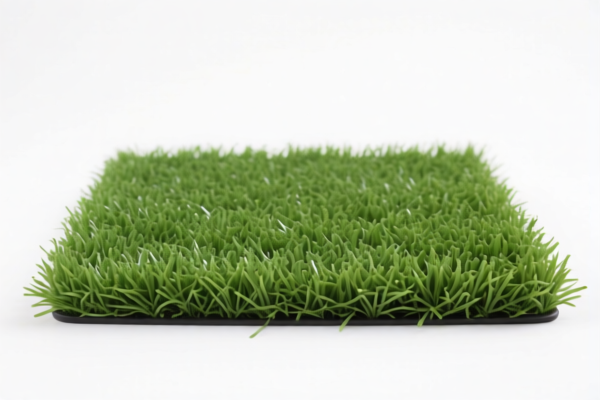
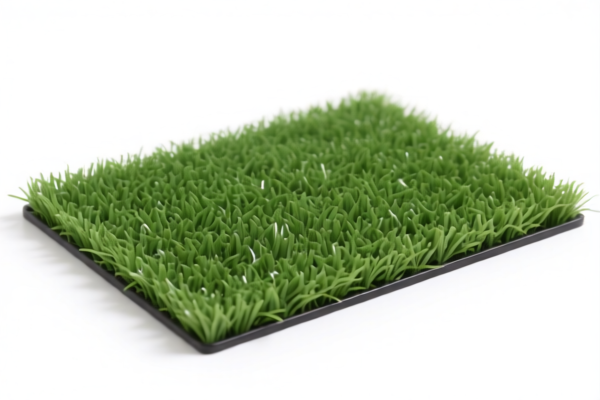
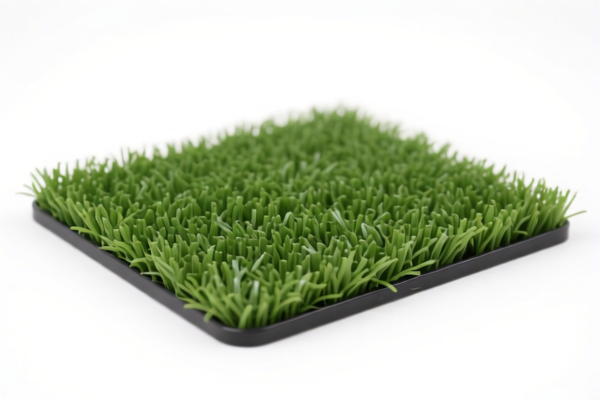
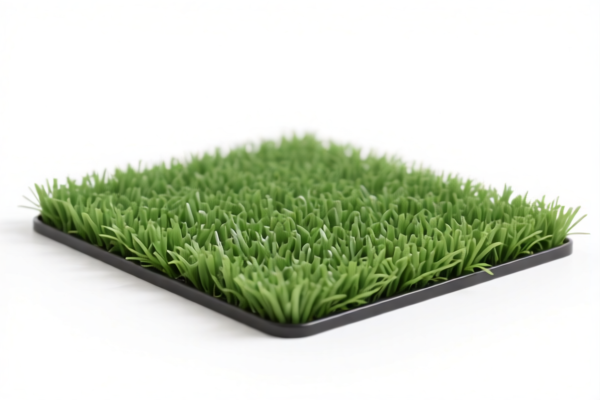
AI Analysis
🍋 Simulated Lemon (Artificial Fruit Decor)
🌐 HS Code Reference & Customs Clearance Guide | 2026 Latest Tariff Analysis | Professional Customs Strategy
📌 I. Product Definition & Classification: What is a "Simulated Lemon"?
A Simulated Lemon is an artificial replica of a fresh lemon, typically used for home decor, kitchen styling, photography props, or educational models. It is non-edible and made from materials like plastic, resin, or synthetic fibers.
In international trade, classification depends heavily on:
1. Material Composition (Plastic, Resin, Other Materials)
2. Primary Function (Toy/Model, Decorative Item, Artificial Flower/Fruit)
3. Intended Use (Entertainment vs. Decoration)
⚠️ Key Classification Divergence:
- If viewed as a Toy/Model → Classified under Chapter 95
- If viewed as Artificial Fruit/Decoration → Classified under Chapter 67
- If viewed as a Plastic Ornament → Classified under Chapter 39
📦 II. HS Code Classification Details (2026 Latest Tariff Authority Comparison)
| HS Code | Product Description | Application Scenario | Material/Feature | Total Tax Rate |
|---|---|---|---|---|
9503.00.00.73 |
Simulated Lemon as a Model/Entertainment Model | Toys, educational models, children’s play items | Plastic/Resin, Model Type | 10.0% |
9503.00.00.90 |
Simulated Lemon as Other Model/Toy | General toys, collectible models | Plastic/Resin, Other Category | 10.0% |
6702.90.65.00 |
Simulated Lemon as Artificial Fruit/Other Materials | Home decor, floral arrangements, non-plastic materials | Non-plastic (e.g., fabric, resin blend) | 34.5% |
6702.10.40.00 |
Simulated Lemon as Artificial Fruit (Plastic) | Decorative items, kitchen props | Plastic | 13.4% |
3926.40.00.90 |
Simulated Lemon as Plastic Ornament (Other) | General plastic decorations | Plastic | 15.3% |
3926.40.00.10 |
Simulated Lemon as Plastic Ornament (Bow-like) | Decorative bows/items | Plastic | 15.3% |
🔍 Key Distinction:
- Chapter 95 (Toys/Models): Lowest tax burden (10%), if classified as a toy or model.
- Chapter 67 (Artificial Flowers/Fruits): Higher tax (13.4%–34.5%), depending on material.
- Chapter 39 (Plastic Articles): Medium-high tax (15.3%), if classified as general plastic ornaments.
💰 III. 2026 Latest Tariff Rate Breakdown (Including Surtaxes & Policy Add-ons)
✅ Applicable Country: United States (US)
✅ Origin: China (CN)
✅ Effective Date: November 10, 2025 (and onwards)
🎯 1. 9503.00.00.73 & 9503.00.00.90 – Simulated Lemon as Model/Toy
| Item | Details |
|---|---|
| Basic Tariff | 0% (ad valorem) |
| Section 301 Surtax | 0% |
| IEEPA Surtax | +10% (Targeting Chinese/HK products) |
| Total Rate | 10.0% |
| Tax Calculation | CIF Value × 10% |
| De Minimis Exemption? | ❌ No (deny_de_minimis applies to Chinese-origin goods under IEEPA) |
| Legal Basis Path | IEEPA:9903.01.25 → IEEPA:9903.01.24 → USITC:9503.00.00.73/90 |
📌 Explanation:
- The 10% IEEPA surtax is the only additional duty.
- No Section 301 surtax applies to these subheadings.
- Lowest total tax rate among all options!
🎯 2. 6702.10.40.00 – Simulated Lemon as Artificial Fruit (Plastic)
| Item | Details |
|---|---|
| Basic Tariff | 3.4% |
| Section 301 Surtax | 0% |
| IEEPA Surtax | +10% |
| Total Rate | 13.4% |
| Tax Calculation | CIF Value × 13.4% |
| De Minimis Exemption? | ❌ No |
| Legal Basis Path | IEEPA:9903.01.25 → IEEPA:9903.01.24 → USITC:6702.10.40.00 |
📌 Explanation:
- Basic tariff is low (3.4%), but IEEPA adds 10%.
- Suitable for plastic-based decorative lemons.
🎯 3. 6702.90.65.00 – Simulated Lemon as Artificial Fruit (Other Materials)
| Item | Details |
|---|---|
| Basic Tariff | 17.0% |
| Section 301 Surtax | 7.5% |
| IEEPA Surtax | +10% |
| Total Rate | 34.5% |
| Tax Calculation | CIF Value × 34.5% |
| De Minimis Exemption? | ❌ No |
| Legal Basis Path | IEEPA:9903.01.25 → IEEPA:9903.01.24 → USITC:6702.90.65.00 |
📌 Explanation:
- Highest tax rate among all options.
- Applies to lemons made from non-plastic materials (e.g., fabric, paper, mixed resin).
- Avoid this classification if possible!
🎯 4. 3926.40.00.90 & 3926.40.00.10 – Simulated Lemon as Plastic Ornament
| Item | Details |
|---|---|
| Basic Tariff | 5.3% |
| Section 301 Surtax | 0% |
| IEEPA Surtax | +10% |
| Total Rate | 15.3% |
| Tax Calculation | CIF Value × 15.3% |
| De Minimis Exemption? | ❌ No |
| Legal Basis Path | IEEPA:9903.01.25 → IEEPA:9903.01.24 → USITC:3926.40.00.90/10 |
📌 Explanation:
- Moderate tax burden.
- Suitable if the product is clearly a plastic decorative item but not a toy or artificial fruit.
🛠️ IV. Customs Clearance Practical Advice (Battle-Tested Pitfall Guide)
✅ 1. Documentation Checklist (Non-Negotiable)
| Document | Required | Notes |
|---|---|---|
| ✅ Product Specifications | ✔️ | Material composition (Plastic, Resin, etc.), dimensions, weight |
| ✅ Product Photos | ✔️ | Clear images showing texture, packaging, and any labels |
| ✅ Commercial Invoice | ✔️ | Clearly state "Simulated Lemon for Decor/Toy" |
| ✅ Packing List | ✔️ | Confirm quantity, gross weight, net weight |
| ✅ Certificate of Origin (CO) | ✔️ | If applicable, for preferential treatment (not applicable for CN-US) |
| ✅ Material Declaration | ✔️ | Explicitly state if plastic, resin, or mixed materials |
✅ 2. Classification Strategy (Golden Rules)
🔥 "Toy/Model First, Plastic Second, Artificial Fruit Last!"
| Scenario | Recommended HS Code | Tax Rate | Risk Level |
|---|---|---|---|
| Sold as a Toy/Educational Model | 9503.00.00.73 or 9503.00.00.90 |
10.0% | ✅ Low |
| Sold as Kitchen Decor (Plastic) | 6702.10.40.00 |
13.4% | ✅ Low-Medium |
| Sold as General Plastic Ornament | 3926.40.00.90 |
15.3% | ✅ Medium |
| Sold as Decor (Non-Plastic Materials) | 6702.90.65.00 |
34.5% | ❌ High |
📌 Key Tip:
- Classify as Toy/Model (9503) if the product has any educational, play, or collectible value. This yields the lowest tax (10%).
- Avoid6702.90.65.00unless the material is explicitly non-plastic and non-toy.
✅ 3. Special Handling Cases
| Scenario | Recommendation |
|---|---|
| OEM Custom Simulated Lemons | Provide design drawings + client contract to prove "toy/model" intent |
| Mixed Packaging (Toys + Decor) | Declare separately to avoid misclassification |
| Plastic + Fabric Mix | Use 3926 or 6702 depending on dominant material; consult customs broker |
| Samples for Promotion | Still subject to IEEPA 10%; no de minimis exemption for CN-origin |
🌍 V. Global Market Customs Comparison (2026 Latest)
| Country/Region | Recommended HS Code | Tariff | Certification | Notes |
|---|---|---|---|---|
| 🇺🇸 USA | 9503.00.00.73/90 |
10.0% | None | Best for toys/models |
| 🇨🇳 China | 9503.00.00.73/90 |
5% | CCC (if toy) | No IEEPA surtax |
| 🇪🇺 EU | 9503.00.00 |
0% | CE (if toy) | No additional surtax |
| 🇬🇧 UK | 9503.00.00 |
0% | UKCA (if toy) | No additional surtax |
| 🇦🇺 Australia | 9503.00.00 |
5% | None | Low tariff |
📌 Conclusion:
- USA has the highest tax burden for Chinese-origin goods due to IEEPA.
- Classifying as Toy/Model (9503) is the most cost-effective strategy for US imports.
📌 VI. Common Mistakes & Pitfalls (Lessons Learned)
❌ Mistake 1: Declaring as "Artificial Fruit" (6702.90.65.00) when it’s plastic.
👉 Consequence: Tax jumps from 10% to 34.5% → Overpayment + Delays!
❌ Mistake 2: Splitting a "Toy Lemon" into "Plastic Ornament" + "Decor".
👉 Consequence: Misclassification → Penalties + Interest
❌ Mistake 3: Omitting material composition on the invoice.
👉 Consequence: Customs requests additional info → Delay in Release
❌ Mistake 4: Assuming de minimis exemption applies.
👉 Consequence: IEEPA surtax still applies to Chinese-origin goods → Unexpected 10% Cost
✅ Correct Approach:
"Plastic Simulated Lemon, Educational Model, Non-Edible, HS Code 9503.00.00.73, IEEPA 10% Applicable"
🎯 VII. Conclusion: Professional Declaration Saves Money!
🎯 Remember the Golden Rule:
🔹 "Toy/Model = 10%, Plastic Decor = 15%, Artificial Fruit = 34.5%"
🔹 "Classify Smart, Save Big, Clear Fast!"
📌 Pro Tip:
- If your sim lemon is exporting to non-US markets (EU, China, UK), taxes are 0%–5% regardless of classification.
- Request a Pre-Ruling from US CBP if unsure about classification.
📣 Action Plan:
📞 Contact a Licensed Customs Broker
📄 Provide Product Photos + Material Declaration
🚀 Classify as9503for Lowest US Tax Burden
✨ Professional Customs Clearance Starts with Accurate Classification!
💼 Every Percent Saved is Profit Earned!
Customer Reviews
About HS Code Classification
The Harmonized System (HS) is an internationally standardized nomenclature developed by the World Customs Organization (WCO) to classify traded products. Over 200 countries use the HS system as the basis for customs tariffs, trade statistics, and import/export regulations.
Each HS code follows a hierarchical structure:
- Chapter (2 digits) — Broad category of goods (e.g., Chapter 84: Machinery and Mechanical Appliances)
- Heading (4 digits) — More specific grouping within the chapter
- Subheading (6 digits) — Internationally standardized breakdown, used by all WCO member countries
- National subdivisions (8-10 digits) — Country-specific extensions for further classification, such as US HTSUS 10-digit codes
Correct HS code classification is essential for smooth customs clearance, accurate duty payment, and compliance with trade regulations. Misclassification can lead to customs delays, overpayment of duties, or penalties.
When importing from CN to US, the applicable tariff rates may include:
- Most-Favored-Nation (MFN) rate — The standard duty rate applied to WTO members
- General rate — Applied to countries without trade agreements
- Trade remedy duties — Additional tariffs such as Section 301 (anti-dumping), Section 232 (national security), or countervailing duties
The information provided on this page is for reference purposes only. For official classification, please consult with your local customs authority or a licensed customs broker.