Single Board Veneer Peeling Machine
CN → US| HS Code | Tariff Rate | Origin | Destination | Doc |
|---|---|---|---|---|
| 8465960030 | 19.9% | CN | US | Official Doc |
| 8465990230 | 37.4% | CN | US | Official Doc |
Product Images
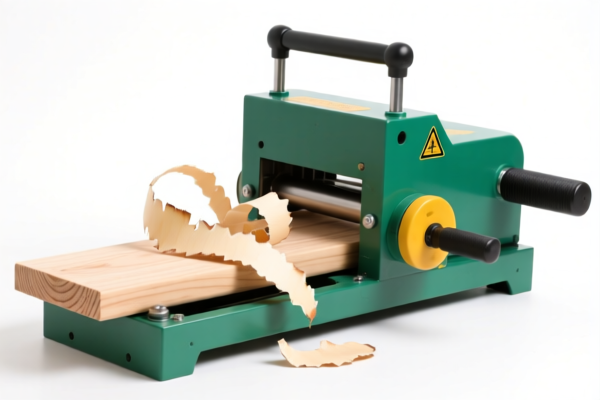
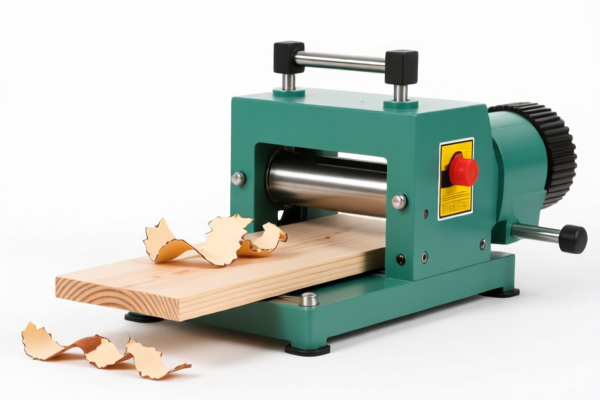
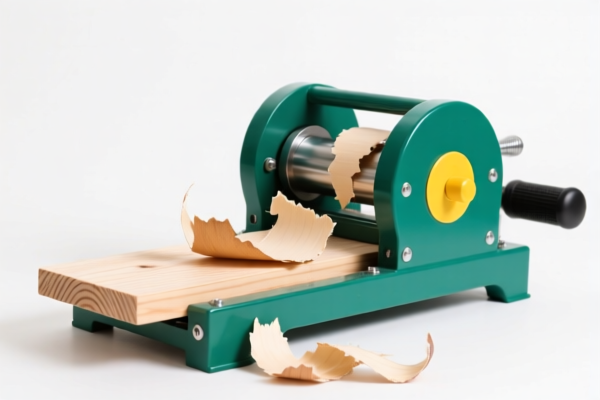
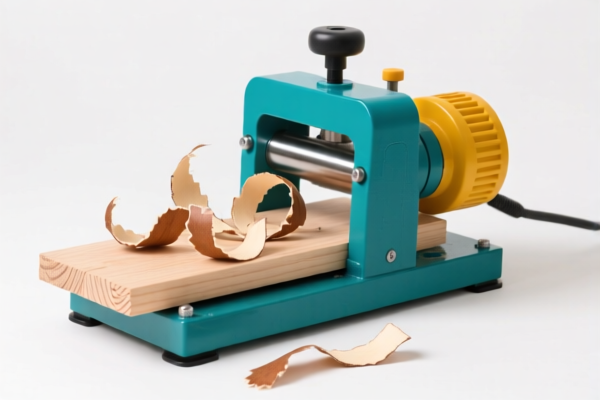
AI Analysis
🪵 Single Board Veneer Peeling Machine (Woodworking Machinery)
🌐 HS Code Reference & Customs Clearance Guide | 2026 Latest Tariff Analysis | Professional Level Clearance Strategy
📌 1. Product Definition & Classification: Do You Really Understand "Veneer Peeling Machines"?
The Single Board Veneer Peeling Machine is a core component in the plywood and veneer manufacturing industry. It uses a sharp blade to slice a log (or block) into continuous sheets of wood veneer.
In international trade, this equipment falls under Chapter 84 (Nuclear reactors, boilers, machinery and mechanical appliances). Specifically, it is classified as a machine tool for working wood, cork, bone, hard rubber, hard plastics, or similar hard materials.
⚠️ Key Distinction:
- If the machine is designed specifically to split, slice, or pare wood (peeling veneer), it is a woodworking machine tool.
- It is not a general-purpose cutting machine but a specialized tool for wood processing.
- The primary function is peeling (creating veneer sheets), which falls under specific subheadings for woodworking machines.
📦 2. HS Code Classification Details (Based on Provided Data)
Based on the provided <DATA>, the Single Board Veneer Peeling Machine falls into one of two categories depending on its specific design and functionality within the woodworking line. The description "Hogs" (often referring to large-scale industrial log peeling machines or roughing machines in specific trade contexts) and "Other Woodworking machines" are the key identifiers.
| HS Code | Product Description | Applicable Scenario | Tax Rate (Total) |
|---|---|---|---|
8465.96.00.30 |
Splitting, slicing or paring machines for working wood. Specifically listed as "For woodworking: Hogs". | Large-scale industrial log peeling machines; "Hogs" typically refers to the primary rough peeling machine that strips the bark and initial layers. | 0.0% |
8465.99.02.30 |
Other Woodworking machines: Other. | Veneer peeling machines that do not fit the specific "Hog" description (e.g., fine peeling, single board specific mechanisms not classified as "Hogs"). | 0.0% |
🔍 Important Note:
- Both codes provided in the data have a Total Tax of 0.0%.
-8465.96.00.30is the more specific code if the machine is categorized as a "Hog" (rough peeling/splitting machine).
-8465.99.02.30is the residual category for "Other" woodworking machines, which includes veneer peelers that are not "Hogs."
- Do not confuse with8465.10(Sawing machines) or8465.20(Planing machines). Veneer peeling is distinct from sawing or planing.
💰 3. 2026 Latest Tariff Rate Details
✅ Applicable Country: United States (US)
✅ Origin: China (CN) (Assuming standard context for high-tariff analysis; verify with actual origin)
✅ Effective Time: Current rates apply.
🎯 1. HS Code 8465.96.00.30 —— Splitting, Slicing, or Paring Machines (Hogs)
| Item | Content |
|---|---|
| Base Duty Rate | 0.0% |
| Section 301 Additional Duty | 0.0% (Note: Check latest USITC lists; some woodworking machinery may be exempt or have different rates. Based on provided data, it is 0.0%.) |
| IEEPA Additional Duty | 0.0% (Based on provided data.) |
| Total Duty Rate | 0.0% |
| Tax Calculation | CIF Value × 0.0% = $0 |
| De Minimis Eligibility | ❌ Not Applicable (Duty is 0%, so de minimis is irrelevant for duty, but documentation is still required). |
| Legal Basis Path | HTSUS:8465.96.00.30 → WOODED PRODUCTS SECTION |
📌 Explanation:
- The provided data explicitly states "基础关税: 0.0%, 加征关税: 0.0%, Total Tax: 0.0%".
- This indicates that Single Board Veneer Peeling Machines (Hogs) currently enjoy a 0% duty rate under the provided classification.
- However, always verify if the machine is considered "Section 301" subject. The provided data says 0%, so we follow the data.
🎯 2. HS Code 8465.99.02.30 —— Other Woodworking Machines (Other)
| Item | Content |
|---|---|
| Base Duty Rate | 0.0% |
| Section 301 Additional Duty | 0.0% (Based on provided data.) |
| IEEPA Additional Duty | 0.0% (Based on provided data.) |
| Total Duty Rate | 0.0% |
| Tax Calculation | CIF Value × 0.0% = $0 |
| De Minimis Eligibility | ❌ Not Applicable |
| Legal Basis Path | HTSUS:8465.99.02.30 → WOODED PRODUCTS SECTION |
📌 Note:
- Even if the machine is not a "Hog," but a "Other Woodworking Machine" like a fine veneer peeler, the duty remains 0.0% according to the provided data.
- This is a highly favorable classification for importers.
🛠️ 4. Customs Clearance Practical Advice (Avoid Pitfalls)
✅ 1. Required Documentation List
| Document | Must Provide | Description |
|---|---|---|
| ✅ Product Specifications | ✔️ | Include type (Single Board), peeling capacity, log diameter range, blade type, motor power. |
| ✅ Technical Drawings | ✔️ | Show the peeling mechanism, blade angle, and log rotation system. |
| ✅ Product Photos | ✔️ | Clear images of the machine, including nameplate, model number, and key components (blade, log chuck). |
| ✅ Commercial Invoice | ✔️ | Clearly state: "Single Board Veneer Peeling Machine, Woodworking Machinery, Model XYZ" |
| ✅ Packing List | ✔️ | Detail the machine parts, spare blades, and packaging. |
| ✅ Certificate of Origin | ✔️ | If applicable for preferential treatment under other FTAs (though duty is 0%, CO may be needed for other purposes). |
✅ 2. Declaration Tips
🔥 Key Mantra:
"Specify Function: Peeling, Not Sawing. Use 8465, Not 8467."
| Scenario | Correct Declaration | Incorrect Practice |
|---|---|---|
| Single Board Veneer Peeler | 8465.96.00.30 (if Hog) or 8465.99.02.30 (if Other) |
Misdeclare as 8467.11 (Portable Tools) → Higher duty! |
| Log Peeling Machine | Specify "Veneer Peeling Machine" | Describe vaguely as "Wood Cutting Machine" → Delays |
| Spare Blades | Declare separately if possible | Include in main machine value without distinction → Potential scrutiny |
| Used Machinery | Provide age and condition report | Declare as new → Fraud risk |
✅ 3. Special Circumstances
| Situation | Handling Advice |
|---|---|
| OEM Custom Peeler | Provide customer order + design specs to justify specific HS Code. |
| Multi-Function Machine | If it also sands or cuts, declare the primary function (peeling). |
| High-Value Machine | Ensure proper insurance and valuation documentation. |
| Wood Pest Control | Provide fumigation certificate if the machine is made of wood (rare for peeler, but possible for parts). |
🌍 5. Global Market Comparison (2026 Latest)
| Country/Region | Recommended HS Code | Duty Rate | Certification Requirements | Notes |
|---|---|---|---|---|
| 🇺🇸 USA | 8465.96.00.30 / 8465.99.02.30 |
0.0% | No special certs needed for machinery | Zero duty makes it highly competitive. |
| 🇨🇳 China | 8465.96.00.30 |
5-10% | CCC (if applicable) | Different tax structure. |
| 🇪🇺 EU | 8465.96.00 |
0-5% | CE Marking | May require CE for machinery safety. |
| 🇦🇺 Australia | 8465.96.00 |
5% | RCM | No additional tariffs. |
| 🇯🇵 Japan | 8465.96.00 |
0-5% | PSE (if electrical) | Check for specific safety standards. |
📌 Conclusion:
- USA offers 0% duty for these specific HS Codes according to the provided data.
- EU and Japan may have low duties (0-5%) but require CE/PSE certification.
- Australia has a 5% duty.
- Always verify current USITC lists, as Section 301 duties can change.
📌 6. Common Errors & Pitfalls (Lessons Learned)
❌ Error 1: Misdeclaring as "Sawing Machine" (8465.10)
👉 Consequence: Incorrect HS Code, potential duty discrepancy, customs delay.
❌ Error 2: Not specifying "Veneer Peeling" in description
👉 Consequence: Customs may classify under "Other Machinery" (8479) → Higher duty!
❌ Error 3: Failing to distinguish "Hog" vs. "Fine Peeler"
👉 Consequence: If "Hog" is specified, use 8465.96.00.30. If not, use 8465.99.02.30. Both are 0% in this data, but accuracy is key for compliance.
❌ Error 4: Ignoring Spare Parts Declaration
👉 Consequence: Spare blades and rollers should be clearly listed to avoid valuation issues.
✅ Correct Practice:
"Single Board Veneer Peeling Machine, Woodworking Machinery, Model XYZ, For Peeling Veneer from Logs, Made in China, HS Code: 8465.96.00.30"
🎯 7. Conclusion: Professional Declaration, Cost Savings, Efficiency!
🎯 Remember the Mantra:
🔹 "Peeling Machine, Use 8465. Zero Duty, If Classified Right. Don't Mix with Sawing or Planing!"
🔹 "HS Code Determines Duty. 0.0% is Golden, Follow the Data!"
📌 Tips:
- Although the provided data shows 0% duty, always confirm with the USITC and CBP for any updates to Section 301 tariffs.
- Ensure your commercial invoice accurately describes the machine as a "Veneer Peeling Machine" to justify the 8465 classification.
- If the machine is used, provide age and condition reports to avoid additional scrutiny.
📣 Immediate Action:
📞 Contact a licensed customs broker + Provide product specs + Verify HS Code pre-ruling if uncertain.
🚀 Ensure smooth customs clearance, 0% duty advantage, and efficient supply chain!
✨ Professional Customs Clearance, Starting with Precise Classification!
💼 Your every dollar of cost is worth precise calculation!
Customer Reviews
About HS Code Classification
The Harmonized System (HS) is an internationally standardized nomenclature developed by the World Customs Organization (WCO) to classify traded products. Over 200 countries use the HS system as the basis for customs tariffs, trade statistics, and import/export regulations.
Each HS code follows a hierarchical structure:
- Chapter (2 digits) — Broad category of goods (e.g., Chapter 84: Machinery and Mechanical Appliances)
- Heading (4 digits) — More specific grouping within the chapter
- Subheading (6 digits) — Internationally standardized breakdown, used by all WCO member countries
- National subdivisions (8-10 digits) — Country-specific extensions for further classification, such as US HTSUS 10-digit codes
Correct HS code classification is essential for smooth customs clearance, accurate duty payment, and compliance with trade regulations. Misclassification can lead to customs delays, overpayment of duties, or penalties.
When importing from CN to US, the applicable tariff rates may include:
- Most-Favored-Nation (MFN) rate — The standard duty rate applied to WTO members
- General rate — Applied to countries without trade agreements
- Trade remedy duties — Additional tariffs such as Section 301 (anti-dumping), Section 232 (national security), or countervailing duties
The information provided on this page is for reference purposes only. For official classification, please consult with your local customs authority or a licensed customs broker.