Single strand wire
CN → US| HS Code | Tariff Rate | Origin | Destination | Doc |
|---|---|---|---|---|
| 7408116000 | 88.0% | CN | US | Official Doc |
| 7408113000 | 86.0% | CN | US | Official Doc |
| 8544110020 | 38.5% | CN | US | Official Doc |
| 8544110030 | 38.5% | CN | US | Official Doc |
Product Images
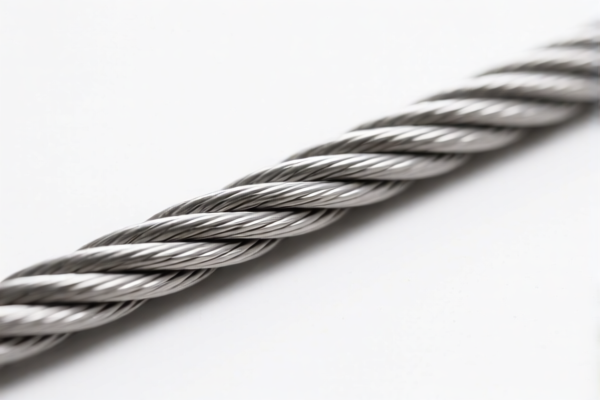
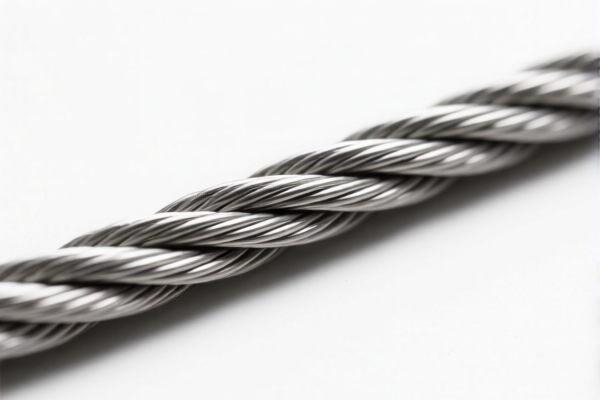
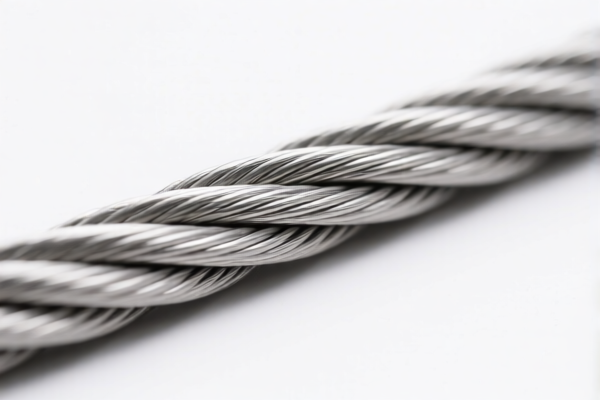
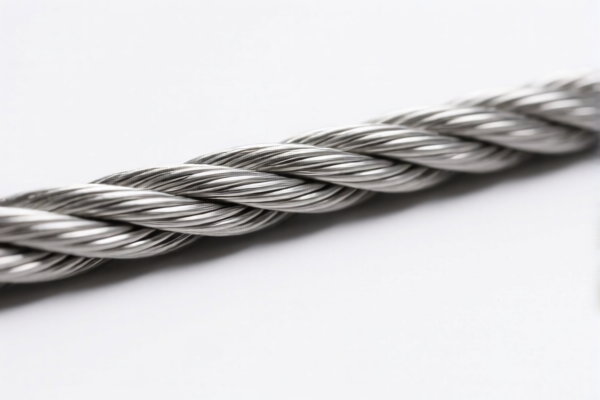
AI Analysis
🧵 Single Strand Wire (Refined Copper)
🌐 HS Code Reference & Customs Clearance Guide | 2026 Latest Tariff Analysis | Professional Clearance Strategy
📌 I. Product Definition & Classification: What Exactly is "Single Strand Wire" in Trade?
"Single strand wire" typically refers to solid conductors made from refined copper, categorized primarily by their physical dimensions (cross-sectional diameter). In international trade, the distinction is critical because tariffs vary drastically based on whether the wire is insulated (winding wire) or bare/uninsulated (solid wire) and by its thickness.
Based on the provided dataset, we distinguish between two main categories: 1. Bare Refined Copper Wire: Used for structural, grounding, or specific industrial applications where no insulation is present. Classification depends heavily on the maximum cross-sectional dimension. 2. Insulated Electric Conductors (Winding Wire): Specifically enameled or anodized copper wire used in transformers, motors, and electromagnets. Classification depends on the AWG (American Wire Gauge) diameter.
⚠️ Key Distinction Point:
- If the wire is bare/uninsulated and >6mm thick → Look at HS 7408.
- If the wire is insulated/enameled (winding wire) → Look at HS 8544.
- Do not mix bare wire with insulated wire classifications; they fall under completely different tariff chapters (Chapter 74 vs. Chapter 85).
📦 II. HS Code Classification Details (2026 Latest Tariff Authority Comparison)
| HS Code | Product Description | Application Scenario | Tax Status (Total) |
|---|---|---|---|
7408.11.60.00 |
Copper Wire (Bare/Refined): Max cross-section >6mm but ≤9.5 mm | Heavy-duty grounding, busbars, specific industrial cables | 78.0% 🔴 High |
7408.11.30.00 |
Copper Wire (Bare/Refined): Max cross-section >9.5 mm | Structural cabling, large-scale power transmission components | 50.0% 🟠 Medium-High |
8544.11.00.20 |
Insulated Wire (Winding): Copper, 33 AWG (0.18mm) and finer | Precision motors, micro-transformers, sensitive electronics | 0.0% 🟢 Low |
8544.11.00.30 |
Insulated Wire (Winding): Copper, 22 AWG (0.643mm) and finer but larger than 33 AWG | Standard motors, transformers, electrical appliances | 0.0% 🟢 Low |
🔍 Important Reminder:
- Bare wires (7408) are subject to significant "Section 301" style additional tariffs ("Steel, Aluminum, Copper Products Surcharge: 50%").
- Insulated winding wires (8544) currently show 0% base tax and 0% additional tax in this specific dataset, likely due to trade agreements or specific exclusions for electronic components.
- Measurement Precision: For HS 7408, the boundary between 9.5mm and 6mm is critical. For HS 8544, the AWG size (and thus mm diameter) determines the sub-heading.
💰 III. 2026 Latest Tariff Rate Detail (Including Additional Taxes & Policy Surcharges)
✅ Applicable Country: USA (US)
✅ Origin: China (CN)
✅ Effective Time: Current Regulations (Subject to ongoing trade policy)
🎯 1. 7408.11.60.00 —— Bare Copper Wire (6mm < Dim ≤ 9.5mm)
| Item | Content |
|---|---|
| Base Tariff | 3.0% (Ad Valorem) |
| Section 301 Surcharge | +50.0% ("Steel, Aluminum, Copper Products Surcharge") |
| Total Effective Rate | 78.0% |
| Tax Calculation | CIF Value × 78.0% |
| De Minimis Exemption | ❌ Not Eligible (High-value industrial goods) |
| Legal Basis Path | HTSUS:7408.11.60 → Trade Act 301 → Copper Product Surcharge |
📌 Explanation:
- This is a high-risk classification due to the 50% surcharge on copper products.
- The base rate is low (3%), but the punitive surcharge dominates the cost.
- Cost Impact: For every $10,000 of goods, you pay $7,800 in duties alone.
🎯 2. 7408.11.30.00 —— Bare Copper Wire (Dim > 9.5mm)
| Item | Content |
|---|---|
| Base Tariff | 0.0% (Ad Valorem) |
| Section 301 Surcharge | +50.0% ("Steel, Aluminum, Copper Products Surcharge") |
| Total Effective Rate | 50.0% |
| Tax Calculation | CIF Value × 50.0% |
| De Minimis Exemption | ❌ Not Eligible |
| Legal Basis Path | HTSUS:7408.11.30 → Trade Act 301 → Copper Product Surcharge |
📌 Note:
- While the base tariff is 0%, the 50% surcharge still applies.
- This classification is for larger diameter wires.
- Savings vs. Above: Saves 28% compared to the 6-9.5mm range, but still very expensive.
🎯 3. 8544.11.00.20 & 8544.11.00.30 —— Insulated Winding Wire (Copper)
| Item | Content |
|---|---|
| Base Tariff | 0.0% |
| Additional Surcharge | 0.0% (No specific copper surcharge for insulated winding wire in this dataset) |
| Total Effective Rate | 0.0% |
| Tax Calculation | $0 (Based on provided data) |
| De Minimis Exemption | N/A (Tax is already 0) |
📌 Explanation:
- Critical Advantage: Insulated winding wires (used in electronics) are exempt from the heavy copper surcharges that apply to bare wire.
- Classification Tip: Ensure the product is explicitly "insulated," "enameled," or "anodized." If it is bare, it must go to HS 7408, triggering the 50-78% tax.
- AWG Check:
- ≤ 33 AWG (0.18mm) →8544.11.00.20
- > 33 AWG but ≤ 22 AWG (0.643mm) →8544.11.00.30
🛠️ IV. Customs Clearance Practical Advice (Real-World Pitfall Avoidance Guide)
✅ 1. Preparation Checklist (All Required)
| Material | Must Provide | Description |
|---|---|---|
| ✅ Product Specifications | ✔️ | CRITICAL: Must state Bare vs. Insulated, AWG Size, and Max Cross-Section (mm) |
| ✅ Material Certificate | ✔️ | Proof of "Refined Copper" to verify Chapter 74 vs. 85 |
| ✅ Product Photos | ✔️ | Clear shots showing insulation (varnish/enameled coating) or lack thereof |
| ✅ Bill of Lading | ✔️ | Accurate weight and value |
| ✅ Commercial Invoice | ✔️ | Describe precisely: "Enameled Copper Winding Wire" or "Solid Refined Copper Wire" |
✅ 2. Declaration Tips (Key Mnemonics)
🔥 "Insulated = 0% Tax; Bare = High Tax. AWG & Diameter Matter!"
| Scenario | Correct HS Code | Wrong Approach | Consequence |
|---|---|---|---|
| Enameled Motor Wire (0.2mm) | 8544.11.00.20 |
Declare as "Copper Wire" (bare) | 78% Tax instead of 0% |
| Solid Grounding Wire (8mm) | 7408.11.60.00 |
Declare as "Insulated Wire" | Customs rejection/Fine for misdeclaration |
| Solid Grounding Wire (10mm) | 7408.11.30.00 |
Misdeclare dimensions | Overpaying taxes or underpaying fines |
| Coaxial Cable | Not in Dataset | Try to fit into Winding Wire | Incorrect classification |
✅ 3. Special Situation Handling
| Situation | Handling Advice |
|---|---|
| Is it Bare or Insulated? | If in doubt, measure the insulation thickness. If any insulating layer (enamel, plastic, varnish) exists, it is likely 8544. If it is pure metal, it is 7408. |
| Wire Diameter Boundary | For 7408, if the diameter is exactly 9.5mm, it falls into the >9.5mm bucket (HS 7408.11.30.00), saving 28% tax. Optimize manufacturing dimensions slightly if possible. |
| AWG Confusion | AWG 22 is ~0.64mm. AWG 33 is ~0.18mm. Ensure your supplier provides the mm diameter or correct AWG to map to .20 or .30. |
| Mixed Containers | If shipping both bare and insulated wires, separate them in the declaration. Mixing can lead to scrutiny and potential penalty for incorrect classification of the entire batch. |
🌍 V. Global Market Comparison (2026 Latest)
| Country/Region | Recommended HS Code | Tariff (China Origin) | Notes |
|---|---|---|---|
| 🇺🇸 USA | 8544.11.00 (Insulated) |
0% | Best for winding wire |
| 🇺🇸 USA | 7408.11.60 (Bare, <9.5mm) |
78% | Very High Cost |
| 🇺🇸 USA | 7408.11.30 (Bare, >9.5mm) |
50% | High Cost |
| 🇨🇳 China | 8544.11 |
Varies (Import Duty) | Check local CCES |
| 🇪🇺 EU | 8544.42 / 7413.00 |
Varies (Import Duty) | VAT + Duty |
📌 Conclusion:
- Insulated Winding Wire (8544) is the most tariff-efficient entry point for copper wire into the US under these rules.
- Bare Wire (7408) is heavily penalized. Consider if the product can be pre-insulated or processed further to change its classification before export, if feasible.
📌 VI. Common Errors & Pitfall Guide (Lessons Learned)
❌ Error 1: Declaring "Enamelled Wire" as "Solid Copper Wire"
👉 Consequence: 78% Tax instead of 0%. Huge cost increase.
✅ Fix: Emphasize "Enameled" or "Insulated" in the commercial invoice.
❌ Error 2: Not specifying diameter for Bare Wire
👉 Consequence: Customs may choose the higher tax bracket (78%) if they suspect it is ≤9.5mm.
✅ Fix: Provide precise millimeter measurements on all packing lists.
❌ Error 3: Confusing AWG with mm for 8544
👉 Consequence: Misclassification into the wrong subheading.
✅ Fix: Convert AWG to mm accurately. 33 AWG = 0.18mm boundary.
✅ Correct Declaration Example:
"Enameled Copper Winding Wire, Insulated, 30 AWG (0.25mm), for Transformer Coils, Model XYZ, HS 8544.11.00.20"
🎯 VII. Conclusion: Precise Classification Saves Money!
🎯 Remember the Mantra:
🔹 "Insulated = 0% (Wiring); Bare = 50-78% (Solid Wire)."
🔹 "Check the Diameter: >9.5mm saves 28% on Bare Wire."
🔹 "AWG 33 is the Cutoff for Fine Winding Wire."
📌 Pro Tip:
If you are exporting Bare Copper Wire, consider if the end-use allows for pre-insulation or if it can be classified under a different duty-free category for specific industrial uses. Always seek an Advance Ruling from CBP if the product's insulation status is borderline.
📣 Immediate Action:
📞 Consult with a licensed customs broker.
📝 Provide exact mm dimensions and insulation type.
🚀 Classify Correctly to Avoid 78% Tariffs!
✨ Professional Customs Clearance Starts with Accurate Classification!
💼 Every percentage point of duty is pure profit lost!
Customer Reviews
About HS Code Classification
The Harmonized System (HS) is an internationally standardized nomenclature developed by the World Customs Organization (WCO) to classify traded products. Over 200 countries use the HS system as the basis for customs tariffs, trade statistics, and import/export regulations.
Each HS code follows a hierarchical structure:
- Chapter (2 digits) — Broad category of goods (e.g., Chapter 84: Machinery and Mechanical Appliances)
- Heading (4 digits) — More specific grouping within the chapter
- Subheading (6 digits) — Internationally standardized breakdown, used by all WCO member countries
- National subdivisions (8-10 digits) — Country-specific extensions for further classification, such as US HTSUS 10-digit codes
Correct HS code classification is essential for smooth customs clearance, accurate duty payment, and compliance with trade regulations. Misclassification can lead to customs delays, overpayment of duties, or penalties.
When importing from CN to US, the applicable tariff rates may include:
- Most-Favored-Nation (MFN) rate — The standard duty rate applied to WTO members
- General rate — Applied to countries without trade agreements
- Trade remedy duties — Additional tariffs such as Section 301 (anti-dumping), Section 232 (national security), or countervailing duties
The information provided on this page is for reference purposes only. For official classification, please consult with your local customs authority or a licensed customs broker.