Sink Storage
CN → US| HS Code | Tariff Rate | Origin | Destination | Doc |
|---|---|---|---|---|
| 3924905650 | 20.9% | CN | US | Official Doc |
| 7323930080 | 62.0% | CN | US | Official Doc |
| 7323999080 | 88.4% | CN | US | Official Doc |
| 3924104000 | 13.4% | CN | US | Official Doc |
| 7326908688 | 87.9% | CN | US | Official Doc |
Product Images
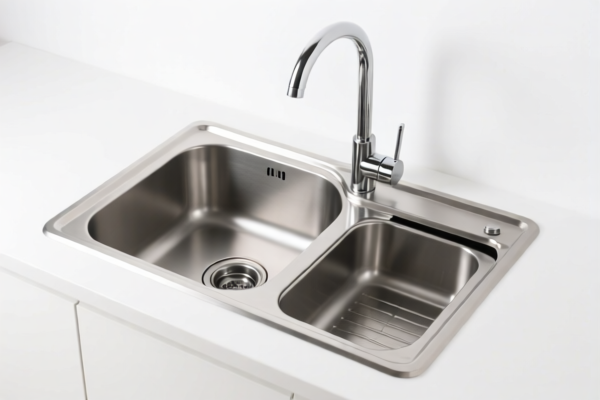
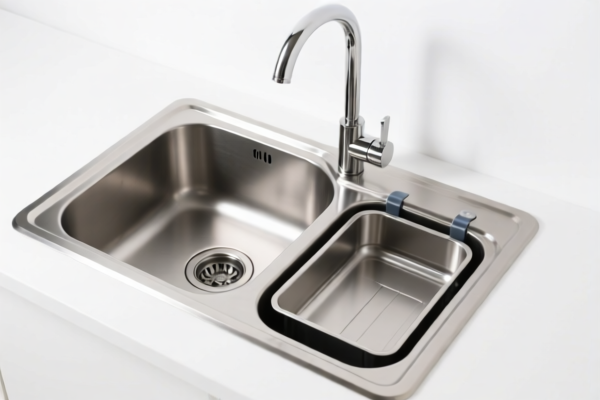


AI Analysis
🛁 Sink Storage: HS Code Classification & U.S. Customs Clearance Guide (2026)
🌐 HS Code Reference & Clearance Strategy | 2026 Latest Tariff Analysis | Professional Import Compliance
📌 I. Product Definition & Classification: What Exactly is "Sink Storage"?
"Sink Storage" (commonly known as under-sink organizers, rack, or caddy) is a household accessory used to organize cleaning supplies, bottles, and kitchenware under or around kitchen/bathroom sinks. In international trade, the classification depends strictly on the material and the specific structure of the product.
Two Main Categories: 1. Plastic Sink Organizers: Made primarily of polypropylene (PP), ABS, or other plastics. 2. Metal Sink Racks: Made primarily of Stainless Steel, Iron, or Steel.
⚠️ Key Distinction Point:
- If the product is Plastic → It falls under Chapter 39 (Plastics).
- If the product is Metal (Stainless/Iron/Steel) → It falls under Chapter 73 (Articles of Iron or Steel).
- Misclassification Risk: Declaring a stainless steel rack as "Plastic" will lead to severe penalties due to the massive difference in tariffs (13.4% vs. 88.4%).
📦 II. HS Code Classification Details (2026 Latest Tariff Authority)
Based on the provided data, here are the five valid HS Codes for "Sink Storage" products, categorized by material and tax liability.
| HS Code | Product Description | Material | Use Case | Estimated Total Tax Rate (US/China Origin) |
|---|---|---|---|---|
3924.90.56.50 |
Plastic Sink Storage Organizer | Plastic (Inferred) | Household Storage | 20.9% |
3924.10.40.00 |
Plastic Sink Basket/Rack | Plastic | Kitchen/Home Utensils | 13.4% |
7323.93.00.80 |
Stainless Steel Sink Rack | Stainless Steel | Kitchen/Household | 62.0% |
7323.99.90.80 |
Iron/Steel Sink Storage | Iron or Steel | Other Household Items | 88.4% |
7326.90.86.88 |
Stainless Steel Sink Shelf | Steel (Other Articles) | General Metal Articles | 87.9% |
🔍 Critical Insight:
- Plastic options are significantly cheaper in terms of tariffs (13.4% - 20.9%).
- Steel/Iron options are subject to punitive "Section 301" and "Section 232" tariffs, pushing rates to 62%-88%.
- Stainless Steel (7323.93) is slightly better than general Iron/Steel (7323.99 or 7326.90), but still very high.
💰 III. 2026 Latest Tariff Rate Breakdown (Detailed Policy Analysis)
✅ Applicable Country: United States (US)
✅ Origin: China (CN)
✅ Effective Date: 2025/2026 Current Regulations
🎯 1. 3924.90.56.50 —— Plastic Sink Storage (Inferred Plastic)
| Item | Detail |
|---|---|
| Base Tariff | 3.4% |
| Section 301 Tariff | +7.5% |
| Section 122 Tariff | +10.0% |
| Total Tax Rate | 20.9% |
| Tax Calculation | CIF Value × 20.9% |
| De Minimis Eligibility | ❌ No (Section 301/122 usually excluded from de minimis) |
| Legal Basis | USITC:3924.90.56.50 → Section 301 + Section 122 |
📌 Explanation:
This is the standard classification for generic plastic organizers where the specific plastic type isn't the primary focus. The Section 122 tariff applies to certain consumer goods, adding an extra 10% on top of the standard 301 and base duties.
🎯 2. 3924.10.40.00 —— Plastic Sink Basket (Kitchen/Household)
| Item | Detail |
|---|---|
| Base Tariff | 3.4% |
| Section 301 Tariff | 0.0% (Note: Specific subheading exemption or lower tier) |
| Section 122 Tariff | +10.0% |
| Total Tax Rate | 13.4% |
| Tax Calculation | CIF Value × 13.4% |
| De Minimis Eligibility | ❌ No |
| Legal Basis | USITC:3924.10.40.00 → Section 122 |
📌 Explanation:
This is the most cost-effective option for plastic products. It benefits from a 0% Section 301 surcharge, resulting in only the Base (3.4%) + Section 122 (10%) = 13.4%. Ideal for plastic baskets or racks.
🎯 3. 7323.93.00.80 —— Stainless Steel Sink Rack
| Item | Detail |
|---|---|
| Base Tariff | 2.0% |
| Section 301 Tariff | 0.0% |
| Section 122 Tariff | +10.0% |
| Steel/Aluminum/Copper Surcharge | +50.0% |
| Total Tax Rate | 62.0% |
| Tax Calculation | CIF Value × 62.0% |
| De Minimis Eligibility | ❌ No |
| Legal Basis | USITC:7323.93.00.80 → Section 232 (Steel) |
📌 Explanation:
Even though Section 301 is 0%, this item is hit hard by the 50% Section 232 tariff on Steel/Aluminum/Copper products. This is the lowest rate among metal options but still high compared to plastic.
🎯 4. 7323.99.90.80 —— Iron/Steel Sink Storage (Other)
| Item | Detail |
|---|---|
| Base Tariff | 3.4% |
| Section 301 Tariff | +25.0% |
| Section 122 Tariff | +10.0% |
| Steel/Aluminum/Copper Surcharge | +50.0% |
| Total Tax Rate | 88.4% |
| Tax Calculation | CIF Value × 88.4% |
| De Minimis Eligibility | ❌ No |
| Legal Basis | USITC:7323.99.90.80 → Section 301 + Section 232 |
📌 Explanation:
This is the worst-case scenario. It attracts the full 25% Section 301 tariff PLUS the 50% Section 232 steel tariff. Almost doubles the cost of the product.
🎯 5. 7326.90.86.88 —— Stainless Steel Sink Shelf (Other Articles)
| Item | Detail |
|---|---|
| Base Tariff | 2.9% |
| Section 301 Tariff | +25.0% |
| Section 122 Tariff | +10.0% |
| Steel/Aluminum/Copper Surcharge | +50.0% |
| Total Tax Rate | 87.9% |
| Tax Calculation | CIF Value × 87.9% |
| De Minimis Eligibility | ❌ No |
| Legal Basis | USITC:7326.90.86.88 → Section 301 + Section 232 |
📌 Explanation:
Similar to7323.99, this "Other Articles" classification also triggers the full punitive tariffs. It is marginally cheaper than7323.99due to a slightly lower base rate (2.9% vs 3.4%), but the outcome is effectively the same.
🛠️ IV. Customs Clearance Practical Advice (Avoid Pitfalls)
✅ 1. Material Declaration is Critical
| Material | Recommended HS Code | Why? |
|---|---|---|
| Plastic | 3924.10.40.00 or 3924.90.56.50 |
Avoids the 50% Steel Tariff entirely. |
| Stainless Steel | 7323.93.00.80 |
Best among metals, but still 62%. |
| Iron/Coated Steel | 7323.99.90.80 |
Avoid if possible due to 88.4% tax. |
⚠️ Warning:
If a product claims to be "Stainless Steel" but is actually coated iron, customs may reclassify it as7323.99(88.4%) instead of7323.93(62%). Be honest in material composition.
✅ 2. Documentation Requirements
| Document | Requirement |
|---|---|
| Commercial Invoice | Must clearly state: "Sink Organizer," "Material: Plastic/Stainless Steel," "Country of Origin: China" |
| Product Photos | High-res images showing the entire product, labels, and material texture (to prove it's not wood or ceramic) |
| Material Certificate | For metal products, a mill certificate proving it is Stainless Steel (304/316) vs. Carbon Steel/Iron is crucial for 7323.93 vs 7323.99. |
✅ 3. Classification Strategy
| Scenario | Strategy |
|---|---|
| Product has Mixed Materials (e.g., Plastic Basket + Metal Hooks) | Declare based on the principal material. If metal hooks are minor, it might still qualify as Plastic (3924). However, if the structure is metal-based, it may be classified as Metal. Consult a broker. |
| Plastic Product | Aim for 3924.10.40.00 (13.4%) over 3924.90.56.50 (20.9%) if it fits the definition of "Kitchen/Household Utensils." |
| Metal Product | If you must import steel, ensure it is explicitly Stainless Steel to qualify for 7323.93.00.80 (62%) instead of the 88% rate. |
🌍 V. Global Market Comparison (2026)
| Market | Recommended HS Code | Tax Rate (China Origin) | Notes |
|---|---|---|---|
| 🇺🇸 USA | 3924.10.40.00 (Plastic) |
13.4% | Lowest duty. Best for plastic. |
| 🇺🇸 USA | 7323.93.00.80 (Stainless) |
62.0% | High duty due to Steel Surcharge. |
| 🇪🇺 EU | Varies (Chapter 39/73) | Varies (0-6.5%) | No Section 301/232 equivalent. Lower taxes. |
| 🇨🇳 China | N/A (Import) | Low (3-10%) | China imports finished goods. |
📌 Conclusion:
- The US market is extremely expensive for Metal Sink Storage.
- Plastic Sink Storage is the most viable option for US imports due to lower and more stable tariffs.
- If sourcing Stainless Steel, calculate if the 62% tariff erodes your profit margin significantly.
📌 VI. Common Errors & Pitfalls (Lessons Learned)
❌ Mistake 1: Declaring a Stainless Steel rack as "Plastic"
👉 Consequence: Customs audit, penalty, and back-tariff of ~60% difference + fines.
❌ Mistake 2: Using "Household Items" as a generic description without material
👉 Consequence: Customs may assign a default "Other" code with high duties (e.g., 9403.90 or similar) or demand additional testing.
❌ Mistake 3: Ignoring the Section 232 Steel Tariff
👉 Consequence: Assuming a 3-5% duty for steel products. Reality: 50-88%.
✅ Correct Approach:
"Under Sink Organizer, Plastic, White, 2-Tier, for Kitchen Use, Origin: China" → HS 3924.10.40.00
🎯 VII. Conclusion: Smart Sourcing for Sink Storage
🎯 Key Takeaway:
For US Imports: Choose Plastic.
The tax difference between Plastic (13.4%-20.9%) and Metal (62%-88.4%) is massive.
Unless you have a high-end brand willing to absorb the 60%+ tax, plastic sink storage is the only competitive option for the US market.
📌 Tip:
If you are selling in the EU or Asia, metal sink storage is highly competitive due to lower tariffs. Consider regional distribution centers to mitigate US tariffs.
📣 Immediate Action:
- Verify Material: Is it Plastic, Stainless Steel, or Iron?
- Calculate Landed Cost: Include the specific tariff from the table above.
- Consult a Customs Broker: For mixed-material products, get a binding ruling.
✨ Professional Clearance Starts with Accurate Classification!
💼 Don't let a 70% tariff surprise destroy your margins!
Customer Reviews
About HS Code Classification
The Harmonized System (HS) is an internationally standardized nomenclature developed by the World Customs Organization (WCO) to classify traded products. Over 200 countries use the HS system as the basis for customs tariffs, trade statistics, and import/export regulations.
Each HS code follows a hierarchical structure:
- Chapter (2 digits) — Broad category of goods (e.g., Chapter 84: Machinery and Mechanical Appliances)
- Heading (4 digits) — More specific grouping within the chapter
- Subheading (6 digits) — Internationally standardized breakdown, used by all WCO member countries
- National subdivisions (8-10 digits) — Country-specific extensions for further classification, such as US HTSUS 10-digit codes
Correct HS code classification is essential for smooth customs clearance, accurate duty payment, and compliance with trade regulations. Misclassification can lead to customs delays, overpayment of duties, or penalties.
When importing from CN to US, the applicable tariff rates may include:
- Most-Favored-Nation (MFN) rate — The standard duty rate applied to WTO members
- General rate — Applied to countries without trade agreements
- Trade remedy duties — Additional tariffs such as Section 301 (anti-dumping), Section 232 (national security), or countervailing duties
The information provided on this page is for reference purposes only. For official classification, please consult with your local customs authority or a licensed customs broker.