Six petal Lace
CN → US| HS Code | Tariff Rate | Origin | Destination | Doc |
|---|---|---|---|---|
| 6217109550 | 32.1% | CN | US | Official Doc |
| 6217109510 | 32.1% | CN | US | Official Doc |
| 5806321095 | 41.0% | CN | US | Official Doc |
| 5806393080 | 35.0% | CN | US | Official Doc |
Product Images
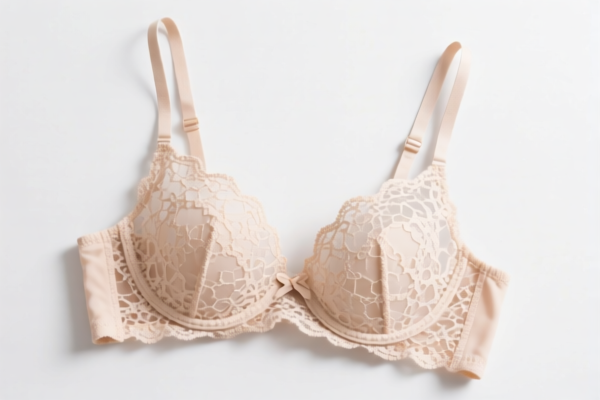
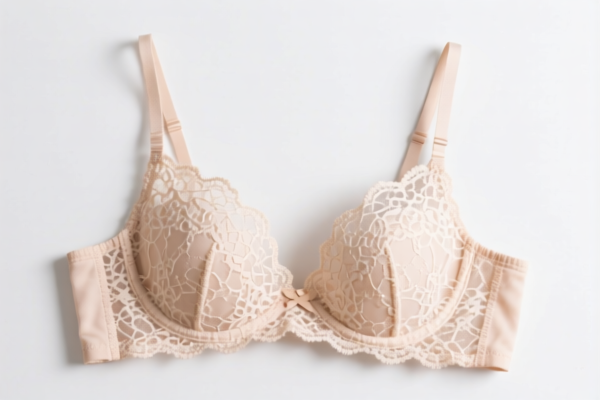
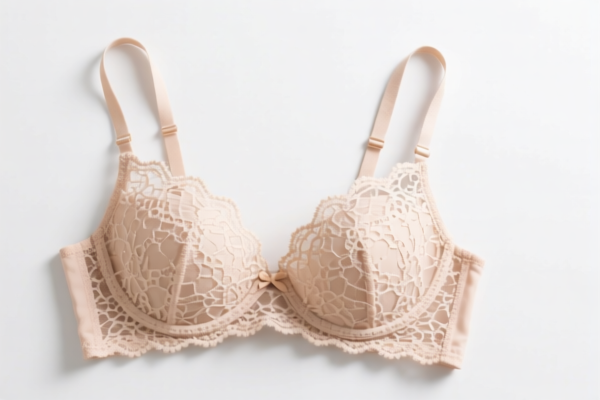
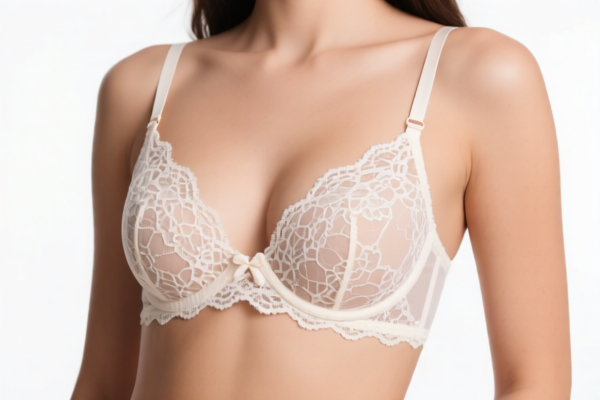
AI Analysis
🎀 Six-Petal Lace (Decorative Textile & Accessories)
🌐 HS Code Reference & Customs Clearance Guide | 2026 Latest Tariff Analysis | Professional Customs Strategy
📌 I. Product Definition & Classification: Do You Really Understand "Six-Petal Lace"?
Six-Petal Lace refers to a specific pattern or type of narrow woven fabric, often used in garments, lingerie, trim, or craft accessories. In international trade, its classification depends heavily on its material composition and final use.
The term "Six-Petal" typically describes the visual pattern or design of the lace. However, for HS Code classification, we must determine: 1. Is it a narrow woven fabric? (Yes, lace ribbons/trims are usually classified under Heading 5806). 2. What is the material? (Man-made fibers vs. Other textile materials like cotton/silk). 3. Is it an accessory or part of clothing? (If made up into accessories, it might fall under Heading 6217).
⚠️ Key Distinction Points:
- If it is a raw strip/ribbon used for trimming → Classify under 5806 (Narrow Woven Fabrics).
- If it is cut/sewn into finished accessories (e.g., hair clips, bow ties, decorative trims attached to garments) → Classify under 6217 (Other Made-Up Clothing Accessories).
📦 II. HS Code Classification Details (2026 Latest Tariff Authority Comparison)
Based on the provided data, here are the relevant HS Codes for "Six-Petal Lace" depending on its form and material:
| HS Code | Product Description | Applicable Scenario | Material | Tax Rate (Total) |
|---|---|---|---|---|
5806.32.10.95 |
Narrow woven fabrics: Of man-made fibers: Ribbons, Other: Other | Raw lace ribbon/trim made from synthetic fibers (e.g., polyester, nylon) | Man-Made Fibers | 0.0% |
5806.39.30.80 |
Narrow woven fabrics: Of other textile materials: Other: Other | Raw lace ribbon/trim made from natural or mixed fibers (e.g., cotton, silk, wool) | Other Textile Materials | 25.0% |
6217.10.95.50 |
Other made-up clothing accessories: Accessories: Other: Other | Finished lace accessories (e.g., pre-made bows, embroidered patches, trim attached to garments) | Mixed/Other | 0.0% |
6217.10.95.10 |
Other made-up clothing accessories: Accessories: Other: Other: Of cotton | Finished lace accessories specifically made of cotton | Cotton | 0.0% |
🔍 Key Reminder:
- If the "Six-Petal Lace" is sold as a roll of fabric/ribbon, it is a Narrow Woven Fabric (5806).
- If it is cut and sewn into a specific accessory (like a hair bow or garment trim), it becomes a Made-Up Accessory (6217).
- Do not mix these categories in one shipment without clear separation, as it can lead to customs scrutiny.
💰 III. 2026 Latest Tariff Rate Details (Including Surcharge & Policy Add-ons)
✅ Applicable Country: United States (US)
✅ Origin: China (CN)
✅ Effective Time: 2025–2026 (Current Trade Policies)
🎯 1. 5806.32.10.95 —— Narrow Woven Fabrics: Man-Made Fibers (Ribbons)
| Item | Content |
|---|---|
| Base Tariff | 0.0% |
| Additional Surcharge | 0.0% |
| Total Tariff | 0.0% |
| Calculation | CIF Value × 0% = $0 |
| De Minimis Eligibility | ✅ Yes (if value < $800 per shipment) |
| Legal Basis Path | HTSUS: 5806.32.10.95 |
📌 Explanation:
- 0% Total Rate: This is a highly favorable code. Most man-made fiber narrow fabrics enjoy low or zero base tariffs.
- No Surcharge: Unlike electronics or certain steel products, standard synthetic lace ribbons are not subject to Section 301 or IEEPA surcharges in this specific sub-category.
- Advice: Ensure the label clearly states "100% Polyester" or "Synthetic Fiber" to qualify for this code. Mislabeling as "Cotton" could trigger the 25% rate.
🎯 2. 5806.39.30.80 —— Narrow Woven Fabrics: Other Textile Materials
| Item | Content |
|---|---|
| Base Tariff | 0.0% |
| Additional Surcharge | 25.0% |
| Total Tariff | 25.0% |
| Calculation | CIF Value × 25% |
| De Minimis Eligibility | ❌ No (Subject to surcharge) |
| Legal Basis Path | HTSUS: 5806.39.30.80 → Surcharge Footnote |
📌 Explanation:
- 25% Total Rate: This code applies to lace made from non-synthetic fibers (e.g., cotton, silk, viscose).
- Why 25%? Many textile products of non-man-made origin from China are subject to the 25% Section 301 surcharge.
- Risk: If you declare "Lace Ribbon" without specifying material, customs may default to the higher rate or request proof.
- Advice: Clearly declare material composition (e.g., "100% Cotton Lace Ribbon") to avoid disputes. Consider switching to synthetic materials if feasible to save 25%.
🎯 3. 6217.10.95.50 & 6217.10.95.10 —— Made-Up Clothing Accessories
| Item | Content |
|---|---|
| Base Tariff | 0.0% |
| Additional Surcharge | 0.0% |
| Total Tariff | 0.0% |
| Calculation | CIF Value × 0% = $0 |
| De Minimis Eligibility | ✅ Yes (if value < $800) |
| Legal Basis Path | HTSUS: 6217.10.95.50 / .10 |
📌 Explanation:
- 0% Total Rate: Finished accessories (e.g., lace bows, pre-cut trim) generally attract lower or zero tariffs.
- Why 0%? Many made-up accessories of various materials benefit from free trade agreements or low base rates.
- Advantage: If you can pre-manufacture the lace into accessories (e.g., sewn bows, attached trims), you can eliminate the 25% surcharge entirely.
- Advice: If your product is already cut/sewn into accessories, always use 6217 codes. Do not ship finished accessories as raw fabric (5806).
🛠️ IV. Customs Clearance Practical Advice (Avoiding Pitfalls)
✅ 1. Documentation Checklist (Mandatory)
| Document | Required? | Description |
|---|---|---|
| ✅ Commercial Invoice | ✔️ | Must specify: "Six-Petal Lace Ribbon" OR "Lace Hair Bow Accessories" |
| ✅ Material Declaration | ✔️ | Clearly state: "100% Polyester" or "100% Cotton" to determine HS Code |
| ✅ Product Photos | ✔️ | Show the "six-petal" pattern to distinguish from other trims |
| ✅ HS Code Justification | ✔️ | Explain whether it is raw fabric (5806) or finished accessory (6217) |
| ✅ Origin Certificate | ✔️ | Required for surcharge verification (China origin = potential 25%) |
✅ 2. Declaration Strategy (Key Tips)
🔥 "Fabric vs. Accessory: Declare Right, Save 25%!"
| Scenario | Correct HS Code | Tax Rate | Common Mistake |
|---|---|---|---|
| Raw Lace Ribbon (Synthetic) | 5806.32.10.95 |
0% | Declaring as Cotton → 25% |
| Raw Lace Ribbon (Cotton/Silk) | 5806.39.30.80 |
25% | Claiming "Free Trade" → Denied |
| Finished Lace Bow/Accessory | 6217.10.95.50 |
0% | Declaring as Raw Fabric → Unnecessary scrutiny |
| Cotton Lace Accessory | 6217.10.95.10 |
0% | Mixing with synthetic → Confusion |
📌 Critical Rule:
- If the lace is cut, sewn, or attached to another item, it is no longer fabric but an accessory.
- Shipping finished accessories as "Fabric" can lead to misclassification penalties.
✅ 3. Special Cases
| Situation | Handling Suggestion |
|---|---|
| Mixed Material Lace | Declare the primary material. If >50% man-made, use 5806.32. |
| Lace with Adhesive | If it’s a "bolduc" (adhesive-backed), it still falls under 5806, but specify in description. |
| Sample Shipments | Under $800, use Section 321 (De Minimis) for fast clearance, but ensure HS Code is correct. |
| OEM Custom Lace | Provide design drawings to prove it’s a custom pattern, not a generic product. |
🌍 V. Global Market Comparison (2026 Latest)
| Country/Region | Recommended HS Code | Tariff (China Origin) | Notes |
|---|---|---|---|
| 🇺🇸 USA | 5806.32.10.95 (Synthetic) |
0% | Best for synthetic |
| 🇺🇸 USA | 5806.39.30.80 (Natural) |
25% | High cost for natural fibers |
| 🇪🇺 EU | 5806.32.10 |
4.3% | No surcharge, but VAT applies |
| 🇬🇧 UK | 5806.32.10 |
4.0% | Post-Brexit tariff |
| 🇨🇳 China | 5806.32.10 |
5–10% | Import duty applies |
📌 Conclusion:
- USA is the most sensitive to material composition. Switching to synthetic materials can save 25%.
- EU/UK have lower base tariffs but add VAT.
- China imposes import duties on lace imports.
📌 VI. Common Errors & Pitfalls (Lessons Learned)
❌ Error 1: Declaring "Lace Ribbon" without specifying material.
👉 Consequence: Customs assigns the highest possible rate (25%) or holds shipment for inspection.
❌ Error 2: Shipping finished lace bows as "Fabric" (5806).
👉 Consequence: Misclassification penalty. Should be 6217 (0%).
❌ Error 3: Assuming all lace is "Man-Made Fiber."
👉 Consequence: If it’s cotton, you pay 25%. Always verify with supplier.
❌ Error 4: Using "Other" as a generic description.
👉 Consequence: Customs rejects vague descriptions. Use "Six-Petal Synthetic Lace Ribbon" or "Cotton Lace Accessory."
✅ Correct Declaration Example:
"Six-Petal Pattern Synthetic Lace Ribbon, 1-inch width, 100% Polyester, for garment trimming. HS Code: 5806.32.10.95."
🎯 VII. Conclusion: Precise Classification Saves Money!
🎯 Remember the Motto:
🔹 "Synthetic Ribbon = 0%, Natural Ribbon = 25%, Finished Accessory = 0%."
🔹 "Material Matters: Declare it Right, Avoid the Surcharge."
🔹 "Fabric or Accessory? Know the Difference, Clear Customs Faster."
📌 Pro Tip:
If you have flexibility in supply chain, switching from natural fibers (cotton/silk) to synthetic fibers (polyester/nylon) for lace products can save you 25% in tariffs when importing into the US. Alternatively, pre-manufacture into accessories to qualify for the 0% accessory rate.
📣 Immediate Action:
📞 Contact your freight forwarder to confirm HS Code based on final product form.
📄 Provide material test reports if customs questions the composition.
🚀 Optimize your supply chain to minimize tariff costs!
✨ Professional Customs Clearance Starts with Accurate Classification!
💼 Every Percent Saved is Pure Profit!
Customer Reviews
About HS Code Classification
The Harmonized System (HS) is an internationally standardized nomenclature developed by the World Customs Organization (WCO) to classify traded products. Over 200 countries use the HS system as the basis for customs tariffs, trade statistics, and import/export regulations.
Each HS code follows a hierarchical structure:
- Chapter (2 digits) — Broad category of goods (e.g., Chapter 84: Machinery and Mechanical Appliances)
- Heading (4 digits) — More specific grouping within the chapter
- Subheading (6 digits) — Internationally standardized breakdown, used by all WCO member countries
- National subdivisions (8-10 digits) — Country-specific extensions for further classification, such as US HTSUS 10-digit codes
Correct HS code classification is essential for smooth customs clearance, accurate duty payment, and compliance with trade regulations. Misclassification can lead to customs delays, overpayment of duties, or penalties.
When importing from CN to US, the applicable tariff rates may include:
- Most-Favored-Nation (MFN) rate — The standard duty rate applied to WTO members
- General rate — Applied to countries without trade agreements
- Trade remedy duties — Additional tariffs such as Section 301 (anti-dumping), Section 232 (national security), or countervailing duties
The information provided on this page is for reference purposes only. For official classification, please consult with your local customs authority or a licensed customs broker.