Skiing equipment and accessories
CN → US| HS Code | Tariff Rate | Origin | Destination | Doc |
|---|---|---|---|---|
| 9506116000 | 17.5% | CN | US | Official Doc |
| 9506198080 | 20.3% | CN | US | Official Doc |
| 9507100080 | 16.0% | CN | US | Official Doc |
| 9507908000 | 19.0% | CN | US | Official Doc |
| 3926203000 | 38.0% | CN | US | Official Doc |
| 3926909989 | 22.8% | CN | US | Official Doc |
Product Images
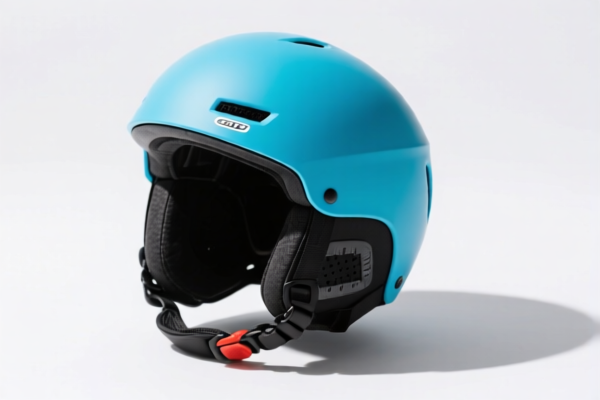


AI Analysis
🎿 Skiing Equipment & Accessories: Ultimate HS Code Classification & Tariff Breakdown | 2026 Customs Guide
🌐 HS Code Reference & Customs Clearance Guide | 2026 Latest Tariff Analysis | Professional Entry Strategy
📌 Part 1: Product Definition & Classification – Do You Really Know "Skiing Gear"?
Skiing equipment falls into two main categories in international trade: 1. Main Skiing Equipment (Ski Boards/Decks): Finished goods specifically designed for skiing, including skis, bindings, and boots (if classified under sporting goods chapters). 2. Accessories & Parts: Components used for maintenance, attachment, or storage (e.g., ski bag parts, plastic buckles, replacement screws).
⚠️ Key Distinction:
- If it is a finished product for use on snow → Classified under Chapter 95 (Toys, Games, and Sports Equipment).
- If it is a generic plastic part without specific sporting functionality → May fall under Chapter 39 (Plastics).
- Crucial Rule: The "122 Clause" (Section 301/IEEPA tariffs) applies heavily to Chinese-origin sports goods entering the US.
📦 Part 2: HS Code Classification Details (2026 Latest Tariff Authority对照)
Based on the provided dataset, here is the precise classification for Skiing Equipment and Accessories:
| HS Code | Product Description | Application Scenario | Total Tax Rate (China Origin) |
|---|---|---|---|
9506.11.60.00 |
Ski Equipment (Snowboards/Skis) | Finished skiing products, fits "Snowboards and other snow-riding appliances." | 17.5% |
9506.19.80.80 |
Other Skiing Equipment | Finished sporting apparatus, no material/conflict issues with main ski items. | 20.3% |
9507.10.00.80 |
Parts & Accessories (Sporting) | General accessories classified under "Parts and Accessories" of sporting goods. | 16.0% |
9507.90.80.00 |
Other Parts & Accessories | Catch-all category for parts/accessories where no specific material conflict exists. | 19.0% |
3926.20.30.00 |
Plastic Accessories | Plastic items for sports use, classified under "Plastic Articles" as a residual category. | 38.0% |
🔍 Critical Note:
- Items classified under 9506 are considered finished sporting goods.
- Items under 9507 are parts/accessories.
- Items under 3926 are plastic components with no specific sporting identity, leading to higher tariffs due to the "Plastic" classification trap.
💰 Part 3: 2026 Latest Tariff Rate Breakdown (Including Surcharges & Policy Add-ons)
✅ Applicable Country: United States (US)
✅ Origin: China (CN)
✅ Effective Time: Current trade policies (Section 301 & IEEPA)
🎯 1. 9506.11.60.00 – Ski Equipment (Main Category)
| Item | Content |
|---|---|
| Base Tariff | 0.0% |
| Section 301 Surcharge | 7.5% |
| "122 Clause" Surcharge | 10.0% |
| Total Tax Rate | 17.5% |
| Calculation Method | CIF Value × 17.5% |
| De Minimis Exemption | ❌ Not Applicable (Denied for Section 301 goods) |
| Legal Basis Path | Base: 9506.11.60.00 → Sec301: 7.5% → IEEPA/122: 10% |
📌 Explanation:
- This is the most favorable rate for main skiing equipment.
- The "122 Clause" (likely referring to specific Section 301 List 4 or IEEPA executive orders) adds an extra 10%.
- Total: 17.5% is relatively low compared to other categories, making this the preferred classification for skis/snowboards.
🎯 2. 9506.19.80.80 – Other Skiing Equipment
| Item | Content |
|---|---|
| Base Tariff | 2.8% |
| Section 301 Surcharge | 7.5% |
| "122 Clause" Surcharge | 10.0% |
| Total Tax Rate | 20.3% |
| Calculation Method | CIF Value × 20.3% |
| De Minimis Exemption | ❌ Not Applicable |
| Legal Basis Path | Base: 9506.19.80.80 → Sec301: 7.5% → IEEPA/122: 10% |
📌 Note:
- Slightly higher base tariff (2.8%) than9506.11.60.00.
- Suitable for other snow-riding devices not specifically covered under 9506.11.
🎯 3. 9507.10.00.80 – Parts & Accessories (Sporting Goods)
| Item | Content |
|---|---|
| Base Tariff | 6.0% |
| Section 301 Surcharge | 0.0% |
| "122 Clause" Surcharge | 10.0% |
| Total Tax Rate | 16.0% |
| Calculation Method | CIF Value × 16.0% |
| De Minimis Exemption | ❌ Not Applicable |
| Legal Basis Path | Base: 9507.10.00.80 → Sec301: 0% → IEEPA/122: 10% |
📌 Advantage:
- 0% Section 301 surcharge! This is a key advantage for accessories.
- Although the base tariff is higher (6.0%), the total is lower (16.0%) than main equipment (17.5%).
🎯 4. 9507.90.80.00 – Other Parts & Accessories (Residual)
| Item | Content |
|---|---|
| Base Tariff | 9.0% |
| Section 301 Surcharge | 0.0% |
| "122 Clause" Surcharge | 10.0% |
| Total Tax Rate | 19.0% |
| Calculation Method | CIF Value × 19.0% |
| De Minimis Exemption | ❌ Not Applicable |
| Legal Basis Path | Base: 9507.90.80.00 → Sec301: 0% → IEEPA/122: 10% |
📌 Note:
- Higher base tariff (9.0%) due to being a "residual" category.
- Still benefits from 0% Section 301 surcharge.
🎯 5. 3926.20.30.00 – Plastic Accessories (Risk Category)
| Item | Content |
|---|---|
| Base Tariff | 3.0% |
| Section 301 Surcharge | 25.0% |
| "122 Clause" Surcharge | 10.0% |
| Total Tax Rate | 38.0% |
| Calculation Method | CIF Value × 38.0% |
| De Minimis Exemption | ❌ Not Applicable |
| Legal Basis Path | Base: 3926.20.30.00 → Sec301: 25% → IEEPA/122: 10% |
📌 WARNING:
- Extremely High Tariff!
- Misclassifying sporting accessories as generic "Plastic Articles" triggers the 25% Section 301 surcharge.
- Avoid this code unless the item is purely plastic with no sporting function.
🛠️ Part 4: Customs Clearance Practical Advice (Avoid Pitfalls)
✅ 1. Documentation Checklist (Mandatory)
| Document | Must Provide | Description |
|---|---|---|
| ✅ Product Specification | ✔️ | Material composition, usage scenario (e.g., "Ski Binding," not just "Plastic Part"). |
| ✅ Product Photos | ✔️ | Clear images showing the item's function and context (e.g., attached to a ski). |
| ✅ Commercial Invoice | ✔️ | Accurate description: "Skiing Equipment" or "Sporting Goods Parts," not generic "Plastic Hardware." |
| ✅ Origin Certificate | ✔️ | Proof of Chinese origin to apply specific tariffs. |
| ✅ HS Code Pre-ruling | ✔️ | Highly Recommended to avoid misclassification under 3926. |
✅ 2. Declaration Strategy (Key Mnemonic)
🔥 "Function Over Material! Classify as Sport, Not Plastic!"
| Scenario | Correct Declaration | Wrong Declaration |
|---|---|---|
| Ski Bindings | 9507.10.00.80 |
3926.20.30.00 |
| Plastic Ski Buckles | 9507.10.00.80 |
3926.20.30.00 |
| Finished Skis | 9506.11.60.00 |
9507.90.80.00 |
| Snowboard Bags | 4202.92.00.00 (Note: Not in Data, but common) |
3926.20.30.00 |
📌 Tip:
- Never describe sporting parts as "Plastic Articles" if they have a clear sporting function.
- Always use terms like "Skiing Accessory," "Sporting Equipment Part," or "Snowboard Component."
✅ 3. Special Cases
| Case | Handling Advice |
|---|---|
| Mixed Containers | Separate SKUs clearly. Do not mix 9506 (Skis) with 3926 (Plastic Parts) to avoid audit triggers. |
| OEM Custom Parts | Provide design drawings showing the part's specific function in skiing. |
| Used/Salvage Gear | May face additional restrictions; ensure compliance with US sanitary regulations. |
🌍 Part 5: Global Market Comparison (2026 Latest)
| Country/Region | Recommended HS Code | Tariff (China Origin) | Certification | Notes |
|---|---|---|---|---|
| 🇺🇸 USA | 9506.11.60.00 |
17.5% | ASTM F1960 (Ski Safety) | High compliance needed for safety standards. |
| 🇪🇺 EU | 9506.11.00.00 |
~3-4% | EN ISO 10826 (Skis) | No Section 301 tariffs. |
| 🇨🇳 China | 9506.11.60.00 |
~5-10% | CCC (if applicable) | Domestic sales have lower barriers. |
| 🇨🇦 Canada | 9506.11.00.00 |
~0-3% | CSA/ANSI | USMCA advantages if produced in NA. |
📌 Conclusion:
- USA is the most challenging market due to Section 301 + IEEPA tariffs.
- EU and Canada offer significantly lower tariff burdens, but safety certifications (EN ISO, ASTM) are critical for customs clearance.
📌 Part 6: Common Mistakes & Pitfalls (Lessons Learned)
❌ Mistake 1: Classifying Ski Bindings as "Plastic Parts" (3926.20.30.00)
👉 Consequence: Tax rate jumps from 16.0% to 38.0% → Double the cost!
❌ Mistake 2: Declaring "Ski Equipment" as "General Sporting Goods" without specifying 9506 vs 9507
👉 Consequence: Customs may reclassify to the highest applicable rate → Delays & Penalties.
❌ Mistake 3: Ignoring the "122 Clause"
👉 Consequence: Underpayment of 10% IEEPA surcharge → Back taxes + Interest.
❌ Mistake 4: Mixing Ski Boards and Plastic Accessories in one HS Code line
👉 Consequence: Audit risk → Inspection delays, potential seizure.
✅ Correct Approach:
"Ski Binding, Alloy/Plastic Composite, Specific for Skiing, Model XYZ, ASTM F1960 Certified"
🎯 Part 7: Conclusion: Professional Classification Saves Money!
🎯 Remember the Mnemonic:
🔹 "Skis in 9506 (17.5%), Parts in 9507 (16%), Plastic Trap in 3926 (38%)"
🔹 "Function First, Material Second! Avoid the Plastic Trap!"
🔹 "122 Clause Adds 10% – Don't Forget It!"
📌 Pro Tip:
- For skiing equipment, always prioritize 9506/9507 classifications.
- Apply for HS Code Pre-ruling to confirm the 16.0% rate for accessories.
- Ensure Safety Certifications (ASTM/EN) are on hand for US/EU clearance.
📣 Immediate Action:
📞 Consult a licensed customs broker for 9507 vs 3926 classification.
📄 Provide Product Specs proving sporting function.
🚀 Clear Customs Smoothly, Maximize Profits!
✨ Professional Customs Clearance Starts with Accurate Classification!
💼 Every Percent of Tariff Matters!
Customer Reviews
About HS Code Classification
The Harmonized System (HS) is an internationally standardized nomenclature developed by the World Customs Organization (WCO) to classify traded products. Over 200 countries use the HS system as the basis for customs tariffs, trade statistics, and import/export regulations.
Each HS code follows a hierarchical structure:
- Chapter (2 digits) — Broad category of goods (e.g., Chapter 84: Machinery and Mechanical Appliances)
- Heading (4 digits) — More specific grouping within the chapter
- Subheading (6 digits) — Internationally standardized breakdown, used by all WCO member countries
- National subdivisions (8-10 digits) — Country-specific extensions for further classification, such as US HTSUS 10-digit codes
Correct HS code classification is essential for smooth customs clearance, accurate duty payment, and compliance with trade regulations. Misclassification can lead to customs delays, overpayment of duties, or penalties.
When importing from CN to US, the applicable tariff rates may include:
- Most-Favored-Nation (MFN) rate — The standard duty rate applied to WTO members
- General rate — Applied to countries without trade agreements
- Trade remedy duties — Additional tariffs such as Section 301 (anti-dumping), Section 232 (national security), or countervailing duties
The information provided on this page is for reference purposes only. For official classification, please consult with your local customs authority or a licensed customs broker.