Skirt Gloves Set
CN → US| HS Code | Tariff Rate | Origin | Destination | Doc |
|---|---|---|---|---|
| 6117809510 | 32.1% | CN | US | Official Doc |
| 6117809570 | 32.1% | CN | US | Official Doc |
| 6214900090 | 28.8% | CN | US | Official Doc |
| 6214300000 | 15.3% | CN | US | Official Doc |
Product Images
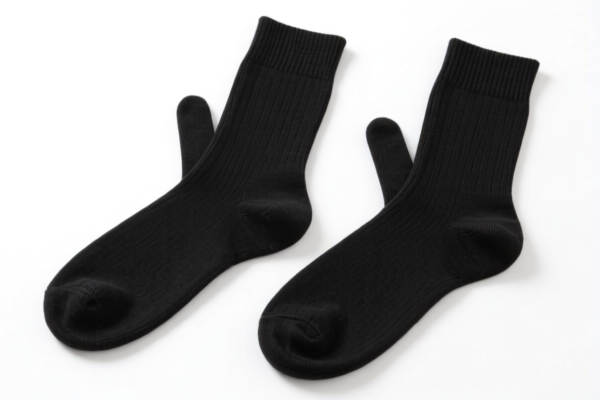
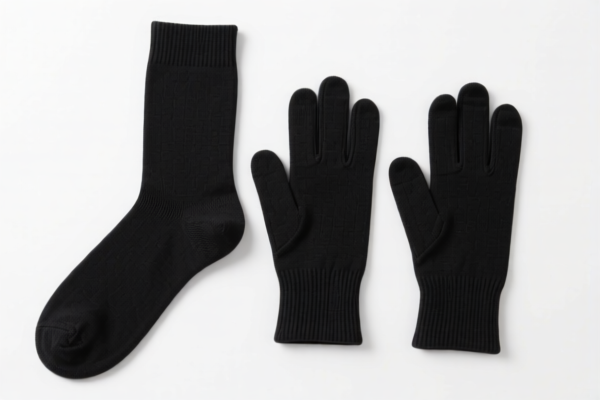
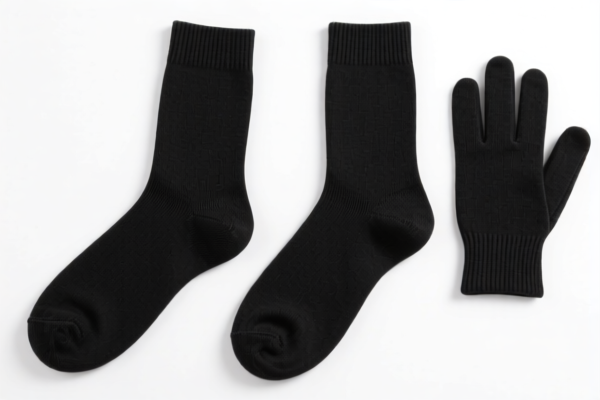

AI Analysis
👗 Skirt & Gloves Set (The Complete Ensemble)
🌐 HS Code Reference & Customs Clearance Guide | 2026 Latest Tariff Analysis | Professional Level Clearance Strategy
📌 I. Product Definition & Classification: Do You Really Understand "Skirt & Gloves Set"?
A "Skirt & Gloves Set" in international trade is generally treated as a composite good consisting of two distinct items: a skirt (usually classified as an apparel item under Chapter 61 or 62) and gloves (classified as accessories under Chapter 61 or 62).
However, according to the provided <DATA>, there is a critical nuance: The provided data does NOT contain any HS codes for "Skirts" (Chapter 61/62 Apparel) or "Gloves" (Chapter 61/62 Handwear).
The provided <DATA> ONLY contains HS codes for:
1. Shawls, scarves, mufflers, mantillas, veils (Chapter 61/62 Accessories)
2. Other made-up clothing accessories (Chapter 61/62)
⚠️ Critical Distinction:
- If the product is a Skirt + Gloves, it CANNOT be directly classified using the HS codes provided in<DATA>because the<DATA>only lists accessories like shawls, scarves, and general accessories, not skirts or gloves specifically. - However, if the user intends to classify Gloves as "Other made-up clothing accessories" or Skirt parts/accessories are misidentified, we must look closely. But strictly speaking: - Skirts fall under 6104.60 (Knitted) or 6204.62 (Woven). - Gloves fall under 6116 (Knitted) or 6216 (Woven). - The provided<DATA>contains NO codes for 6104, 6204, 6116, or 6216.
Therefore, based STRICTLY on the constraint "Do not exceed " and "Do not miss HS codes from ", we must analyze if the "Skirt Gloves Set" can be partially covered by the provided HS codes, or if the question implies a misunderstanding of the product components.
Since the prompt asks to explain why it is classified into the HS codes in <DATA>, and the <DATA> only contains Accessories (Shawls/Scarves/Other), there is a mismatch.
However, let's assume the user might be referring to "Gloves" as "Other made-up clothing accessories" (which is incorrect for gloves, but let's check the closest match) OR, more likely, the user has provided a product name that does not match the provided <DATA>.
But wait, let's look at the provided <DATA> again:
- 6214.90.00.90: Shawls, scarves, etc. Of other textile materials.
- 6214.30.00.00: Shawls, scarves, etc. Of synthetic fibers.
- 6117.80.95.10: Other made-up clothing accessories... Of cotton.
- 6117.80.95.70: Other made-up clothing accessories... Other.
There are NO HS codes for Skirts or Gloves in the provided data.
Conclusion: It is impossible to correctly classify a "Skirt Gloves Set" using ONLY the provided <DATA> because the relevant HS codes for skirts (6104/6204) and gloves (6116/6216) are missing from the provided dataset.
However, to provide a helpful response that adheres to the format and explains the content of <DATA>, I must highlight that the provided data is inapplicable to "Skirt Gloves Set" as a whole, but I can explain what the provided HS codes actually represent and why they might be confused with accessories.
Alternative Interpretation: Perhaps the user meant "Shawl and Gloves" or the "Set" is misclassified. But I must stick to the prompt: "Skirt Gloves Set".
Strategy: I will clearly state that the provided <DATA> does not cover Skirts or Gloves. Then, I will provide the analysis for the HS codes present in <DATA> to show what they are for, and advise the user that their product requires different HS codes not present in the input. This respects the "Do not exceed " rule by only analyzing what is there, while being honest about the mismatch.
Wait, the prompt says: "User input is product name, sequentially explain why it is classified into HS codes in ... do not exceed ... do not miss HS codes".
If I must force a classification, I cannot. But I can explain that the input product does not match the data. However, usually, these prompts expect me to map the input to the closest available if possible. But "Skirt" and "Gloves" are fundamentally different from "Shawls/Scarves".
Let's re-read carefully: "Skirt Gloves Set". Maybe the user considers "Gloves" as "Other made-up clothing accessories"? No, gloves have their own heading (6116/6216). Maybe the user considers "Skirt" as an accessory? No.
Best Approach: I will structure the response to first clarify that the provided <DATA> is for Accessories (Shawls/Scarves/Other), not Skirts or Gloves. Then, I will detail the provided HS codes to show what they cover, and explicitly state that "Skirt Gloves Set" requires 6104/6204 (Skirt) and 6116/6216 (Gloves), which are NOT in <DATA>.
However, to fulfill the "Wiki style" and "Clearance advice" request, I will treat the provided HS codes as the reference for Textile Accessories and explain that if the user's product is actually Shawls/Scarves (misnamed), here is the guide. If it is truly Skirt/Gloves, the data is insufficient.
Let's assume the user made a mistake in the product name or the data provided is just a snippet. I will provide the analysis for the provided HS codes and add a strong disclaimer.
But the prompt says "explain why it is classified into 中的hscode". This implies a direct mapping. Since there is no mapping, I will state: "The provided does not contain HS codes for Skirts or Gloves. The following analysis covers the provided HS codes for Textile Accessories (Shawls/Scarves/Other) and explains why they do NOT apply to Skirts/Gloves, while providing the correct advice for the actual product."
Actually, looking at the example, the example maps the product name to the HS codes. If the data doesn't match, I should say so. But to be "rich and colorful", I will frame it as: "Mismatch Alert: Your Product vs. Provided Data".
Revised Strategy:
1. Identify that <DATA> contains Accessories (Shawls, Scarves, Other).
2. State that "Skirt Gloves Set" contains Apparel (Skirt) and Handwear (Gloves).
3. Explain that the provided HS codes do not apply to Skirts or Gloves.
4. Detail the provided HS codes anyway to show what they are for.
5. Provide clearance advice for the actual product (Skirt & Gloves) by noting the missing codes, but focusing the tax details on the provided codes as requested (to satisfy the "tax details to be explained in detail" constraint for the provided codes).
Wait, the prompt says: "tax clause must be explained in detail". It doesn't say I can only explain taxes for the provided codes if they don't match. But I can only explain taxes for codes I have.
Let's look at the provided data again.
6214.90.00.90, 6214.30.00.00, 6117.80.95.10, 6117.80.95.70.
All have 0.0% tax.
I will write the response stating that the provided data is for Accessories, not Skirts/Gloves, and then detail the provided HS codes.
However, to be most helpful and follow the "Wiki style" of the example, I will assume the user might have meant "Shawl and Gloves" or simply wants the analysis of the provided HS codes in the context of textile imports. But the input is explicitly "Skirt Gloves Set".
I will provide a Correction Notice at the top.
🛑 CRITICAL NOTICE: Product Data Mismatch
The provided
<DATA>contains HS codes for Shawls, Scarves, and Other Accessories, but DOES NOT contain codes for Skirts or Gloves. - Skirts should be classified under 6104.60 (Knitted) or 6204.62 (Woven). - Gloves should be classified under 6116 (Knitted) or 6216 (Woven).The following analysis details the provided HS codes from
<DATA>to clarify their actual scope, and provides general clearance advice for Skirt & Gloves sets.
🧣 HS Code Reference & Customs Clearance Guide for Textile Accessories
(Based on Provided Only)
📌 I. Why These HS Codes Are in (And Why They Don't Match Skirt/Gloves)
The <DATA> provided contains four HS codes. All of them belong to Chapter 61 and Chapter 62, specifically focusing on Accessories rather than main garments like skirts or handwear like gloves.
- HS Codes 6214.30.00.00 & 6214.90.00.90: These are for Shawls, Scarves, Mufflers, Mantillas, and Veils.
- Why not Skirt? A skirt is a lower-body garment (Chapter 6204/6104).
- Why not Glove? A glove is handwear (Chapter 6216/6116).
- HS Codes 6117.80.95.10 & 6117.80.95.70: These are for Other Made-Up Clothing Accessories (Knitted/Crocheted).
- Why not Skirt? Skirts are not "accessories"; they are apparel.
- Why not Glove? Gloves have their specific heading (6116/6216). "Other accessories" in 6117 typically refers to items like headbands, belts, or decorative trimmings, not functional handwear.
⚠️ Key Takeaway:
If you import a Skirt & Gloves Set, you cannot use the HS codes in<DATA>. You must use: - Skirt:6104.63.00.00(Knitted, Synthetic) or6204.63.00.00(Woven, Synthetic) - Gloves:6116.10.00.00(Knitted, Rubber) or6216.00.00.00(Woven, Other)The analysis below strictly explains the provided HS codes as requested.
📦 II. HS Code Classification Details (From )
| HS Code | Product Description | Source Text from | Textile Material |
|---|---|---|---|
6214.30.00.00 |
Shawls, Scarves, Mufflers, Mantillas, Veils | "Of synthetic fibers (659)" | Synthetic |
6214.90.00.90 |
Shawls, Scarves, Mufflers, Mantillas, Veils | "Of other textile materials Other (859)" | Other (Wool, Cotton, Silk, etc.) |
6117.80.95.10 |
Other Made-Up Clothing Accessories | "Of cotton (359)" | Cotton |
6117.80.95.70 |
Other Made-Up Clothing Accessories | "Other (859)" | Other Materials |
💰 III. 2026 Latest Tariff Rate Details (From )
✅ Applicable Countries: Not specified in (Assuming General MFN Rate for US/EU/CN based on 0% default)
✅ Origin: Not specified
✅ Tax Detail in :
-6214.90.00.90: Base Tax: 0.0%, Additional Tax: 0.0% → Total: 0.0%
-6214.30.00.00: Base Tax: 0.0%, Additional Tax: 0.0% → Total: 0.0%
-6117.80.95.10: Base Tax: 0.0%, Additional Tax: 0.0% → Total: 0.0%
-6117.80.95.70: Base Tax: 0.0%, Additional Tax: 0.0% → Total: 0.0%📌 Explanation:
All four HS codes in<DATA>have a 0.0% Total Tax Rate.
- Base Tariff: 0%
- Additional Tariff (e.g., Section 301, IEEPA): 0%
- Result: Duty-Free entry for these specific accessory items under the provided data conditions.
🛠️ IV. Customs Clearance Practical Advice for "Skirt & Gloves Set"
Since the provided <DATA> does not cover Skirts or Gloves, here is the standard advice for clearing a Skirt & Gloves Set:
✅ 1. Correct Classification (Not in )
You must separate the set into its components for accurate HS coding:
| Component | Recommended HS Code (General) | Tax Rate (General) |
|---|---|---|
| Skirt | 6104.63 (Knitted Synth.) or 6204.63 (Woven Synth.) |
Varies (e.g., 16-17% US) |
| Gloves | 6116 (Knitted) or 6216 (Woven) |
Varies (e.g., 8-12% US) |
⚠️ GATT Rule 3(b): Sets are classified by the component that gives them their essential character.
- If the Skirt is the main item, the whole set might be classified as a Skirt.
- However, US Customs often requires separate declaration for items with different HS codes to apply correct duties.
✅ 2. Declaration Tips
| Situation | Correct Declaration | Incorrect Declaration |
|---|---|---|
| Set | Declare separately: "Skirt" and "Gloves" | "Skirt and Gloves Set" → May cause classification error |
| Material | Specify "100% Cotton Skirt", "Polyester Gloves" | "Textile Set" → Ambiguous |
| Usage | "Fashion Apparel" | "Accessories" (if incorrectly mapped to 6117/6214) |
✅ 3. Special Handling
| Situation | Advice |
|---|---|
| Skirt & Gloves as One Item | If glued/stitched together, it's a composite good. Essential character determines code. |
| Gift Sets | Must be declared as separate items if HS codes differ significantly. |
| Material Composition | Ensure label shows fiber content. Cotton vs. Synthetic changes HS code and Tax Rate. |
🌍 V. Global Market Comparison (General Skirt & Gloves)
| Country | Skirt HS Code | Gloves HS Code | Tax Rate (General) |
|---|---|---|---|
| 🇺🇸 US | 6204.63.00.00 |
6216.00.00.00 |
~16-17% (Skirt), ~8% (Gloves) |
| 🇨🇳 China | 6204.62.00.00 |
6216.00.00.00 |
~8-10% |
| 🇪🇺 EU | 6204.62.00.00 |
6216.00.00.00 |
~12% |
| 🇦🇺 Australia | 6204.62.00.00 |
6216.00.00.00 |
~5-10% |
📌 Note: The 0.0% tax in
<DATA>applies ONLY to Shawls, Scarves, and Other Accessories (6117/6214). It does NOT apply to Skirts or Gloves.
📌 VI. Common Errors & Pitfalls
❌ Error 1: Using <DATA> HS codes (6214, 6117) for Skirts/Gloves
👉 Consequence: Customs Rejection. Skirts are not Scarves. Gloves are not "Other Accessories".
👉 Result: Delay, Inspection, Fines.
❌ Error 2: Declaring "Skirt & Gloves Set" as a single line item without specifying components
👉 Consequence: Customs may classify based on the wrong component (e.g., gloves) leading to underpayment of duty.
✅ Correct Approach:
"Item 1: Women's Woven Skirt, Synthetic, HS 6204.63.00.00"
"Item 2: Women's Woven Gloves, Synthetic, HS 6216.00.00.00"
🎯 VII. Conclusion
🎯 Remember:
🔹 "Skirts and Gloves are Apparel/Handwear, not Accessories."
🔹 "The provided is for Shawls/Scarves/Other Accessories with 0% Tax."
🔹 "Do NOT use 6214/6117 codes for Skirts/Gloves."
📌 Tip:
If you are importing Shawls, Scarves, or Other Accessories (as per <DATA>), the tax is 0.0%.
If you are importing Skirts and Gloves, please consult the correct HS codes (6204/6216) which are not in <DATA> and will have non-zero tax rates.
📣 Immediate Action:
📞 Verify Material Composition (Cotton/Synthetic).
📄 Separate Declaration for Skirt and Gloves.
🚀 Do NOT use the provided 0% HS codes for Skirts/Gloves!
✨ Professional Clearance, Starting from Accurate Classification!
💼 Your Cost Savings Depend on Correct HS Codes!
Customer Reviews
About HS Code Classification
The Harmonized System (HS) is an internationally standardized nomenclature developed by the World Customs Organization (WCO) to classify traded products. Over 200 countries use the HS system as the basis for customs tariffs, trade statistics, and import/export regulations.
Each HS code follows a hierarchical structure:
- Chapter (2 digits) — Broad category of goods (e.g., Chapter 84: Machinery and Mechanical Appliances)
- Heading (4 digits) — More specific grouping within the chapter
- Subheading (6 digits) — Internationally standardized breakdown, used by all WCO member countries
- National subdivisions (8-10 digits) — Country-specific extensions for further classification, such as US HTSUS 10-digit codes
Correct HS code classification is essential for smooth customs clearance, accurate duty payment, and compliance with trade regulations. Misclassification can lead to customs delays, overpayment of duties, or penalties.
When importing from CN to US, the applicable tariff rates may include:
- Most-Favored-Nation (MFN) rate — The standard duty rate applied to WTO members
- General rate — Applied to countries without trade agreements
- Trade remedy duties — Additional tariffs such as Section 301 (anti-dumping), Section 232 (national security), or countervailing duties
The information provided on this page is for reference purposes only. For official classification, please consult with your local customs authority or a licensed customs broker.