Skirt and Gloves Set
CN → US| HS Code | Tariff Rate | Origin | Destination | Doc |
|---|---|---|---|---|
| 6217108500 | 24.6% | CN | US | Official Doc |
| 6112490090 | 30.7% | CN | US | Official Doc |
| 6117809570 | 32.1% | CN | US | Official Doc |
| 6217109550 | 32.1% | CN | US | Official Doc |
| 6104230030 | 0.0% | CN | US | Official Doc |
Product Images
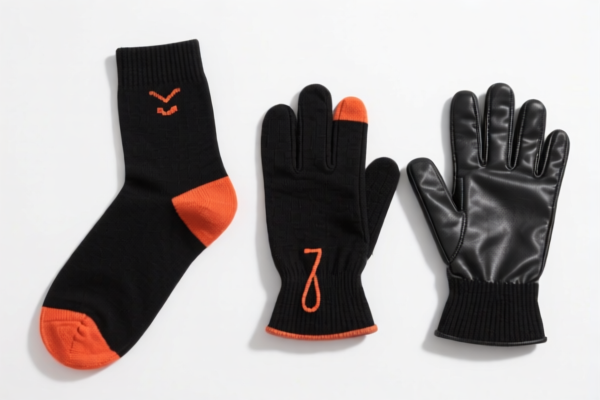
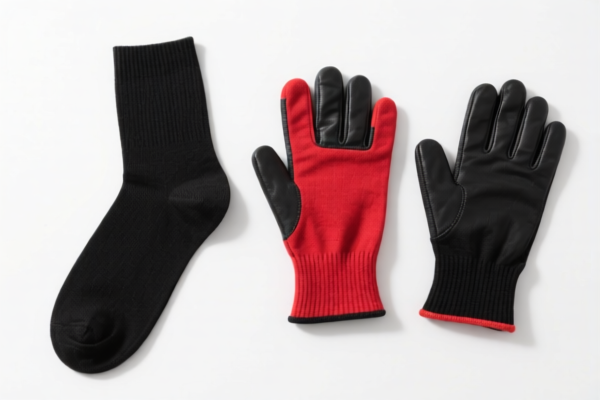
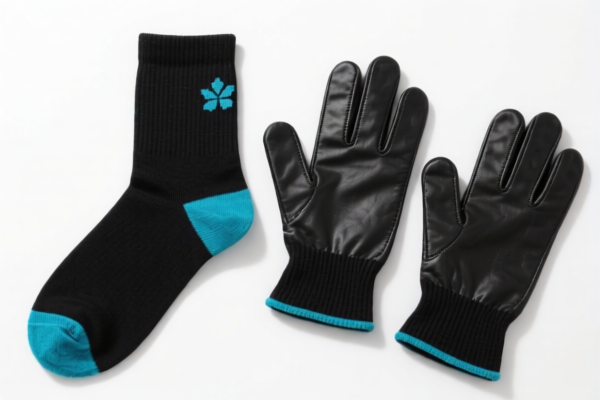
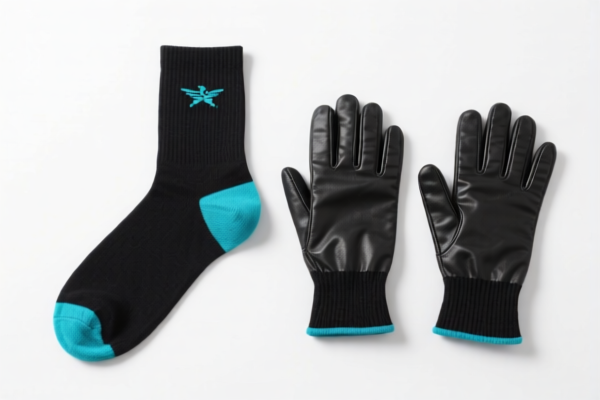
AI Analysis
🧤 裙子手套套装 (Skirt and Gloves Set)
🌐 HS Code Reference & Customs Clearance Guide | 2026 Latest Tariff Analysis | Professional Clearance Strategy
📌 I. Product Definition & Classification: What exactly is a "Skirt and Gloves Set"?
In international trade, a "Skirt and Gloves Set" is not a standard unified garment. Its classification depends heavily on: 1. Material Composition (Knitted vs. Woven, Cotton vs. Synthetic). 2. Functionality (Sportswear/Skiing vs. Fashion Accessory). 3. Packaging & Presentation (Sold as a single ensemble or separate items).
Because this item is ambiguous, it often falls into multiple HS Code categories, leading to significant tariff discrepancies. Below is the breakdown based on the provided data.
📦 II. HS Code Classification Details (Based on Provided Data)
| HS Code | Product Description & Logic | Material Inference | Total Tax Rate | Tax Breakdown (US Import from China) |
|---|---|---|---|---|
| 6217.10.85.00 | Clothing Accessories / Ensembles: Belongs to "Ready-made clothing accessories and clothing articles." Logic: Treated as a textile accessory set. | Textile (Inferred) | 24.6% | Base Tariff: 14.6% Section 301: 0.0% Section 122: 10% |
| 6112.49.00.90 | Knitted/Hook-knitted Sportswear/Skiwear/Swimwear: Matches knitted garment attributes. Logic: Classified as knitted sportswear or similar apparel. | Non-cotton, Non-silk textile (Inferred) | 30.7% | Base Tariff: 13.2% Section 301: 7.5% Section 122: 10% |
| 6117.80.95.70 | Clothing Accessories & Sets: Matches usage as clothing accessories in set form. Logic: Other materials (not cotton, wool, or fine animal hair). | Other textile materials (Inferred) | 32.1% | Base Tariff: 14.6% Section 301: 7.5% Section 122: 10% |
| 6217.10.95.50 | Clothing Accessories/Categories: Fallback logic for "Other clothing accessories." Logic: Standard textile ensemble treated as an accessory. | Textile (Inferred) | 32.1% | Base Tariff: 14.6% Section 301: 7.5% Section 122: 10% |
| 6104.23.00.30 | Summer Skirt Ensemble: Matches the form of a skirt suit. Logic: Classified as a synthetic fiber ensemble. | Synthetic Fiber (Inferred) | Varies* | Base: Rate applicable if separable Section 301: 7.5% Section 122: 10% |
Note on 6104.23.00.30: The total tax is described as "The rate applicable to each garment in the ensemble if separately+17.5%"*. This implies a complex calculation where the base tariff might vary by component, but the Section 301 (7.5%) and Section 122 (10%)** remain fixed additions. The total effective rate is likely higher than 24.6% depending on the base textile rate.
💰 III. Detailed Tax Clause Explanation (2026 Tariff Structure)
✅ Applicable Country: United States (US)
✅ Origin: China (CN) (Implied by the presence of Section 301 and Section 122 tariffs)
🎯 1. The "Section 122" Tariff (10%)
- Source: Section 122 of the Trade Act of 1974 (Emergency import relief).
- Application: This 10% tariff is applied to all the above HS Codes.
- Impact: This is a fixed penalty layer on top of the base and Section 301 tariffs.
🎯 2. The "Section 301" Tariff (0% vs. 7.5%)
- Low Tax Scenario (24.6%): HS Code 6217.10.85.00 has a 0% Section 301 rate. This is the most advantageous classification.
- High Tax Scenario (30.7% / 32.1% / +): All other codes (6112.49, 6117.80, 6217.10.95, 6104.23) carry a 7.5% Section 301 rate.
- Why the difference?: Section 301 exclusions or different listing positions in the USITC Harmonized Tariff Schedule (HTSUS) apply to specific accessory codes (6217.10.85) but not to general apparel (6112, 6104) or other accessories (6117).
🎯 3. Base Tariff (13.2% - 14.6%)
- This is the standard Most Favored Nation (MFN) rate for textiles/apparel from China.
- 6112.49 has a slightly lower base (13.2%) due to its specific sportswear classification, but the Section 301 kicks in.
- 6217/6117/6104 have a higher base (14.6%).
🛠️ IV. Customs Clearance Practical Advice (Pitfall Avoidance)
✅ 1. Strategic Classification Recommendation
To minimize costs, aim for HS Code 6217.10.85.00. * Reason: It has 0% Section 301 tariff, resulting in a total tax of 24.6%. * How to justify: * Market the product explicitly as "Clothing Accessories" or "Fashion Set (Accessories)". * Ensure the gloves and skirt are packed together as a single retail unit intended for use as accessories. * Avoid describing it as a "Suit" or "Sportswear" which pushes it into Chapters 61/62 Apparel codes (6112, 6104) with higher tariffs.
✅ 2. Documentation Checklist (Essential for Clearance)
| Document | Requirement | Purpose |
|---|---|---|
| Product Specification | Clear material breakdown (Fabric vs. Glove material) | To prove classification as "Accessory" (6217) vs "Apparel" (6112/6104). |
| Commercial Invoice | Value must be allocated correctly | If classified as 6104.23, separate values for skirt and gloves may be required. |
| Photos | Show set packaging and individual items | Prove they are sold as a "Set" (accessory ensemble) rather than separate garments. |
| Material Declaration | Confirm "Non-Cotton/Non-Silk" if using 6117/6112 | Supports the inference for 32.1% tax codes if 6217 is rejected. |
| Origin Certificate | Confirm China Origin | Trigger the correct Section 301 & 122 calculations. |
✅ 3. Critical Warnings (Risk Management)
⚠️ Risk 1: Misclassification as "Apparel" (6112/6104) * If customs views the skirt as a primary garment and gloves as minor accessories, they may classify the entire set under the skirt's code (e.g., 6104.23.00.30 or 6204.43.00). * Consequence: Tax jumps from 24.6% to >32%. * Mitigation: Emphasize the "Accessory" nature. Use terms like "Fashion Ensemble," "Decorative Set," not "Sportswear."
⚠️ Risk 2: Material Mismatch * The data infers materials. If the actual product is Cotton, codes like 6112.49 (Non-cotton) will be rejected. * Consequence: Re-classification and potential penalties. * Mitigation: Provide exact fiber content percentages.
⚠️ Risk 3: "Ensemble" Rules for 6104.23 * For 6104.23.00.30, the tax is calculated per garment if separated. If the skirt and gloves are considered separate articles in an ensemble, the duty is the sum of duties for each. * Consequence: Complex calculation, potentially higher than a flat accessory rate. * Mitigation: Avoid this code unless necessary. Stick to 6217.10.85.00 for simplicity and lower rate.
🌍 V. Market Comparison & Conclusion
| Classification | Total Tax Rate | Key Advantage | Key Risk |
|---|---|---|---|
| 6217.10.85.00 | 24.6% | ✅ Lowest Rate (0% Sec 301) | Must prove "Accessory" status. |
| 6112.49.00.90 | 30.7% | Suitable for Knitted Sport/Gloves | Higher Sec 301 (7.5%). |
| 6117.80.95.70 | 32.1% | Generic Accessory Fallback | Highest Base + Sec 301. |
| 6217.10.95.50 | 32.1% | Generic Textile Accessory | Highest Base + Sec 301. |
| 6104.23.00.30 | Variable | Matches Skirt Form | Complex calculation; Likely Higher. |
📌 Final Recommendation: 1. Target HS Code: 6217.10.85.00 for the lowest tariff (24.6%). 2. Justification: Label as "Textile Clothing Accessories Set." Ensure gloves are small/decorative enough to be seen as accessories, not standalone apparel. 3. Backup: If classified as apparel (6112/6104), expect 30.7%+ tax. Budget accordingly. 4. Pre-Clearance: Submit an Advance Ruling Request with product images to the US CBP to confirm if the "Skirt and Gloves" qualify as an "Accessory Set" under 6217 or an "Ensemble" under 6104/6204.
📌 VI. Common Mistakes & Pitfalls
❌ Mistake 1: Calling it a "Suit" or "Dress Set" 👉 Result: Custom may classify as Apparel (Chapter 61/62), triggering 7.5% Section 301. 👉 Fix: Use "Accessory Set" or "Fashion Ensemble."
❌ Mistake 2: Ignoring Material Composition 👉 Result: If the code assumes "Non-Cotton" but the product is Cotton, the classification is invalid. 👉 Fix: Verify fabric content matches the HS Code description.
❌ Mistake 3: Assuming "Free" or Low Duty 👉 Result: All provided codes have Base Tariffs >13% plus Section 122 (10%). No duty-free options exist in this dataset. 👉 Fix: Account for minimum ~24.6% total landed duty cost.
✅ Correct Action:
"Import 'Skirt and Gloves Set' as 6217.10.85.00 (Clothing Accessories). Ensure marketing emphasizes 'Accessories.' Prepare for 24.6% total duty (14.6% Base + 0% Sec 301 + 10% Sec 122)."
🎯 VII. Conclusion
🎯 Key Takeaway:
🔹 Classification is Cost-Driving: The difference between 6217.10.85.00 (24.6%) and other codes (32.1%+) is $7.50+ per $100. 🔹 Section 301 is the Killer: The 7.5% surcharge on most textile codes makes 6217.10.85.00 the clear winner. 🔹 Section 122 is Unavoidable: All codes carry an extra 10%. Factor this into all pricing models.
📣 Immediate Action:
📞 Consult a customs broker to file for an Advance Ruling on HS Code 6217.10.85.00. 📝 Document the product strictly as "Accessory Ensemble" to avoid reclassification as apparel.
✨ Professional Clearance Starts with Precision!
💼 Your Margin Depends on Your HS Code Choice!
Customer Reviews
About HS Code Classification
The Harmonized System (HS) is an internationally standardized nomenclature developed by the World Customs Organization (WCO) to classify traded products. Over 200 countries use the HS system as the basis for customs tariffs, trade statistics, and import/export regulations.
Each HS code follows a hierarchical structure:
- Chapter (2 digits) — Broad category of goods (e.g., Chapter 84: Machinery and Mechanical Appliances)
- Heading (4 digits) — More specific grouping within the chapter
- Subheading (6 digits) — Internationally standardized breakdown, used by all WCO member countries
- National subdivisions (8-10 digits) — Country-specific extensions for further classification, such as US HTSUS 10-digit codes
Correct HS code classification is essential for smooth customs clearance, accurate duty payment, and compliance with trade regulations. Misclassification can lead to customs delays, overpayment of duties, or penalties.
When importing from CN to US, the applicable tariff rates may include:
- Most-Favored-Nation (MFN) rate — The standard duty rate applied to WTO members
- General rate — Applied to countries without trade agreements
- Trade remedy duties — Additional tariffs such as Section 301 (anti-dumping), Section 232 (national security), or countervailing duties
The information provided on this page is for reference purposes only. For official classification, please consult with your local customs authority or a licensed customs broker.