Skull Silicone Mold
CN → US| HS Code | Tariff Rate | Origin | Destination | Doc |
|---|---|---|---|---|
| 3923900012 | 38.0% | CN | US | Official Doc |
| 8480718045 | 38.1% | CN | US | Official Doc |
| 8480799090 | 38.1% | CN | US | Official Doc |
| 3926909989 | 22.8% | CN | US | Official Doc |
| 3923900080 | 38.0% | CN | US | Official Doc |
Product Images
AI Analysis
💀 Skull Silicone Mold (Silicone Skull Shaping Tools)
🌐 HS Code Reference & Clearance Guide | 2026 Latest Tariff Analysis | Professional Customs Strategy
📌 I. Product Definition: What Exactly Is a "Skull Silicone Mold"?
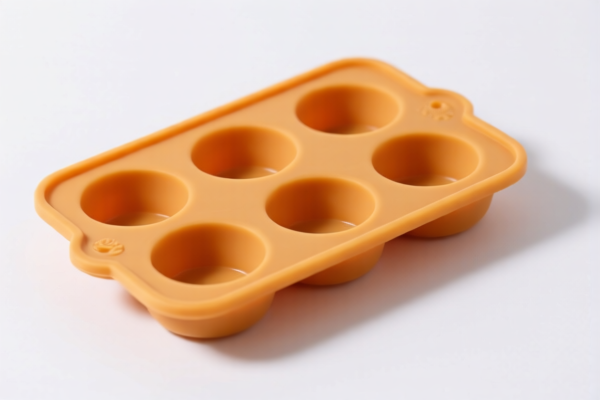
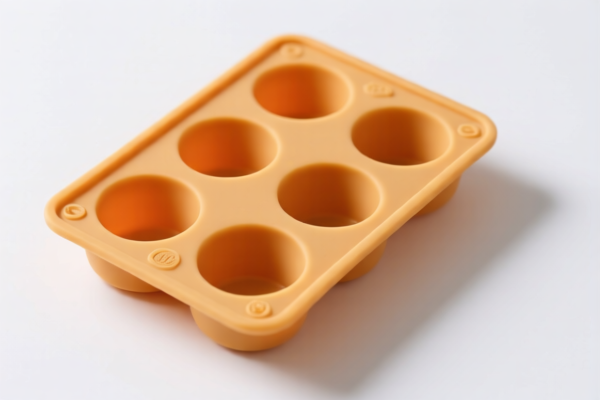
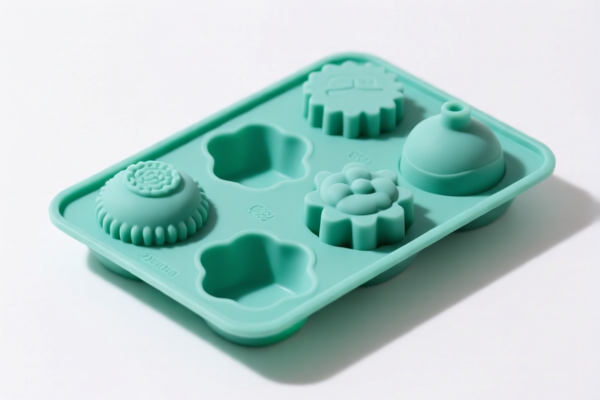
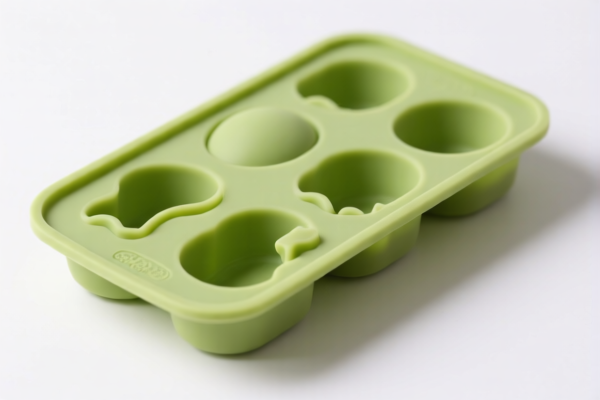
A "Skull Silicone Mold" is typically a flexible, heat-resistant silicone rubber matrix used for casting resins, plaster, chocolate, concrete, or other materials into the shape of a human skull. In international trade, its classification hinges on two critical factors: 1. Material: Is it considered "Plastics" (Chapter 39) or "Rubber/Plastic Molds" (Chapter 84)? 2. Function: Is it a packaging/forming tool (3923) or a mold for manufacturing other goods (8480)?
⚠️ Key Distinction:
- If the mold is used primarily for industrial manufacturing (e.g., casting industrial parts, professional prop-making on a large scale), it leans toward Chapter 84.
- If it is viewed as a general-purpose plastic article or packaging auxiliary, it may fall under Chapter 39.
- Silicone is legally classified as a "plastic" in many customs jurisdictions unless specifically listed as rubber, leading to the split between 3923/3926 and 8480.
📦 II. HS Code Classification Matrix (2026 Latest Tariff Data)
Based on the provided data, there are 5 valid HS Code options depending on the specific customs interpretation of the mold's function.
| HS Code | Product Description | Functional Basis | Total Tax Rate (US Import) |
|---|---|---|---|
3923.90.00.12 |
Plastic Containers/Forming Tools: Silicone skull mold classified as a plastic forming tool for packaging or shaping. | Forming Tool / Packaging Aid | 38.0% |
3923.90.00.80 |
Other Plastic Packaging/Forming Auxiliaries: Silicone mold used as a forming auxiliary. | Forming Auxiliary | 38.0% |
8480.71.80.45 |
Molds for Rubber/Plastics: Specifically for metals (or general metal molds? Note: Data says "Rubber/Plastic Molds"). Classified as a rubber or plastic mold. | Industrial Mold | 38.1% |
8480.79.90.90 |
Other Rubber/Plastic Molds: Other molds for rubber or plastic materials. | Industrial Mold (Other) | 38.1% |
3926.90.99.89 |
Other Plastic Articles: Silicone skull mold classified as a general plastic article/shape. | General Plastic Item | 22.8% |
🔍 Critical Observation:
- The lowest tax rate is 22.8% under3926.90.99.89(Other Plastic Articles).
- The highest tax rates are 38.0% - 38.1% under the "Forming Tools" (3923) and "Industrial Molds" (8480) categories.
- The difference in tax burden is 15.3% (22.8% vs 38.1%), which is significant for high-volume shipments.
💰 III. 2026 Tariff Rate Breakdown (Detailed Tax Clauses)
✅ Applicable Country: United States (US)
✅ Origin: China (CN)
✅ Effective Date: Post-2025 policies (Section 301 & IEEPA)
🎯 Option 1: The "High Tax" Route (Industrial/Forming Classification)
Codes: 3923.90.00.12, 3923.90.00.80, 8480.71.80.45, 8480.79.90.90
| Tax Component | Rate | Legal Basis | Explanation |
|---|---|---|---|
| Base Duty | 3.0% - 3.1% | HTSUS General Rate | Standard duty for plastics or molds. |
| Section 301 (Add-on) | +25.0% | USITC Footnote 9903.88.01 | Additional duty on Chinese goods in this category. |
| Section 122 (IEEPA) | +10.0% | IEEPA Proclamation | Additional 10% tariff on Chinese-origin goods (often linked to specific strategic lists). |
| TOTAL RATE | 38.0% - 38.1% | Very High Cost |
📌 Why is it so high?
Customs may view silicone molds as "industrial tools" (Chapter 84) or "packaging forming aids" (Chapter 39). Both categories are heavily scrutinized under Section 301 tariffs. The 10% "122 Clause" further exacerbates the cost.
🎯 Option 2: The "Lower Tax" Route (General Plastic Article)
Code: 3926.90.99.89
| Tax Component | Rate | Legal Basis | Explanation |
|---|---|---|---|
| Base Duty | 5.3% | HTSUS General Rate | Standard duty for other plastic articles. |
| Section 301 (Add-on) | +7.5% | USITC Footnote | Lower additional duty for this specific sub-category. |
| Section 122 (IEEPA) | +10.0% | IEEPA Proclamation | The 10% surcharge still applies. |
| TOTAL RATE | 22.8% | Significant Savings (15.3% less) |
📌 Why is it lower?
If customs classifies the item not as a "mold" but as a "plastic article" (e.g., a decorative silicone item or general-purpose casting kit), it falls under 3926. The Section 301 rate for this sub-heading is often lower (7.5% vs 25%).
🛠️ IV. Customs Clearance Strategy (Practical Advice)
✅ 1. Classification Strategy: Fight for 3926.90.99.89
Goal: Avoid "Mold" (8480) or "Forming Tool" (3923) classifications.
Argument: The skull mold is a consumer good or craft supply, not an industrial manufacturing mold. It is sold in retail packages for hobbyists, not for factory production lines.
| Scenario | Recommended HS Code | Tax | Strategy |
|---|---|---|---|
| Retail/Craft Use | 3926.90.99.89 |
22.8% | Label as "Silicone Casting Kit" or "Craft Mold," not "Industrial Tool." |
| Industrial Bulk | 8480.79.90.90 |
38.1% | If for factories, be prepared for higher taxes. Justify if possible. |
| Packaging Aid | 3923.90.00.12 |
38.0% | Avoid this; it attracts the highest scrutiny. |
✅ 2. Documentation & Declaration Tips
| Document | Required Content | Purpose |
|---|---|---|
| Commercial Invoice | Description: "Silicone Skull Molding Putty Kit" or "Flexible Silicone Craft Mold". Avoid words like "Industrial," "Heavy-Duty," or "Production Line Mold." | Steers customs toward 3926 (Artiles) rather than 8480 (Machinery/Molds). |
| Product Photos | Show the mold in a retail box, possibly with casting resin or paint. | Proves consumer/hobbyist intent. |
| Material Declaration | State "100% Silicone Rubber" but emphasize it is "Non-Industrial Grade" if applicable. | Avoids "Mold" classification under machinery chapters. |
| Country of Origin | Clearly mark "Made in China". | Triggers Section 301 & IEEPA checks regardless of HS code. |
✅ 3. Critical Warnings
- ❌ Do NOT declare as "Plastic Mold for Metals": This will definitely trigger
8480and the 38%+ rate. - ❌ Do NOT split shipments: If you ship some as "Plastic Articles" and others as "Molds," customs may audit the entire batch.
- ✅ Leverage the "Craft" Narrative: If the skull mold is part of a Halloween prop kit or a DIY resin craft set, emphasize the end-use as decorative/craft, which supports
3926.90.99.89.
🌍 V. Market Comparison (2026)
| Market | Likely HS Code | Est. Total Tax | Notes |
|---|---|---|---|
| 🇺🇸 USA | 3926.90.99.89 |
22.8% | Best option. Use 3926 to save ~15%. |
| 🇺🇸 USA | 8480.79.90.90 |
38.1% | High risk. Avoid if consumer-facing. |
| 🇨🇳 China | 3926.90.99.89 |
~5-10% | Low import duty, no Section 301. |
| 🇪🇺 EU | 3926.90.97 |
~4-6% | EU does not have Section 301. Silicone molds often taxed lower. |
📌 VI. Common Mistakes & Pitfalls
❌ Mistake 1: Using the word "Mold" prominently in the HS Code description without justification.
👉 Result: Customs defaults to 8480 (Machinery) → 38.1% Tax.
❌ Mistake 2: Ignoring the 10% IEEPA Clause.
👉 Result: Unexpected bill at customs. Even the "cheap" 22.8% rate includes this 10% surcharge.
❌ Mistake 3: Misidentifying material as "Rubber" instead of "Silicone".
👉 Result: While silicone is chemically a polymer, customs may classify it under rubber chapters if not specified, leading to different duty structures. Stick to Plastics (Chapter 39) for easier clearance as 3926.
✅ Best Practice Declaration:
"Silicone Rubber Skull Casting Mold for Crafts, Hobbyist Use, Non-Industrial"
HS Code:3926.90.99.89
Tax: 22.8%
🎯 VII. Conclusion: Save 15% on Every Skull!
🎯 Key Takeaway:
The difference between 22.8% and 38.1% is massive. By positioning the skull mold as a craft consumer good (
3926) rather than an industrial tool (8480or3923), you can save over 15 percentage points in duties.
📌 Action Plan:
1. Update Product Listings: Use "Craft Mold" or "Silicone Casting Tool" instead of "Industrial Mold."
2. Invoice Description: Be specific about non-industrial use.
3. Pre-Consult: If shipping large volumes, consider an Advance Ruling with US CBP to confirm 3926.90.99.89 eligibility.
✨ Smart Classification = Higher Margins!
💼 Don't let unnecessary tariffs crack your profits!
Customer Reviews
About HS Code Classification
The Harmonized System (HS) is an internationally standardized nomenclature developed by the World Customs Organization (WCO) to classify traded products. Over 200 countries use the HS system as the basis for customs tariffs, trade statistics, and import/export regulations.
Each HS code follows a hierarchical structure:
- Chapter (2 digits) — Broad category of goods (e.g., Chapter 84: Machinery and Mechanical Appliances)
- Heading (4 digits) — More specific grouping within the chapter
- Subheading (6 digits) — Internationally standardized breakdown, used by all WCO member countries
- National subdivisions (8-10 digits) — Country-specific extensions for further classification, such as US HTSUS 10-digit codes
Correct HS code classification is essential for smooth customs clearance, accurate duty payment, and compliance with trade regulations. Misclassification can lead to customs delays, overpayment of duties, or penalties.
When importing from CN to US, the applicable tariff rates may include:
- Most-Favored-Nation (MFN) rate — The standard duty rate applied to WTO members
- General rate — Applied to countries without trade agreements
- Trade remedy duties — Additional tariffs such as Section 301 (anti-dumping), Section 232 (national security), or countervailing duties
The information provided on this page is for reference purposes only. For official classification, please consult with your local customs authority or a licensed customs broker.