Slag Products
CN → US| HS Code | Tariff Rate | Origin | Destination | Doc |
|---|---|---|---|---|
| 251990 | 0.0% | CN | US | Official Doc |
| 252010 | 0.0% | CN | US | Official Doc |
Product Images
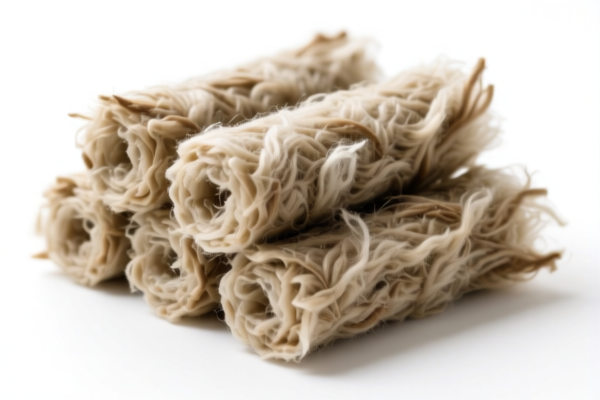
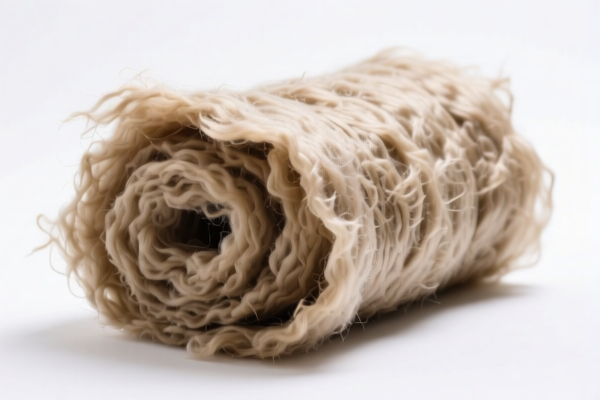
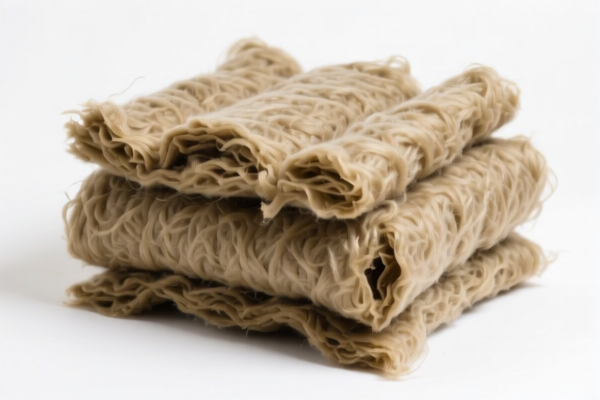
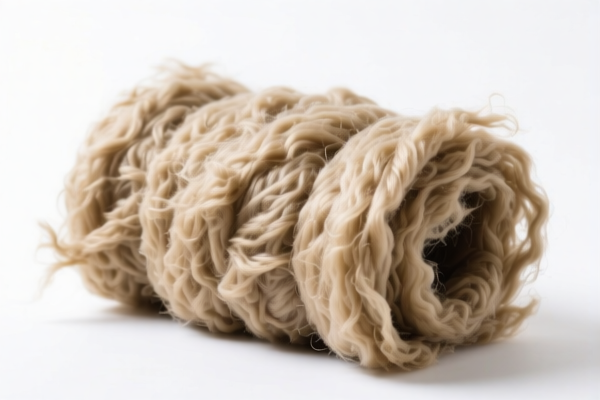
AI Analysis
⛏️ Slag Products & Metal Scrap (Other Waste and Scrap)
🌐 HS Code Reference & Customs Clearance Guide | 2026 Latest Tariff Analysis | Professional Clearance Strategy
📌 I. Product Definition and Classification: What Are "Slag Products"?
In international trade, "Slag Products" refer to the non-metallic by-products generated during the smelting or refining of metals (such as iron, steel, copper, aluminum, etc.). These materials are primarily composed of oxides and silicates. They are categorized into two distinct types based on their processing state and origin:
- Metallurgical Slag & Smelting Waste (HS 2520.10):
Specific waste from the smelting/refining process, including granulated slag (rapidly cooled slag to form glassy granules, often used in cement). This is a specialized chemical/mineral product. - Other Waste and Scrap (HS 2519.90):
A broader category for "not elsewhere specified" waste containing metal. This often includes general industrial residue, slag products that do not fit specific chemical definitions, and mixed scrap containing metallic content.
⚠️ Key Distinction:
- If the material is granulated slag or specific waste from smelting → 2520.10
- If the material is general waste/scrap with unspecified metal content or other slag products → 2519.90
📦 II. HS Code Classification Details (2026 Latest Tariff Authority Comparison)
| HS Code | Product Description | Applicable Scenario | Metal Content |
|---|---|---|---|
2519.90 |
Other waste and scrap, not elsewhere specified, including slag products, whether or not containing metal | General industrial waste, mixed slag, unspecified scrap | ✅ Yes (or mixed) |
2520.10 |
Slag and other waste from the smelting or refining of metals, not elsewhere specified, including granulated slag | Granulated slag, blast furnace slag, specific smelting residue | ❌/✅ (Primarily mineral, may contain residual metal) |
🔍 Key Reminder:
- Granulated Slag is explicitly listed under 2520.10.
- General Slag Products that are not granulated or do not fit the strict "smelting waste" definition may fall under 2519.90.
- Misclassification can lead to significant tariff differences or customs delays.
💰 III. 2026 Latest Tariff Rate Details (Including Surcharges & Policy Add-ons)
✅ Applicable Country: United States (US)
✅ Country of Origin: China (CN)
✅ Effective Date: From November 10, 2025 (for subsequent imports)
🎯 1. 2519.90 —— Other Waste and Scrap (Including Slag Products)
| Item | Content |
|---|---|
| Base Tariff Rate | 0% (ad valorem) |
| USITC Surcharge | +0% (No additional 301 duty for this specific subheading in most cases, but verify local rules) |
| IEEPA Surcharge | +10% (Targeting Chinese/HK products under IEEPA, effective Nov 10, 2025) |
| Total Tariff Rate | 10% |
| Tax Calculation | CIF Value × 10% |
| De Minimis Exemption | ❌ Not Applicable (Industrial waste/scrap usually not eligible for de minimis) |
| Legal Basis Path | IEEPA:9903.01.25 → USITC:2519.90 |
📌 Explanation:
- While the base tariff for many mineral products is 0%, the IEEPA 10% surcharge applies to Chinese-origin goods in this category.
- Total Cost Increase: 10% of the CIF value.
- Note: If the slag contains significant recyclable metal, customs may reclassify it as metal scrap (e.g., 7204, 7404), which has different tariff structures. Ensure the description clearly states "Slag Products."
🎯 2. 2520.10 —— Slag from Smelting/Refining (Including Granulated Slag)
| Item | Content |
|---|---|
| Base Tariff Rate | 0% (ad valorem) |
| USITC Surcharge | +0% |
| IEEPA Surcharge | +10% (Targeting Chinese/HK products under IEEPA) |
| Total Tariff Rate | 10% |
| Tax Calculation | CIF Value × 10% |
| De Minimis Exemption | ❌ Not Applicable |
| Legal Basis Path | IEEPA:9903.01.24 → USITC:2520.10 |
📌 Note:
- Identical tariff treatment to 2519.90 in this context.
- Granulated Slag is a high-value product for the cement industry; ensure it is not misdeclared as "soil" or "aggregate" to avoid higher duties.
🛠️ IV. Customs Clearance Practical Advice (Real-World Pitfall Guide)
✅ 1. Required Documentation Checklist (Non-Negotiable)
| Document | Must Provide | Description |
|---|---|---|
| ✅ Product Specification Sheet | ✔️ | Chemical composition (SiO2, CaO, etc.), physical form (granular, powder, lumps) |
| ✅ Safety Data Sheet (SDS) | ✔️ | Critical for waste/scrap to prove no hazardous materials |
| ✅ Commercial Invoice | ✔️ | Clearly state "Granulated Slag" or "Slag Products" – DO NOT use generic terms like "Stone" or "Waste" |
| ✅ Certificate of Origin (CO) | ✔️ | To determine eligibility for any preferential rates (though currently 10% surcharge applies) |
| ✅ Packing List | ✔️ | Detail net/gross weight, package type |
| ✅ Lab Test Report | ✔️ | Proving non-hazardous status and chemical composition |
✅ 2. Declaration Tips (Key Mantra)
🔥 "Be Specific, Be Chemical, Avoid 'Waste' Ambiguity!"
| Situation | Correct Declaration | Wrong Practice |
|---|---|---|
| Granulated Slag | 2520.10 - "Granulated Blast Furnace Slag" |
"Stone Dust" or "Construction Waste" → High Risk of Audit |
| Mixed Slag/Scrap | 2519.90 - "Slag Products, Containing Metal" |
"Metal Scrap" → May trigger 301 duties if classified under Chapter 72-83 |
| Industrial Residue | 2519.90 |
Vague term "Industrial By-product" → Customs may reclassify |
✅ 3. Special Case Handling
| Situation | Handling Advice |
|---|---|
| Recyclable Metal Content | If >5% metal, customs may demand reclassification to metal scrap (e.g., 7204.21). Declare accurately! |
| Hazardous Waste | If heavy metals (lead, cadmium) are present, it becomes Hazardous Waste. Requires EPA approval and much higher scrutiny. |
| Granulated vs. Lumpy | Granulated slag has different customs codes. Ensure physical form matches HS description. |
🌍 V. Global Market Clearance Comparison (2026 Latest)
| Country/Region | Recommended HS Code | Tariff (China Origin) | Certification Required | Notes |
|---|---|---|---|---|
| 🇺🇸 USA | 2520.10 / 2519.90 |
10% (IEEPA) | SDS, Chemical Analysis | Strict on hazardous content |
| 🇨🇳 China | 2520.10 / 2519.90 |
0% | N/A | Import of waste is restricted; check circulars |
| 🇪🇺 EU | 2520.10 |
0% | REACH, SDS | Strict on waste shipment regulations |
| 🇦🇺 Australia | 2520.10 |
5% | SDS | Check NEPM guidelines |
📌 Conclusion:
- USA imposes a 10% IEEPA surcharge on Chinese-origin slag products.
- EU and China have strict waste import restrictions. Ensure the product is not classified as "domestic waste" but as a mineral product.
📌 VI. Common Errors & Pitfall Guide (Lessons Learned)
❌ Error 1: Declaring as "Stone" or "Aggregate"
👉 Consequence: Customs may reject for misdescription, or reclassify to a higher duty rate.
❌ Error 2: Ignoring Hazardous Content
👉 Consequence: If heavy metals are detected, shipment will be seized and destroyed.
❌ Error 3: Using Generic Terms like "Slag" without specification
👉 Consequence: Customs will request additional documents, causing delays and storage fees.
❌ Error 4: Misidentifying Granulated Slag as Lumpy Slag
👉 Consequence: Potential tariff discrepancy or regulatory mismatch.
✅ Correct Practice:
"Granulated Blast Furnace Slag, Chemical Grade, SiO2>40%, CaO>30%, Non-Hazardous, SDS Provided, for Cement Production"
🎯 VII. Conclusion: Precise Classification Saves Costs!
🎯 Remember the Mantra:
🔹 "Granulated is 2520.10, General is 2519.90."
🔹 "10% IEEPA on China Origin, No De Minimis."
🔹 "Provide SDS, Prove Non-Hazardous, Avoid Rejection!"
📌 Pro Tip:
If your slag product has high recyclable metal content, consider separating the metal first. Metal scrap may have different duty rates (often 0% base, but check 301 lists).
For Granulated Slag, emphasize its use in cement/concrete to justify its mineral classification.
📣 Immediate Action:
📞 Consult with a licensed customs broker + Provide detailed chemical analysis + Verify IEEPA applicability for your specific shipment date.
🚀 Ensure smooth clearance and avoid costly delays!
✨ Professional Clearance Starts with Accurate Classification!
💼 Every Percent of Duty Matters!
Customer Reviews
About HS Code Classification
The Harmonized System (HS) is an internationally standardized nomenclature developed by the World Customs Organization (WCO) to classify traded products. Over 200 countries use the HS system as the basis for customs tariffs, trade statistics, and import/export regulations.
Each HS code follows a hierarchical structure:
- Chapter (2 digits) — Broad category of goods (e.g., Chapter 84: Machinery and Mechanical Appliances)
- Heading (4 digits) — More specific grouping within the chapter
- Subheading (6 digits) — Internationally standardized breakdown, used by all WCO member countries
- National subdivisions (8-10 digits) — Country-specific extensions for further classification, such as US HTSUS 10-digit codes
Correct HS code classification is essential for smooth customs clearance, accurate duty payment, and compliance with trade regulations. Misclassification can lead to customs delays, overpayment of duties, or penalties.
When importing from CN to US, the applicable tariff rates may include:
- Most-Favored-Nation (MFN) rate — The standard duty rate applied to WTO members
- General rate — Applied to countries without trade agreements
- Trade remedy duties — Additional tariffs such as Section 301 (anti-dumping), Section 232 (national security), or countervailing duties
The information provided on this page is for reference purposes only. For official classification, please consult with your local customs authority or a licensed customs broker.