Slag Stone Products
CN → US| HS Code | Tariff Rate | Origin | Destination | Doc |
|---|---|---|---|---|
| 6810191200 | 39.9% | CN | US | Official Doc |
| 6810191400 | 44.0% | CN | US | Official Doc |
Product Images
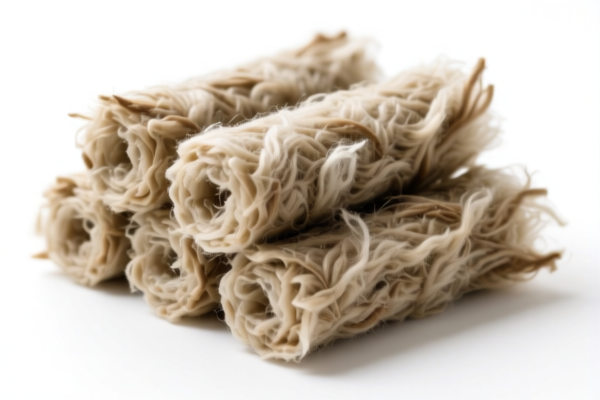
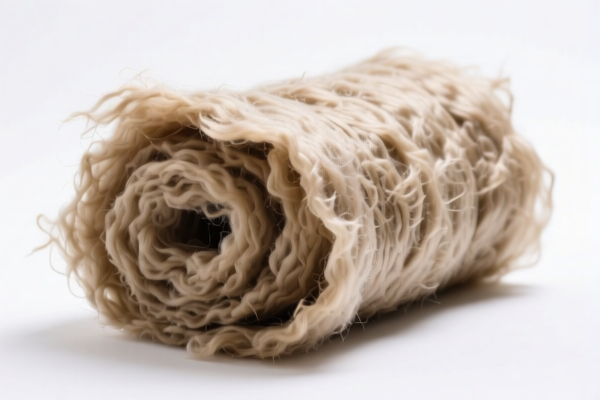
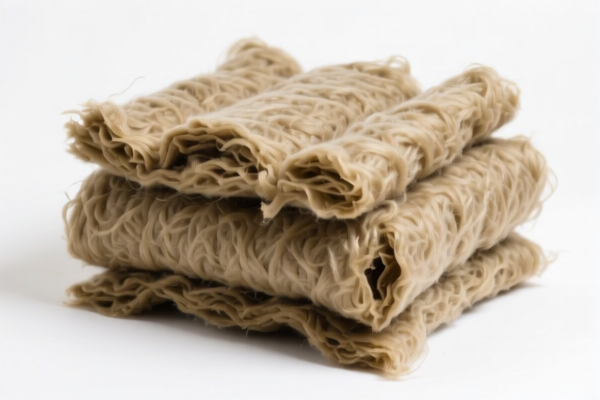

AI Analysis
🏗️ Slag Stone Products: Agglomerated Stone Tiles & Bricks
🌐 HS Code Reference & Customs Clearance Guide | 2026 Latest Tariff Analysis | Professional Clearance Strategy
📌 I. Product Definition & Classification: What Exactly Are "Slag Stone Products"?
Slag stone products are artificial construction materials derived from industrial by-products, primarily blast furnace slag, steel slag, or coal gangue, processed and bound together with cement or other binders. In international trade, these are classified under Chapter 68 (Articles of stone or of other mineral substances).
The key distinction lies in the binder and the form: 1. Agglomerated Stone (Artificial Stone): Slag particles bound by non-cement binders (e.g., resin, bitumen, gypsum) vs. cement. 2. Form Factor: Tiles, flagstones, bricks, or other shaped articles.
⚠️ Critical Classification Point:
- If the product uses cement as the primary binder → Generally falls under 6810 (Cement/Concrete/Artificial Stone).
- If the product uses binders other than cement (e.g., resin, asphalt) → Falls under specific subheadings of 6810.19.
- Shape matters: If it is a floor or wall tile, it falls under 6810.19. If it is a brick, it may fall under a different subheading (not listed in the provided DATA, but often 6810.91).
Based on the provided <DATA>, we focus specifically on Floor and Wall Tiles made from slag stone agglomerated with binders other than cement.
📦 II. HS Code Classification Details (2026 Latest Tariff Authority)
| HS Code | Product Description | Applicable Scenario | Binder Type |
|---|---|---|---|
6810.19.12.00 |
Floor and wall tiles: Of stone agglomerated with binders other than cement | Slag tiles, resin-bonded slag tiles, asphalt-bonded slag tiles for flooring/walls | ❌ Non-cement (e.g., Resin, Bitumen) |
6810.19.14.00 |
Floor and wall tiles: Other | Other slag-based tiles not meeting the "non-cement binder" specific definition, or ambiguous cases | ✅/❌ Ambiguous/Other |
🔍 Key Reminder:
-6810.19.12.00is the precise fit for slag tiles where the binder is explicitly NOT cement (e.g., epoxy resin, polyurethane, or asphalt).
-6810.19.14.00is a catch-all for other floor/wall tiles in this category. Use only if the binder is unclear or if it falls under "other" provisions.
- Do NOT use6810.11or6810.19.10if the binder is cement; those are for cement-bonded articles (not in this DATA scope).
💰 III. 2026 Latest Tariff Rate Breakdown
✅ Applicable Country: United States (US)
✅ Origin: China (CN)
✅ Effective Date: 2025–2026 (Current Policy)
🎯 1. 6810.19.12.00 — Floor/Wall Tiles, Stone Agglomerated with Non-Cement Binders
| Item | Detail |
|---|---|
| Base Tariff Rate | 0.0% |
| Additional Tariff (Section 301) | 0.0% |
| Total Tariff Rate | 0.0% |
| Tax Calculation | CIF Value × 0.0% = $0 |
| De Minimis Eligibility | ✅ Eligible (if value ≤ $800) |
| Legal Basis Path | USITC:6810.19.12.00 → No Section 301 Footnote |
📌 Explanation:
- Unlike many steel or tech products, slag-based tiles are subject to zero tariffs under current US trade policies.
- No Section 301 (25%) or IEEPA (10%) applies to these specific HS codes.
- Total Tax: 0.0% — This is a highly competitive tariff profile for importers.
🎯 2. 6810.19.14.00 — Other Floor/Wall Tiles
| Item | Detail |
|---|---|
| Base Tariff Rate | 0.0% |
| Additional Tariff (Section 301) | 0.0% |
| Total Tariff Rate | 0.0% |
| Tax Calculation | CIF Value × 0.0% = $0 |
| De Minimis Eligibility | ✅ Eligible (if value ≤ $800) |
| Legal Basis Path | USITC:6810.19.14.00 → No Section 301 Footnote |
📌 Note:
- Same favorable tariff treatment as6810.19.12.00.
- Ensure your product description clearly states "Stone Agglomerated" to justify this classification.
🛠️ IV. Customs Clearance Practical Advice (Avoid Pitfalls)
✅ 1. Required Documentation Checklist
| Document | Must Provide | Purpose |
|---|---|---|
| ✅ Product Specification Sheet | ✔️ | Detail raw materials (slag type), binder type (resin/cement/etc.), dimensions, weight. |
| ✅ Formula/Composition Report | ✔️ | Crucial: Prove binder is NOT cement (for 6810.19.12.00). |
| ✅ Product Photos | ✔️ | Show tile surface, edges, packaging, and labeling. |
| ✅ Commercial Invoice | ✔️ | Clearly state: "Slag Stone Agglomerated Tiles, Non-Cement Binder, HS 6810.19.12.00". |
| ✅ Packing List | ✔️ | Confirm quantities and weights. |
| ✅ MSDS (Material Safety Data Sheet) | ✔️ | Required if resin/bitumen binder is hazardous. |
| ✅ CO (Certificate of Origin) | ✔️ | For origin verification. |
✅ 2. Declaration Tips (Key Mantras)
🔥 “Binder is Key! Cement vs. Non-Cement Defines Your Tax!”
| Scenario | Correct Declaration | Wrong Declaration |
|---|---|---|
| Slag tiles bound with resin | 6810.19.12.00 |
“Cement Tiles” → Risk of misclassification |
| Slag tiles bound with cement | NOT IN THIS DATA (Likely 6810.19.10 or 6810.11) |
6810.19.12.00 → High Risk of Audit |
| Slag bricks (not tiles) | Check 6810.91 or 6810.99 |
6810.19.12.00 → Wrong shape classification |
| Loose slag granules | NOT TILES → Likely 2517 or 6801 |
6810.19.12.00 → Shape mismatch |
✅ 3. Special Cases
| Situation | Handling Advice |
|---|---|
| Mixed Binder (e.g., Cement + Resin) | Declare the primary binder. If cement is >50%, use cement-based HS code. |
| Recycled Slag Claim | Provide proof of recycled content for green building certifications (LEED), but not for tariff reduction. |
| Anti-Dumping Duty (ADD) | Slag products are NOT subject to ADD in the US. |
| Section 201 (Solar/Glass) | Not applicable to slag tiles. |
🌍 V. Global Market Comparison (2026)
| Country/Region | Recommended HS Code | Tariff Rate | Notes |
|---|---|---|---|
| 🇺🇸 USA | 6810.19.12.00 |
0.0% | No Section 301. Best for cost efficiency. |
| 🇨🇳 China | 6810.19.12.00 |
0.0% | Zero import duty for recycled material tiles. |
| 🇪🇺 EU | 6810.19.12.00 |
0.0% | Favorable for sustainable building materials. |
| 🇨🇦 Canada | 6810.19.12.00 |
0.0% | CUSMA preferential if qualifying. |
| 🇲🇽 Mexico | 6810.19.12.00 |
0.0% | No additional tariffs. |
📌 Conclusion:
- Slag stone tiles enjoy zero tariffs globally in most major markets.
- USA is particularly favorable due to no Section 301 impact.
📌 VI. Common Mistakes & Pitfalls (Lessons Learned)
❌ Mistake 1: Declaring cement-bonded slag tiles as 6810.19.12.00
👉 Consequence: Misclassification penalty. Cement-bonded tiles may have different duty rates or anti-dumping checks.
👉 Fix: Verify binder composition. If cement is primary, do not use 6810.19.12.00.
❌ Mistake 2: Calling them “Ceramic Tiles”
👉 Consequence: Wrong chapter (69 vs. 68). Ceramic tiles have different tariffs (often 0%–5.7%) but require different certification.
👉 Fix: Use “Agglomerated Stone” or “Artificial Stone” in description.
❌ Mistake 3: Ignoring MSDS for resin-bonded products
👉 Consequence: Customs hold for hazardous material review.
👉 Fix: Provide MSDS for any resin/bitumen binder.
✅ Correct Declaration Example:
“Artificial Stone Floor Tiles, Made from Blast Furnace Slag Agglomerated with Epoxy Resin Binder, Non-Cement, 60x60cm, HS 6810.19.12.00”
🎯 VII. Conclusion: Professional Clearance, Cost Optimization!
🎯 Remember the Mantra:
🔹 “Non-Cement Binder = 0% Tariff!”
🔹 “Shape Matters: Tiles vs. Bricks!”
🔹 “Binder Proof is Key: Avoid Audit Traps!”
📌 Pro Tip:
If your slag tiles are recycled content, highlight this in marketing for LEED/Green Building points, but do not rely on it for tariff benefits. The 0% tariff comes from the HS Code classification, not the recycled nature.
📣 Action Required:
📞 Confirm Binder Type: Resin/Bitumen vs. Cement.
📄 Prepare MSDS if non-cement binder is chemical-based.
🚀 Ship with Confidence: 0% Tariff Advantage!
✨ Precision in Classification, Savings in Cost!
💼 Your Slag Stone Products: Green, Durable, and Tariff-Free!
Customer Reviews
About HS Code Classification
The Harmonized System (HS) is an internationally standardized nomenclature developed by the World Customs Organization (WCO) to classify traded products. Over 200 countries use the HS system as the basis for customs tariffs, trade statistics, and import/export regulations.
Each HS code follows a hierarchical structure:
- Chapter (2 digits) — Broad category of goods (e.g., Chapter 84: Machinery and Mechanical Appliances)
- Heading (4 digits) — More specific grouping within the chapter
- Subheading (6 digits) — Internationally standardized breakdown, used by all WCO member countries
- National subdivisions (8-10 digits) — Country-specific extensions for further classification, such as US HTSUS 10-digit codes
Correct HS code classification is essential for smooth customs clearance, accurate duty payment, and compliance with trade regulations. Misclassification can lead to customs delays, overpayment of duties, or penalties.
When importing from CN to US, the applicable tariff rates may include:
- Most-Favored-Nation (MFN) rate — The standard duty rate applied to WTO members
- General rate — Applied to countries without trade agreements
- Trade remedy duties — Additional tariffs such as Section 301 (anti-dumping), Section 232 (national security), or countervailing duties
The information provided on this page is for reference purposes only. For official classification, please consult with your local customs authority or a licensed customs broker.